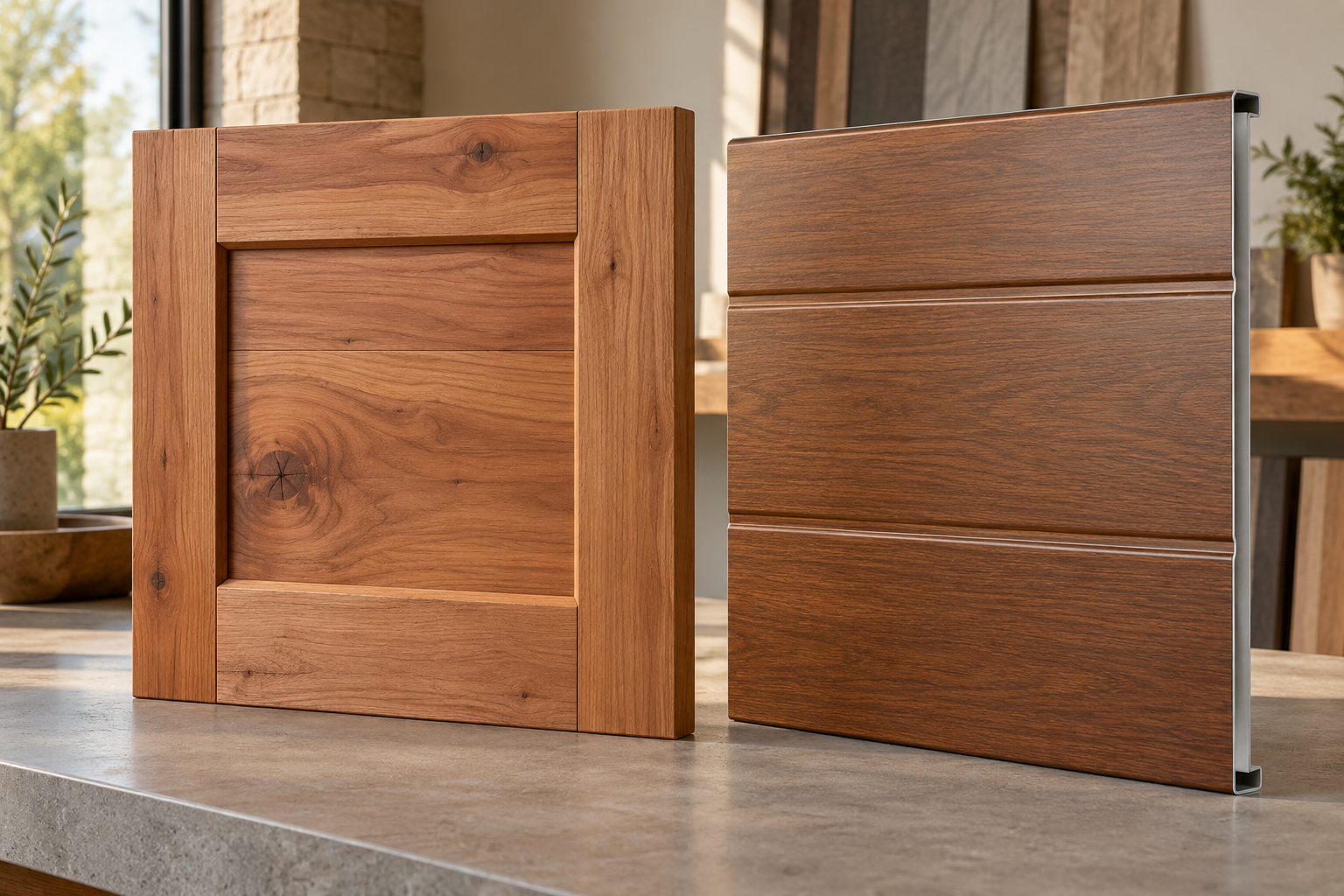
Appearance and material are separate choices.
Compare the actual steel or wood door construction, finish care, exposure and warranty. Material alone does not determine the appearance, thermal performance or maintenance needs of the installed assembly.
Choose between steel and wood garage doors by comparing two actual door configurations, not by awarding a winner to a material. A wood-look steel door may satisfy the appearance you want with a different care routine. A real-wood door may offer the grain, joinery or customization you value enough to maintain. Neither description tells you the complete construction, thermal performance or installed scope.
The useful comparison starts with your priorities: authentic material, a particular architectural detail, willingness to maintain a finish, or a defined insulation and glazing requirement. Once those are clear, the shortlist becomes much more informative than “steel is practical, wood is beautiful.”
Separate real wood, wood-look steel and composite overlays
Real wood is not simply a brown finish. Its species, grain and construction contribute to the appearance, and natural variation is part of what you are buying. Ask whether the proposed door uses framed panels, a particular wood facing or another specified construction. A photograph alone cannot establish those details.
Wood-look steel uses a finish or texture to suggest wood while retaining a steel-based door construction. Clopay’s steel guide, for example, lists Ultra-Grain finishes and several one-, two- and three-layer constructions. The finish name does not tell you which construction has been quoted.
A composite overlay is another category. Clopay describes examples built on an insulated steel base with a molded composite face. That is neither a traditional natural-wood door nor merely a printed steel surface. If a quote says “faux wood,” ask which of these constructions it means before comparing it with another quote.
Request a physical sample when appearance is important. View it in the light where the door will be installed, and step back as well as looking closely. A grain pattern that looks convincing from the street may look different beside an existing natural-wood entry door. That is an aesthetic choice you can make yourself once the materials are honestly identified.
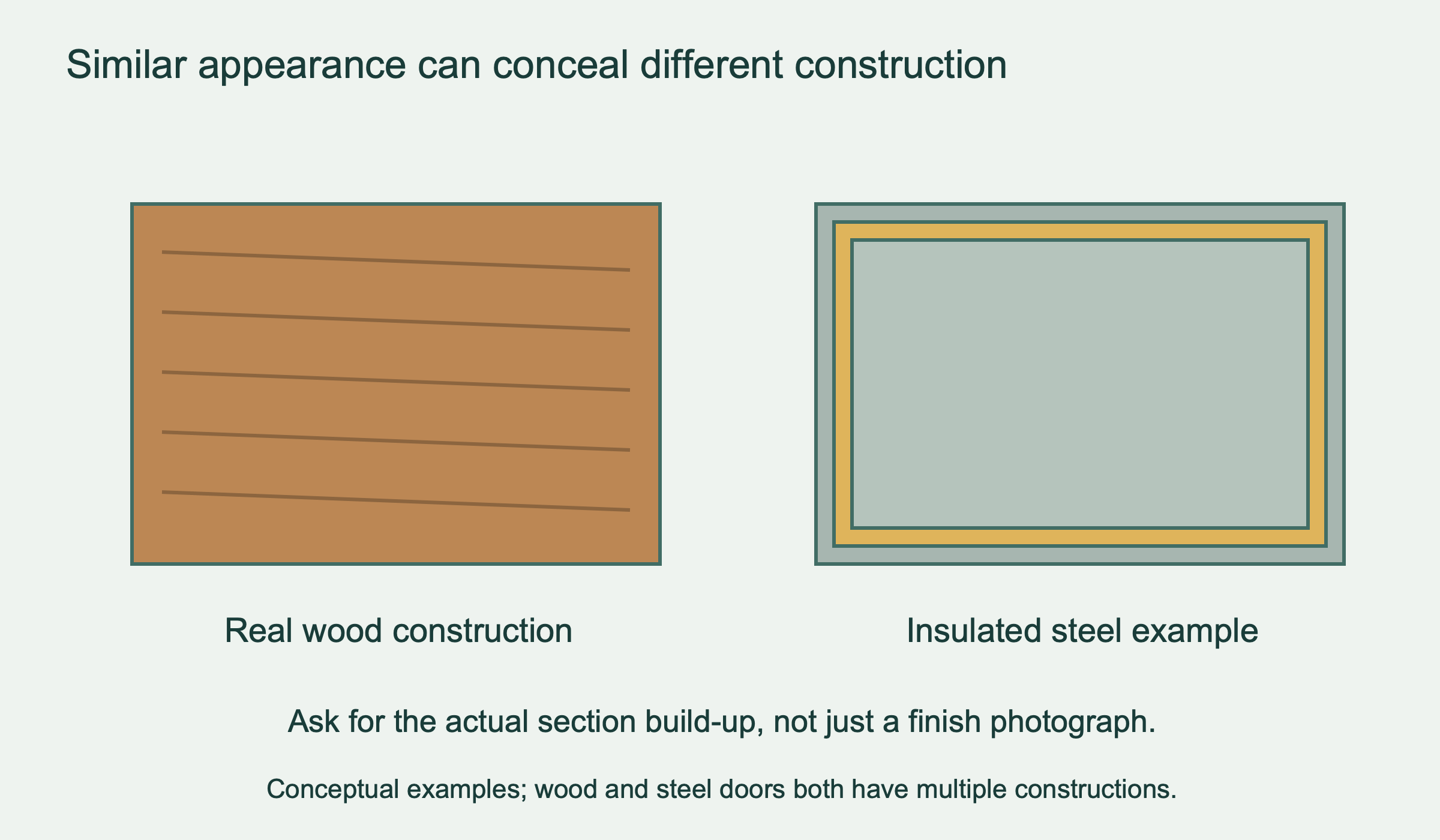 Select the diagram to view it at full size.
Read the construction before predicting performance
The word steel covers more than one door build-up. An uninsulated single-skin section and an insulated sandwich section are not interchangeable specifications. In the same way, a wood door’s appearance does not reveal its complete layers, joints or insulation. Ask for the model’s section drawing or product sheet.
A different material does not authorize reusing the existing springs or adjusting them yourself. The door must be evaluated as a system. When the proposal retains an opener, ask how its compatibility and the new door’s operating condition will be confirmed, rather than assuming that a motor that lifted the old door can simply lift anything.
For thermal performance, compare the same measurement type and configuration. A section R-value and a tested assembly U-factor describe different things. Windows, construction and the scope of the reported test belong beside the number. A high advertised insulation figure is not a stand-alone promise about garage temperature or household bills.
Make maintenance a concrete ownership decision
“Low maintenance” should mean a manageable routine, not no routine. Steel finishes still need appropriate cleaning and timely attention to eligible coating damage. Real wood needs an identified finish-care plan, including inspection and eventual refinishing where required. Both doors also have operating hardware that needs its own maintenance.
Clopay’s wood care manual calls for annual finish inspection, describes a 1–2-year repainting recommendation for its painted wood doors and ties restaining to the stain manufacturer’s directions and actual need. Treat those as examples from the named manual, not a universal lifespan for every wood finish. Ask for the instructions that will apply to the door and finish you are purchasing.
Translate the care instructions into a practical plan. Who will inspect and clean the door? Who can safely access the upper sections? If refinishing is needed, will you hire it out, and how will the garage remain safely accessible during the work? An attractive finish is not a good fit for your household if its required care is work you already know you will postpone.
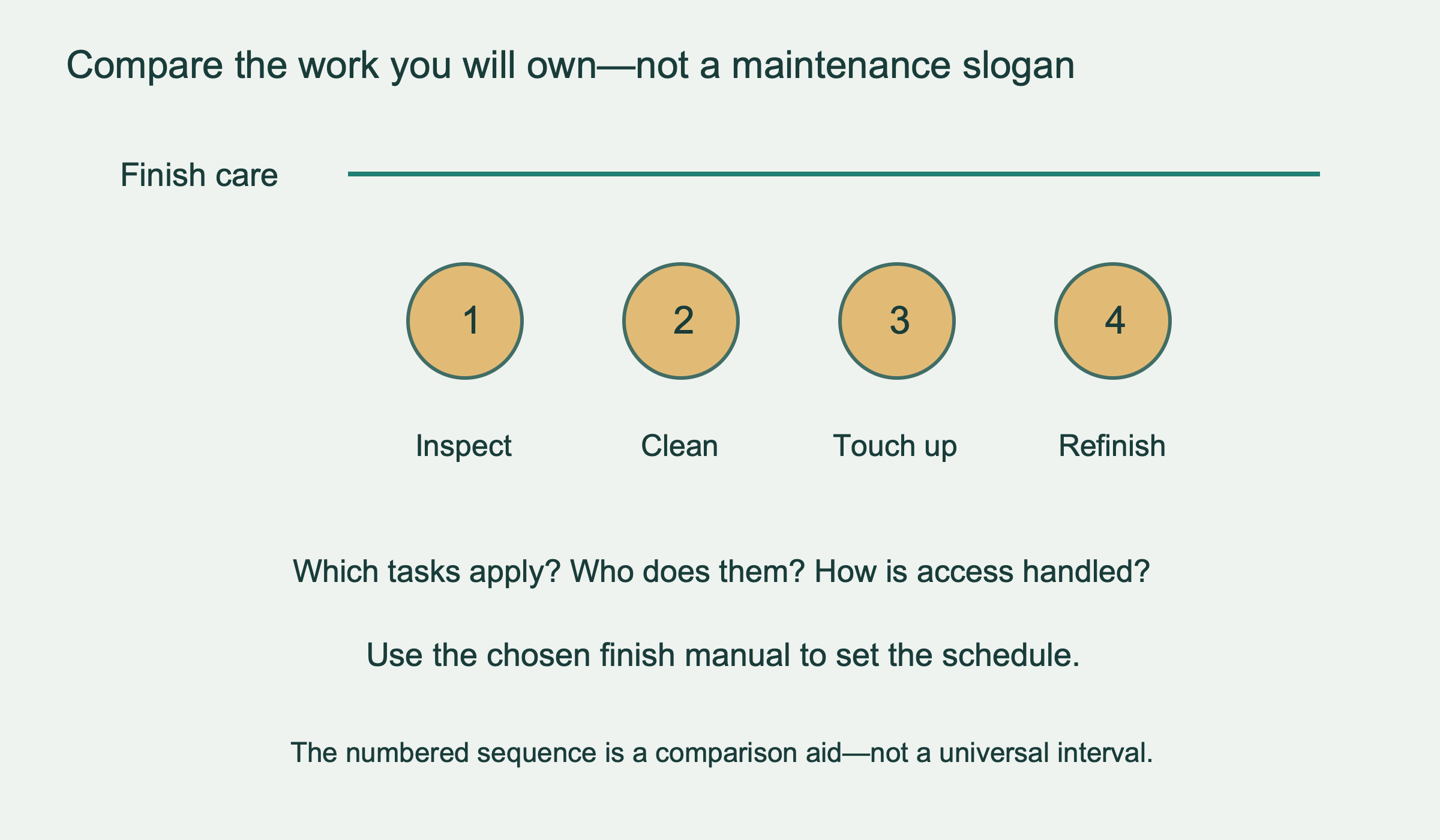 Select the diagram to view it at full size.
Consider exposure without turning it into a guarantee
Tell the supplier about direct sun, repeated wetting and any known harsh exposure. The relevant question is whether the proposed finish and its care requirements suit that location. An exposure concern should lead to a product-specific answer, not a claim that all wood will fail or all steel will remain unaffected.
Color is part of this conversation. The wood care manual warns against dark colors, particularly with direct southern exposure. The steel care manual also discusses reflective paint and specialty-finish restrictions. That does not mean you must choose a particular color; it means the desired color should be checked against the selected product rather than approved from a rendering alone.
Ask what condition would prompt a finish inspection sooner than the ordinary schedule. For example, visible coating damage is a reason to consult the relevant care procedure rather than waiting for an anniversary date. Keep maintenance advice specific to the finish; a wax or cleaner suited to one surface may not belong on another.
If the opening has recurring water exposure or a building-envelope problem, address that separately. Selecting a different door material does not explain why water collects in the same location. The door choice and the surrounding building condition are related, but they are not substitutes for one another.
Compare warranties by component, not by the biggest word
Obtain the written warranty for each exact collection and finish. Separate the coverage for finish, sections, windows, hardware and installation labor. A long finish term does not automatically provide the same term for springs, and a parts remedy does not necessarily pay for removal, installation or refinishing.
Check who is eligible, when the term begins and what records the provider needs. Also ask which maintenance and modification conditions apply to the proposed finish. Do not let a verbal “lifetime warranty” replace the document that actually describes coverage.
Warranty differences should inform the comparison without becoming a prediction that one door will fail sooner. A warranty is a defined promise with conditions; it is not a universal service-life calculation. If a clause is unclear, ask the provider for a written explanation about your proposed purchase.
Build a shortlist that makes the trade-off visible
Choose one wood candidate and one steel candidate in the same intended opening size. Specify the panel style, glazing and finish on each. Put the construction, available thermal data, care requirements, hardware arrangement and written coverage alongside the installed scope. This makes it possible to see what changes when the material changes.
Where the appearance differs, decide whether that difference matters enough to you to keep both options. You do not need to pretend a printed grain and natural wood are identical. Conversely, you do not need to buy natural wood if your real priority is the overall warm color and panel design seen from the street.
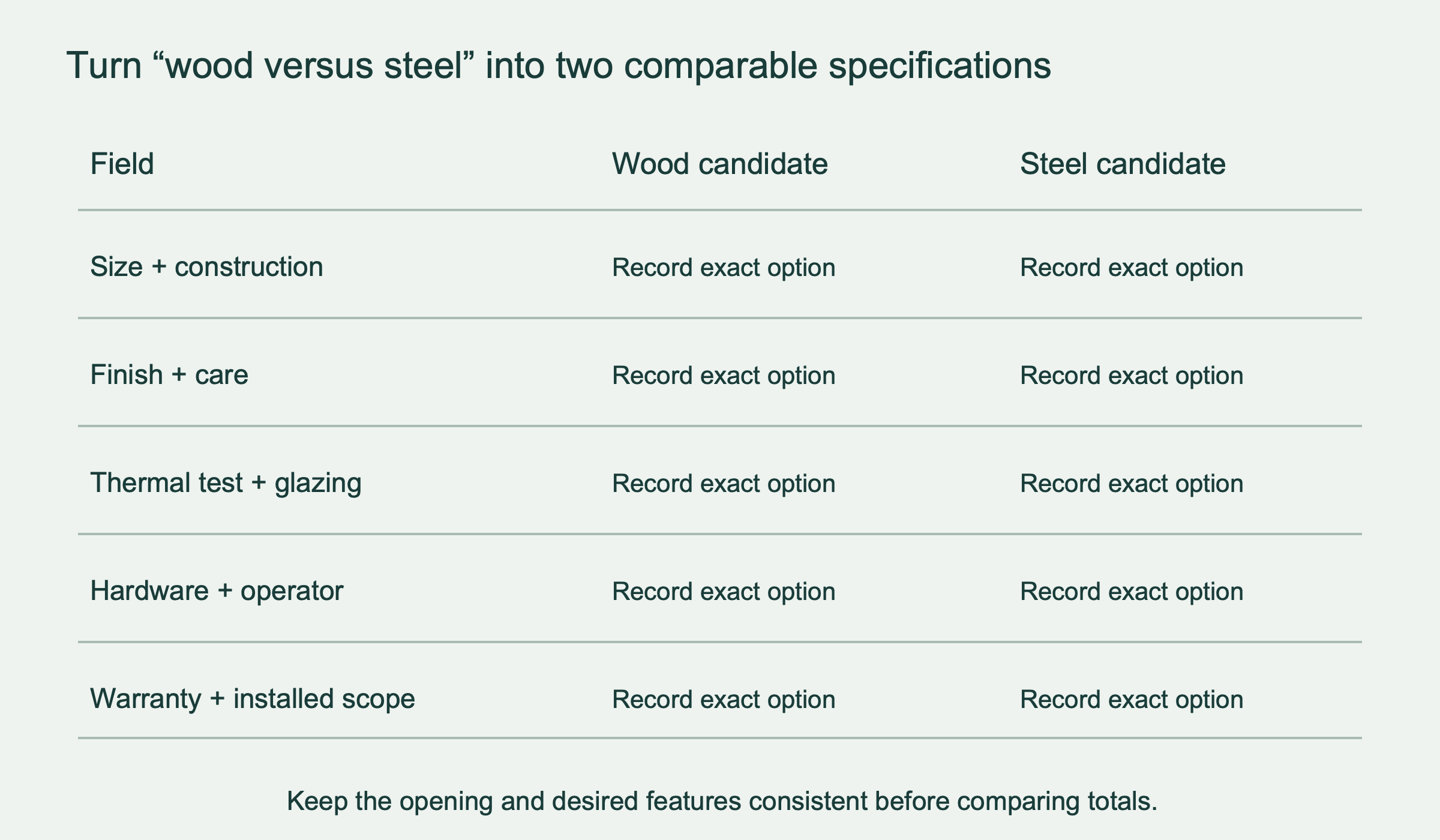 Select the diagram to view it at full size.
Ask for separate explanations of optional upgrades and required installation work. If one proposal includes a new opener, unusual track arrangement or additional finishing, make that visible before interpreting the total as a material price difference. The installed project is what you will own.
A useful final choice can be stated in one sentence: “I prefer this actual door because its appearance, construction and required care match my priorities.” For a garage door selection and installation assessment, bring that shortlist and the opening information. It gives the installer a specific compatibility question to answer while leaving the aesthetic and ownership decision where it belongs—with you.