
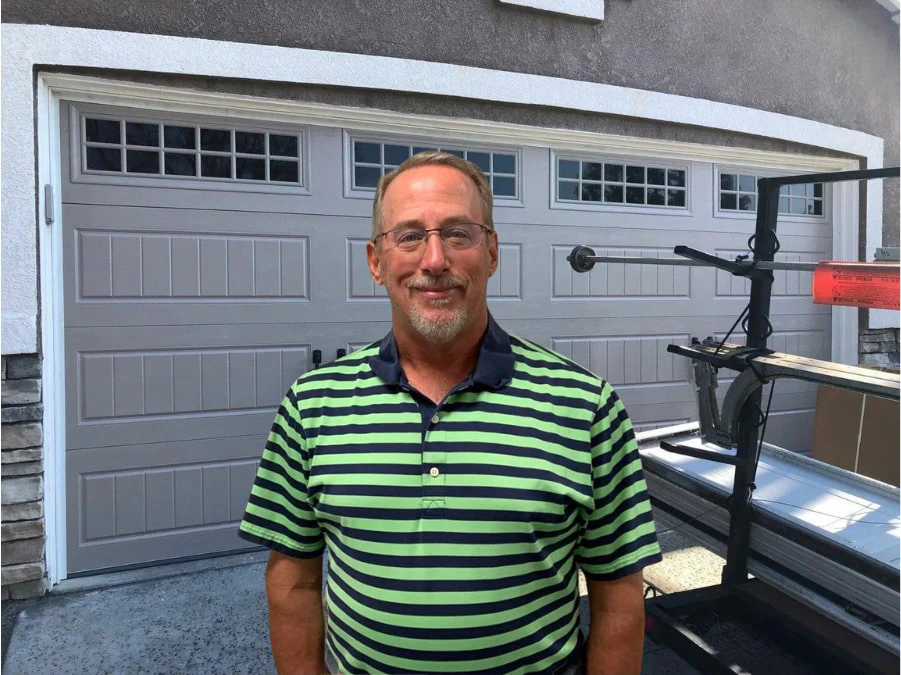
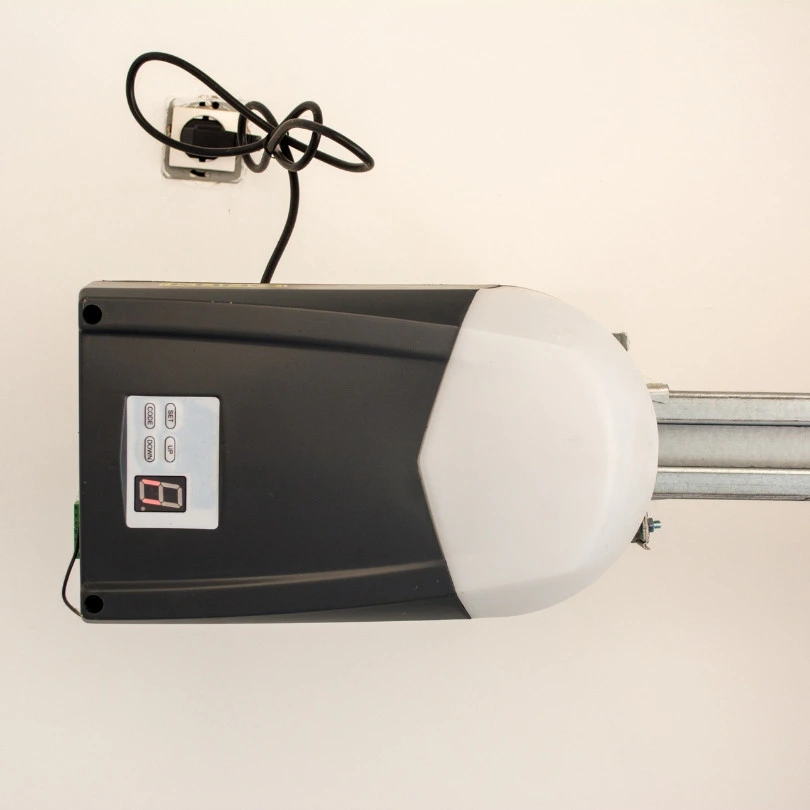
Removing the motor and long rail from the ceiling can be appealing when planning storage, lighting or a cleaner-looking garage. The right decision starts with how the door moves. A compact operator mounted beside the opening still needs a compatible mechanical system and a safe installation location.
Understand the two layouts
A conventional ceiling-mount opener operates through a rail and trolley, with an arm connected to the door. A residential wall-mount, often called a jackshaft opener, mounts beside the door and operates its torsion shaft. The hardware occupies different places and applies motion differently.

That layout difference is separate from the choice between a chain and a belt in a conventional rail system. If a ceiling installation is already suitable, the chain-versus-belt opener comparison can help narrow that choice. Start with physical suitability before comparing smart features or advertised power.
| Project priority | Wall-mount consideration | Ceiling-mount consideration |
|---|---|---|
| Clear central ceiling | Removes the conventional opener rail from that area. | The rail and motor need a clear installation route. |
| Existing door hardware | Shaft, drums and track arrangement must match the operator's requirements. | Door attachment, rail and travel must suit the door and operator. |
| Lighting | May use a separate light that needs its own suitable position. | Lighting is often on the motor unit; coverage still needs checking. |
| Project scope | May require more than a motor swap. | Existing mounting positions are not proof that old components can be reused. |
First confirm the door type and spring arrangement
Ask the installer to identify the door as sectional, one-piece or another construction, then match it to the proposed opener. Do not assume that a product sold as a “garage door opener” works with every garage door.
For a specific example, LiftMaster's current 98022 manual is for sectional doors with torsion assemblies. It excludes extension-spring doors and certain low-headroom arrangements using outside pickup drums. This is an eligibility check for that model, not a universal statement about every wall-mount operator.
A homeowner can gather photographs of the closed door, the upper opening and the existing motor from a safe position. The installer should identify the shaft, drums, lift type and condition. Do not loosen springs, collars, brackets, drums or cables to inspect their fit.
Measure the space where the equipment actually goes
“There is space beside the door” is too vague for ordering. A wall-mount unit needs room around the shaft and adjacent wall, and the shaft must have the arrangement and exposed length required by that model. Shelving, a cabinet or a pipe can interfere even when the wall looks open from the driveway.

The 98022 planning section, for example, specifies separate measurements around the shaft, above it and beside its end. Other models and revisions can differ. Have the installer mark those locations on a photograph rather than relying on a single width measurement.
For either layout, consider the entire path of the open door. A clear center ceiling does not create unlimited storage space: the raised panels, tracks and moving hardware still occupy part of the garage. Consult the headroom, sideroom and backroom planning guide when preparing a sketch.
If a vehicle lift or overhead rack is planned
Give the installer the proposed equipment dimensions and position before deciding on an opener. Ask whether changes to the door's track configuration are part of the project, and obtain a combined layout. Do not buy a wall-mount opener on the assumption that it alone creates clearance for a lift or tall vehicle.
Plan power, lighting and access together
The existing ceiling outlet may not be suitable for a new wall location. Confirm the electrical requirements and where an appropriate outlet belongs. If electrical work is necessary, use a qualified electrician. Avoid turning a temporary extension-cord arrangement into the installation plan.
Lighting deserves a separate question. The 98022 product package includes a remote-light arrangement rather than relying on a light at the center of a ceiling motor. Decide whether the proposed location will illuminate the walking route, vehicle doors and work area. Do not compare only the advertised lumen total.
Also ask how manual operation works for the chosen installation and what happens during an outage. Have the installer demonstrate the relevant owner procedure after the installation is complete. A garage without another access door needs particular planning for access from outside; do not assume every product package includes a suitable solution.
Compare complete installations, not motor prices
Two quotes can describe very different jobs while both say “new opener.” Request enough detail to compare the equipment and any door-system changes.

- Operator: Exact model and applicable door limits.
- Door work: Any required track, spring, shaft or other hardware changes, identified separately.
- Controls: Remotes, keypad, wall control and vehicle compatibility.
- Lighting and power: Included light, mounting position and any electrical work.
- Safety and security equipment: Sensors and any model-required lock or other accessories.
- Handover: Owner documentation, demonstration and recorded safety checks.
Do not assume old safety devices, controls or a ceiling rail can be carried over to a new opener. Their reuse should be explicitly supported by the new equipment's documentation.
Be realistic about noise
Moving the motor away from the central ceiling changes the installation, but the door still has rollers, hinges and tracks. Noise can also travel through the building structure. Ask what part of the current sound is likely to remain and which proposed change addresses it.
A useful description is more specific than “loud”: a click when starting, a rumble through the ceiling, or a squeal at the track curve points to different questions. If noise is the main reason for replacing a working opener, get the door condition assessed first. Treat manufacturer sound claims as product claims rather than a guarantee for every garage.
Make the final decision in three steps
- Confirm eligibility. The installer checks the actual door and documents whether the proposed opener fits without modifications.
- Resolve the layout. Confirm clearances, power, light and any planned storage or lift equipment.
- Compare complete proposals. Choose the system that meets the space and access goals with a clearly defined installation scope.
A compatible wall-mount layout can be a worthwhile improvement when central ceiling space matters. A suitable ceiling-mount system can be the simpler answer when that space is available. For help deciding before ordering equipment, request a garage door opener installation assessment with photographs and your intended use of the garage.
Sources & manuals
- LiftMaster 98022 product information and current manuals
- LiftMaster 98022 owner's manual: planning and installation limitations
- LiftMaster 2420L: example of a current rail-mounted opener
Manufacturer documentation checked November 2, 2026. Examples describe specific models; the manual for the proposed equipment controls the installation requirements.