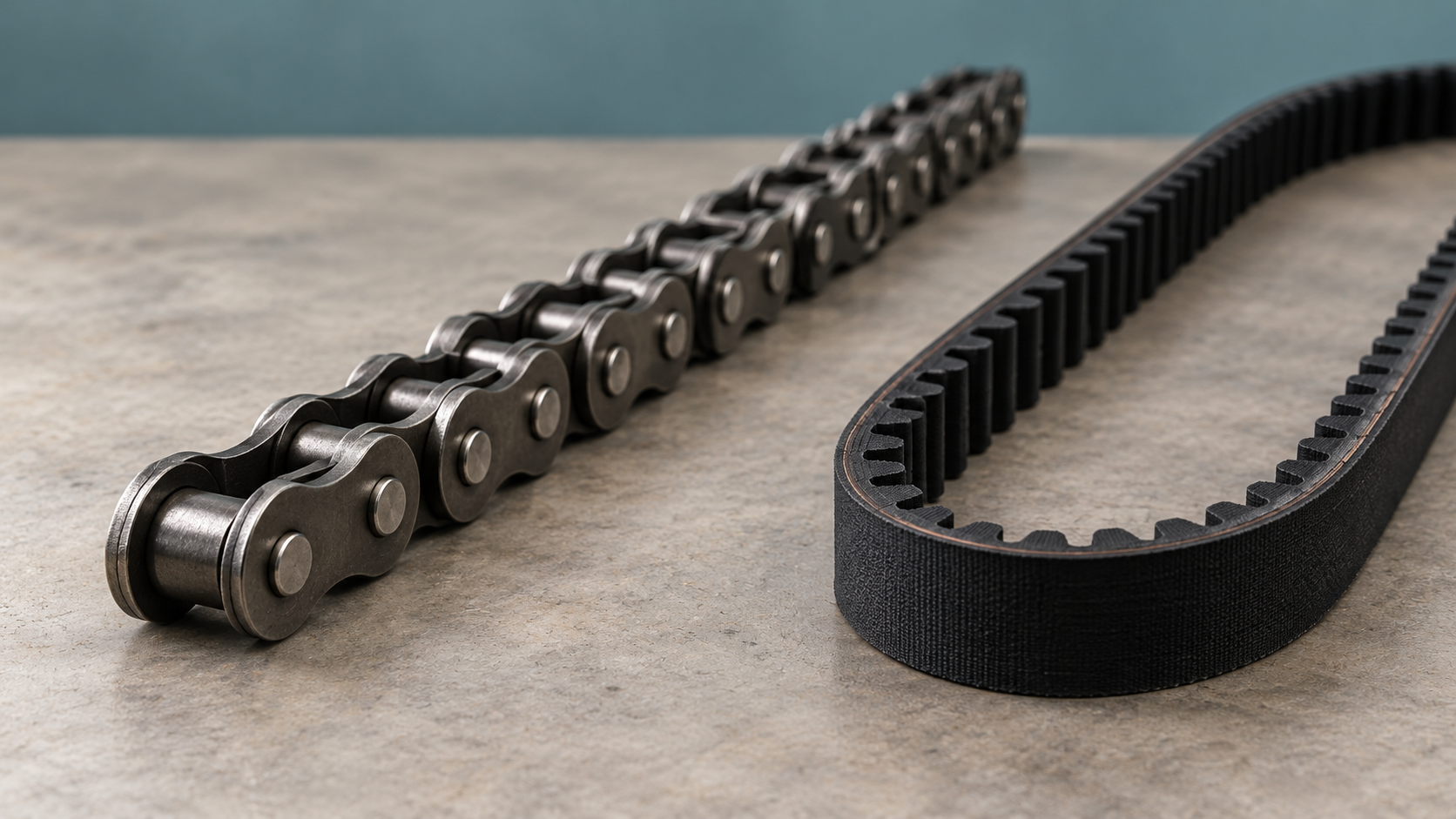
Chain and belt drives use different transmission materials; compare the complete opener configuration.
Chain and belt describe the drive, not the quality of the whole installation. Compare the exact opener’s features, compatibility and maintenance requirements; a quieter drive will not repair a noisy or damaged door.
A practical buying guide that starts with your garage, separates noise from faults, and makes two opener proposals genuinely comparable.
The choice starts with the room above the garage
A chain-drive opener can be the right purchase. So can a belt-drive opener. The useful question is not which material wins in isolation, but which complete system suits your door and the rooms around it. If a bedroom shares the garage ceiling and someone leaves early, reducing opener noise deserves real weight. If the garage is detached and the existing door runs smoothly, other features may matter more.
Begin by naming the problem you want a new opener to solve. Is the old unit unreliable, is normal operating sound intrusive, or has the door recently started grinding and jerking? Those are different buying situations. A quieter drive does not straighten a track or repair a damaged door. This guide helps separate the drive choice from the faults and specifications that can make a seemingly good replacement disappointing.
What changes—and what stays the same
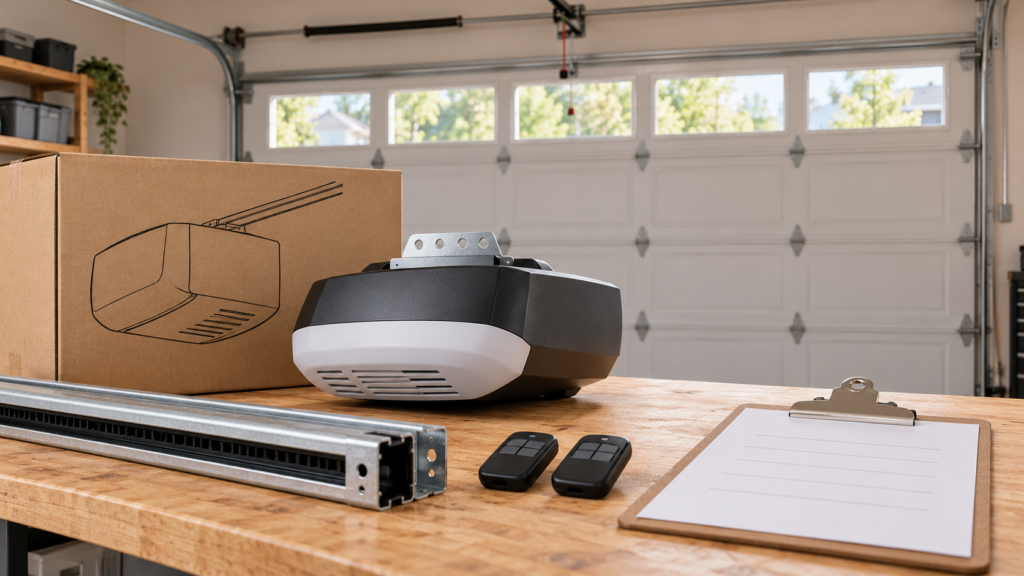
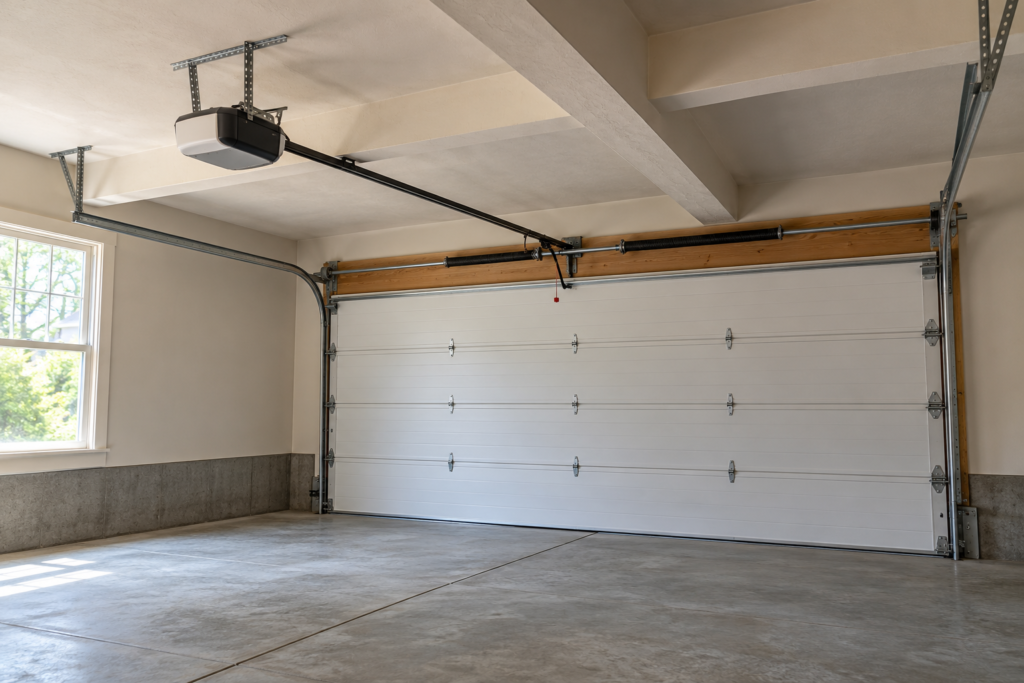
In a conventional ceiling-mounted trolley opener, a motor moves a trolley along a rail. The trolley connects to the door through an arm. Chain and belt describe the material transmitting that motion, not two fundamentally different kinds of garage door. Chamberlain describes its chain drive as a metal, bicycle-like chain and its belt drive as a steel-reinforced rubber belt.[1]
That distinction is worth seeing. A belt is not simply an ordinary rubber strap, and a chain is not proof that the entire opener has a greater rated capacity. The motor, rail, controls and permitted door configuration are part of the product specification. Compare two complete model numbers rather than assigning every chain opener one set of abilities and every belt opener another.
Likewise, neither label tells you whether the package includes battery backup, connected controls, a keypad or the rail needed for your door height. Those are separate decisions. A feature-rich belt package and a basic chain package are not a clean test of the price of the drive material alone.

First decision: normal operating sound or a developing fault?
Chamberlain positions belt drive for quiet, smooth operation and garages near bedrooms.[1] That makes a belt-drive model a sensible starting point when sound is the main reason for replacement. It is not a promise that the complete door system will become silent, and it is not a measured decibel comparison between any two models.
Listen to what you already know about the noise. A longstanding operating sound that disturbs the room above is different from a new scrape at one point of travel, a sudden bang or a visibly shaking door. Describe the location and timing from previous normal use; do not repeatedly cycle a suspect door to produce a recording.
Chamberlain’s noise guidance separates noise from the door, the opener and the installation.[2] That is the important diagnostic principle. A professional can assess these separately before recommending replacement. It prevents the expectation that changing the drive will cure every hinge, roller, track or mounting problem.
If the door is crooked, a cable hangs loose or a spring is visibly broken, stop using it and keep clear. Do not release a suspect open door or handle high-tension hardware. Buying a more powerful opener is not the next step; addressing the door’s condition is.
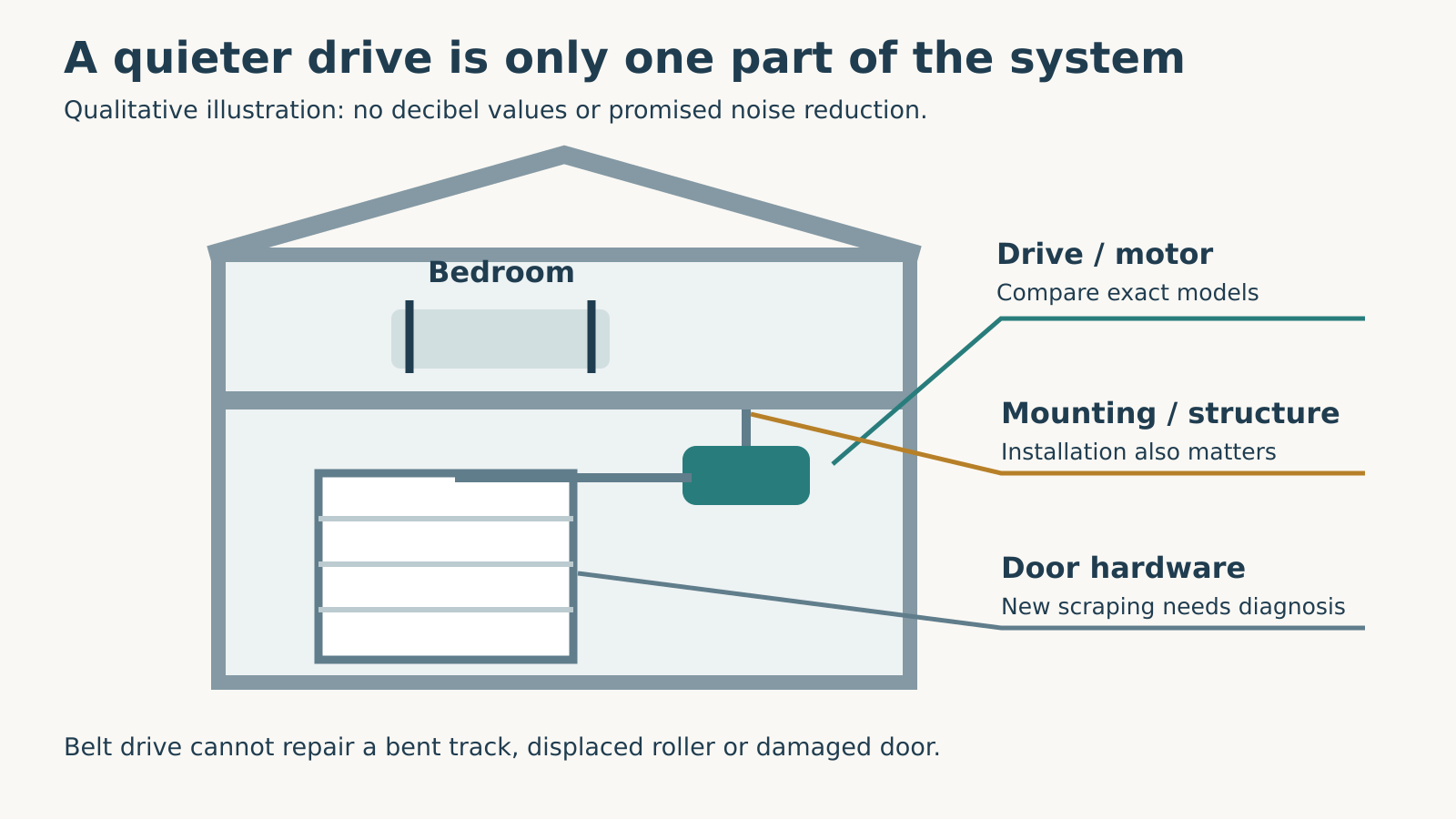 Select the diagram to view it at full size.
Second decision: confirm the door before comparing the motor
Write down the door type and height from reliable existing records or measurements taken with the door safely closed. Do not climb or reach into the mechanism to collect a shopping specification. A sectional door, a one-piece door and a rolling curtain should not be treated as interchangeable applications for a trolley opener.
An example shows why details matter. Genie lists the chain-drive 7035 for residential sectional doors up to 7 feet high and 500 pounds, with an extension kit for an 8-foot door. It identifies the motor as DC and explains its HPc terminology separately.[3] These are limits and descriptions for that model—not a claim that all chains lift that weight or that the motor should overcome an unbalanced door.
Height also has a separate consequence from weight: the trolley needs enough travel. Genie’s 7155 belt-drive page likewise specifies an extension kit for an 8-foot door rather than treating its standard configuration as universal.[4] A motor upgrade does not supply missing rail travel.
Do not confuse door height with the overall length of the opener assembly along the ceiling. The first determines the required opening movement; the second affects fit in the garage. Ask the proposed model’s installation drawing to resolve ceiling obstructions and space, rather than borrowing a dimension from another rail. This is a useful question to settle before removing the old equipment.
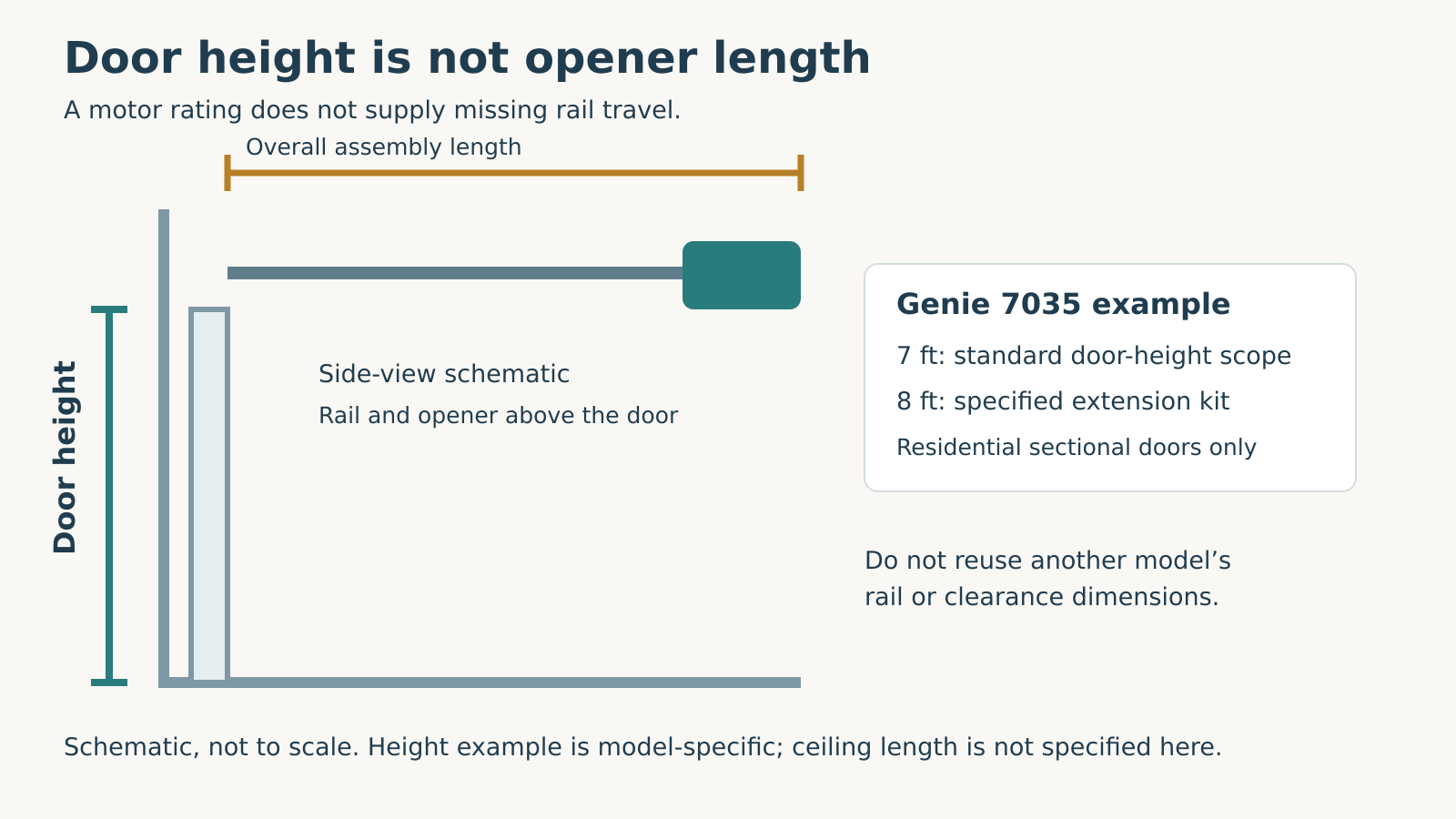 Select the diagram to view it at full size.
Third decision: separate drive type from the features you need
Battery backup is not exclusive to belt drive. Genie’s 7035 chain model includes integrated backup; its 7155 belt model also includes backup and integrated Aladdin Connect connectivity.[3][4] Those examples show why “chain versus belt” is too narrow a shopping filter. They are documented feature examples, not a promise of local stock or a recommendation without checking the installation.
Make the features concrete. If you need phone access, establish whether it is built in or needs additional compatible equipment. If a keypad matters, identify whether it is included. If the car’s integrated remote is important, check that vehicle and opener combination rather than assuming a familiar logo settles compatibility.
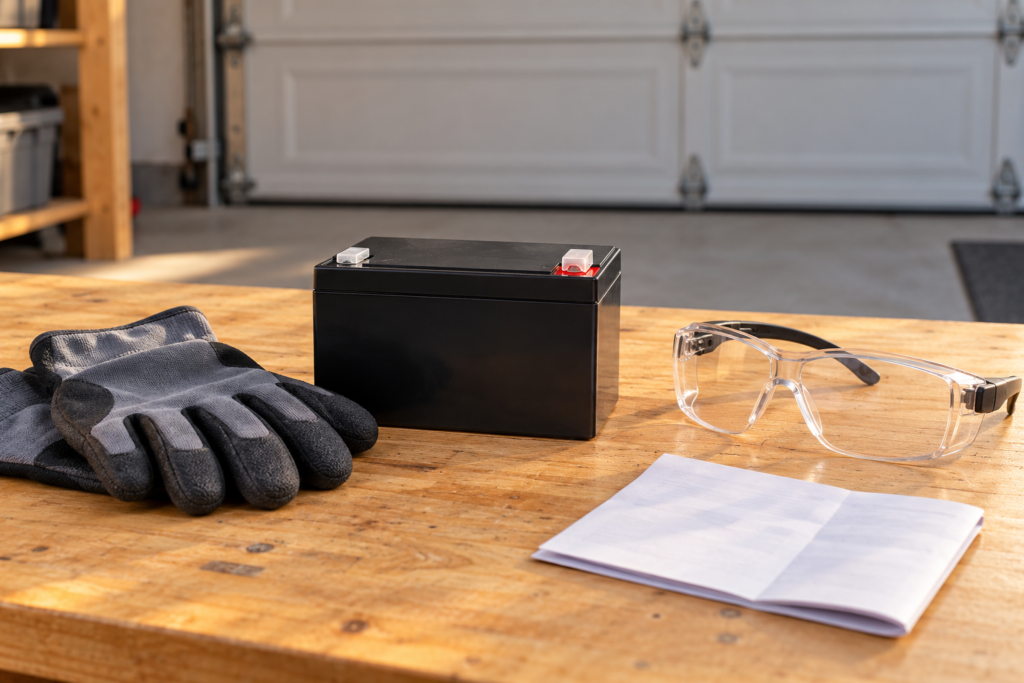
Treat outage operation as its own requirement. Genie’s support guidance explains that battery performance depends on conditions including charge, age and door load, and that operation can be slower while conserving power.[5] A headline cycle count is therefore not a guaranteed number of trips from every battery. Include the correct backup arrangement in the specification rather than treating it as an afterthought.
For a garage beside a sleeping area, you might give quiet operation the highest priority, then compare compliant models with the same access and backup features. For a detached garage, you might start with a suitable complete package and installed cost. These are decision examples, not a rule that one drive is always right for one building.
Maintenance and lifespan: avoid the two misleading promises
The first promise is that belt drive needs no attention. The second is that a chain guarantees a longer service life. Neither statement gives you a maintenance plan or a reliable replacement date for a particular installation. Product condition, usage and the manufacturer’s requirements matter more than a universal year-count attached to a drive label.
Chamberlain’s noise guidance includes checking appropriate drive tension for both chain and belt models.[2] That does not mean the owner should tighten either whenever a loop looks loose. Tension procedures depend on the rail and product; an appearance seen with the door in one position is not a universal adjustment target. If your question is specifically about a loose chain, use our chain-tension guide rather than turning a purchase comparison into a repair instruction.
Read warranty coverage by component. Motor, belt, other parts and labor can have different terms, exclusions and claimant requirements. The model’s actual warranty—not the biggest phrase on its product page—belongs in the comparison. A long component warranty is useful information, but it does not establish the total cost of every future repair.
Can you change a chain opener into a belt opener?
Do not buy a loose belt and assume it will replace the chain on an existing unit. A drive assembly has to match the specified rail, powerhead and associated parts. Similar external dimensions do not prove compatibility, and a parts listing for another model does not establish an approved conversion for yours.
Genie’s replacement instructions for its five-piece rail identify separate chain and belt assemblies and distinguish 7-foot from 8-foot versions. The procedure also involves taking the opener down for work on a bench or floor.[6] That is evidence that this is a defined equipment repair, not a simple material swap performed while the door remains overhead.
For an existing opener, the useful next step is a model-specific parts and repair assessment: is a supported repair available, what is its scope, and how does that compare with a correctly specified new system? Do not disconnect a suspect door or dismantle the overhead unit to answer the shopping question.
Compare the installed result, not two incomplete prices
Request two alternatives against the same written brief: the same door, required height, backup needs and access controls. Each proposal should identify the exact opener and rail configuration, installation work, included controls, removal of old equipment and final safety verification. If one proposal also corrects a door fault, show that work separately so it does not masquerade as a chain-versus-belt price difference.
A useful comparison could be “quieter suitable model with backup and two remotes” against “suitable chain model with the same backup and two remotes.” Adding a camera, keypad or different lighting package to only one side changes the question. There is no need to invent an average price to see why unequal packages produce misleading comparisons.
Before the job is complete, the installer should demonstrate ordinary operation and the manufacturer’s safety checks, explain the controls and leave the relevant instructions. If the original complaint was noise, the result should address that complaint as well as opening and closing once. For unresolved closing symptoms, our door-not-closing guide separates common diagnostic paths.
For help assessing an existing system, Local Garage Experts’ opener service takes calls daily from 6 a.m. to 11 p.m. at (323) 924-8777, with free estimates, free diagnostics and no service call fee. Choose belt when its quiet-operation advantages solve a real need; choose a suitable chain package when its complete specification fits better. In either case, the door and the installation must be right first.
Sources & manuals
Checked October 31, 2026. Named models illustrate specifications, not local availability or a universal recommendation.