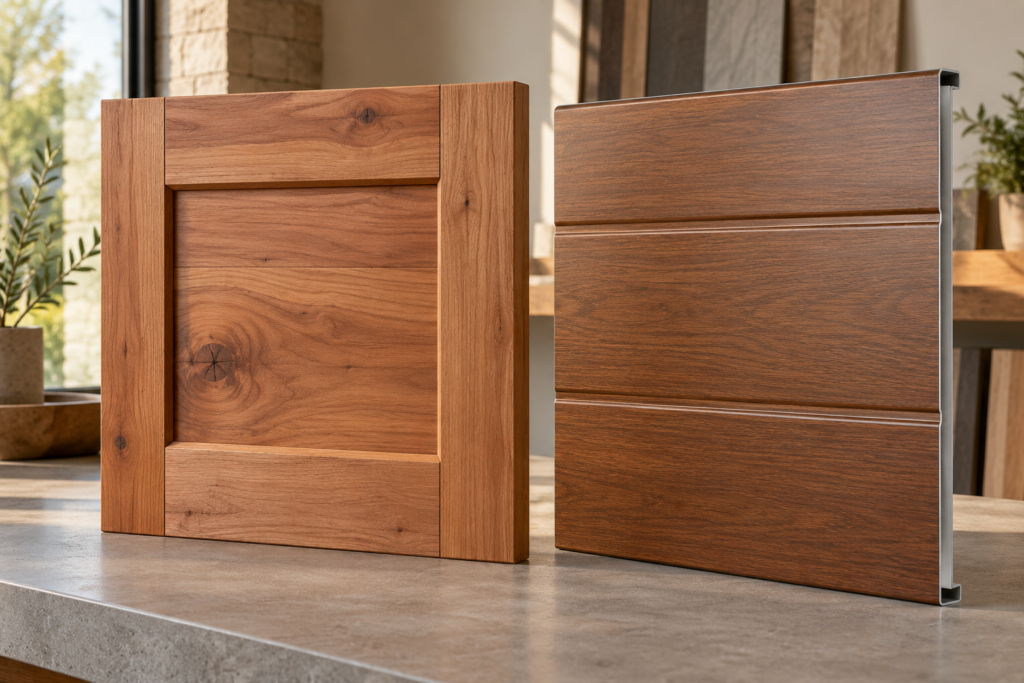
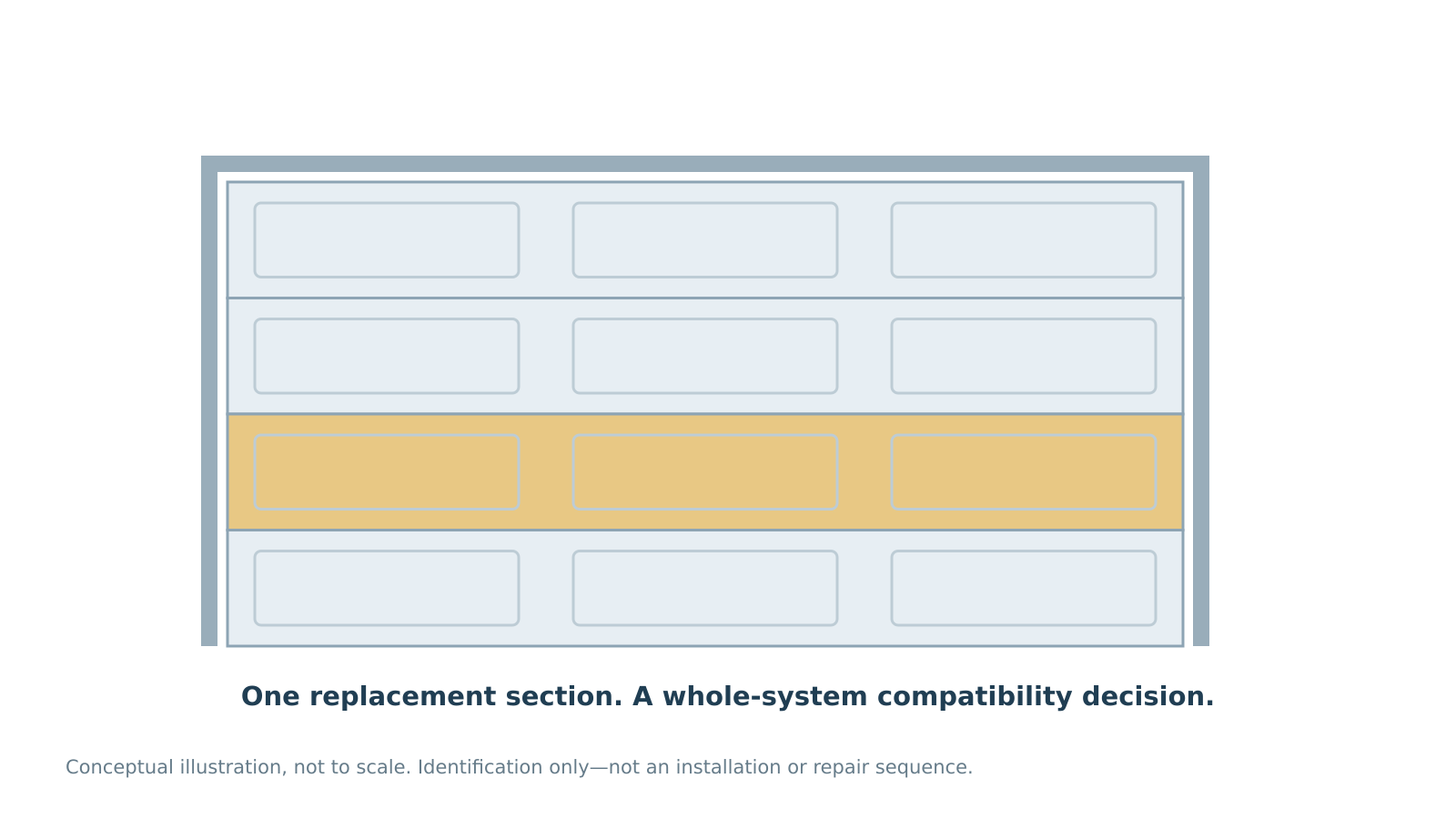
A section spans the door; decorative rectangles are not separate replacement sections.
One complete door section may be replaceable, but the model, joints, dimensions, finish and availability must match. Section replacement requires assessment of the remaining door, not just a similar-looking panel.
A damaged garage door does not always require a completely new door. Sometimes one section can be replaced. The deciding question is not merely whether a new panel is the same width: it must be an appropriate section for the actual door, and the remaining system must be suitable for the proposed repair.
This guide starts after you have recognized damage and stopped any unsafe operation. It helps you understand identification, availability and quote comparisons. It is not a panel-removal procedure. Door sections, spring load and connected hardware make replacement a professional job rather than a simple decorative swap.
First clarify what “one panel” means
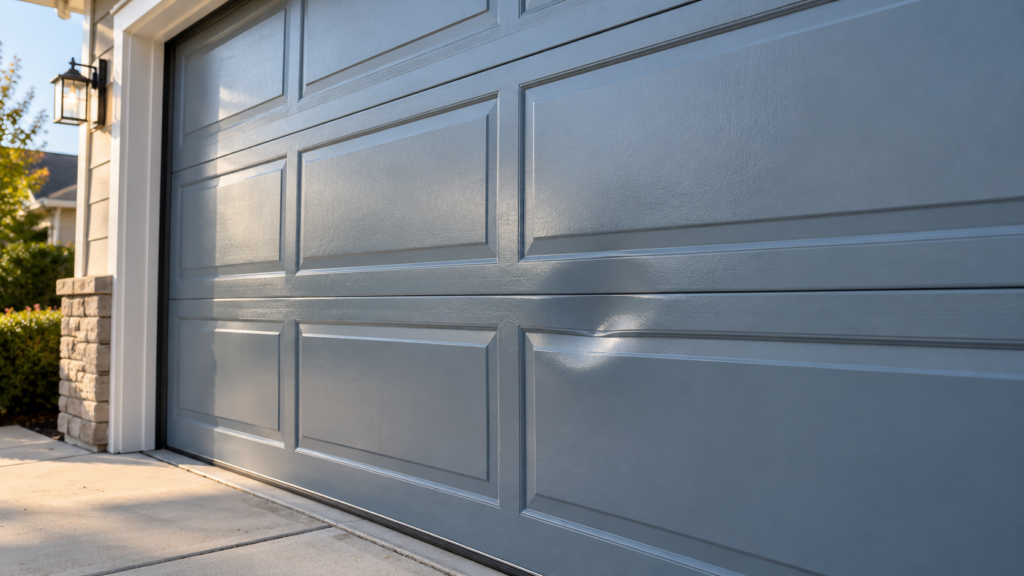
Homeowners sometimes call each embossed rectangle a panel, while a supplier may mean the full horizontal section that spans the door. A decorative pattern, a window insert and a complete section are different things to order. Begin by describing the damaged area in a wide photograph of the stationary door.
Say whether it is the bottom, an intermediate or the top section. Count from the floor if you need a simple reference, but do not assume all sections are the same height or construction. The manufacturer’s documentation and the installer’s measurements should settle the ordering details.
This vocabulary saves an avoidable misunderstanding. A quote for one complete section may sound very different from the price of an insert or trim piece because it covers a different object. Ask the supplier to identify the exact item in writing before comparing prices.
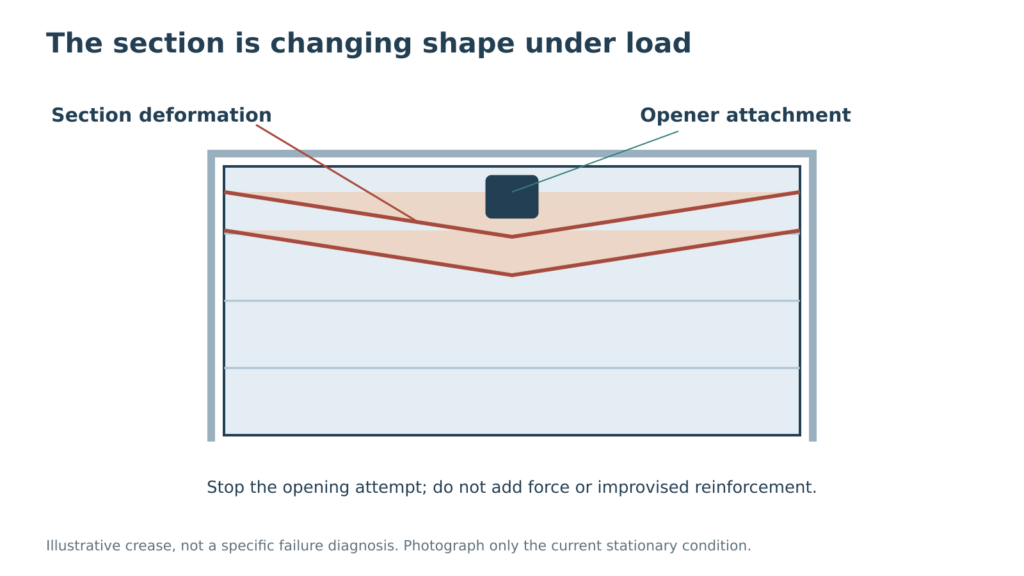
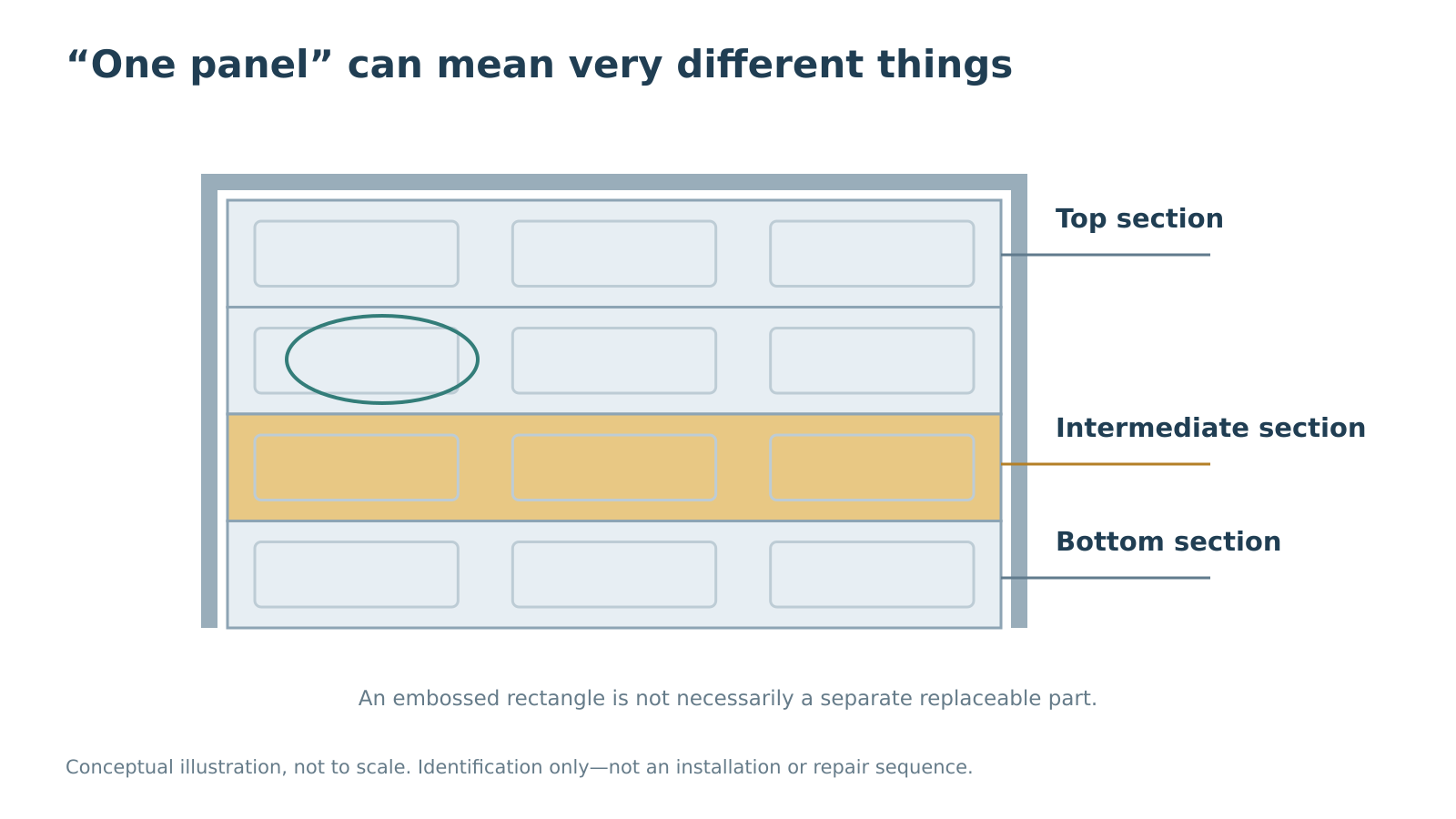 Select the diagram to view it at full size.
Identify the door before searching for a matching section
Start with the door manufacturer, model and serial information from existing documents or a readily accessible label. The opener’s model is not a door model. If your paperwork lists a motor replacement but says nothing about the door, it may not answer the section-identification question.
Clopay’s section replacement guidance asks for the door model, section size, color and position. Those are useful organizing categories even when another manufacturer’s procedure differs. Let the relevant dealer confirm the details for your door rather than copying dimensions from a similar neighbor’s installation.
Equal width does not establish interchangeability
The replacement has to work as part of a sectional assembly. Its relationship to adjoining sections, hardware and the door’s construction matters as well as its visible face. A used section with the right width and similar rectangles is not proven compatible by those two facts.
Matching one dimension is not a complete comparison. Exact section profiles and attachment details must come from the manufacturer’s documentation and professional assessment; do not reproduce a joint from a diagram.
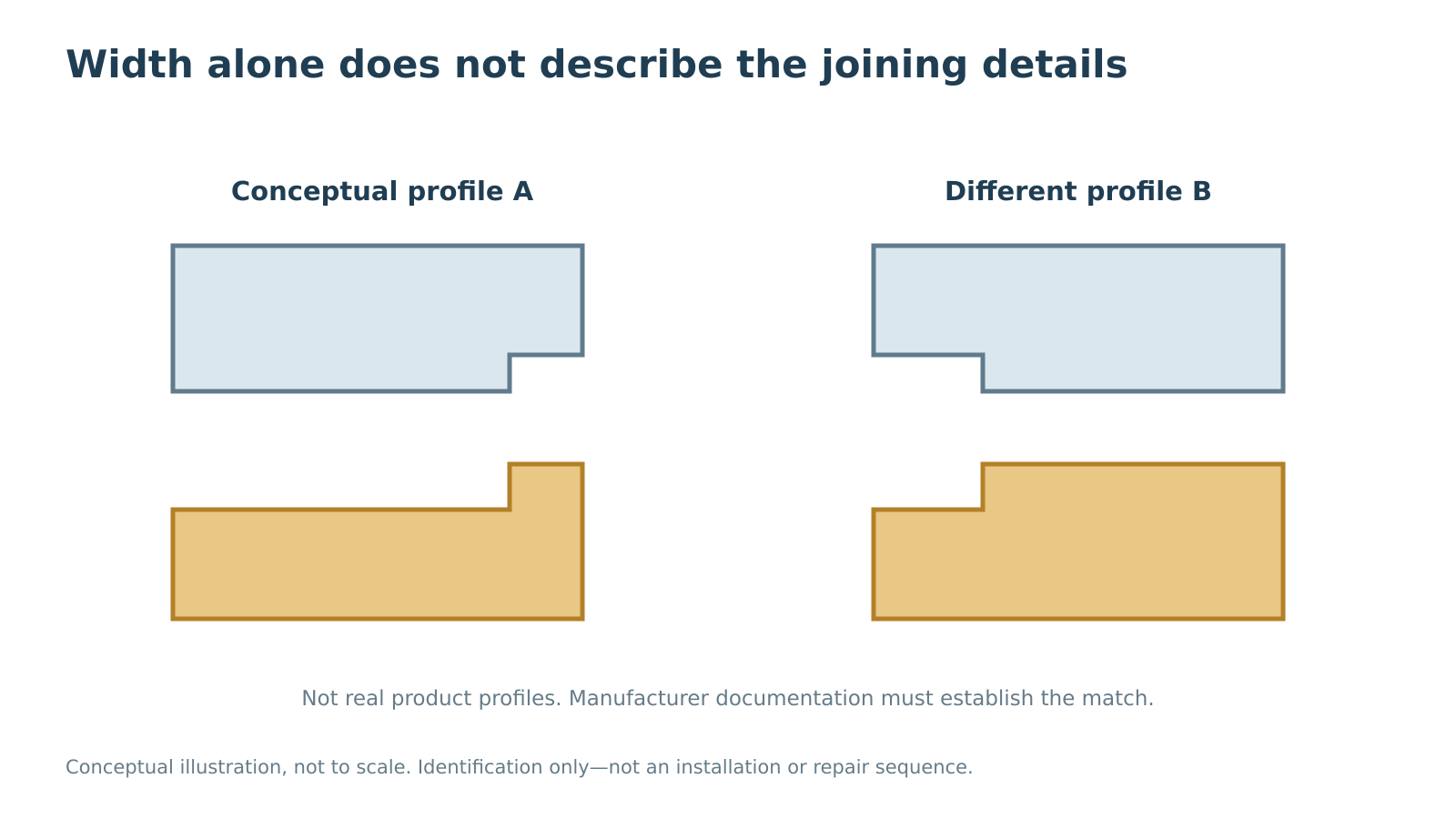 Select the diagram to view it at full size.
Availability is a separate question from repairability
A section may be technically replaceable but unavailable in the needed model or configuration. Clopay’s FAQ ties replacement-section availability to the door model still being manufactured. Do not turn a generic statement that “panels are available” into a promise for a particular discontinued door.
Ask for confirmation of the part, ordering route and expected lead time before making plans around the repair. Clarify whether the quoted item is new, an approved substitute or something else. If availability is uncertain, the estimate should say so rather than present an unconfirmed section as ready to install.
Avoid treating a listing photograph as inventory confirmation. A product page can remain online even when a particular color, size or configuration needs special ordering. Ask the supplier to confirm the exact version you require.
Expect a finish discussion—not a guaranteed invisible repair
A new section can be the specified color and still look different from the surrounding door. Clopay notes that weathering can alter the original finish over time. Compare the repair objective with the appearance you will accept: restored function and a perfect visual match are not automatically the same outcome.
Discuss the expected difference in normal daylight before approving the order. A photograph viewed on a phone is not a controlled color comparison. If refinishing is proposed to improve the match, treat it as a separate, material-specific scope with its own preparation and manufacturer restrictions.
Do not assume that painting every section is required or that it will always be permitted. The useful question is what options apply to this finish and what each would involve. Keep the answer separate from the mechanical compatibility decision.
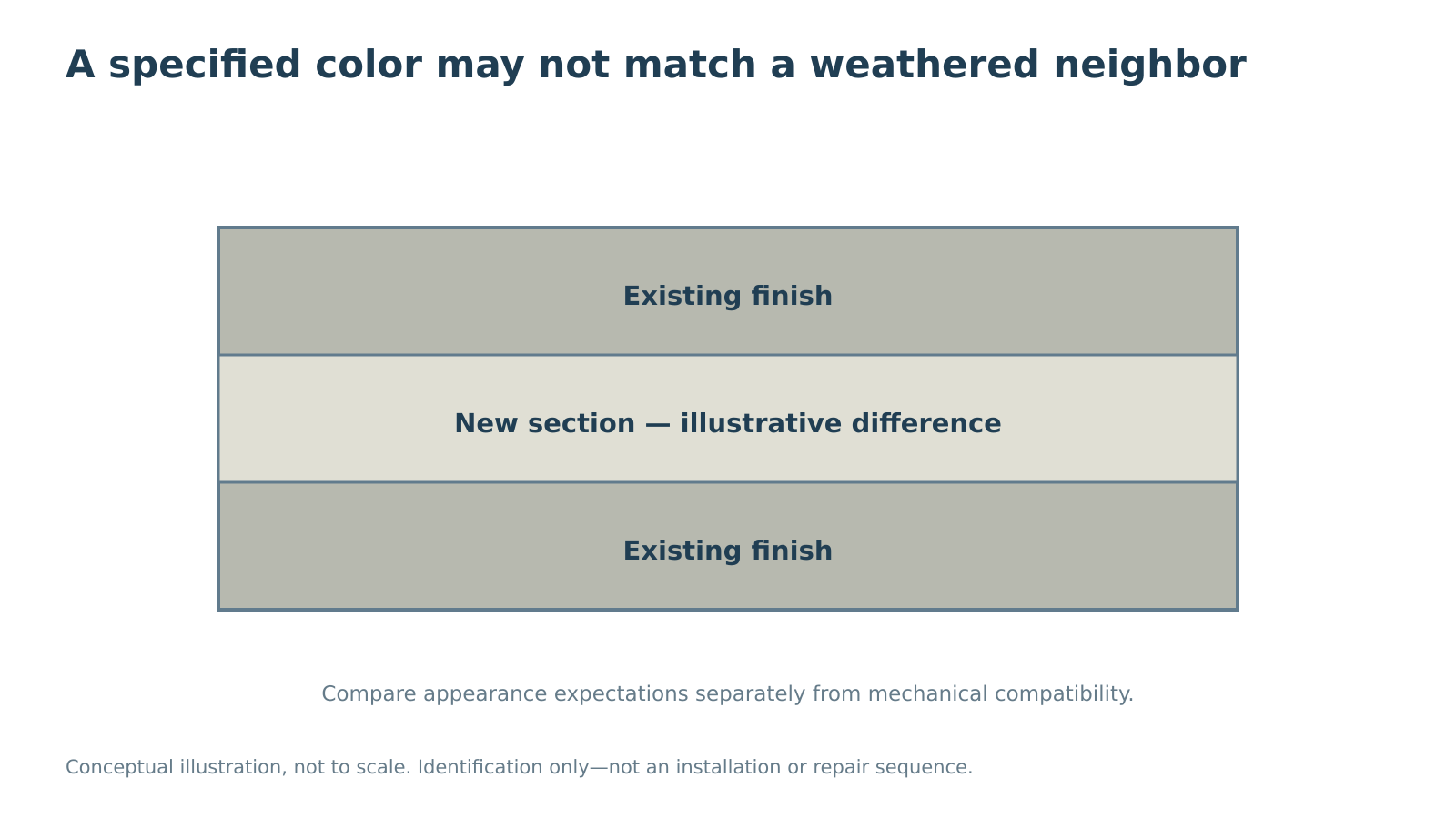 Select the diagram to view it at full size.
Compare a section repair with a full-door proposal fairly
A complete comparison begins with the identified damage. If the problem is confined to a compatible replaceable section, ask what supports the repair option. If the recommendation is a whole door, ask what makes that preferable: unavailable parts, damage elsewhere, condition of the remaining assembly or another documented reason.
Request comparable scopes. A section-only material price is not equivalent to an installed repair with assessment and testing. Likewise, a whole-door proposal should explain which components are included rather than relying on a headline price. This article does not invent a local price range or use an arbitrary door age as an automatic replacement rule.
Ask how the proposed change will be checked as part of the complete operating system. A replacement section should not be treated as independent of the rest of the door. The installer should explain any necessary related work and identify optional items separately from required repairs.
Prepare an ordering record that prevents mistakes
Keep the door identity, section position, confirmed dimensions, finish specification and supplier’s written compatibility confirmation together. Attach the estimate and any photographs used to select the part. If a drawing is supplied, make sure it describes the actual ordered configuration rather than a generic product family.
Before the appointment, explain the door’s current position and whether access is restricted. Do not move a damaged door to clear the garage or remove its hardware to save time. Clear only the accessible area that can be reached without going under an unstable door.
At handover, retain the installed part description and the explanation of what was checked. If the repair includes a finish difference or a limitation that was agreed in advance, record that too. A clear paper trail is useful for future maintenance without needing to remember every detail of the original conversation.
Separate urgent access from the ordering decision
A damaged door may need to be secured or left out of use while a compatible section is identified. Ask the service provider what can safely be done about the present condition and what depends on the replacement part arriving. Those are related but separate decisions.
Do not accept an unverified substitute simply because the garage is inconvenient to access. Explain the access problem when booking so it can be considered without treating compatibility as optional. If the repair has a lead time, obtain a clear explanation of the interim condition and any restrictions on use. Avoid moving the door yourself to create a temporary solution.
When a delivery arrives, keep the product label and any documented differences available for the installer. A mismatch should be resolved before installation, not hidden by a finish change or an improvised attachment. The ordering record is useful precisely because it gives everyone the same specification to check.
If your first question is whether the dent is serious
Use the separate dent and impact assessment guide before assuming a new section is the answer. A surface mark, distorted section joint and damage around a hardware attachment require different questions. Photographs alone may not settle which condition you have.
For a section-replacement or whole-door assessment, see garage door installation and replacement. Call Local Garage Experts at (323) 924-8777, daily from 6 a.m. to 11 p.m. Free estimates, free diagnostics and no service call fee are available. The goal is a confirmed compatible repair—not merely a panel that looks close in a catalog.
Sources & manuals
Use the documentation for the actual installed model..