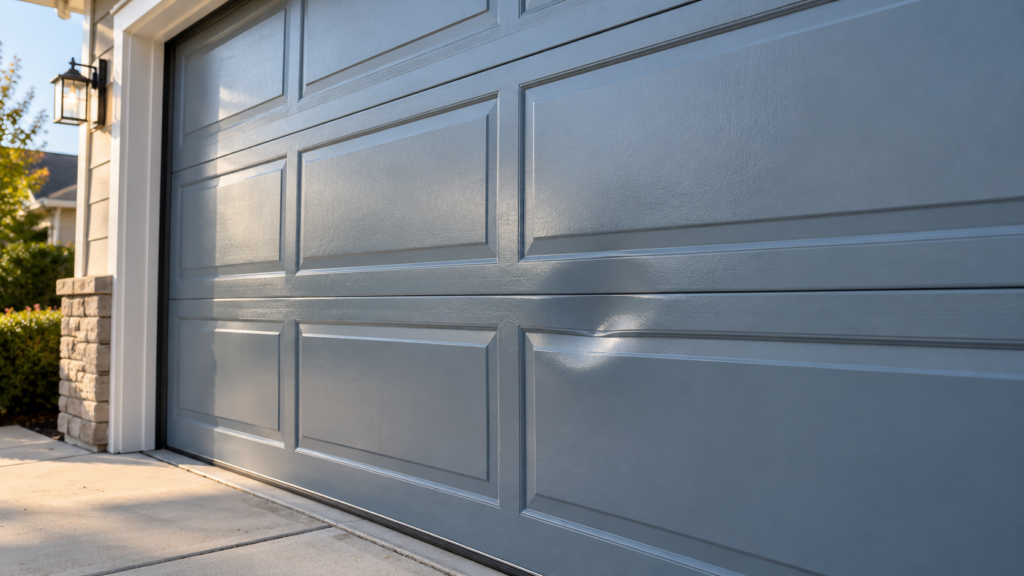
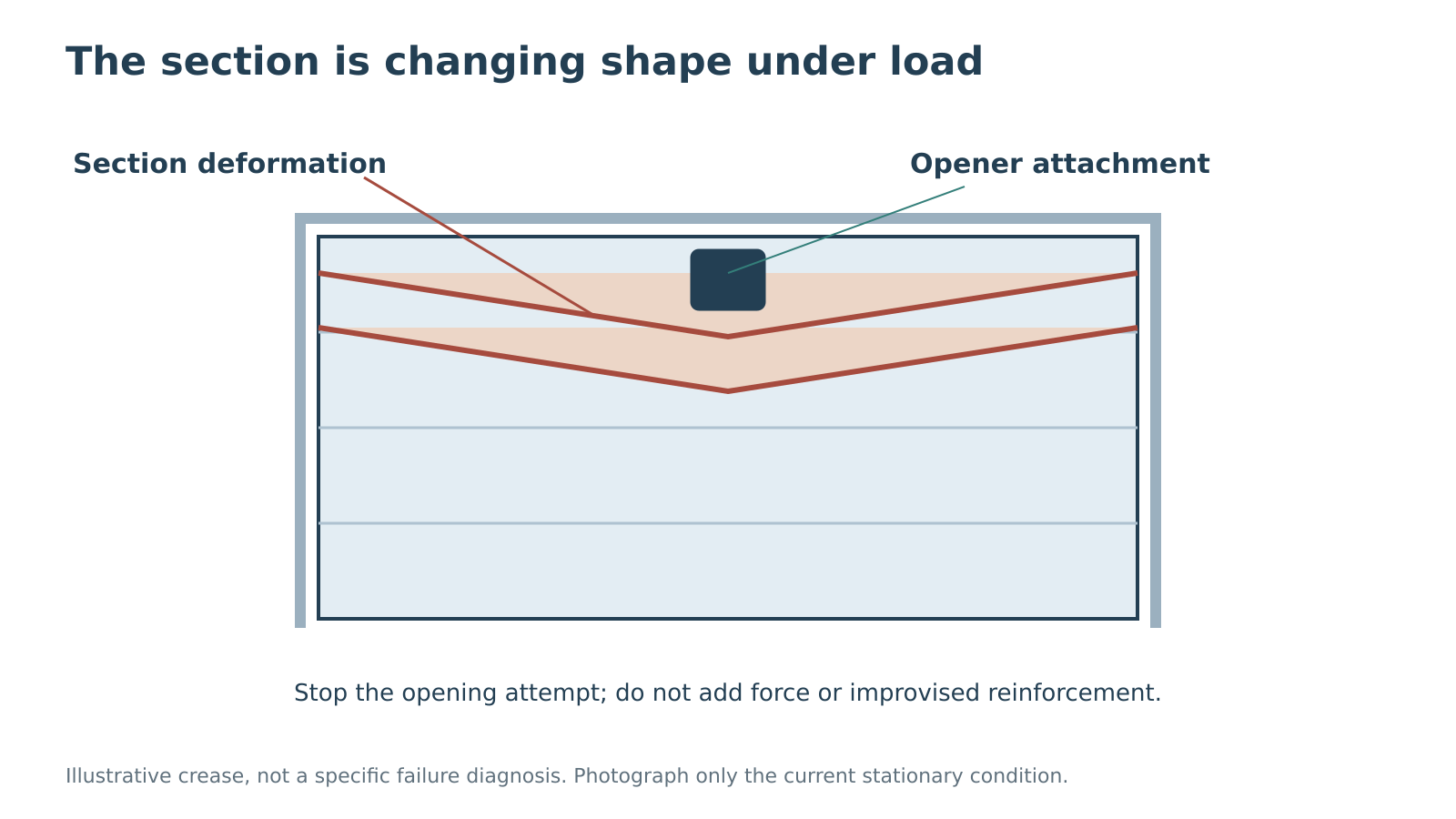
Section deformation during operation is different from normal articulation at the joints. The cause still needs assessment.
A panel that buckles during opening is more than a cosmetic question. Stop operating the door and have its sections, attachments and movement assessed; a stronger opener is not the repair.
This guide concerns a section that buckles during operation. It is not a dent-removal tutorial, a guide to seasonal thermal bow or a prescription for adding reinforcement. The immediate goal is to avoid further movement and communicate what happened without recreating it.
 Select the diagram to view it at full size.
Make sure you are describing the door section
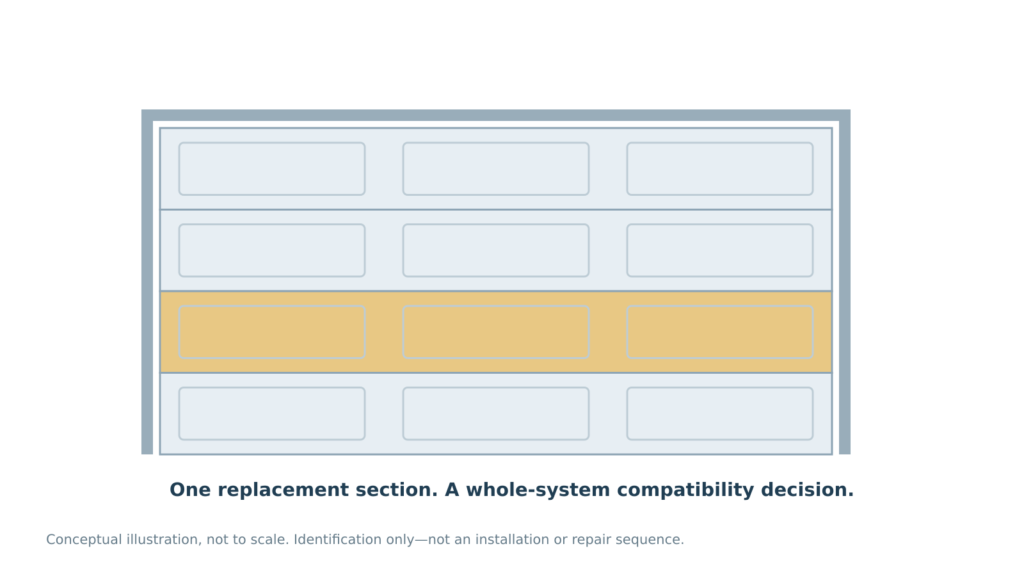
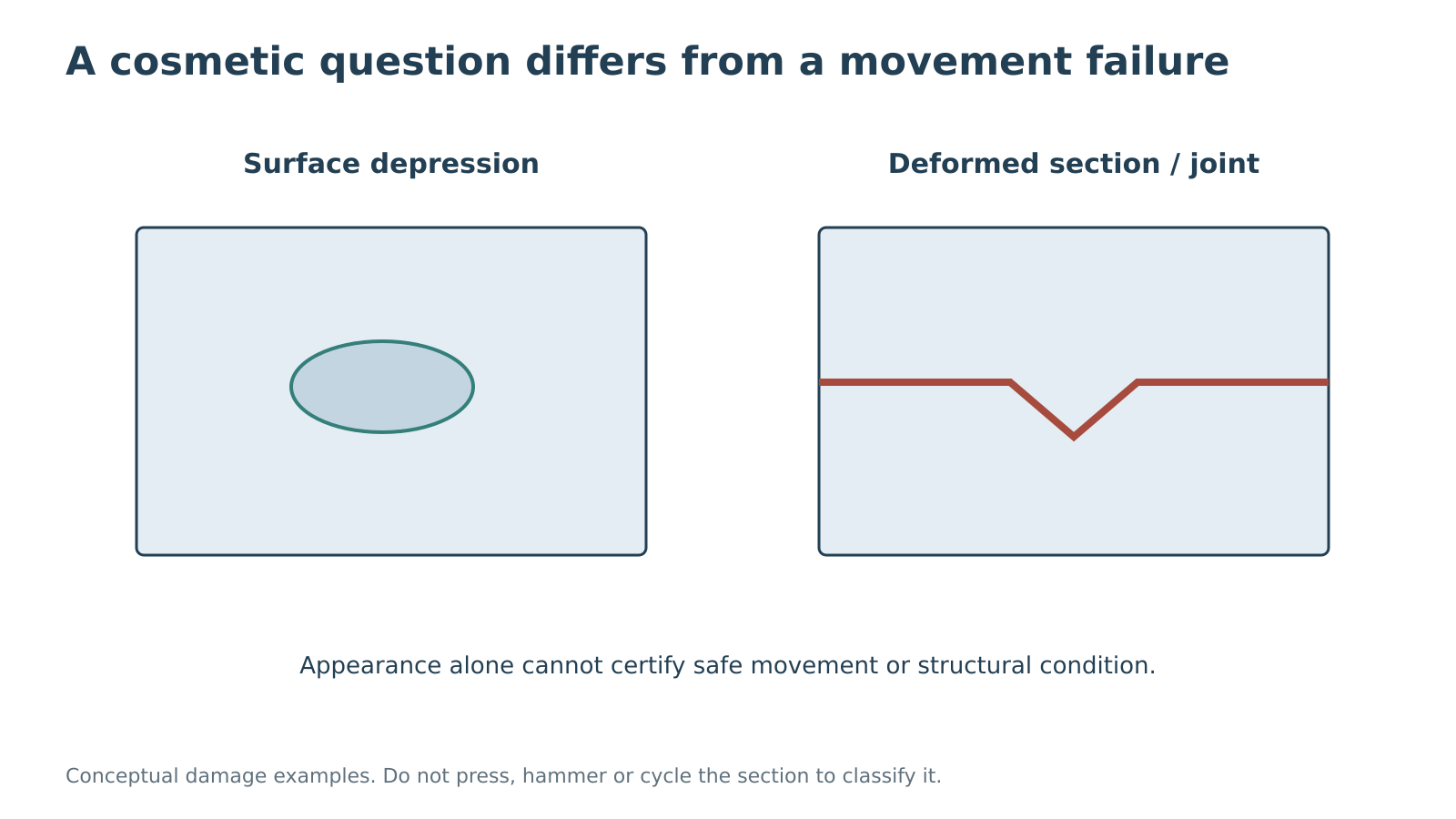
A sectional garage door is assembled from horizontal sections connected by hinges. Those joints allow the sections to change angle as the door follows the tracks. Normal articulation at a joint is different from a section face creasing, an attachment pulling through or a panel visibly distorting under the opener’s load.
Sometimes a homeowner sees the opener rail flex and calls it a buckling door. The rail above the center of the garage and the door section below it are different components. Describe which part moved abnormally; a wide stationary photograph can clarify the location without asking you to diagnose the cause.
A localized static dent also differs from deformation that appeared or worsened during an operating attempt. For a surface mark without abnormal movement, see the dented-door assessment guide. A section that changes shape under operation deserves a mechanical assessment even if the visible crease seems small afterward.
Record the event, then leave the door stationary
Note whether the deformation occurred as opening began, at a particular height or after the door met resistance. If you heard a pop, scrape or other sound, record it as a separate observation rather than treating it as proof of a specific failure.
State the door’s present position. If it is partly open, keep people away from the opening and do not pull the emergency-release cord. If it is closed, leave it closed. Do not try a manual lift to determine whether the motor is the problem when the section has already shown abnormal deformation.
If a vehicle is trapped or the opening cannot be secured, include that practical issue in the service request. It helps plan access, but it is not a reason to push through another cycle. Use a separate normal entrance if available and prevent other occupants from activating the door.
Do not remove any material, loosen an attachment or add an improvised brace while waiting. Those changes can alter the load path and make the original condition harder to assess. A stationary photograph and an honest history are enough to start the diagnosis.
 Select the diagram to view it at full size.
Why the opener attachment matters—but may not be the only issue
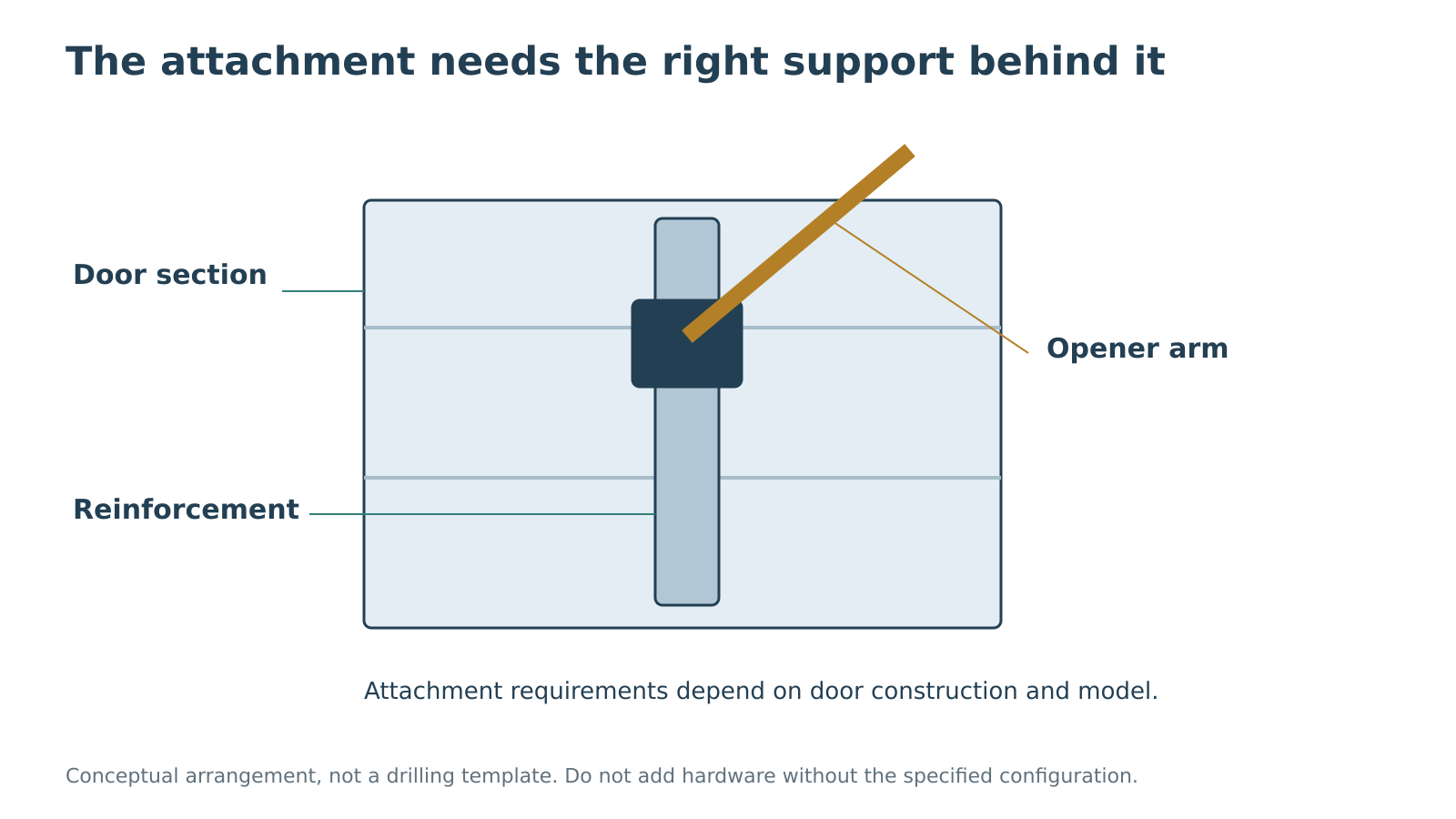
The opener arm transfers movement through its connection to the door. That connection needs the reinforcement specified for the door’s construction and model. Clopay’s safety guidance specifically calls attention to appropriate reinforcement when an automatic opener is used.
A failure near this area therefore raises questions about the attachment, supporting material and specified reinforcement. It does not prove that adding one more metal strip is sufficient. The surrounding section may be damaged, and resistance elsewhere in the system may also need investigation.
Our garage door bracket guide separates the opener connection from bottom cable brackets, track supports and spring-connected hardware. That distinction matters when explaining where the buckling occurred. The word “bracket” alone does not identify the affected load path or its risks.
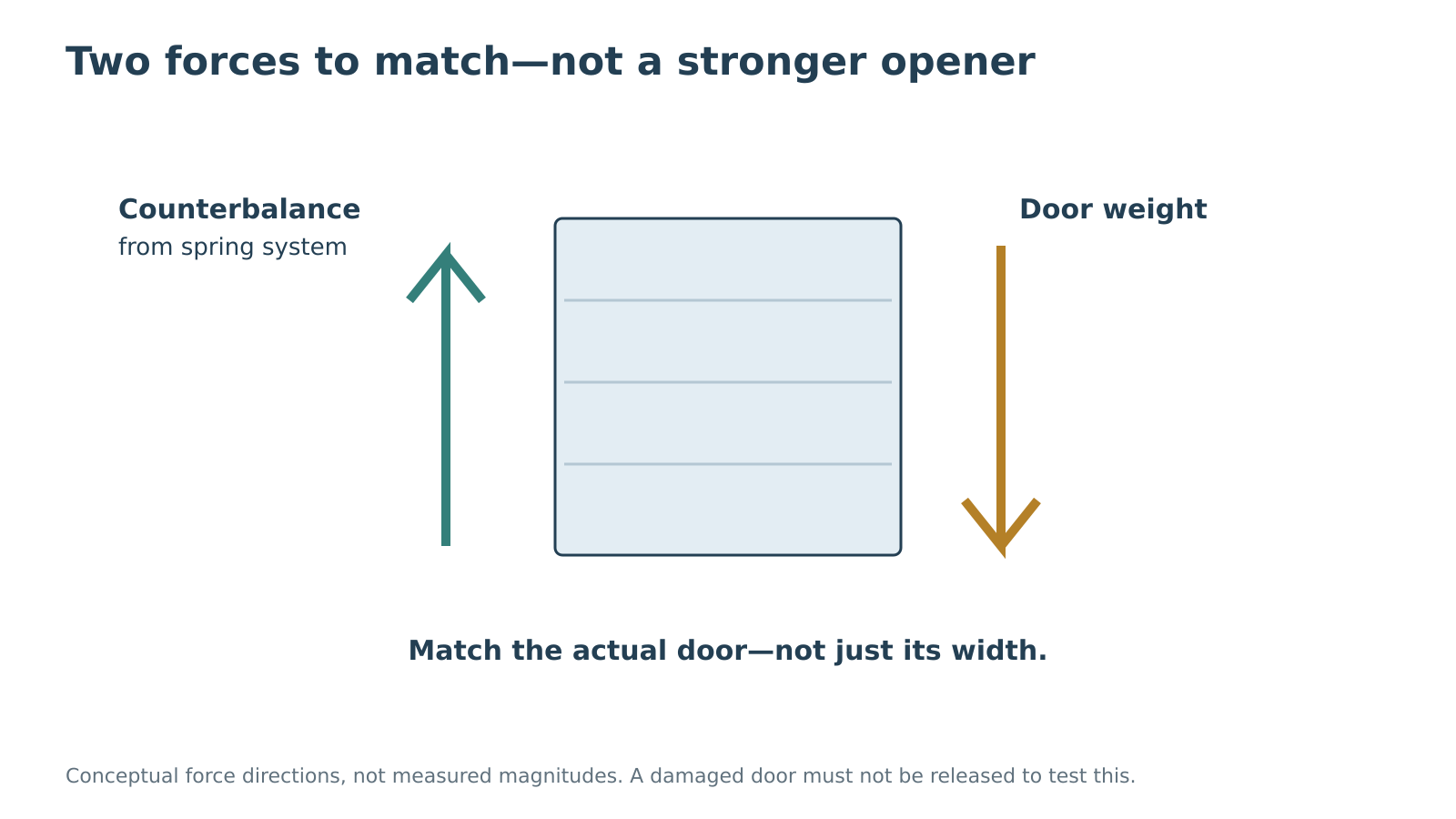
A stronger opener is not a repair for a deforming section. The door must be mechanically sound and correctly counterbalanced before the opener can perform its intended job. Increasing available force can mask resistance rather than establish why the structure is changing shape.
Look for context, not a single dramatic close-up
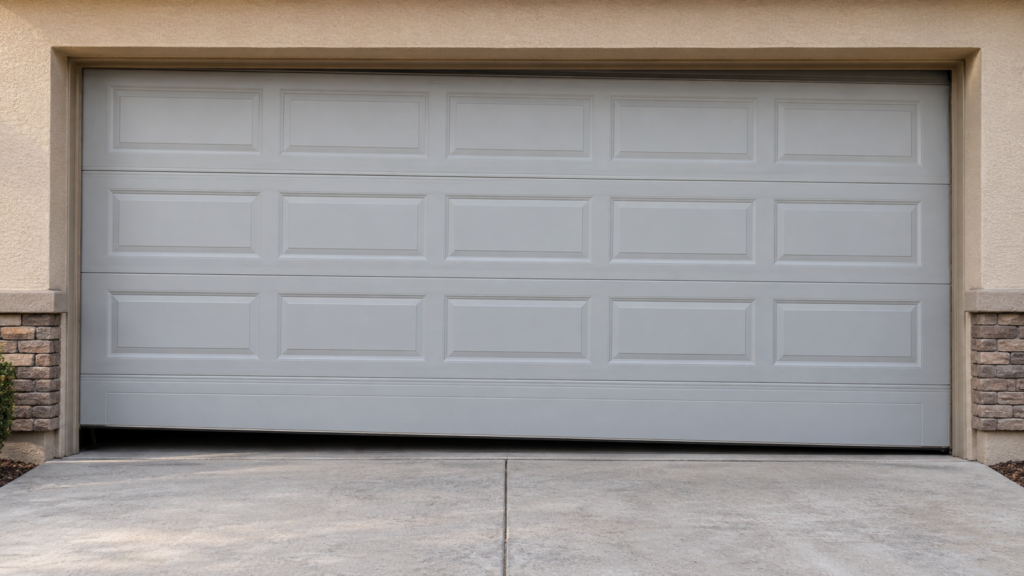
From a safe position outside the opening, take a wide view showing the stationary door and the affected section. A closer zoomed view can show a visible crease, attachment concern or irregular joint. Do not stand under a partly open door or climb beside it for a better angle.
Include enough surrounding material to show whether the deformation is near an opener attachment, hinge, section edge or broad panel face. A tight crop of a crease may hide the relationship that makes it relevant. If the location cannot be photographed safely, describe it in words.
Existing photographs from before the event can also help show what changed. Do not edit the new image to make the defect look clearer by altering the panel shape. A simple annotation pointing to the concern is enough; preserve the original image as well.
Report recent impacts, section repairs, opener changes, added insulation or reinforcement and any previous difficulty moving the door. These facts do not automatically explain the failure, but they help the technician assess the actual configuration rather than an assumed original installation.
The assessment needs two connected answers
The first answer is about the section: what material or attachment is damaged, and is it suitable for continued service? Clopay distinguishes minor surface work from major damage that needs professional help. The correct boundary depends on the door material and construction; a method appropriate for one product is not automatically appropriate for another.
The second answer is about movement: what allowed or caused the abnormal loading? The professional assessment may consider the door’s travel, rollers, hinges, track system, counterbalance and opener attachment. This is not a homeowner disassembly checklist. It explains why a section repair should not ignore the rest of the operating system.
Sometimes the cause can be established clearly; sometimes the evidence supports only a limited conclusion. Ask the technician to distinguish the observed damage from a suspected contributing condition. A repair proposal should not claim certainty merely because a common explanation sounds plausible.
For example, “the section is creased around the attachment” identifies damage. “The opener is too strong” is a causal conclusion that requires more support. Keep those levels of explanation separate when comparing recommendations.
 Select the diagram to view it at full size.
Reinforcement, section replacement or a new door?
No single option fits every buckled section. A manufacturer-approved reinforcement arrangement may be relevant, but it must be suitable for the actual door and the condition of the supporting material. An improvised strut does not automatically restore a damaged panel or correct resistance elsewhere.
If a section replacement is proposed, ask how compatibility will be established. The replacement must work with the existing construction and hardware, not merely resemble the exterior pattern. Our single-panel replacement guide explains the identification questions without turning the task into a removal procedure.
If a complete door replacement is recommended, ask why the available repair options are unsuitable. The answer may involve the extent of damage, component availability or the condition of the wider assembly. It should be specific to the door rather than an unsupported rule that every crease requires a new installation.
Changes in door weight or configuration also belong in the counterbalance assessment. Do not assume that the existing springs remain appropriate after material or section changes. Genie’s safety guidance emphasizes that door modifications must be considered with the spring system.
Judge the outcome by more than a flatter panel
The repair explanation should connect the visible damage, the operating issue and the completed work. Ask what was restored or replaced, what related components were assessed and whether any limitations remain. Keep that description with the door’s model information and service records.
Before normal use resumes, the door should be mechanically sound and travel as intended, followed by the opener’s prescribed safety verification. A panel that looks flatter in a photograph is not sufficient evidence that the system is ready. Nor is a single successful opening a substitute for the required checks.
For a section or complete-door decision, see garage door installation and replacement; for a separately established operator fault, see opener service. The immediate response to buckling remains the same: stop the attempt, preserve the stationary evidence and have the structure and movement assessed together.