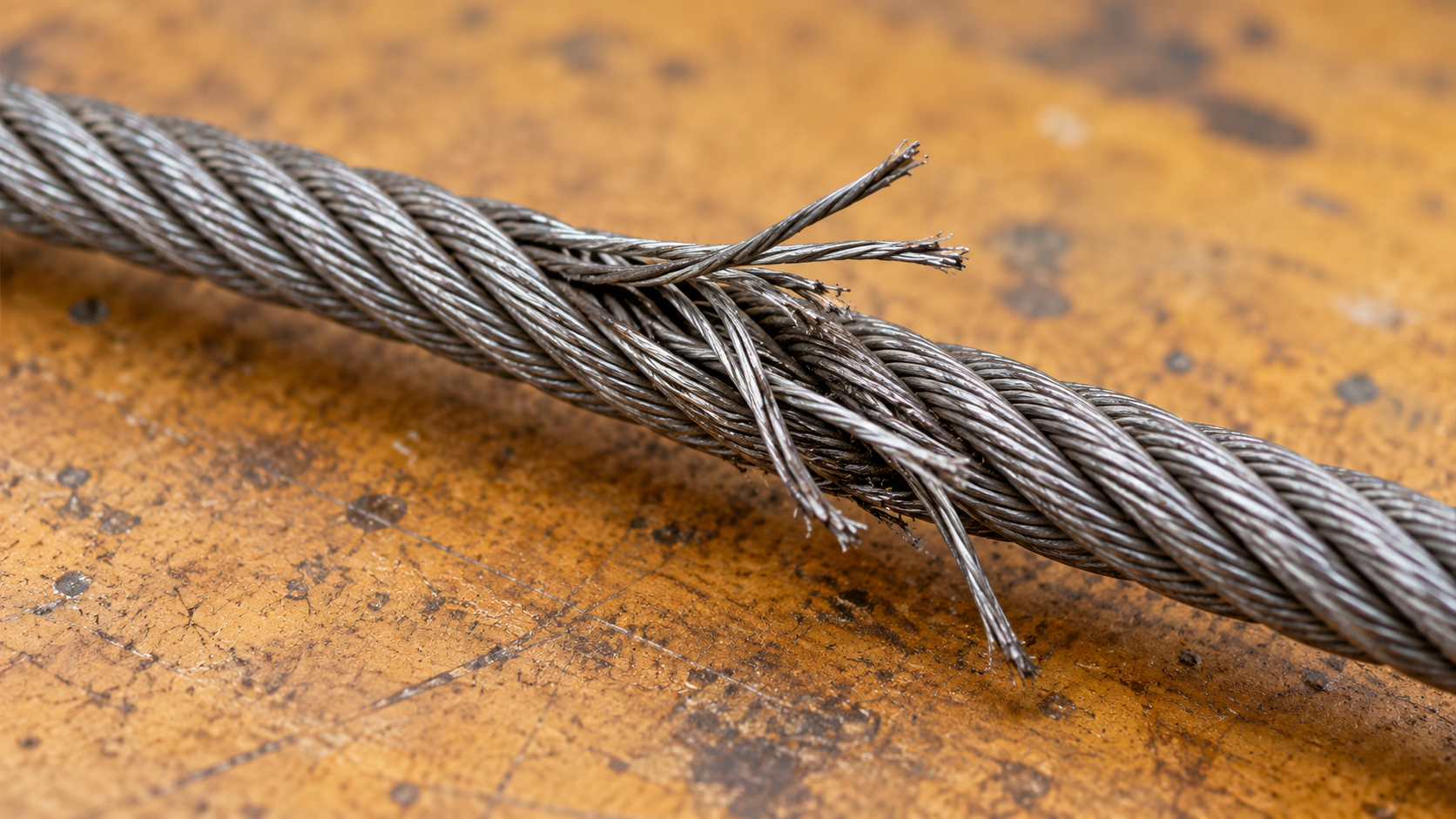
Visible lift-cable damage requires stopping use and arranging professional assessment.
Frayed or broken lift cables are a reason to stop using the door and request professional service. Keep clear and report what is visible without touching the cable or moving the door for a better view.
The useful question is not just “How do I replace this cable?” It is “What is the door doing now, what part appears damaged, and what must be checked before it moves again?” A lift cable works within a counterbalance system. Replacing a visible failed part without establishing why it failed can leave the underlying problem unresolved.
Describe what you see without touching it
Slack means a cable no longer appears taut in the visible section. It may hang in a loop or lie away from its expected path. That observation does not tell you whether the cable itself broke, another component failed, or the door became uneven. Do not assume that winding the loose length back onto a drum is the complete answer.
A visible break is a separation in the cable, but the exact extent of damage may be hidden. You do not need to locate both ends to justify service. Avoid reaching behind tracks, climbing beside the spring system or moving the door to expose the missing section.
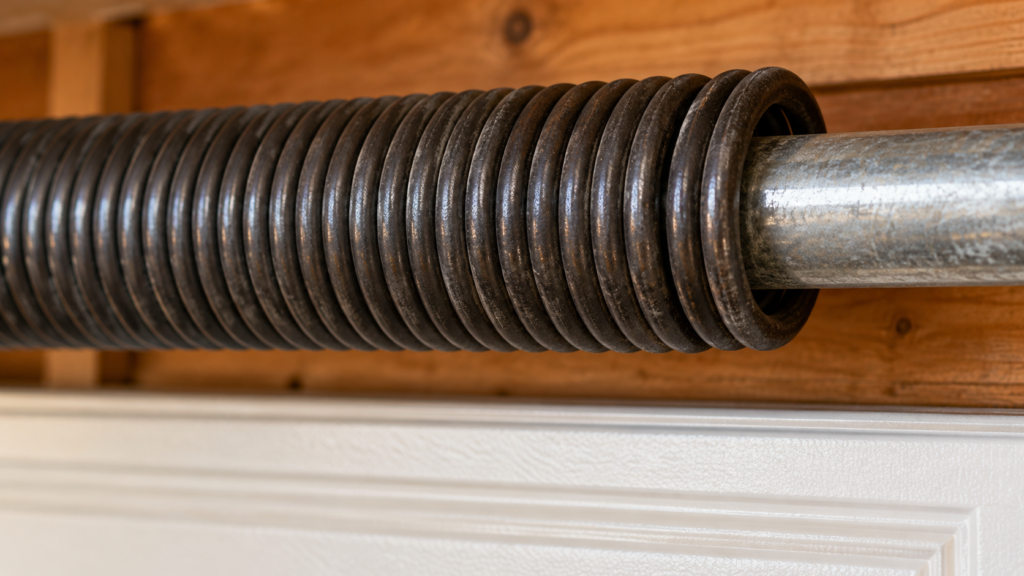
In its maintenance guidance, Clopay identifies worn or broken cables as a condition for professional attention. Genie similarly treats springs, cables and their associated hardware as a high-tension system. These are not ordinary loose cords that can be safely repositioned because the motor is switched off.
 Select the diagram to view it at full size.
Confirm which kind of cable you mean
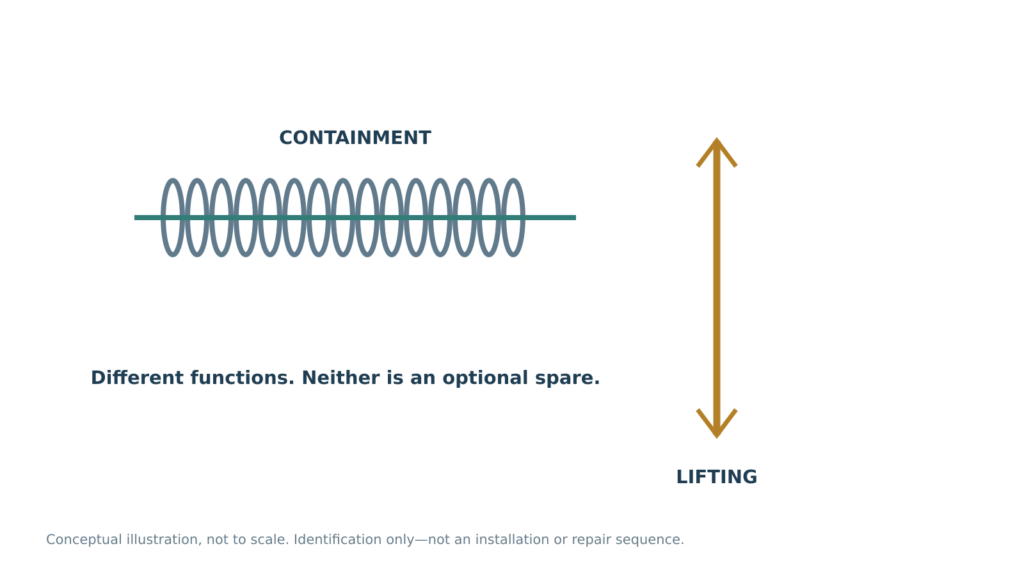
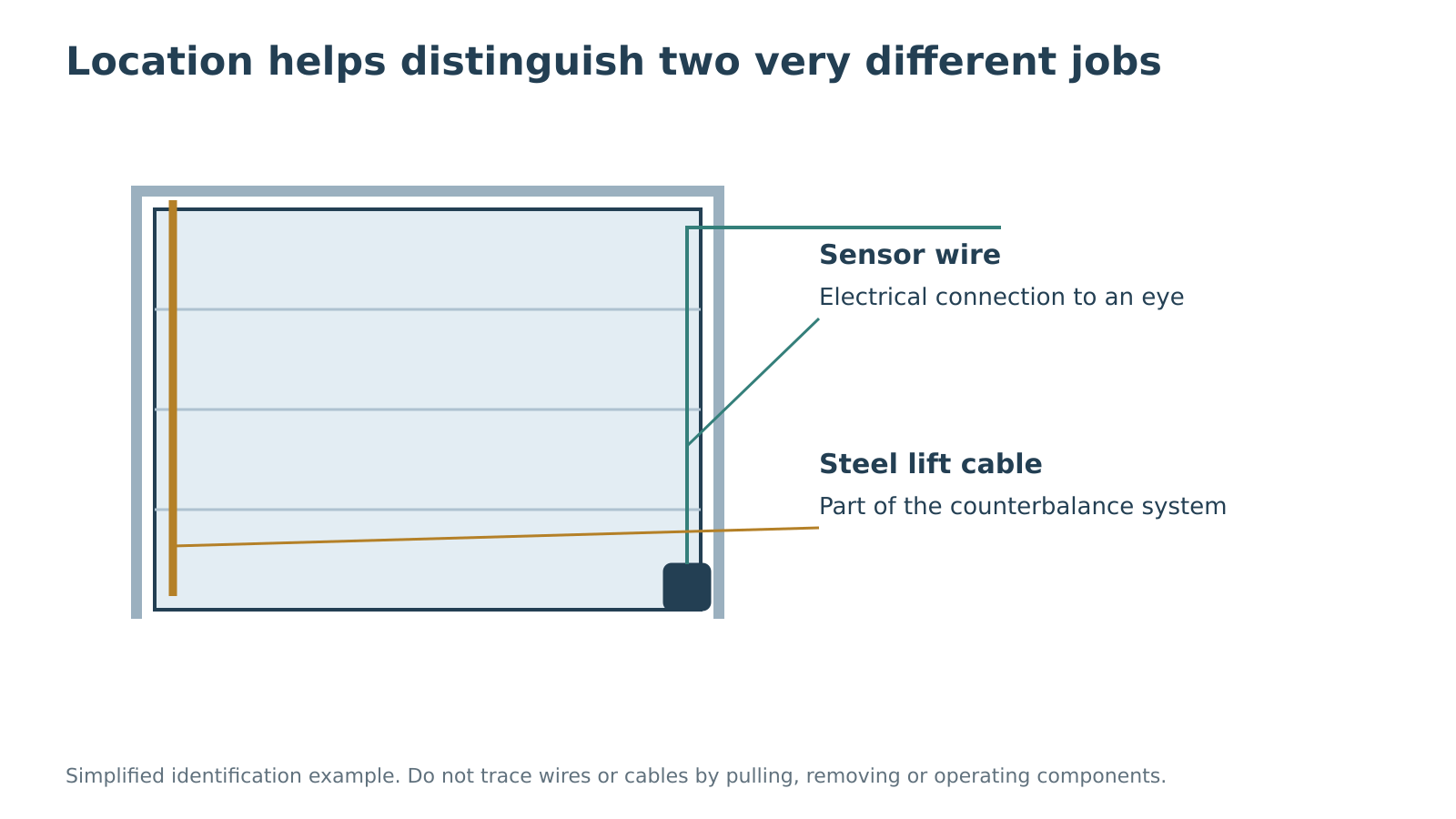
A thin electrical wire leading to a photo-eye near the floor has a different job from a steel lift cable beside the door. Some extension-spring systems also have a separate containment or safety cable associated with the spring. A damaged containment cable still deserves professional attention, but it should not be described as a broken lift cable without identification.
You can describe the location instead of guessing the name: “A steel cable hangs on the left side beside the track,” or “The thin wire to the floor-level sensor is cut.” Those descriptions direct the assessment without asking you to trace the entire installation. For the terminology distinction, see our guide to safety cables and lift cables.
Do not use a cable’s apparent diameter, color or length as a replacement specification. Correct selection depends on the installed door and counterbalance arrangement. A package labeled for a similar-size door does not establish compatibility with your system.
 Select the diagram to view it at full size.
The door’s current position changes the access problem
If the door is closed, leave it closed. Do not use the opener to find out whether the remaining hardware can still lift it. A car being inside does not make a trial opening safer. Tell the service provider that vehicle access is blocked so the situation can be planned before arrival.
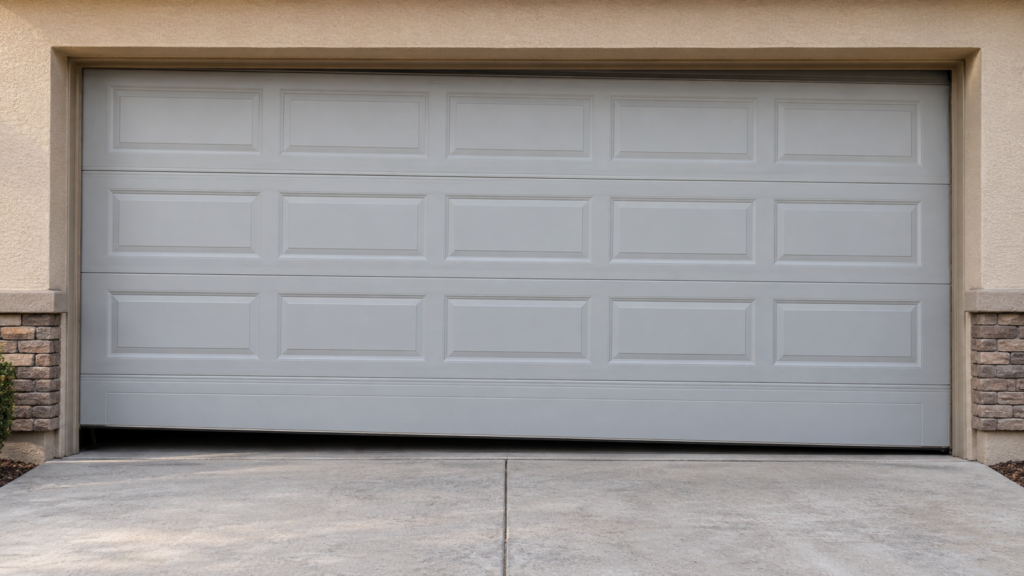
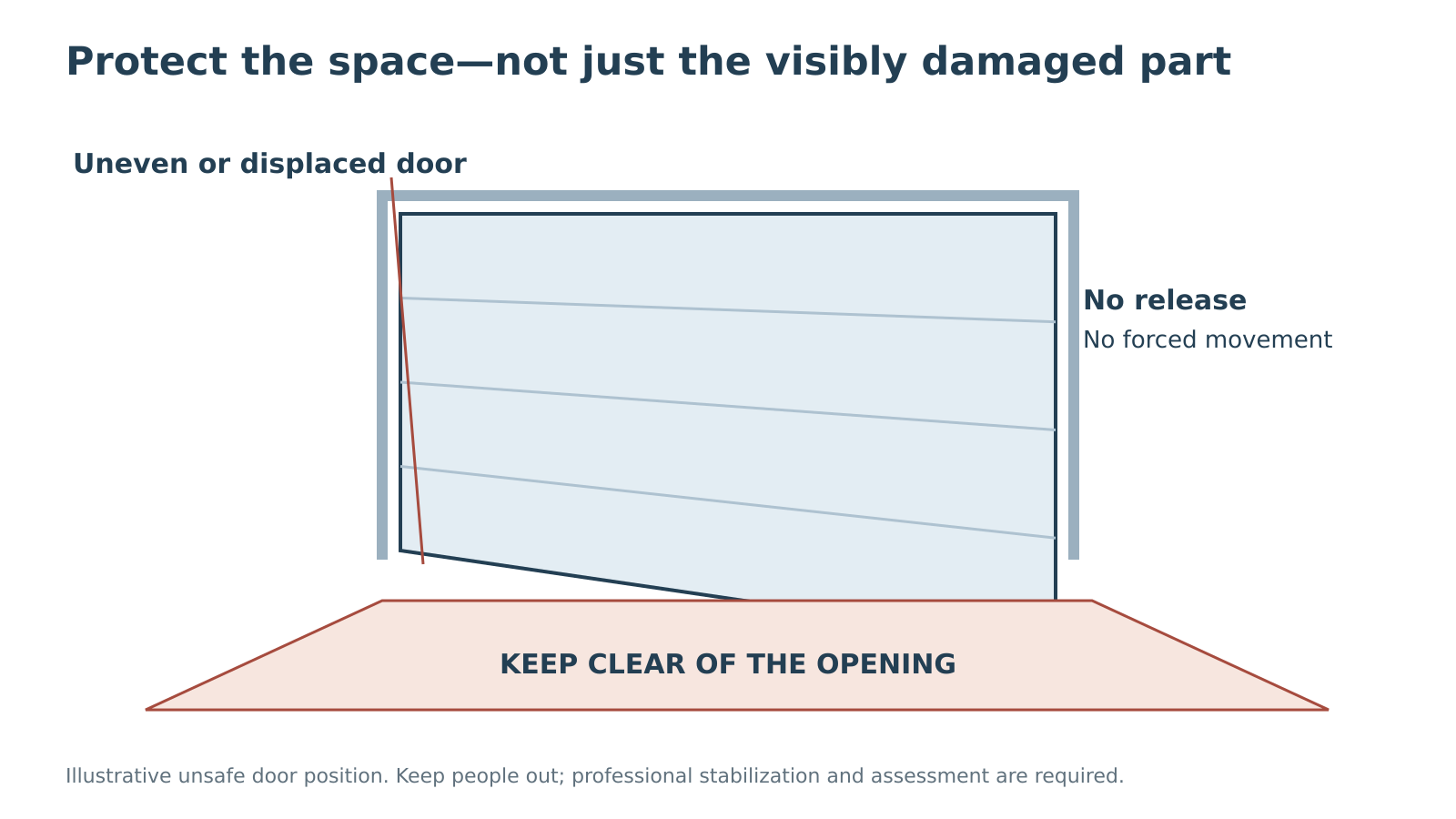
If the door is partly open or crooked, keep the opening clear on both sides. Do not pass beneath it, hold a corner up or enlist another person to support the opposite side. An uneven door may be relying on components that are already stressed or displaced. People should not become temporary supports.
If the door is fully open, its height can make the problem seem less urgent because the vehicle route looks clear. The safe response is still to avoid the opening and not release the trolley. A motor connection is not a substitute for a sound door system, and disconnecting it is not a neutral diagnostic step on a suspect door.
Use another normal pedestrian route if one is available. Keep remotes and app controls from being used accidentally, and tell other occupants not to operate the door. Do not reach into an unsafe area merely to unplug an opener. Turning off power, when safely accessible, prevents powered commands; it does not remove spring tension or stabilize the door.
 Select the diagram to view it at full size.
Build a short, useful service report
Begin with the current position and whether the door looks level. Then describe the cable condition and side. Add when you first noticed it: after a loud event, during ordinary travel, after an impact or while the door was stationary. Report only what you actually observed, not the sequence you think must have happened.
A concise report could read: “The door stopped partly open. Its left corner is lower, and a steel cable is hanging beside that track. We have stopped operating it. There is a car inside.” This example records the condition and actions taken without guessing the cause.
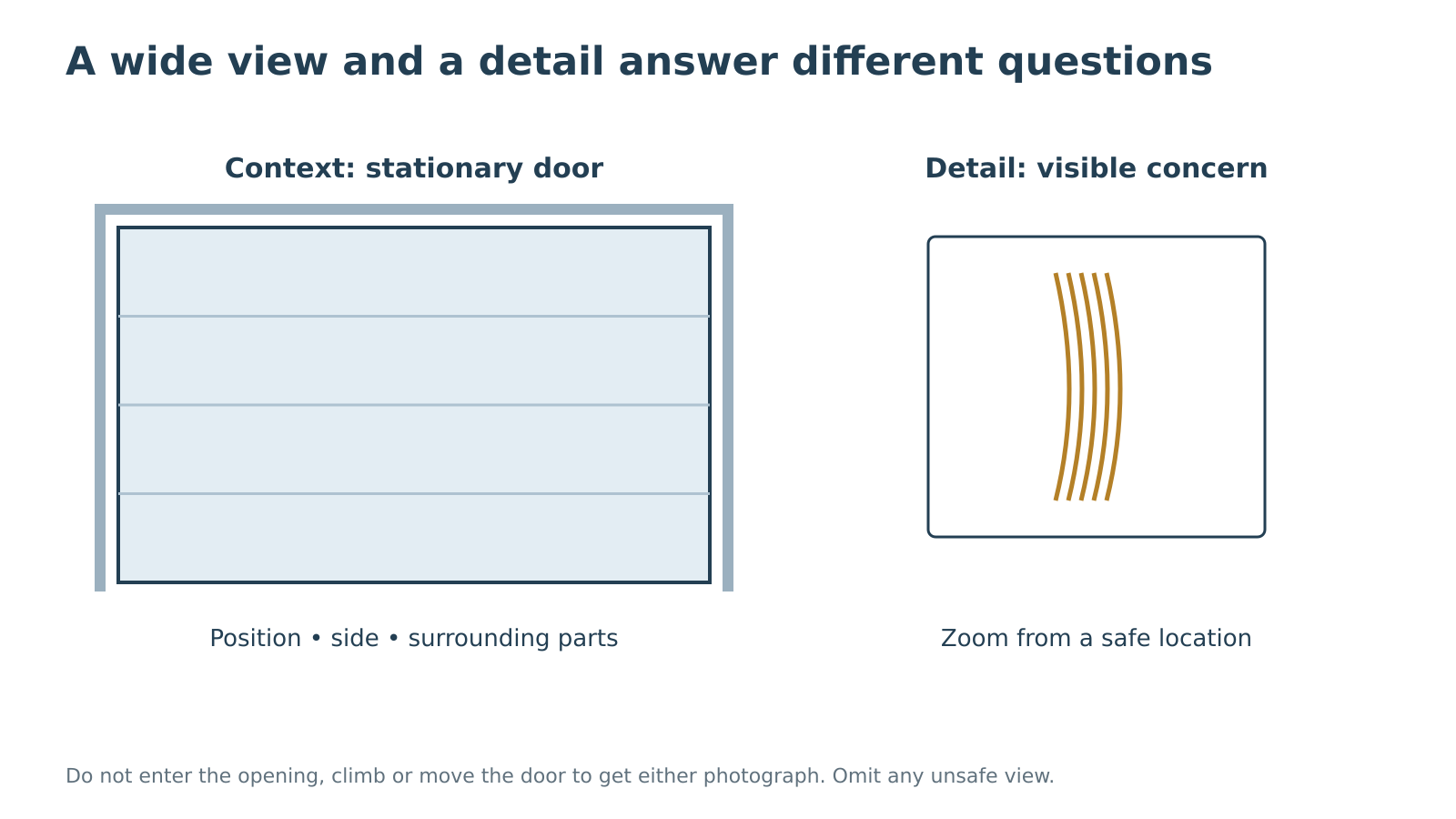
If safe, provide a wide photograph showing the whole stationary door and a second view of the visible cable concern. A close-up alone can conceal the door’s position; a wide view alone may not show fraying. Use zoom from outside the opening rather than stepping under the door for a better angle. Existing pictures taken before the failure may also help identify the system.
Include any known recent work or changes, such as a spring replacement, new section, opener installation or impact. There is no need to assign blame. The history helps the technician decide which relationships need checking rather than treating the cable as an isolated consumable.
What a cable-repair scope should explain
The diagnosis should identify the affected cable and the condition of the related system. Depending on the installation, that can include the cable path, drums or pulleys, bottom attachments, springs, rollers, tracks and the door’s ability to travel evenly. This is a professional assessment list, not a homeowner inspection procedure.
Ask what evidence explains the failure. A technician may find obvious wear or damage, but sometimes a single definitive cause cannot be established. “The cause is not confirmed” is a more honest conclusion than an invented certainty. The repair proposal should nevertheless explain how the door will be restored and checked.
Also ask whether another cable or associated part needs replacement, and why. Do not assume that replacing every nearby component is necessary, or that replacing only the visibly broken cable is automatically sufficient. The condition of the actual installation and the manufacturer’s requirements should support the recommendation.
A quote is easier to compare when it identifies the compatible parts, related corrective work, labor and final checks. Avoid comparing two totals as though they describe identical work when one includes a damaged attachment or track repair and the other does not. This guide does not supply a universal price because the visible cable symptom does not establish the full repair scope.
What should be established before normal use resumes?
Ask for an explanation of what was found, what was replaced and what was checked. The outcome should be more than a cable that looks straight in a photograph. The door must be mechanically sound, correctly counterbalanced and able to travel as intended before the opener’s required safety verification is completed.
Keep the part identification and work description with your door records. If the diagnosis revealed damage beyond the cable, the record should distinguish completed work from any remaining recommendation. That makes later maintenance more useful and helps prevent the same symptom being treated without its history.
For related background, our spring replacement explainer describes why counterbalance work is not a DIY release-and-adjust task. If you need an assessment of the connected spring system, see garage door spring service. The immediate decision remains simple: preserve the current evidence, keep clear and let the damaged door stay out of use until it is assessed. For urgent service availability, see emergency garage door repair. Calls are answered daily from 6 a.m. to 11 p.m.; confirm availability and arrival arrangements when calling.