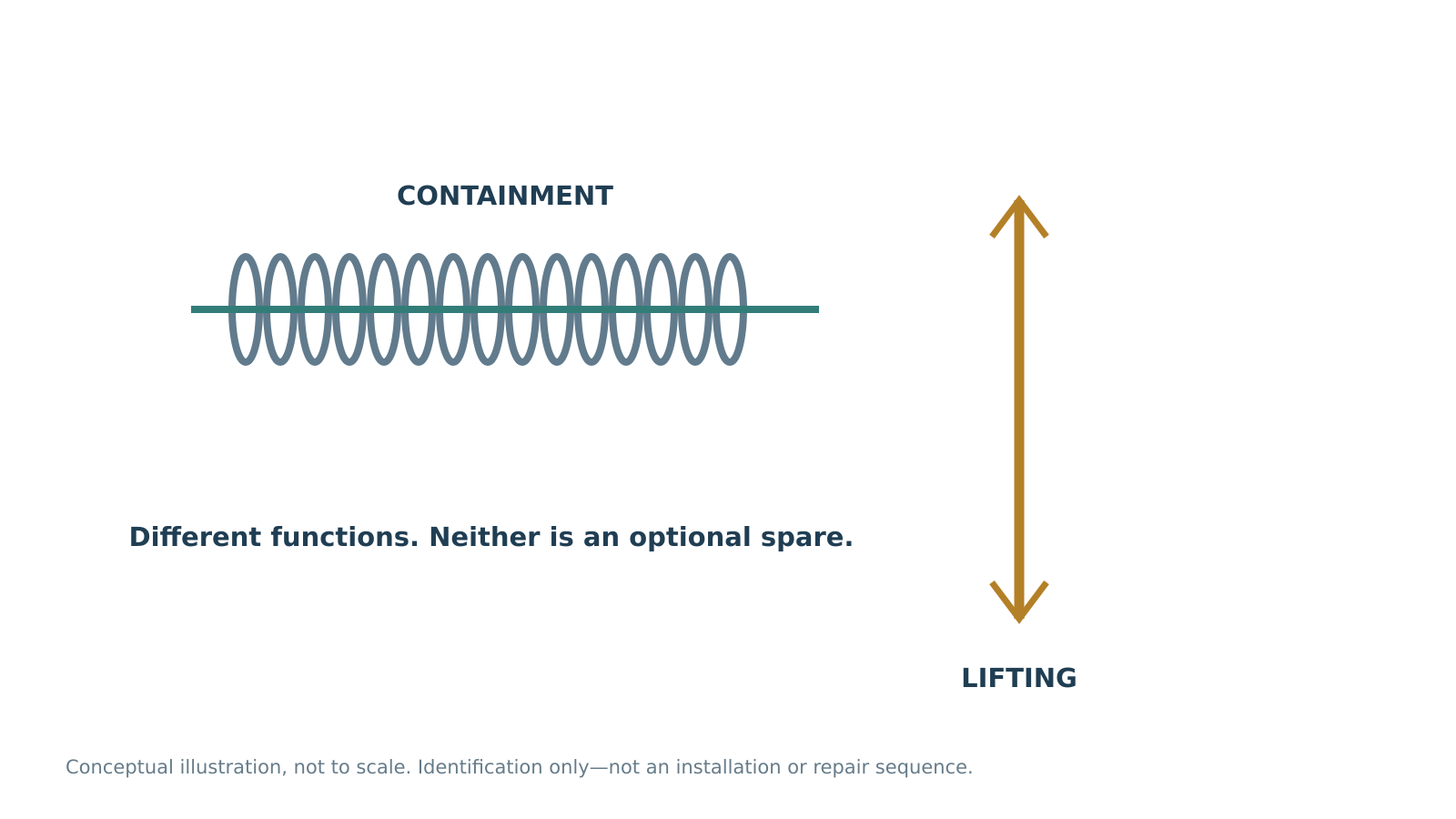
Lift cables and containment cables perform different functions; identify the installed system before naming a cable.
Lift cables move the door as part of its counterbalance system; safety containment cables serve a different purpose. One does not replace the other, and visible cable damage needs professional assessment.
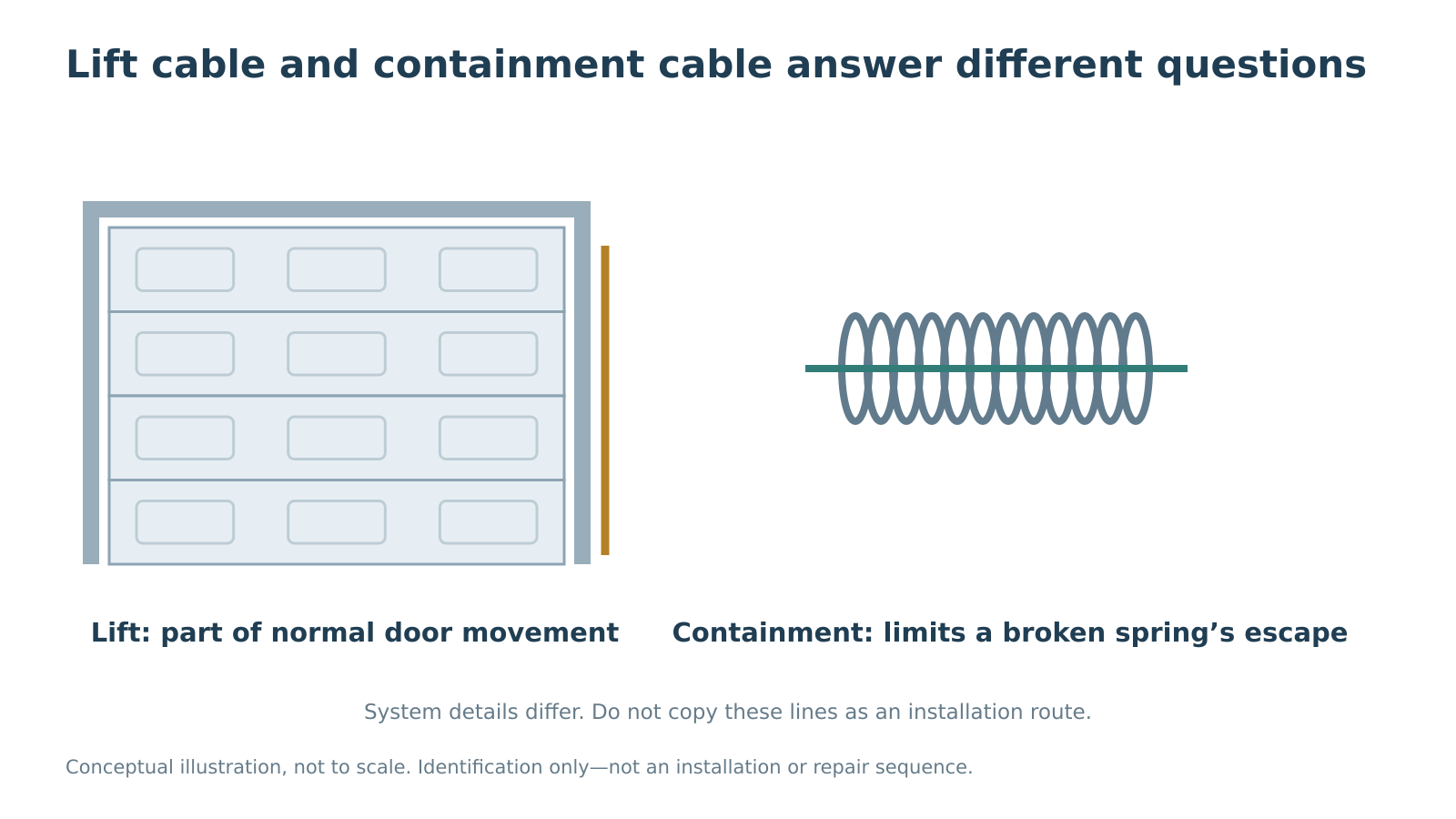
Someone points to a cable beside a garage door and calls it a safety cable. Another person calls the same thing a lift cable. The names are often used loosely, but the distinction matters: one can be part of the mechanism that moves the door, while another has a containment role in an extension-spring arrangement.
Understanding that difference helps you describe an unfamiliar installation and recognize why an apparently spare cable should not be removed. It does not make cable replacement a homeowner task. This guide explains functions and observations, not routing, tension, attachment or repair.
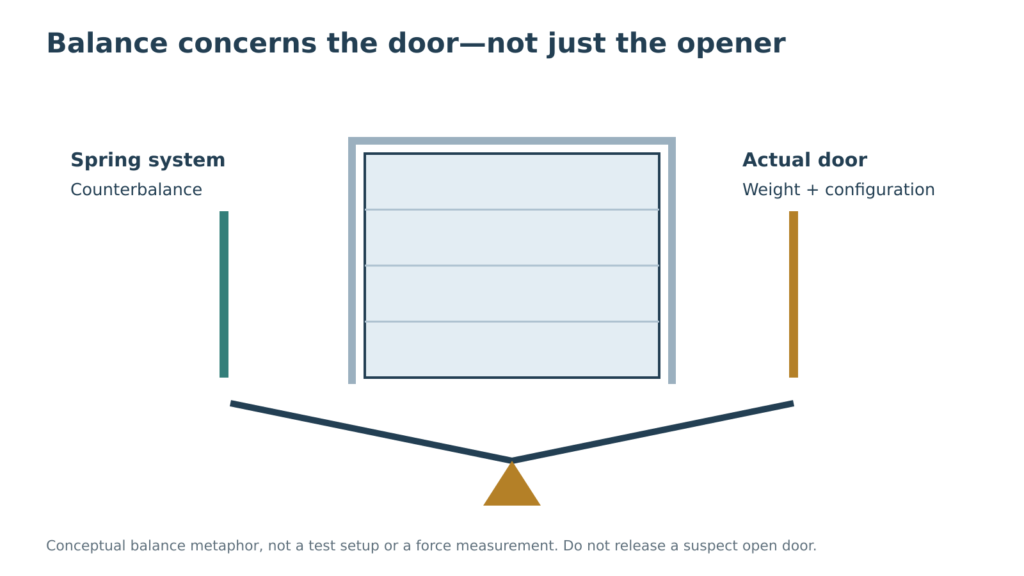
Two different jobs, not two names for the same job
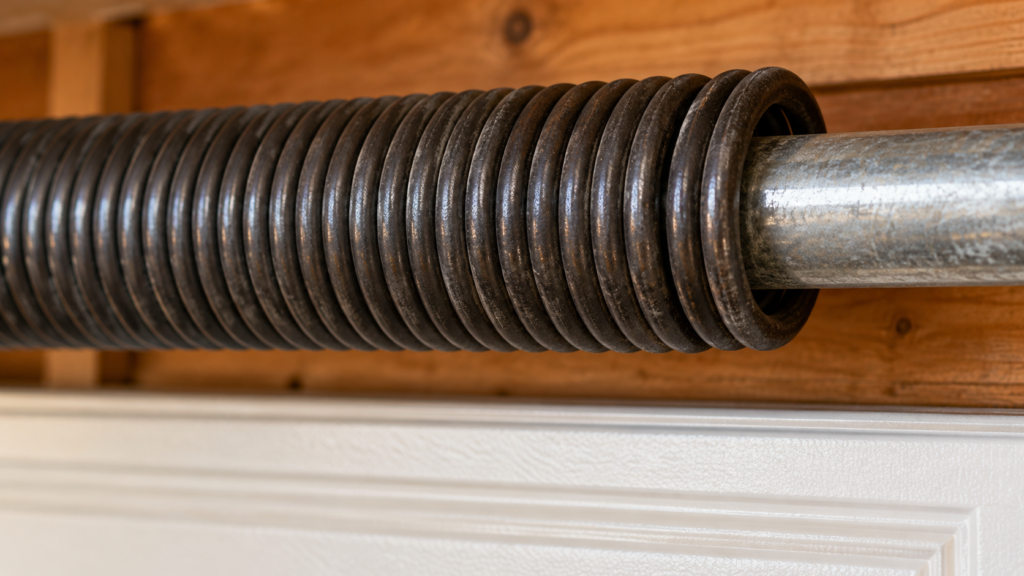
A lift cable participates in lifting and lowering the door with the spring system. In a common torsion-spring arrangement, cables connect the drums above the opening to bottom attachments at the sides of the door. Genie describes this relationship in its maintenance guide. Other spring arrangements have their own components and routing.
A containment cable serves a different purpose in an extension-spring system: it is intended to help contain a broken spring rather than perform the normal lifting job. Clopay describes containment cables in its safety checklist. That function explains why a second cable may be present even when another cable already appears to do the lifting.
 Select the diagram to view it at full size.
Where the spring arrangement changes the picture
Torsion springs are commonly found above the opening on a shaft. Extension springs are commonly positioned beside the horizontal tracks. These are identification clues, not a complete survey of every residential door. Enclosed, proprietary and specialized hardware can make the arrangement less obvious.
The absence of a long exposed cable through a spring is therefore not enough to declare an unfamiliar door unsafe or incomplete. Conversely, seeing a cable is not proof that it is the correct component or correctly installed. The question for a technician is which system is present and whether its required components are in place and fit for use.
What a containment cable does not promise
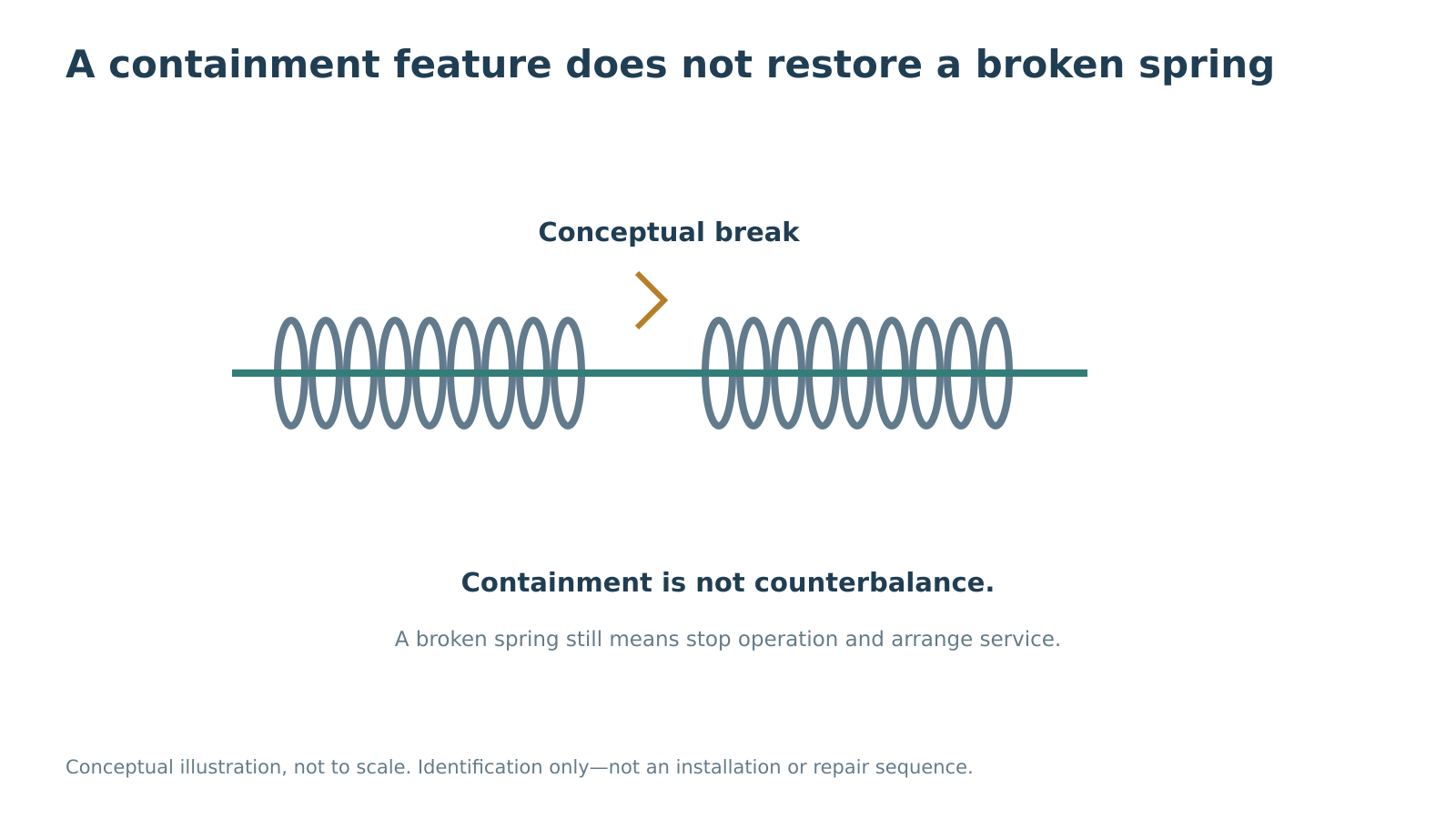
A containment feature does not restore the counterbalance after a spring fails. It does not make a broken spring serviceable, and it is not permission to keep operating a damaged door. These are separate questions: containing a component and supporting controlled door movement are not the same function.
This distinction is important when the door looks less dramatic than expected after a failure. The fact that a spring has not flown across the garage does not tell you that the door can be raised normally. Stop operation when a spring or lifting component is suspected to be broken, and keep people out of the opening.
Do not test the containment system by pulling a cable, loosening an anchor or deliberately stressing a spring. Its condition and configuration belong in a professional inspection. The spring replacement guide explains the next decisions after a suspected spring failure without offering a tensioning procedure.
 Select the diagram to view it at full size.
Read a visible problem without touching it
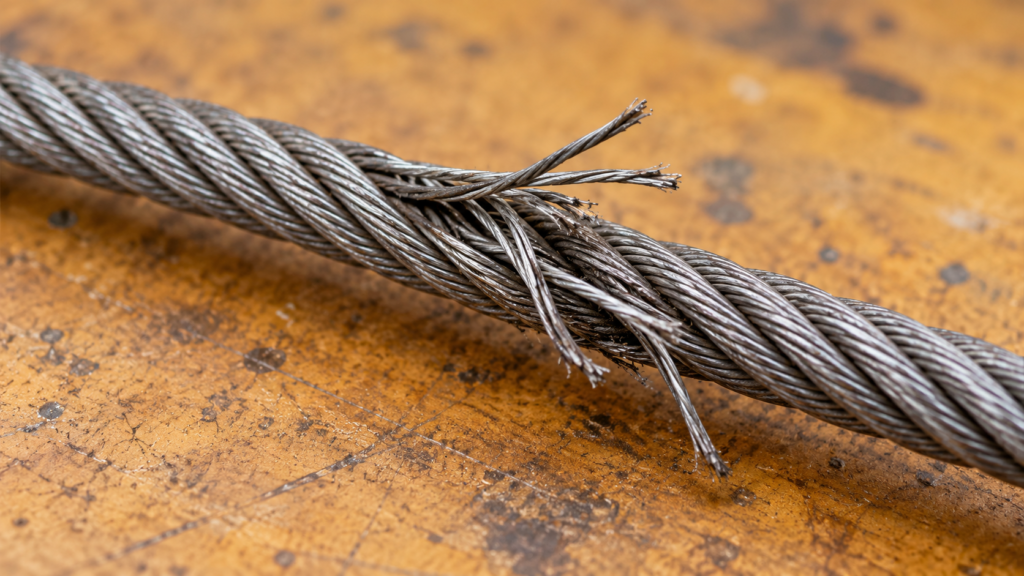
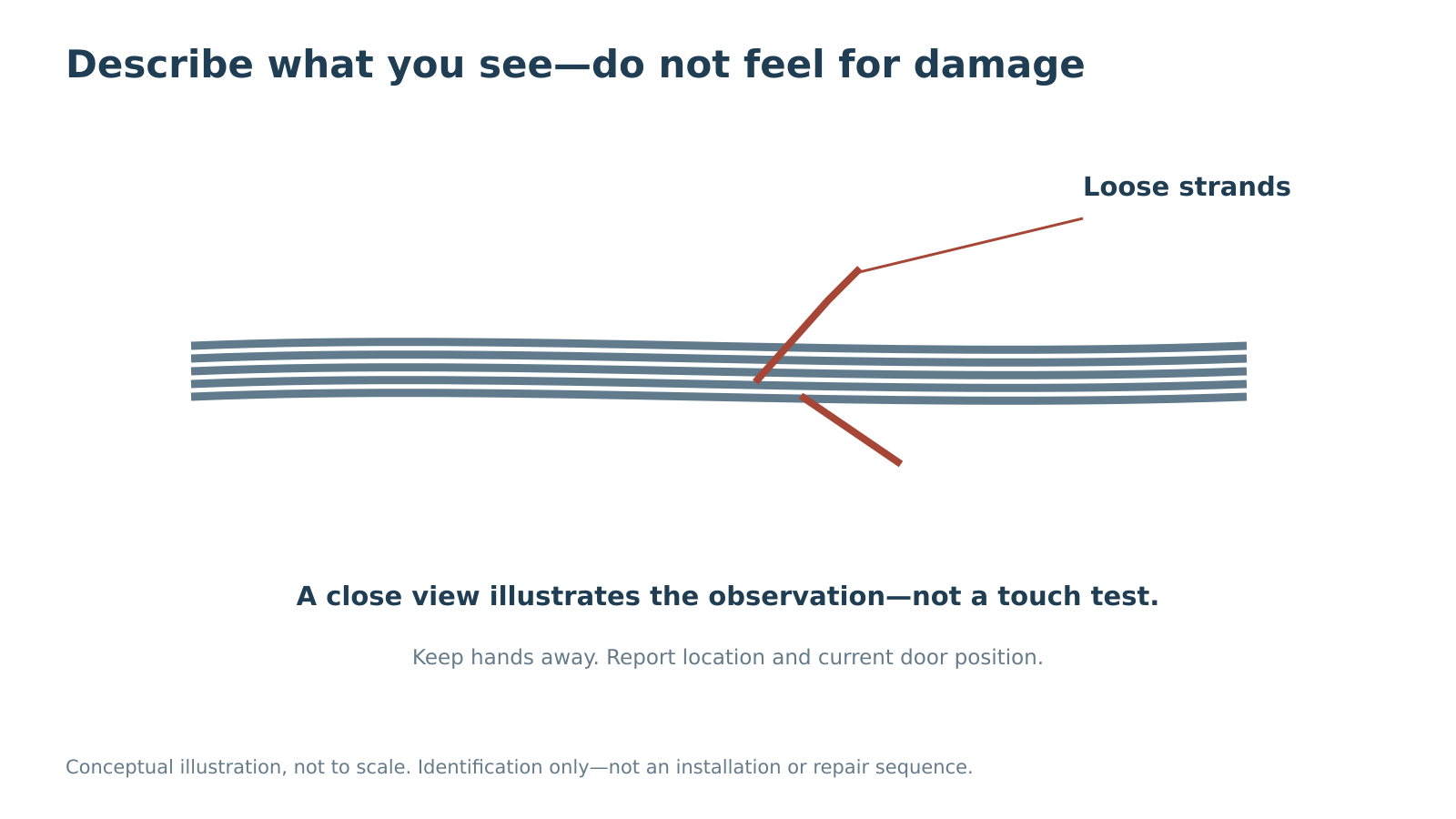
A loose loop, broken strand, displaced cable or marked change in the door’s position is worth reporting promptly. The relevant detail is what you can see and where it is, not whether you can prove which mechanism failed first. Do not run your hand along a cable to feel for damage.
Keep the report specific: left or right side as viewed from inside, near the floor or overhead, door currently open or closed, and whether the condition followed an impact or unusual noise. If a photograph can be taken from a clear location, include the surrounding structure so the reader can understand the position.
If the door is open, crooked or unstable, do not use the emergency release to investigate. A cable concern is not a reason to detach the opener from a potentially unsupported door. For active damage, arrange service rather than following a cable-routing video. The purpose of the vocabulary in this article is to improve that service conversation.
Why an apparently extra cable should stay in place
An unfamiliar component can look redundant because its function is not visible during ordinary use. That is particularly true of a containment feature: it may not appear to be doing anything while the system is intact. Removing it because it seems unnecessary confuses absence of visible movement with absence of purpose.
The same caution applies when comparing two neighboring doors. Different installations may use different spring systems, and an older door may have an unknown repair history. The second door is not a substitute for the manufacturer’s instructions for the first.
If a cable interferes with storage or looks untidy, do not shorten, reroute or tie it away. Ask whether the installation has a fault or whether the storage arrangement needs to change. A professional should identify the component before anyone proposes an alteration.
 Select the diagram to view it at full size.
Useful questions for an inspection
Ask the technician to name the installed spring arrangement and distinguish its lifting and containment components. If a component is missing, damaged or incompatible, ask what documentation or observed condition supports that conclusion. This keeps the discussion focused on your system rather than a generic upgrade list.
For proposed work, request a description of the affected components and any related damage. A cable replacement proposal may need to address more than the visibly damaged length, but the reason should be explained. Do not assume that a spring, cable, drum and bracket all need replacing simply because they appear on the same diagram.
After repair, retain the invoice and the system identification. Ask what observations would warrant another call and which maintenance instructions apply. Written component information is useful if the door later needs a different service provider or if the original label becomes unreadable.
A few terms that help you avoid confusion
A lifting cable is not the electrical wire leading to an opener control or sensor. A hand-operated chain on some commercial equipment is another different component. If you are researching a sectional residential door, make sure the source is describing that equipment, not a rolling curtain or commercial chain hoist.
The best description often combines plain words with location: “the thin steel cable running down the side of the door,” for example. You can leave the technical identification open until the system has been inspected. That is more accurate than selecting a part online under the wrong name.
How to read a diagram without treating it as instructions
Pulleys, fasteners and routing details are essential to an actual installation. Identifying a cable’s lifting or containment role does not establish its required route. Do not use a simplified line as a replacement specification.
When consulting the manufacturer’s literature, check that the system name and revision match the equipment being assessed. A drawing for an extension-spring installation does not describe every torsion or proprietary system. If a photograph and a manual seem inconsistent, preserve both for the technician rather than changing hardware to make them look alike.
The safe takeaway
Lift and containment are different functions. A cable that is not visibly pulling the door may still be an essential part of the installation, and a containment feature does not make a broken spring safe to use. Leave cables, springs and their attachments in place while you gather information from a safe position.
For a damaged or uncertain counterbalance system, spring and connected-system assessment can establish what is installed and what needs attention. Local Garage Experts answers (323) 924-8777 daily from 6 a.m. to 11 p.m.; free estimates, free diagnostics and no service call fee are available. Bring the observations you have, not a guess about which cable to remove.
Sources & manuals
Use the documentation for the actual installed model..