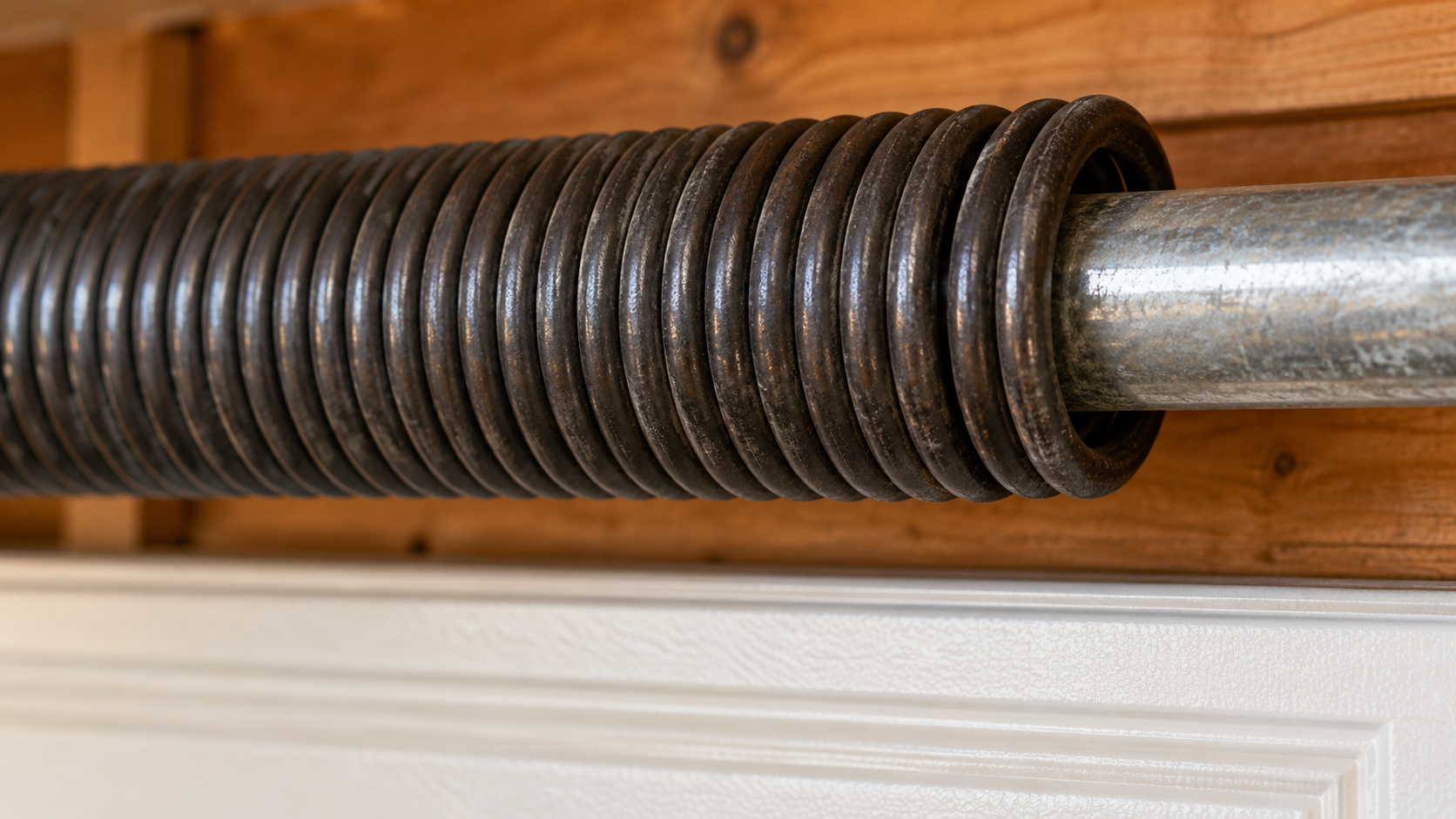
Spring position helps distinguish torsion and extension systems; replacement specifications require more than appearance.
Garage door spring replacement is professional work involving stored energy. Stop using a door with a suspected spring failure, keep clear, and have the door and counterbalance assessed together.
If you searched for how to replace a garage door spring, the first useful answer is a safety boundary: do not wind, unwind, remove or substitute a spring using a general online guide. The spring system stores energy and is matched to the door. A mistake can release that energy or leave the door unsupported.
This article explains what you can observe safely, what to tell a technician, and what a replacement proposal should cover. It deliberately does not provide winding counts, tool substitutes or cable-removal steps.
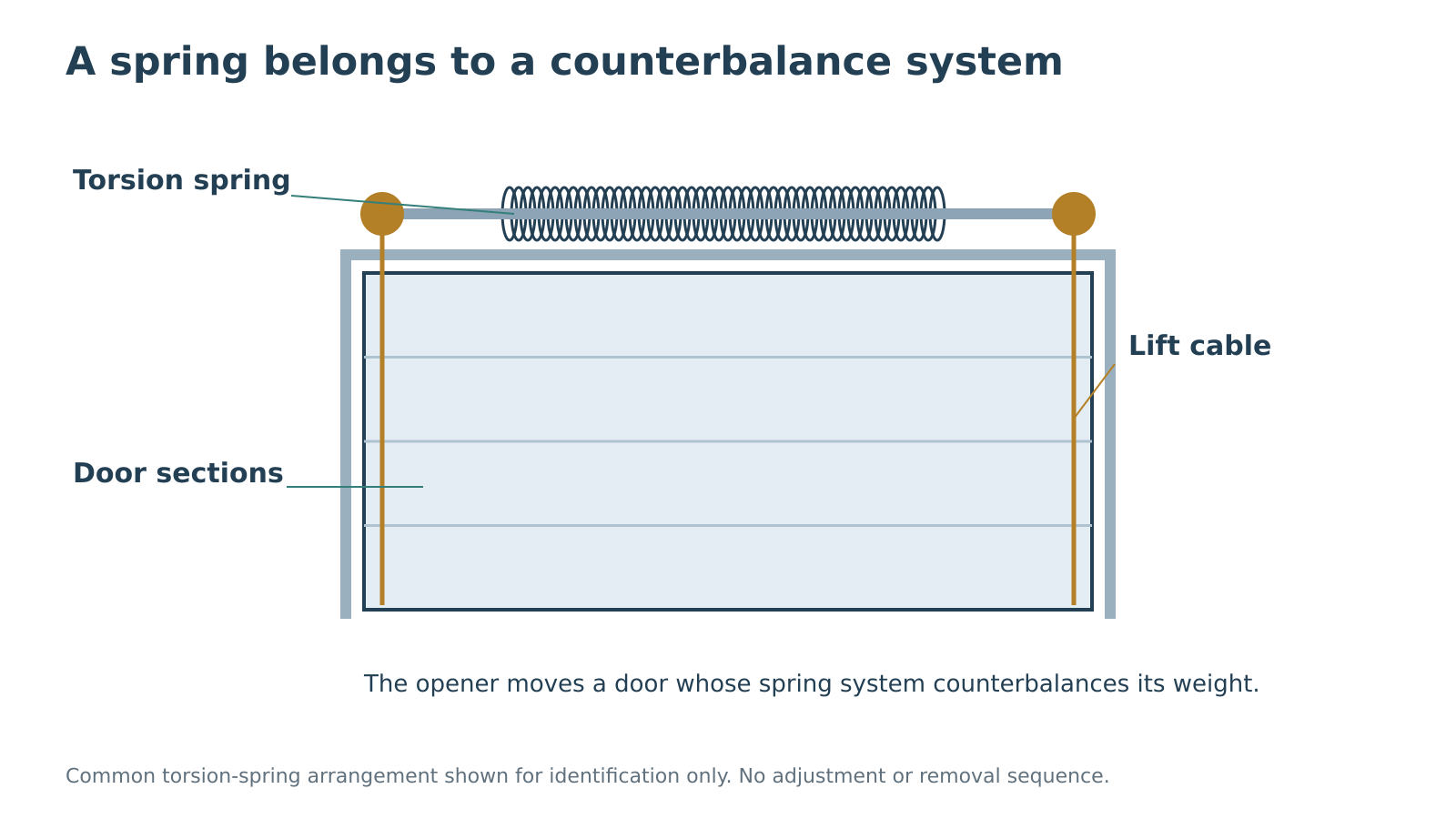 Select the diagram to view it at full size.
What to do if you suspect a broken spring
Genie’s garage door safety guidance says not to operate a door with a broken spring and reserves spring-system work for professionals. If the garage is your only exit or there is an immediate danger, explain that when arranging assistance instead of attempting a workaround.
Signs worth reporting—without testing the door
- A loud bang followed by a door that no longer operates normally.
- A visible break or gap in a spring viewed from a safe position.
- A door left crooked, uneven or partially open.
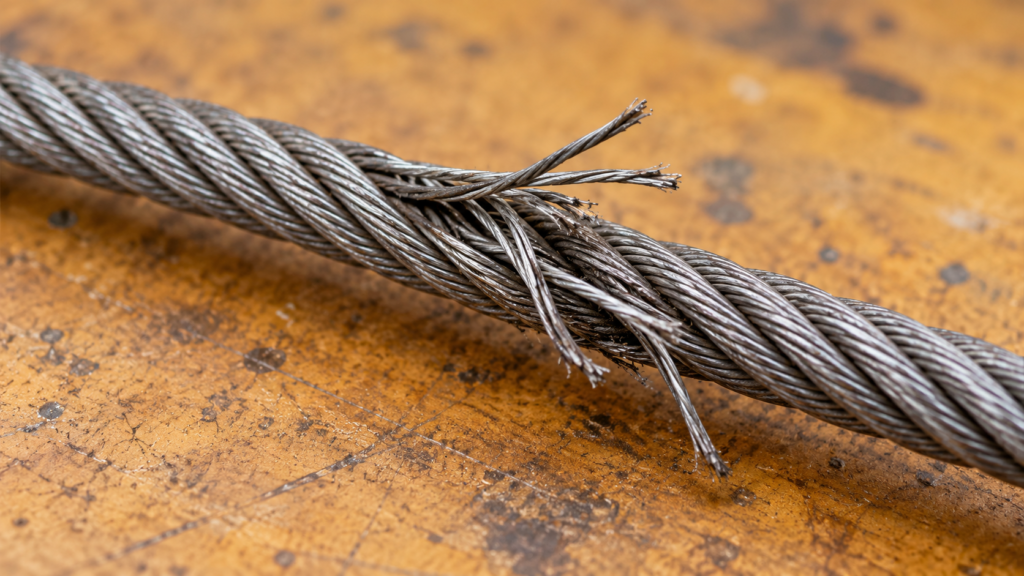
- A loose or displaced cable, damaged support or other visibly displaced hardware.
- An opener that began struggling just before the door stopped.
Torsion and extension springs: the distinction that matters
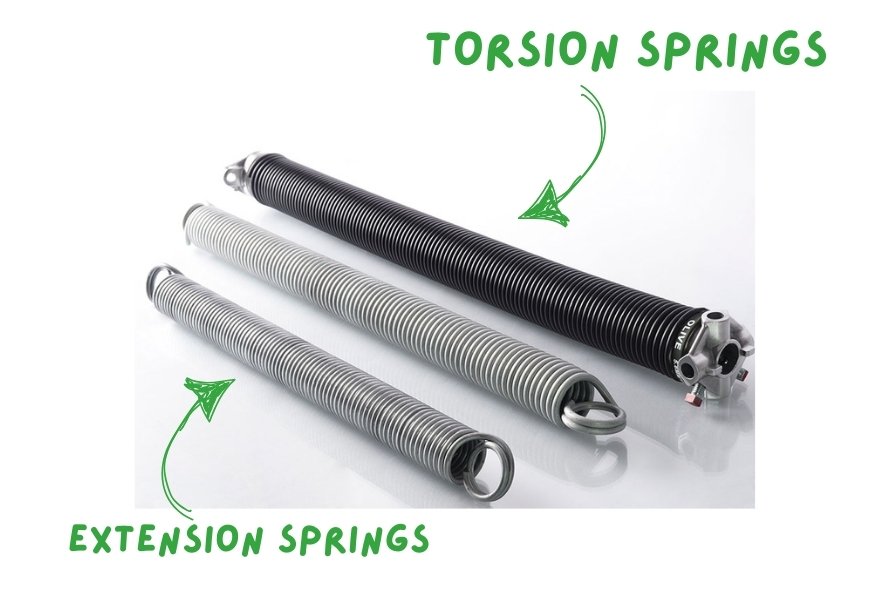
Many residential sectional doors have torsion springs positioned above the opening. Other systems use extension springs beside the horizontal tracks. Enclosed and specialized systems can look different, so location is an identification clue rather than a complete specification.
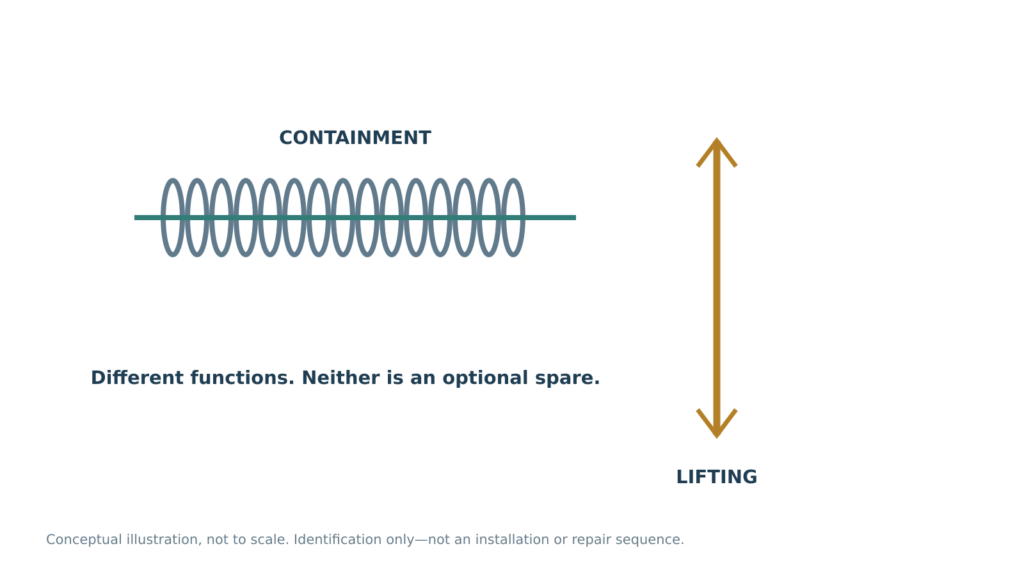
Both types belong to the door’s counterbalance system. Neither should be treated as harmless because it looks smaller, has already broken or appears relaxed. Related brackets and cables also matter. For a non-procedural overview of those connections, see our guide to garage door brackets.
Do not buy a replacement based only on door width, a photograph or a seller’s “universal” description. Ask the technician to explain how the proposed spring matches the actual door and installed hardware.
Why a stronger opener is not the answer
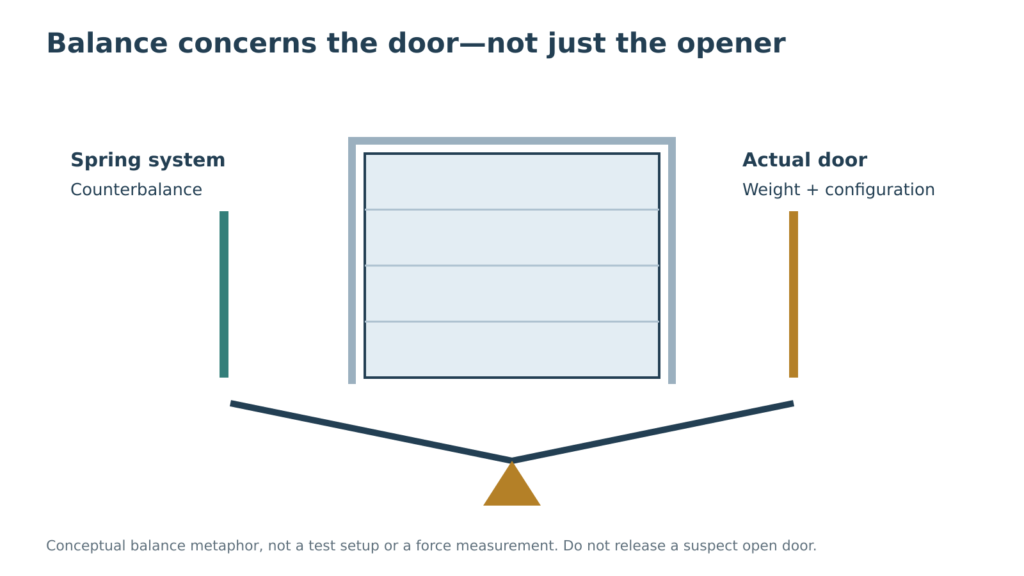
The spring system counterbalances the door; the opener provides controlled movement. They have different jobs. If the door suddenly becomes too heavy to move normally, replacing the motor with a more powerful one does not establish that the door is correctly balanced.
Think of the replacement as matching a system, not buying a coil of roughly the same length. The actual door configuration, its operating hardware and any changes to its weight belong in that decision. A door that has gained insulation, glazing or other added material should not be assessed as though it were unchanged. The technician needs to know what was altered, even if it happened years before the failure.
For the homeowner, the useful question is not “How many turns does this spring need?” It is “What information was used to select the replacement, and will the completed door operate correctly independently of the opener?” That asks for an accountable result without directing hazardous work.
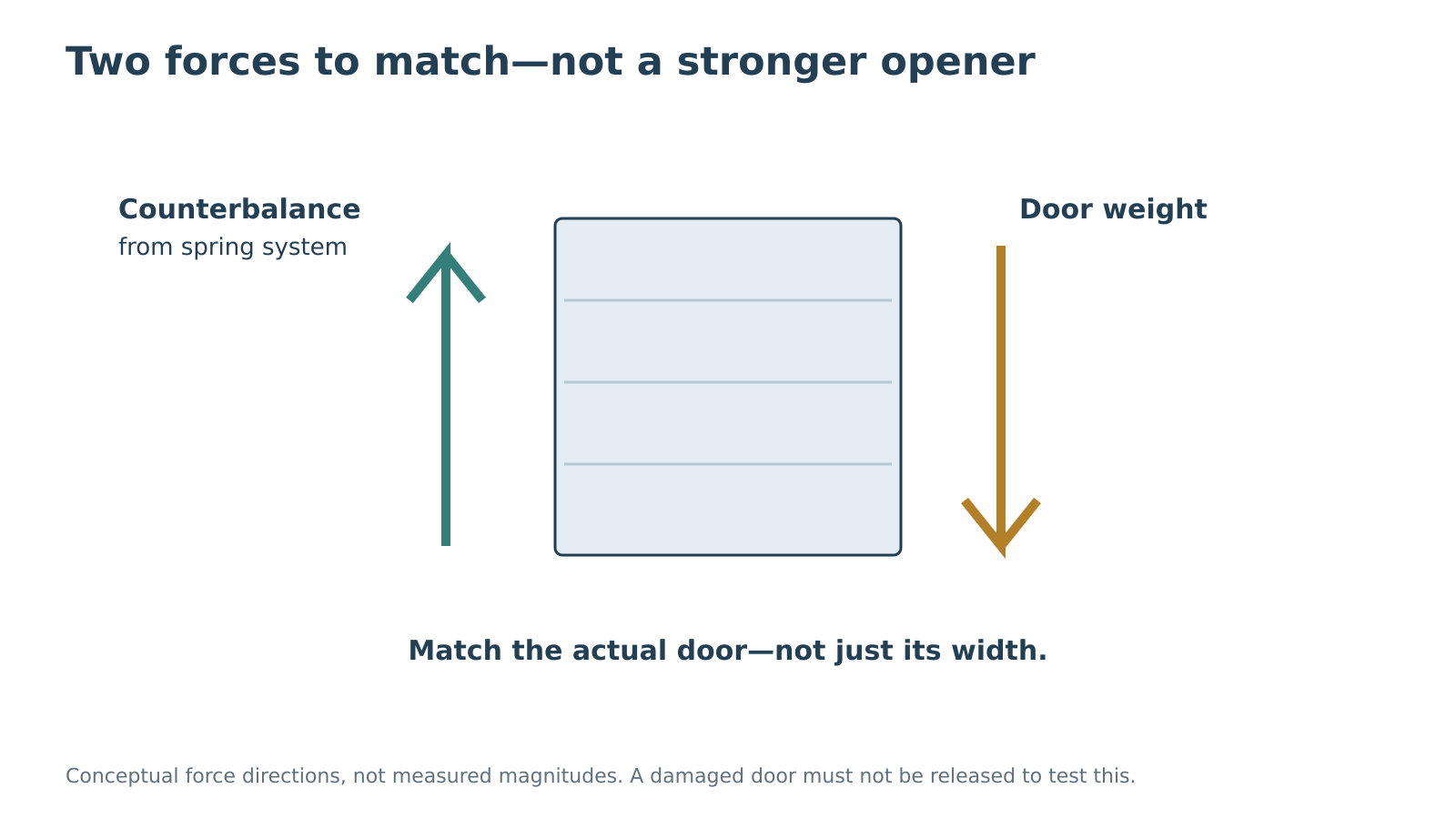 Select the diagram to view it at full size.
What a cycle rating does—and does not—tell you
A complete opening and closing is one operating cycle. A spring offered with a higher stated cycle rating may be worth discussing, but the number is not a promise of a fixed calendar life. A door used as the household’s main entrance accumulates cycles differently from a door opened occasionally.
Ask for the rating of the actual proposed spring, not a general brochure claim. Also ask what the warranty covers: the spring itself, labor, a return visit or other components. Keep those answers separate. A long parts warranty can still leave questions about the cost and coverage of future service.
Do not base the decision on an invented universal replacement interval. The more useful record is the installation date, the identified spring specification, the written warranty and subsequent changes in operation. Those details make later advice more specific than an estimate based on the age of the house.
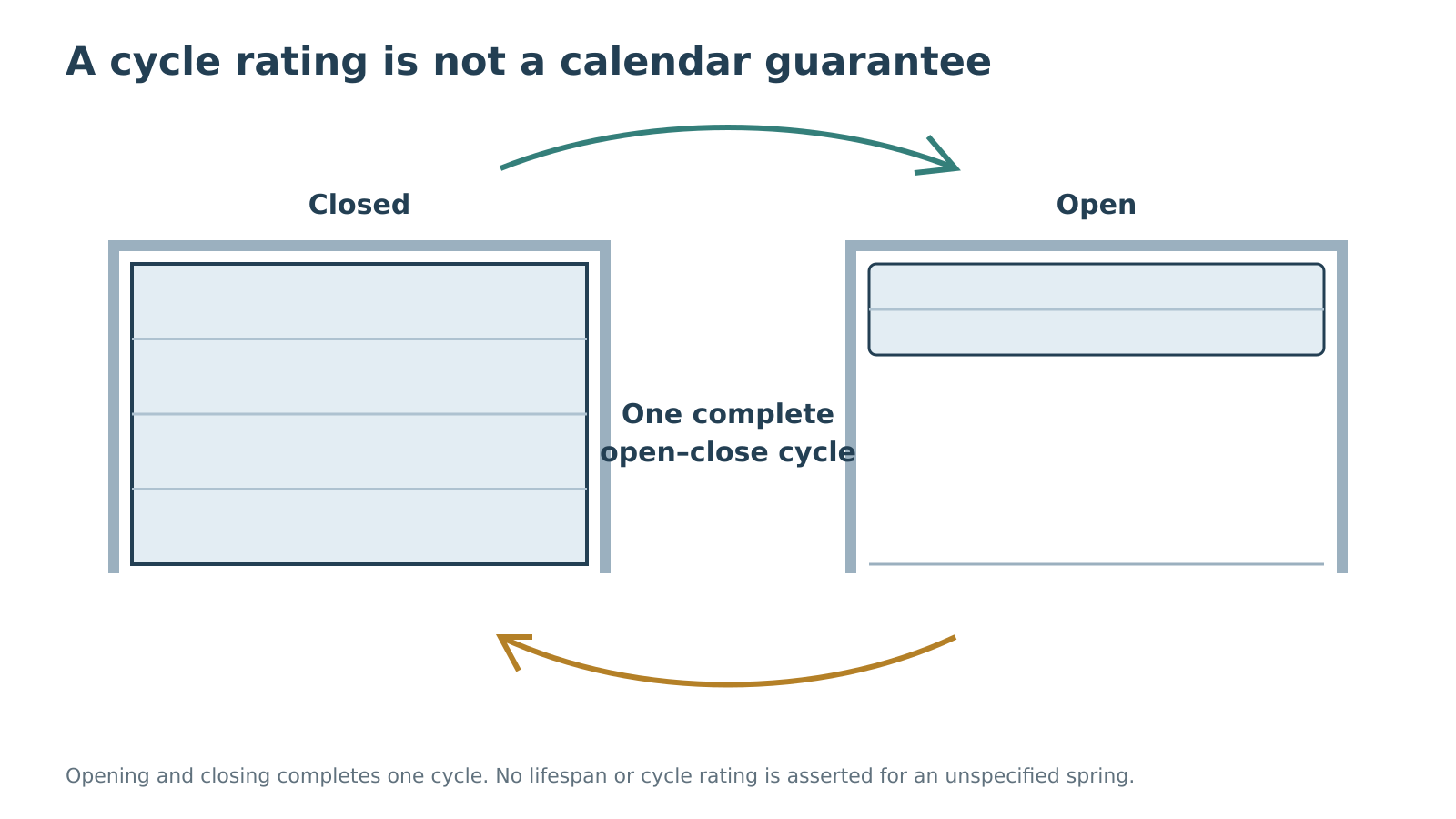 Select the diagram to view it at full size.
What a professional replacement should address
A clear scope should distinguish the failed part from the condition of the whole system. Before authorizing work, ask for an explanation of the diagnosis and the components included. You do not need to direct the repair procedure to ask informed questions.
- Identification: what spring system is installed, and what evidence supports replacement?
- Compatibility: how was the replacement specification established for this door?
- Related condition: are cables, mounting points or other components damaged, and which recommendations are necessary versus optional?
- Commissioning: what checks of door operation and the opener’s safety features will be completed before handover?
- Documentation: what parts, labor and warranty terms will appear on the invoice?
If the door has been modified with added insulation or other weight, mention it. Genie specifically notes that a door upgrade requires a properly matched spring. A prior modification should not be left out of the assessment.
Should both springs be replaced?
For a two-spring door, Clopay recommends replacing both when one fails. That manufacturer guidance is a useful question for the estimate—not proof that every door must have two springs or that every existing system has the same history.
Ask whether the springs were installed together, whether the proposed pair is matched to the door, and how the recommendation applies to your specific setup. If a contractor proposes changing the system rather than replacing like for like, request a separate explanation of the conversion and its scope.
What affects garage door spring replacement cost?
A reliable quote needs an identified system and a defined job. A parts-only listing is not comparable to an installed replacement with diagnosis, labor and testing. This article does not present an invented local price range.
Compare written estimates using the same checklist: the number and specification of springs, any separately identified cable or hardware work, labor, removal of old parts, testing, and warranty coverage. Ask whether the amount is an estimate or a fixed quote and what circumstances could change it.
If a higher-cycle option is offered, request the stated cycle rating and written warranty terms. A cycle rating and a warranty are different things. Avoid translating either into a guaranteed number of years without considering how the door is used and what the warranty actually covers.
How to compare two recommendations that do not match
If one proposal lists springs alone and another includes cables, bearings or other hardware, ask each provider to identify the condition behind the difference. The larger list is not automatically the better repair, and the smaller list is not automatically a complete one. A photograph of visible wear, an explanation of compatibility and a distinction between necessary and optional work make the comparison meaningful.
Separate three decisions: restoring the failed counterbalance, correcting other observed damage, and choosing an upgrade. For example, a compatible higher-cycle spring is an option to evaluate; a visibly damaged cable is a different kind of question. Combining everything under an unexplained “full rebuild” label makes it harder to understand what you are authorizing.
There is also a difference between replacing a part and changing the spring arrangement. A conversion should come with an explanation of the intended system, the hardware included and any implications for future service. Do not approve a change simply because a replacement resembles a nearby door’s hardware.
What a useful handover sounds like
Before the visit ends, ask the technician to identify what was replaced and what remains original. The explanation should connect the repair to the initial symptom, describe the completed checks and identify any remaining recommendation separately. Request the door and opener maintenance instructions that apply to the restored installation.
You should not need to perform a risky demonstration yourself to understand the result. If the door still appears uneven, catches, or behaves unexpectedly during the professional handover, raise it before returning to normal use. Keep the final invoice with the original door information rather than relying on a generic sticker saying only “spring replaced.”
Preparing for the visit without disturbing the door
Provide the door’s current position, whether a vehicle is trapped, any visible damage, and the model label if you already have it. A safely taken photograph may help, but do not climb near the spring or reach across damaged hardware to obtain one.
Clear only the accessible work area that does not put you under the door. Keep children, pets and other users away from the controls. Tell the technician about recent repairs, unusual operation and any modifications; these details can prevent an incomplete diagnosis.
For an assessment, see garage door spring repair and replacement. Call (323) 924-8777 daily, 6 a.m.–11 p.m. Local Garage Experts offers free estimates, free diagnostics and no service call fee.
Frequently asked questions
Can the opener lift the door until the spring is replaced?
Do not use it as a substitute for a functioning counterbalance system. Stop operating a door with a suspected broken spring and arrange service.
Is replacing an extension spring a safe beginner repair?
No. This guide does not treat either spring type as a beginner task. The spring, cable and supporting hardware must be assessed as a system.
Can lubrication fix a broken spring?
No. Lubrication is not a repair for a fracture or damaged hardware. After the system is restored, follow its manufacturer’s maintenance instructions rather than applying products or altering tension on a schedule copied from a generic article.