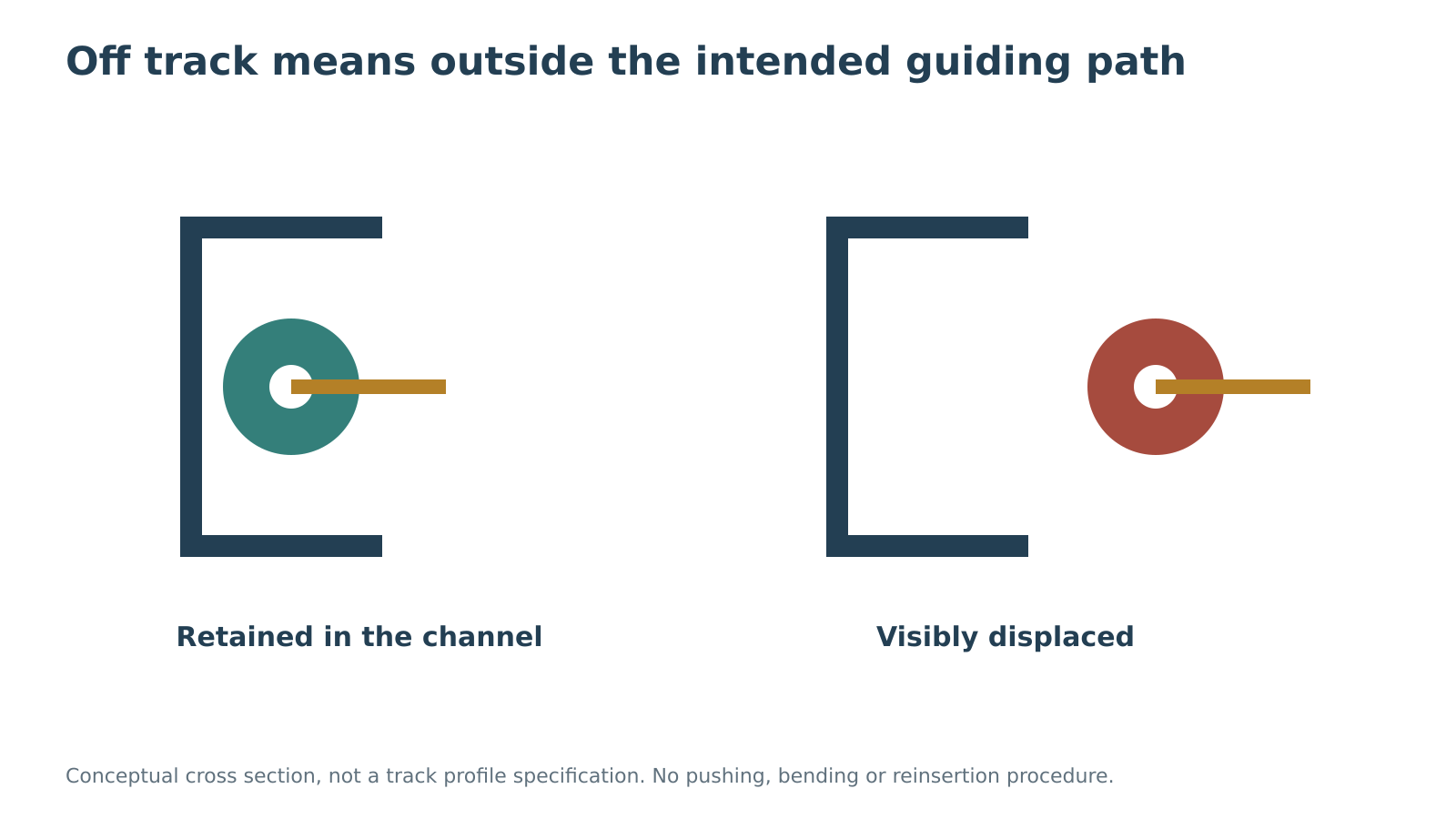
Actual derailment differs from noise or a tilt alone. This is not a track-profile specification.
A roller outside its track is different from noise or a slight tilt. Stop operating an off-track or unstable door, keep people clear, and do not force it back into the channel.
This guide helps you recognize what you can safely report and understand what a proper assessment needs to establish. It is not a reset procedure. A door can be partly supported, crooked or jammed even when only one roller appears out of place.
 Select the diagram to view it at full size.
What “off track” actually describes
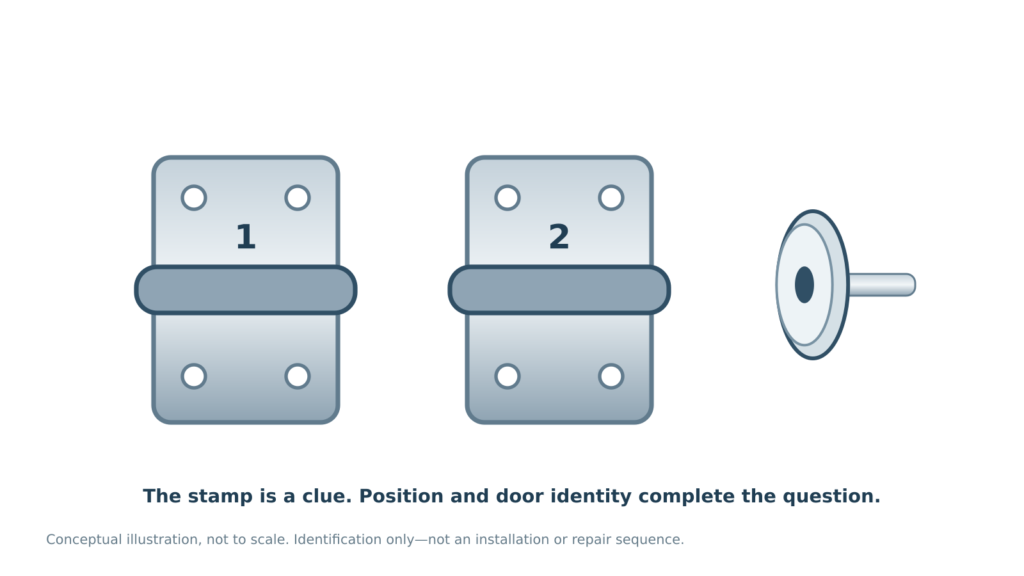
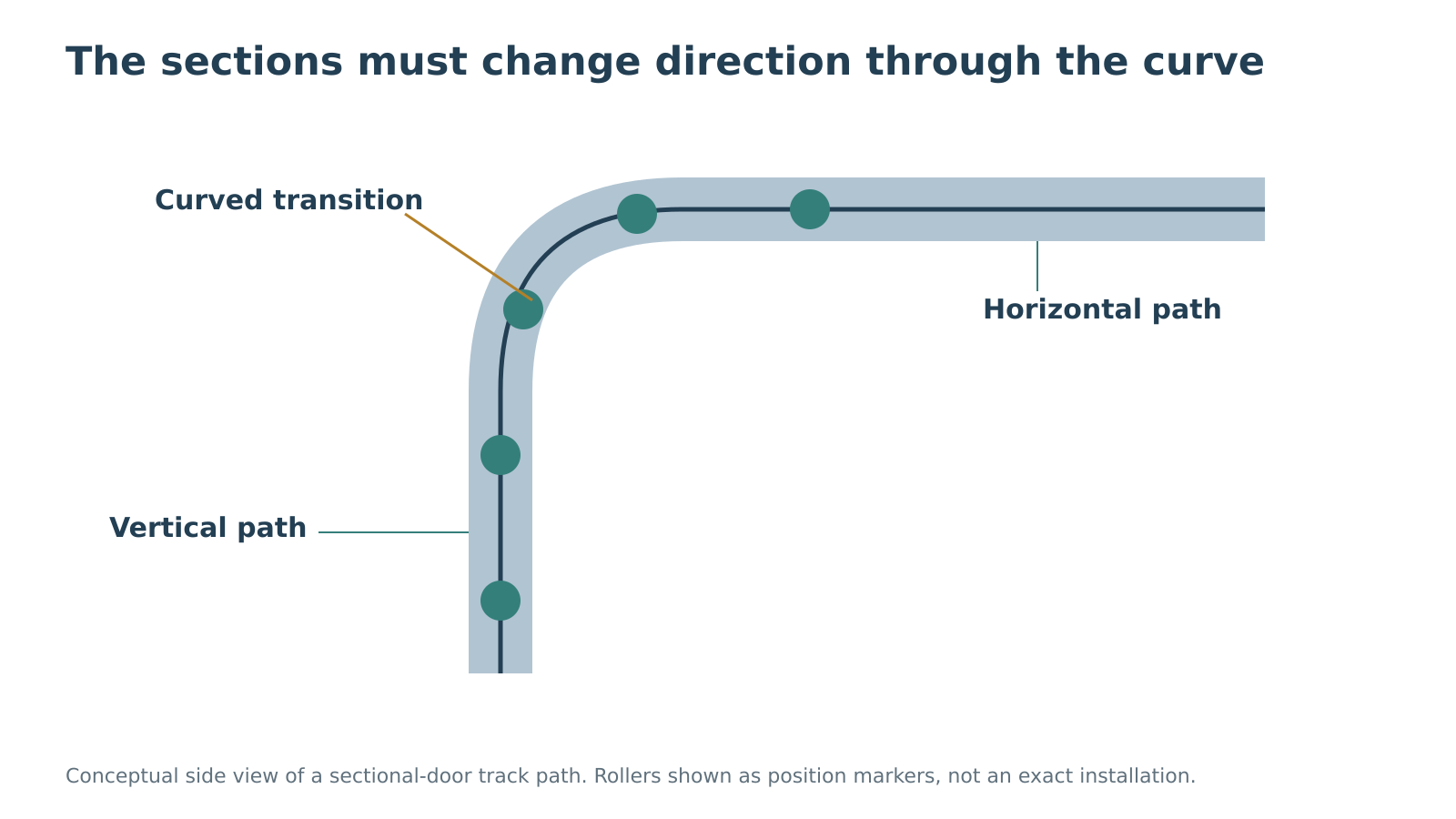
On a typical sectional door, rollers at the sides guide the sections through vertical tracks and around curved transitions toward the horizontal tracks. The hinges allow the sections to change angle as they move. The track system and its supports maintain the intended path; the spring system counterbalances the door’s weight. Those are related jobs, not interchangeable ones.
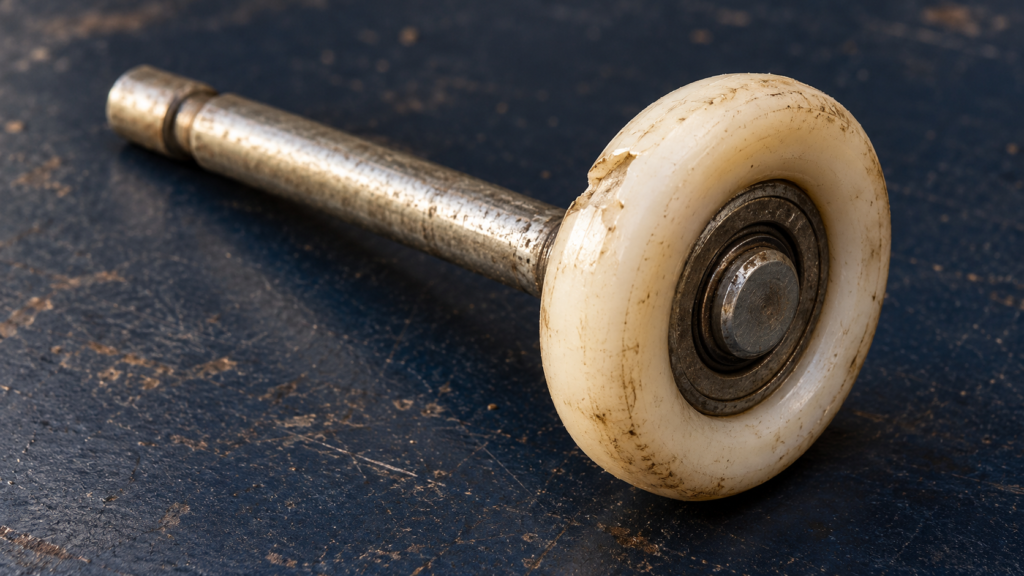
A visible roller outside the channel is direct evidence of displacement. A door that looks crooked, makes a scraping sound or stops near the curve may have another mechanical problem without an obvious derailment. You do not need to prove which condition applies before stopping a damaged or jammed door.
Use precise language where possible: “The upper roller on the right appears outside the track,” is more useful than “The whole door fell off.” If the roller cannot be seen safely, say that the door is displaced or uneven and leave the component diagnosis open.
Our separate guides cover a visibly bent track, binding at the curved transition and uneven movement without confirmed derailment. These distinctions keep the repair discussion focused on the evidence rather than the most familiar label.
 Select the diagram to view it at full size.
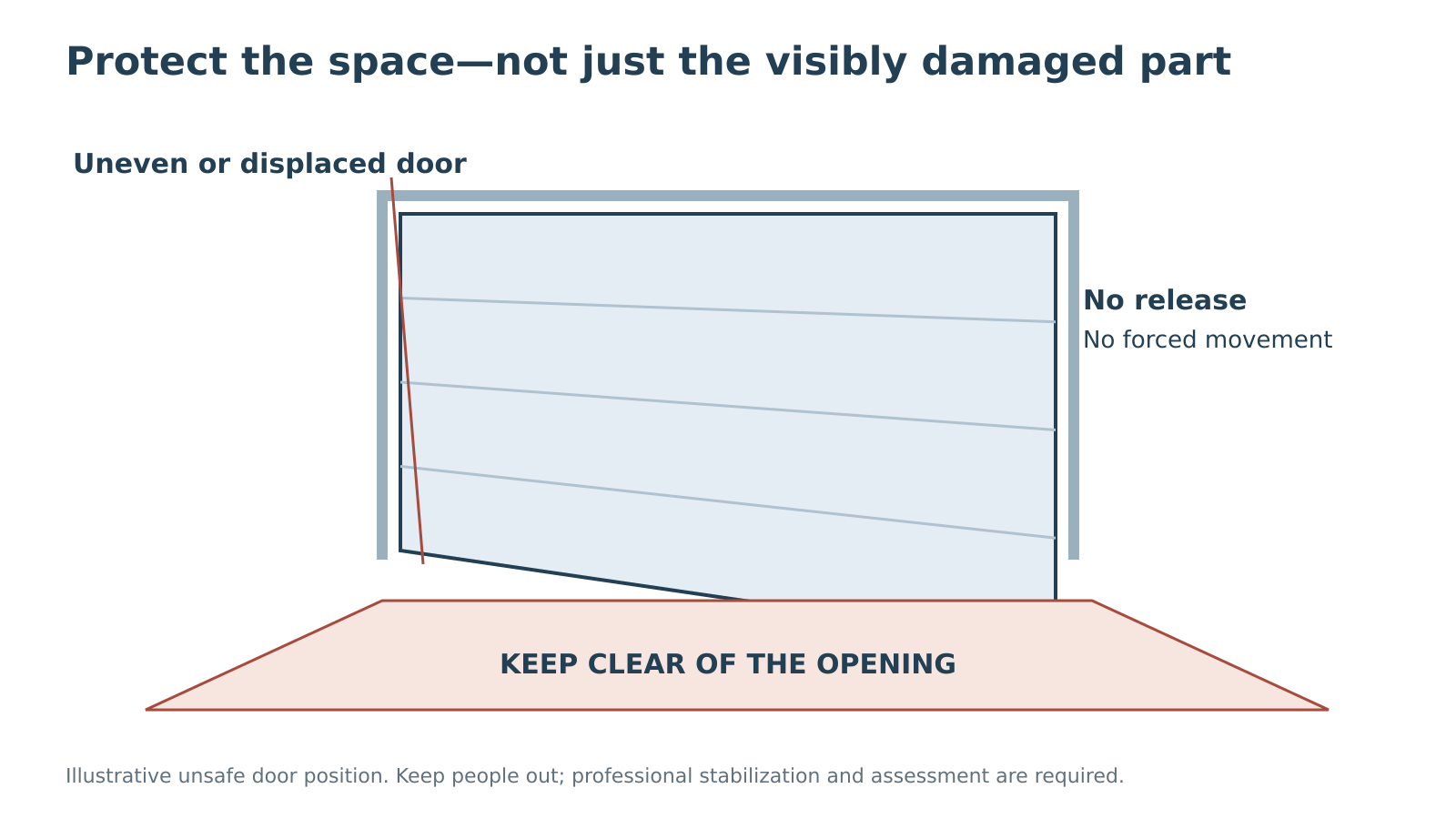
Keep the opening clear, not just the loose roller
Do not pull the emergency-release cord on a suspect open door. Do not recruit a helper to lift one corner while you guide a roller. Removing the opener connection or changing the door’s position can change how the damaged assembly is supported. Neither action is a harmless way to make a clearer photograph.
If a vehicle is inside, tell the service provider. If the opening cannot be secured, explain that too. These practical access issues belong in the initial report; they are not reasons to attempt one more operating cycle. Use another normal route into the building if available.
Prevent accidental commands by telling other occupants the door is out of use and keeping controls from being pressed. Power isolation, if it can be done safely, does not make the mechanical assembly safe to handle. Springs and suspended door sections remain relevant even when the motor cannot run.
 Select the diagram to view it at full size.
Why putting the roller back may not solve the problem
A roller’s position is an outcome. The assessment needs to establish the condition of the roller, its mounting, the track profile, the supports and the rest of the moving door. An impact, damaged hardware or abnormal movement may be relevant, but a photograph alone may not establish which event came first.
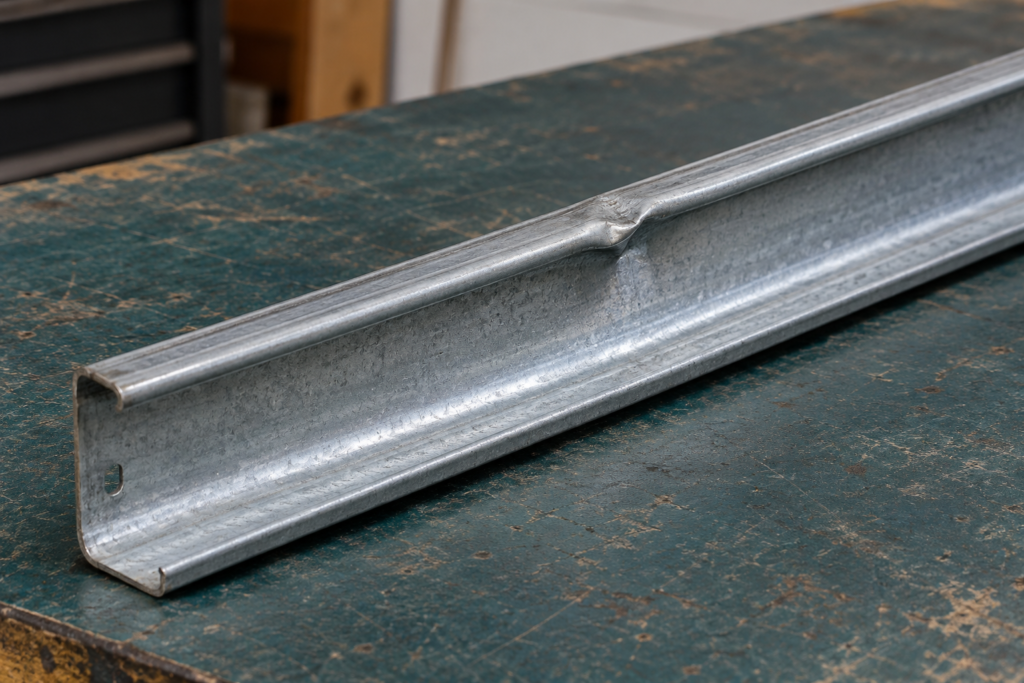
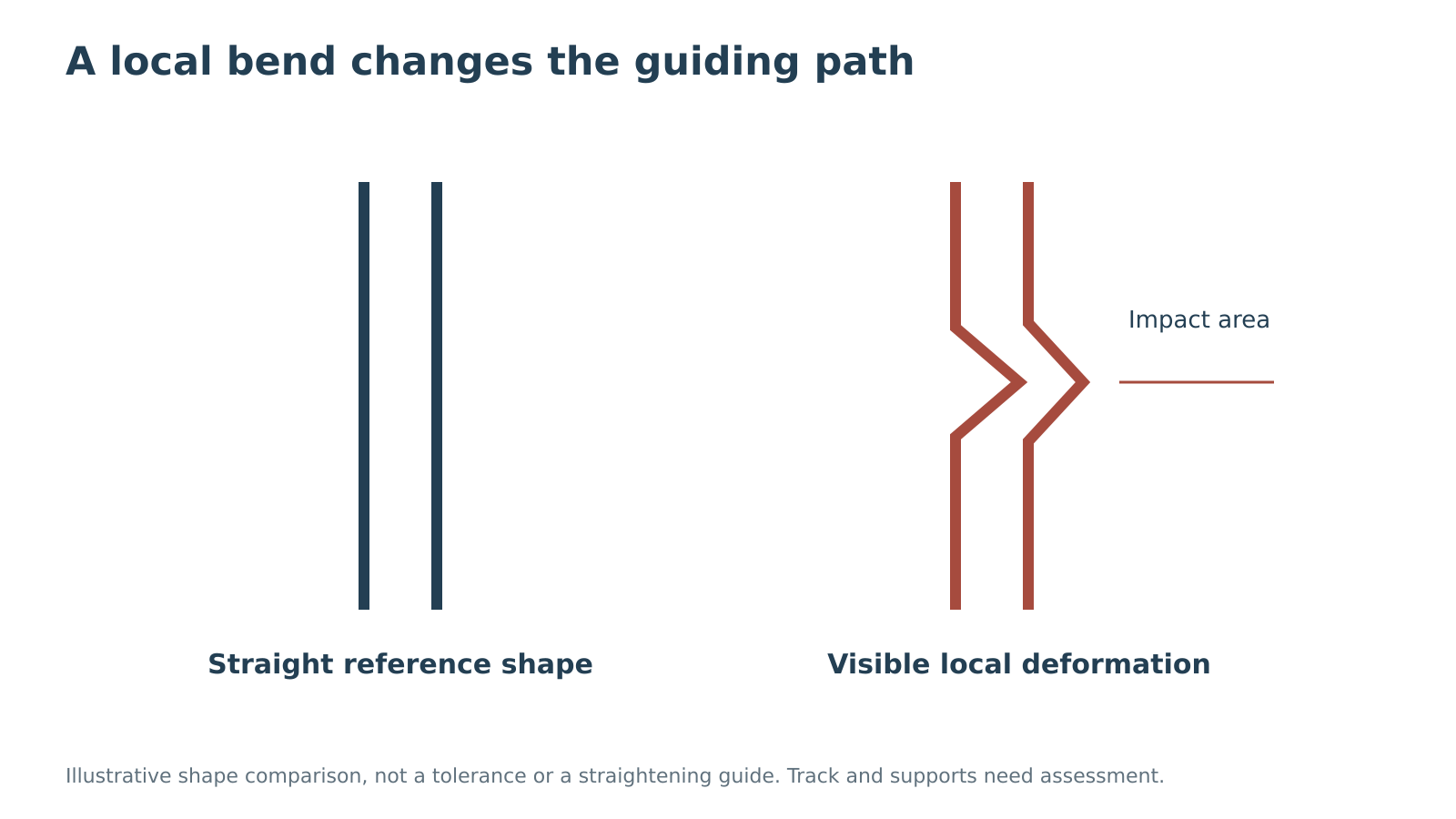
For example, a track may visibly open or twist near the displaced roller. That does not mean the correct repair is to squeeze it closed with pliers. The required shape and relationship to the rest of the system matter. A visually straighter channel can still have an unsuitable profile, damaged support or unresolved source of abnormal loading.
Likewise, a roller that appears intact from one angle may not be the only affected part. A hinge or section attachment can be damaged; another roller may be carrying the door differently. The point is not that every derailment requires replacing the whole door. It is that the repair decision needs more evidence than whether one wheel can be made to sit inside a channel.
Clopay recommends professional service for bent or twisted tracks and damaged door components. Genie’s safety guidance also says not to operate a jammed door. Those recommendations support stopping the system and arranging assessment rather than trying to overcome the jam with motor force.
Photographs that show relationships
Start with a wide view of the stationary door from a safe location outside the opening. Include both sides if you can do so without moving into the hazard area. This helps establish the door’s present height, whether it is tilted and where the visible displacement occurs.
Then take a detail view of the affected region using zoom. Include some surrounding track and the adjacent section, not just the wheel. A very tight crop can make a top roller, middle roller and unrelated piece of hardware difficult to distinguish. If the detail cannot be photographed safely, omit it.
Do not move stored objects that are holding or touching a damaged door. Do not remove covers, loosen supports or operate the door while another person films. Explain any obstruction in the photograph instead. The service provider can plan access rather than receiving a cleaner picture produced by a risky change.
Include a short timeline: the last normal operation, the first abnormal event, any recent impact and any attempted intervention. If someone has already pushed the door or altered a bracket, report that plainly. It changes what must be checked and is more useful than presenting the current position as untouched evidence.
Questions that make a repair proposal clearer
Ask what is actually displaced and what is damaged. These are not necessarily the same list. A repair may involve restoring the correct path, replacing damaged components and correcting the condition that allowed abnormal movement. The scope should identify which of those tasks applies to your door.
Ask whether the track itself remains suitable for use and how that conclusion was reached. If replacement is recommended, ask which track section and compatible configuration are required. Similar-looking tracks are not a reason to mix parts without checking the door system.
Ask whether the door sections, roller attachments and counterbalance components were affected. The technician should distinguish observed damage from a precautionary recommendation. There is no need for a dramatic prediction or a universal list of parts that every off-track door must receive.
Finally, ask how the repaired door will be checked before it returns to normal use. A door that closes once is not the same as a completed assessment of travel, balance, attachment condition and the opener’s specified safety functions. The work record should explain what was restored and any remaining limitation.
What should you expect at handover?
The explanation should connect the original symptom to the completed work: where the roller or door was displaced, what condition was found and what was repaired or replaced. If the original cause cannot be confirmed, that uncertainty should remain explicit rather than being replaced by a convenient story.
Keep the component description and any manufacturer identification with your maintenance records. If a technician advises a later repair, ask whether normal operation is acceptable in the meantime and have the limitation documented. Do not infer permission from the fact that the door was moved during service.
For help with a track-system assessment, see garage door track service. If the confusing part is a bracket rather than the roller, our bracket identification guide explains why location and function matter. The safest useful action before that assessment is to document the stationary condition—not to recreate the derailment or try to erase its visible evidence. For urgent service availability, see emergency garage door repair. Calls are answered daily from 6 a.m. to 11 p.m.; confirm availability and arrival arrangements when calling.