
Visible roller wear should be described together with the wheel’s location and door condition.
Visible wheel damage, a bent stem or a roller outside its track needs assessment. Observe from a clear position without removing rollers or using noise alone to decide which part has failed.
A roller is easy to overlook until the door starts scraping or you notice a damaged wheel beside the track. The useful question is not simply whether the rollers look old. It is whether a visible condition has changed, whether a component appears damaged, and whether the door has already shown a reason to stop using it.
You can collect useful information without removing a roller, touching a cable or running the door repeatedly. This guide separates observations a homeowner can report from the mechanical assessment needed to decide what should be replaced. It also explains why a photograph of one wheel cannot establish the condition of the entire door.
Know which part you are looking at
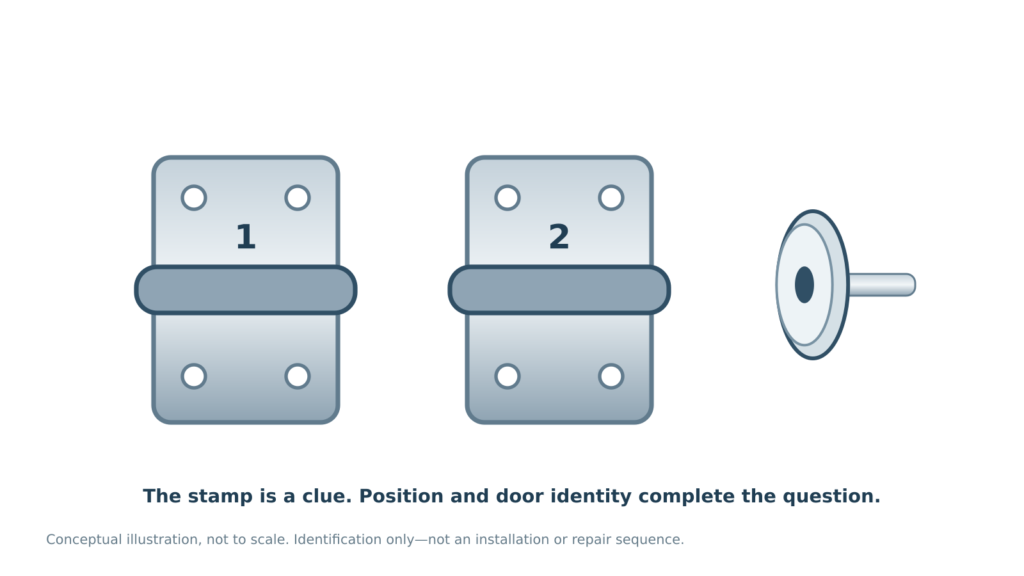
On a sectional door, the roller wheel travels within the track. Its metal stem extends into a holder associated with the door’s hardware. The wheel, stem, holder and track are related, but they are not interchangeable names for the same part. A bent support beside an intact wheel needs a different description from a chipped wheel on an apparently straight stem.
Start with a wide view of the stationary door from a clear position. Identify which side and approximately which section the suspect part is beside. Then use the camera’s zoom, if useful, rather than bringing your face or fingers into a pinch point. “Left side, second joint above the floor, wheel visibly cracked” is a more informative report than “the track is bad.”
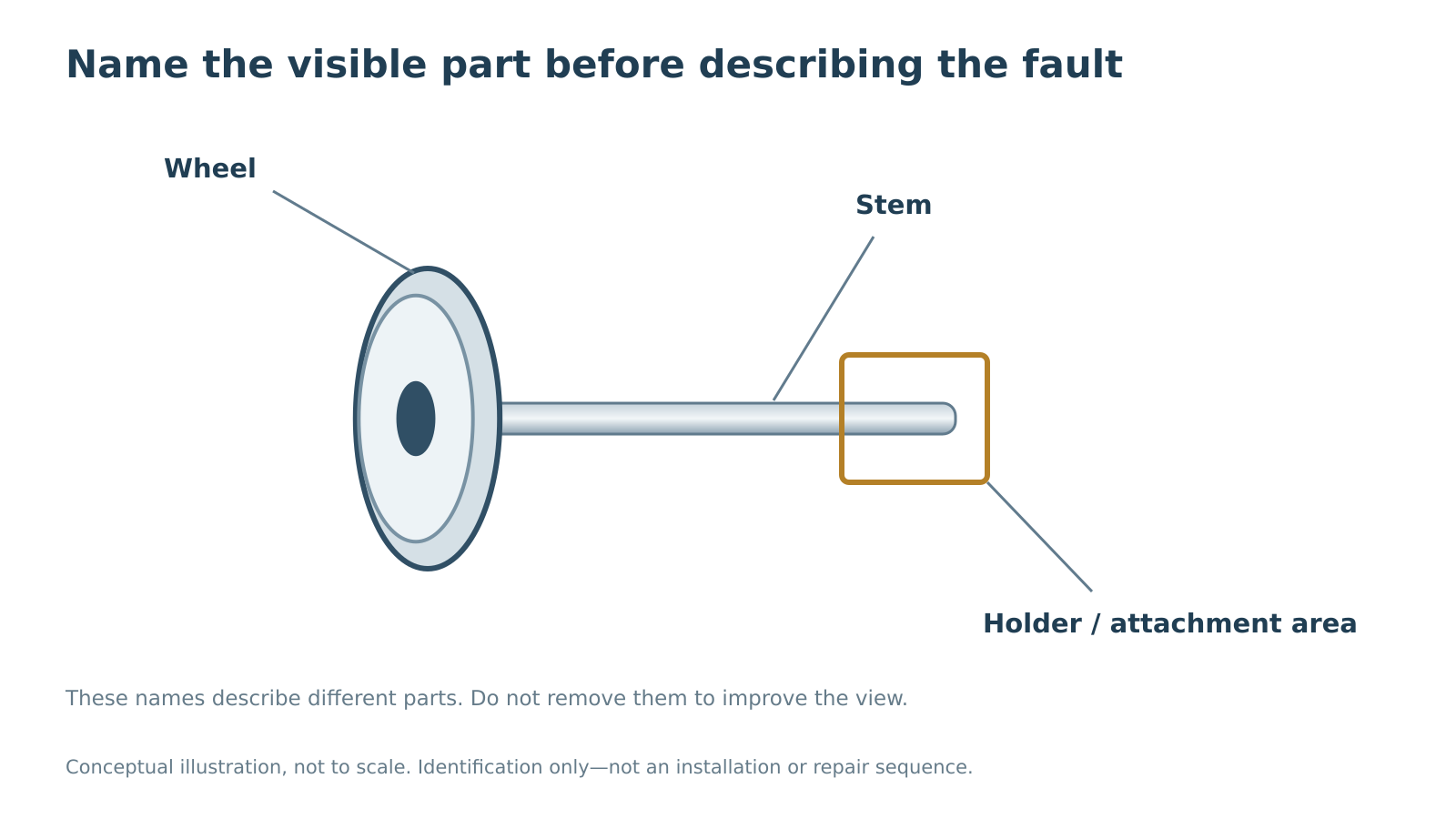 Select the diagram to view it at full size.
What visible wear can look like
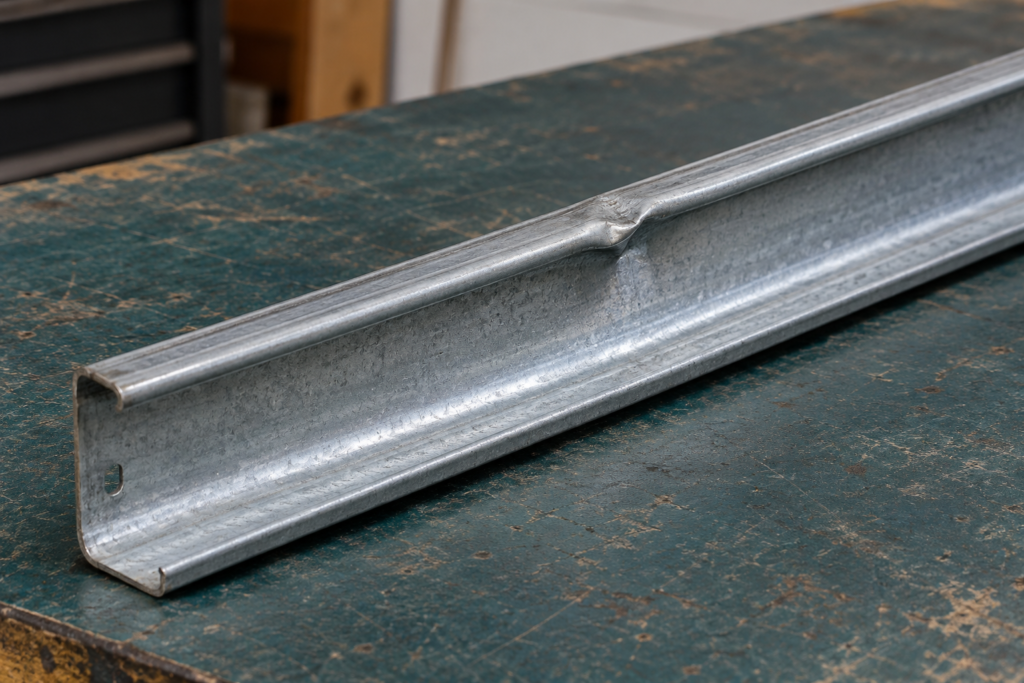
Genie’s maintenance guidance lists cracked or chipped rollers, distorted wheels and bent shafts among the conditions to inspect. Those are useful visual categories, not a home measurement standard. There is no universal photograph-based limit that tells you how much damage is acceptable.
A crack in a wheel and a line of dirt may initially look similar. If you cannot distinguish them without touching or manipulating the part, describe the uncertainty rather than testing it. Likewise, a camera angle can make a straight stem look tilted. A second photograph from another safe standing position may clarify the view; pulling on the stem will not make the observation safer.
Surface discoloration alone does not tell you the state of a bearing or the load the part is carrying. The reverse is also true: a clean-looking wheel is not a certificate of good condition. This is why a technician should assess both the visible part and its relationship with the door, rather than treat appearance as the only test.
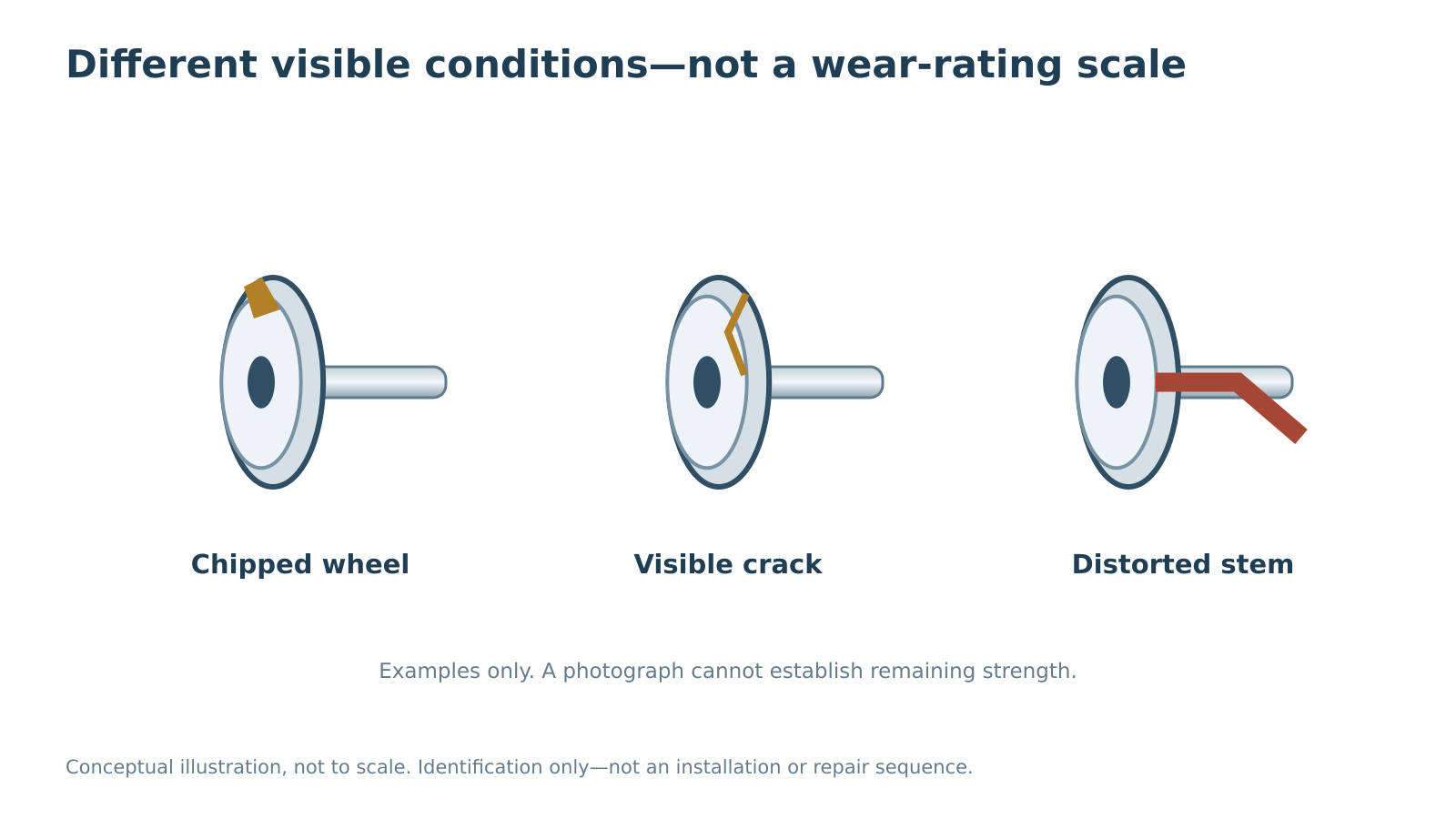 Select the diagram to view it at full size.
Three observations that change the next action
A visibly broken wheel, bent stem or loose support also calls for service before further use. Record the door’s current position and any associated change you already noticed. Do not pull an emergency release on an open or unstable door to see whether the motor is causing the problem.
If you have only a noise and no visible damage, avoid jumping straight to a roller order. Tell the assessor where the sound seemed to come from and when it happened. You do not need to reproduce the sound to make the report useful. A new rattle after an impact, for example, is a different history from a longstanding sound that has not changed.
Why a squeak does not identify the failed part
A garage door is an assembly of moving and supporting components. The noise you hear in the room is not a reliable parts label. A sound perceived near a roller may involve its holder, the nearby track or another part of the door. Calling every squeak a dry roller can lead to treatment that leaves the actual problem unexplained.
Describe the timing in ordinary language: before the door moved, during the first part of travel, near the curve, or throughout the movement. Mention whether the symptom began after a repair, impact or other change. Do not turn those observations into a definite diagnosis yourself. Their value is that they help the technician choose what to examine.
This article is not a lubrication schedule. Products and permitted application points depend on the equipment. Do not spray lubricant onto a moving mechanism or assume that a quieter result proves a damaged component is sound. When visible damage exists, making the noise less noticeable is not an adequate repair objective.
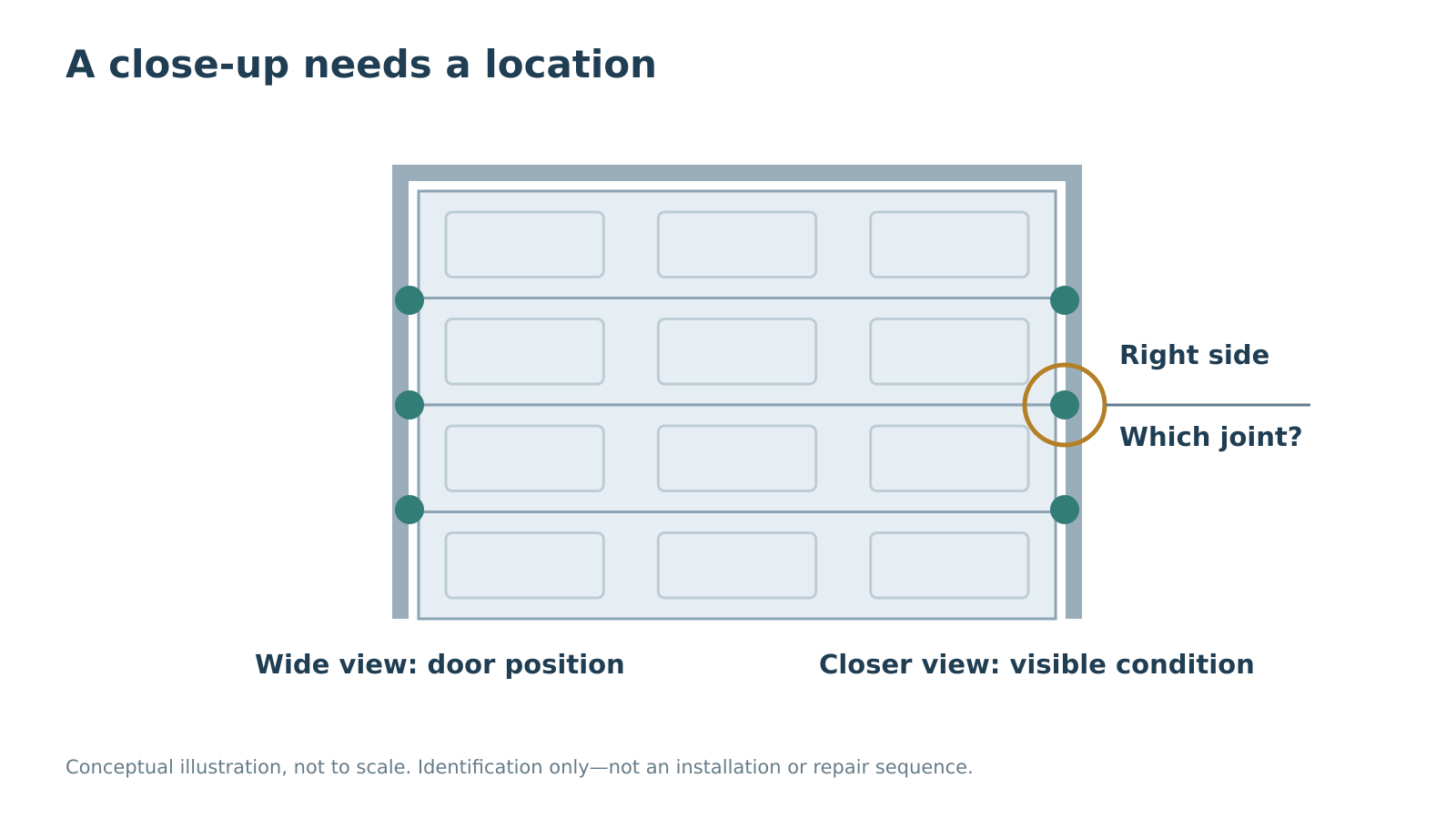 Select the diagram to view it at full size.
What “replace the rollers” should mean on an estimate
Ask which rollers are affected and why the proposed scope is appropriate. A recommendation to replace several parts may be reasonable, but it should be explained using the observed condition and compatible replacements—not only a generic age rule. Ask whether the quoted work includes assessment of the related holders and track.
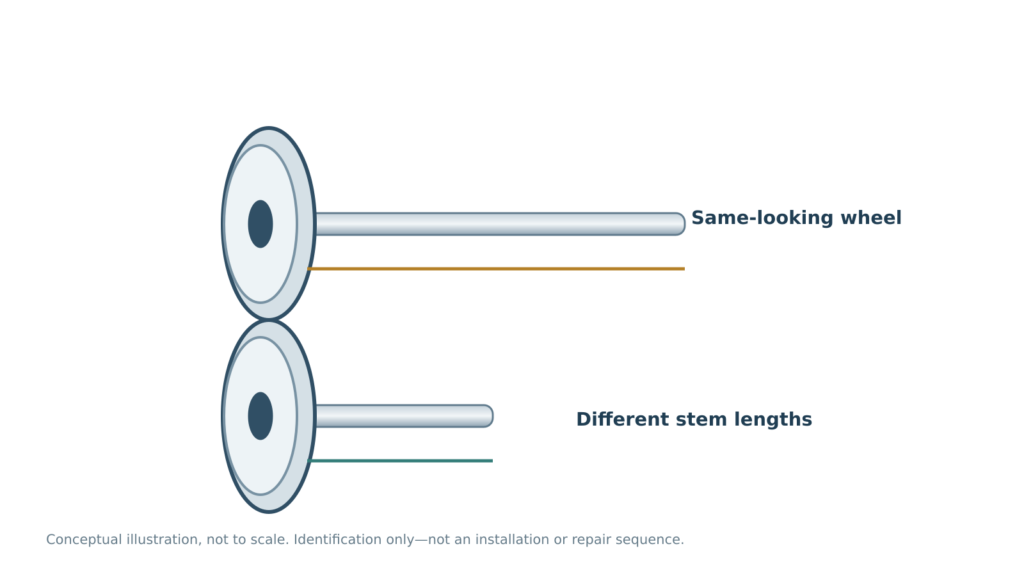
A retail listing can describe wheel material and dimensions without establishing suitability for your door. Clopay’s parts guidance identifies roller diameter and stem length as selection details. The installer should also establish the applicable door and hardware specification rather than select the closest-looking part.
Keep separate three questions: what is damaged, which replacement is compatible, and what work is needed to return the system to service. A single line reading “new rollers” does not necessarily answer all three. Request clarification before authorizing work, especially if the same proposal also includes track or door-section repairs.
A practical service report you can make now
Use one wide photograph to show the door’s current position and one closer image taken from a safe location to show the suspect component. Keep the original files rather than applying a filter that could conceal a crack or exaggerate discoloration. If a safe photograph is not possible, a verbal description is enough.
Write down when you first noticed the issue, whether it followed an impact or previous service, and whether the door moved abnormally before you stopped using it. Include the door model from paperwork or a readily accessible label if available. There is no need to climb beside a damaged door to complete the record.
An example report might read: “The door is closed. A wheel on the right side appears chipped, and a scraping sound began yesterday. I have not operated it again.” That description gives the service provider a condition, location and timeline without pretending to diagnose an internal failure.
What a close-up cannot show
A close-up can document a missing piece of wheel material, but it cannot reproduce the load and alignment conditions of the installed system. It may also leave the neighboring holder and track outside the frame. Ask the assessor to explain which conclusions can be drawn from the image and which require examination in person.
Do not interpret an inconclusive photograph as reassurance. If the door already behaved dangerously, that history remains important even when the image looks ordinary. Conversely, avoid ordering every component visible in the photograph simply because one part is questionable. The useful result of the inspection is a defined problem and compatible repair, with uncertainty resolved rather than hidden.
After repair, keep the information that prevents guesswork
Ask the technician to explain what was found, which components were changed and what checks were completed before handover. Retain the part description and invoice with the door’s manuals. If a similar symptom returns, that record helps distinguish a new concern from an unresolved one.
Follow the maintenance instructions appropriate to the installed parts. Do not replace an equipment-specific schedule with a promised number of years from a generic article. Usage, product construction and conditions differ, and a calendar estimate cannot overrule a visible defect.
For a door with damaged rollers or uncertain track condition, Local Garage Experts’ track and roller service can assess the connected system. Call (323) 924-8777 daily from 6 a.m. to 11 p.m. Free estimates, free diagnostics and no service call fee are available. The useful next step is an identified condition and a clear repair scope—not an unsupported guess about which wheel to buy.
Sources & manuals
Use the documentation for the actual installed model..