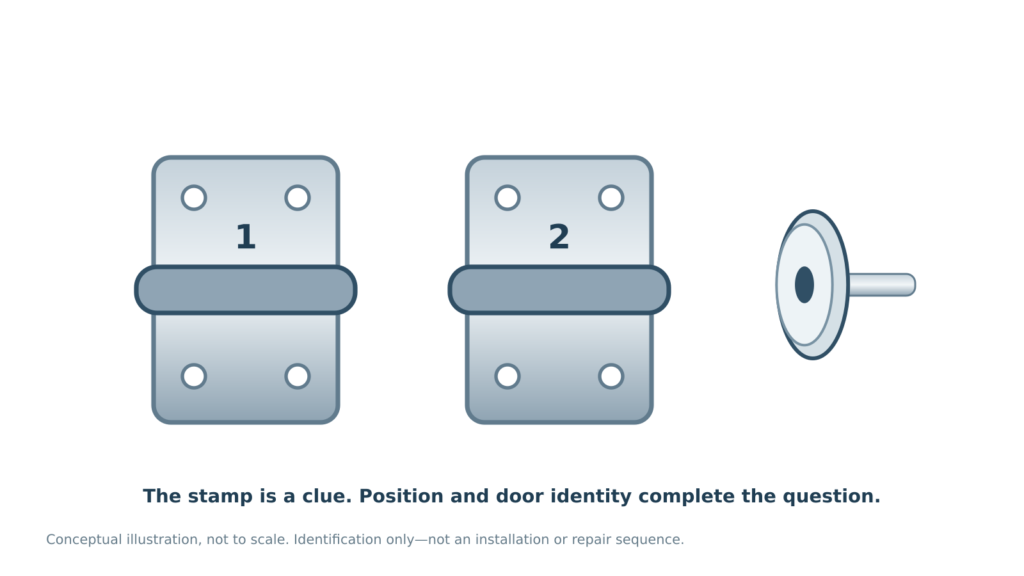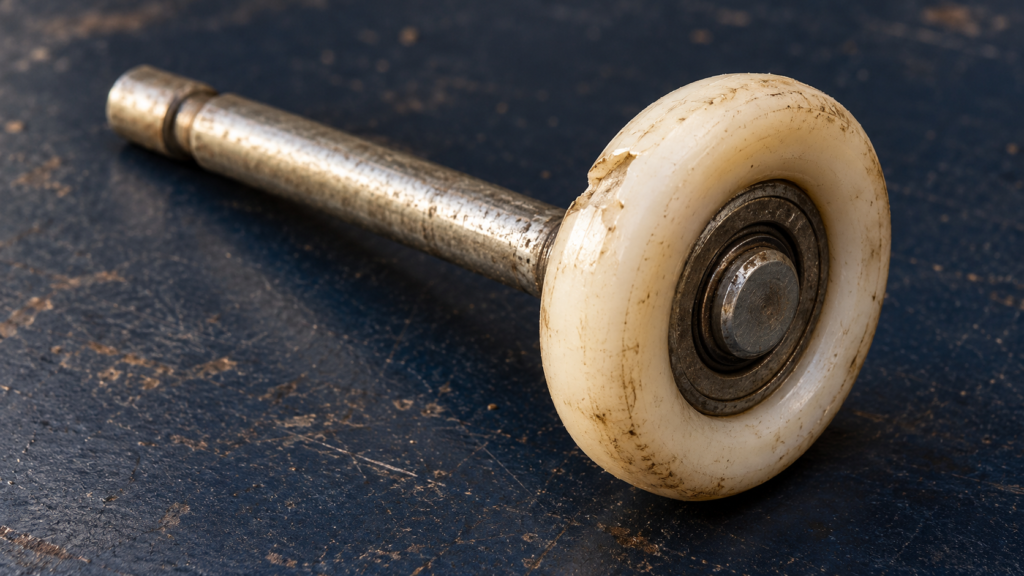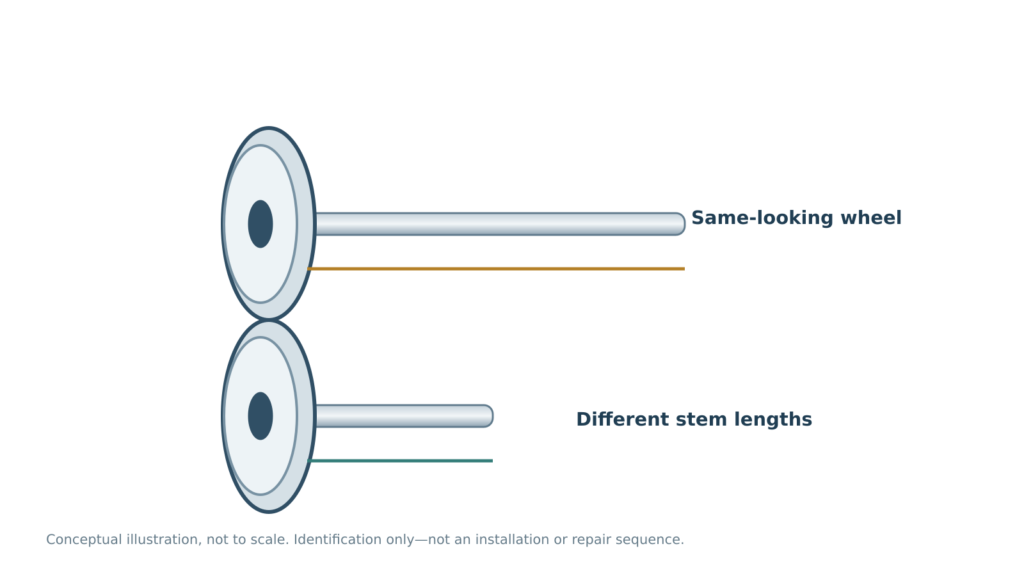
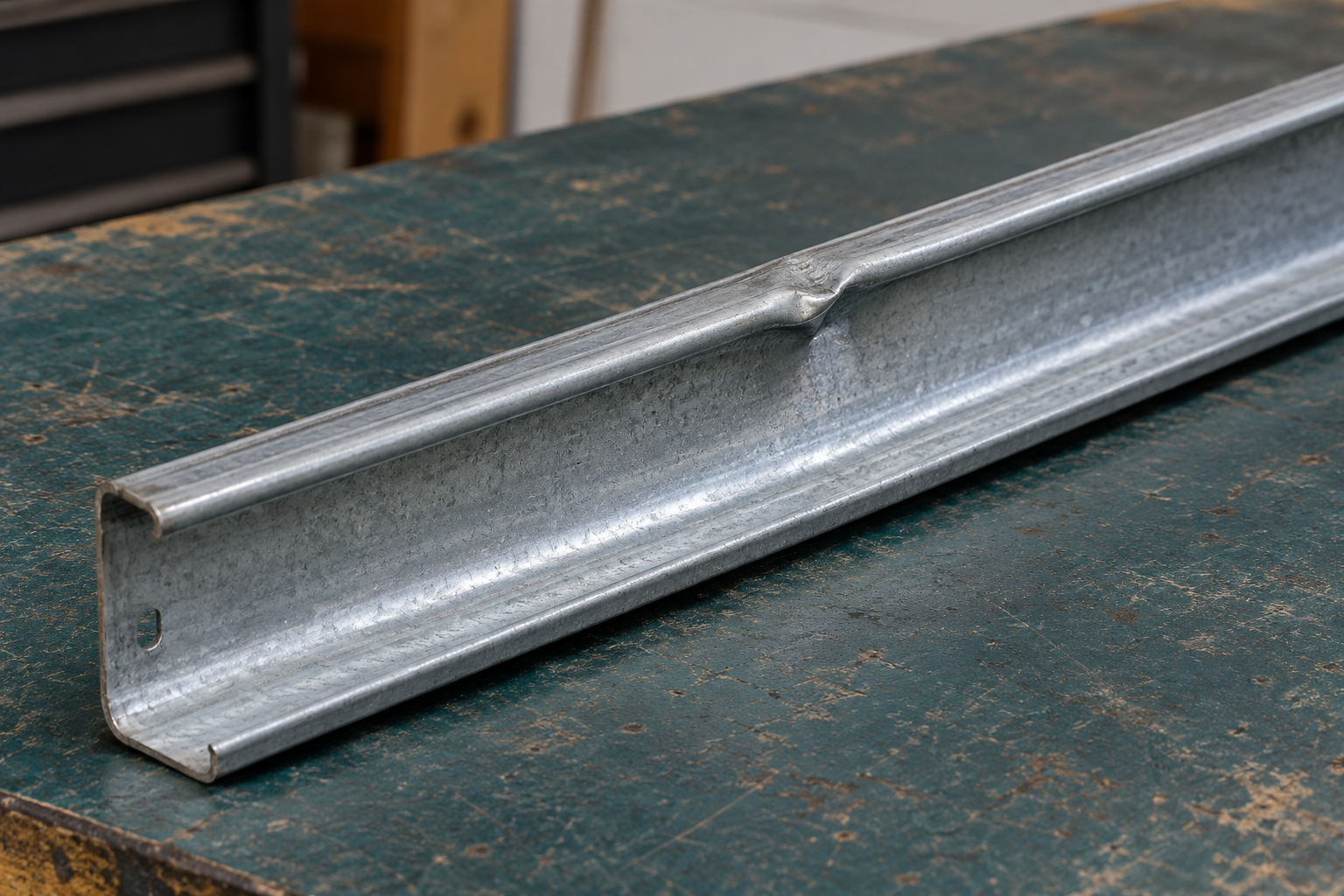
Track deformation can affect the roller path and requires assessment of the complete guiding system.
A designed track curve and a local bend are different observations. Stop using a damaged or unstable door and have the track, supports and alignment assessed instead of hammering the channel straight.
The first useful step is not to hammer the metal straight. It is to establish what changed and whether the damage is limited to the track. A repair that makes one edge look better may leave the guiding profile, mounting or nearby components unsuitable for normal travel.
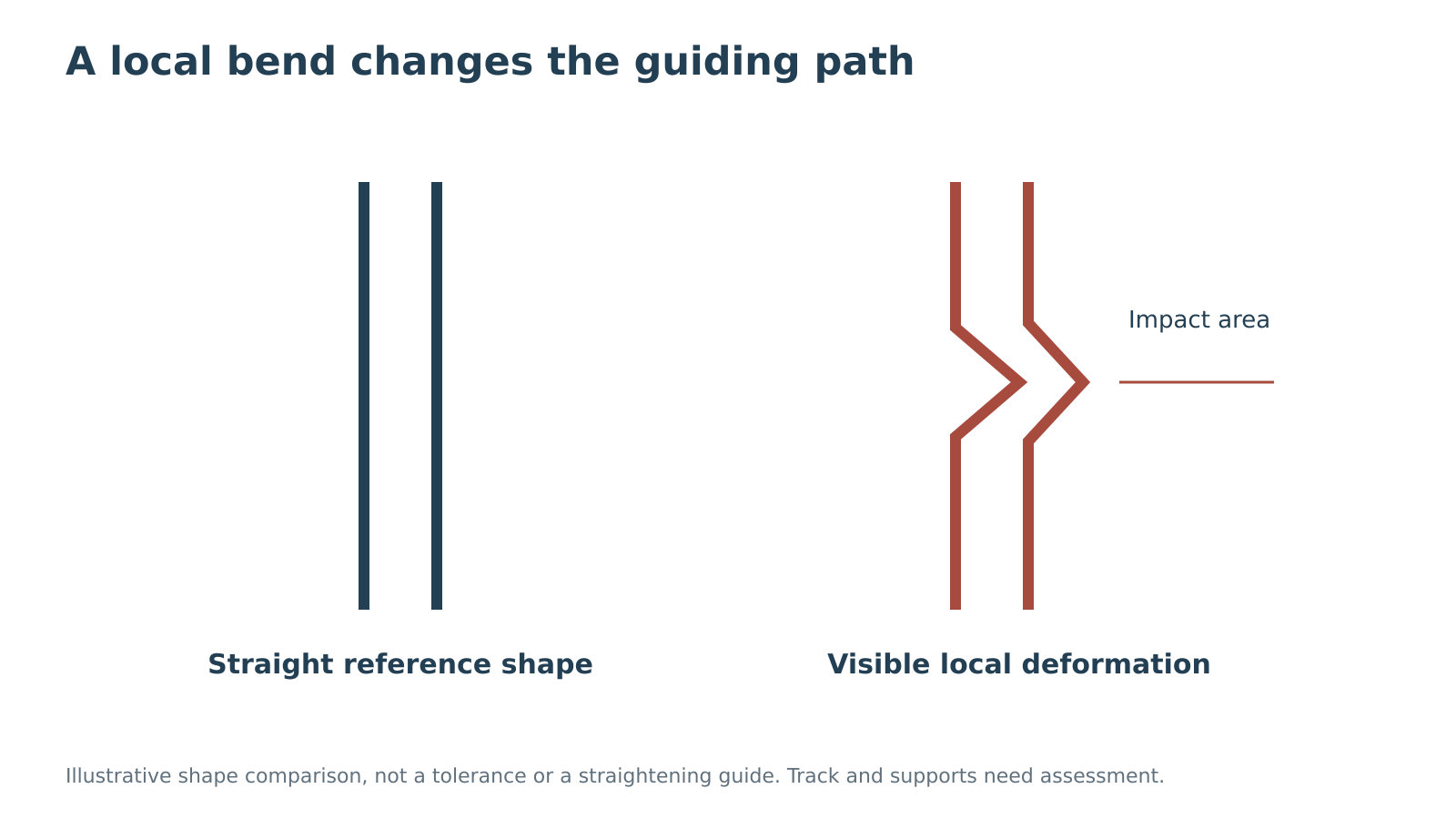 Select the diagram to view it at full size.
Separate an intentional curve from local damage
A sectional door’s track normally includes a curved transition from vertical to horizontal travel. That designed curve is not a defect. A local kink, crushed area, twist or abrupt change in shape is a different observation, especially after a vehicle or stored object struck the installation.
Look only from a safe position at the stationary system. You do not need to follow the track by hand or run a roller past the suspected damage to decide that it needs attention. If you cannot tell whether the shape is designed or damaged, send a wide view and describe the concern rather than attempting a correction.
The track can also be displaced while its channel appears relatively straight. This brings the supports and mounting into the assessment. Shape and position are related questions, but they are not the same one: a straight-looking channel can still be in the wrong relationship to the door.
Clopay’s maintenance guidance specifically recommends professional service for bent or twisted tracks. The recommendation is useful because a track is part of a moving assembly, not an independent trim piece that can be reshaped without considering what it guides.
What an impact report should include
Start with what made contact, where it occurred and whether the door was moving. Be factual rather than estimating a force or speed you did not measure. “A car mirror struck the left vertical track while the door was open” is more useful than “It was only a light hit, so the damage cannot be serious.”
Photograph the affected region with enough surrounding context to show where it sits in the installation. Then add a wider view of the stationary door if safely possible. The most useful images establish the relationship between track, support and nearby section, not merely the appearance of a small dent.
If an object remains against the track or door, do not move it when doing so could change the support of a damaged assembly. Explain the situation when arranging service. A less tidy picture is preferable to a scene altered by an unsafe attempt to make access easier.
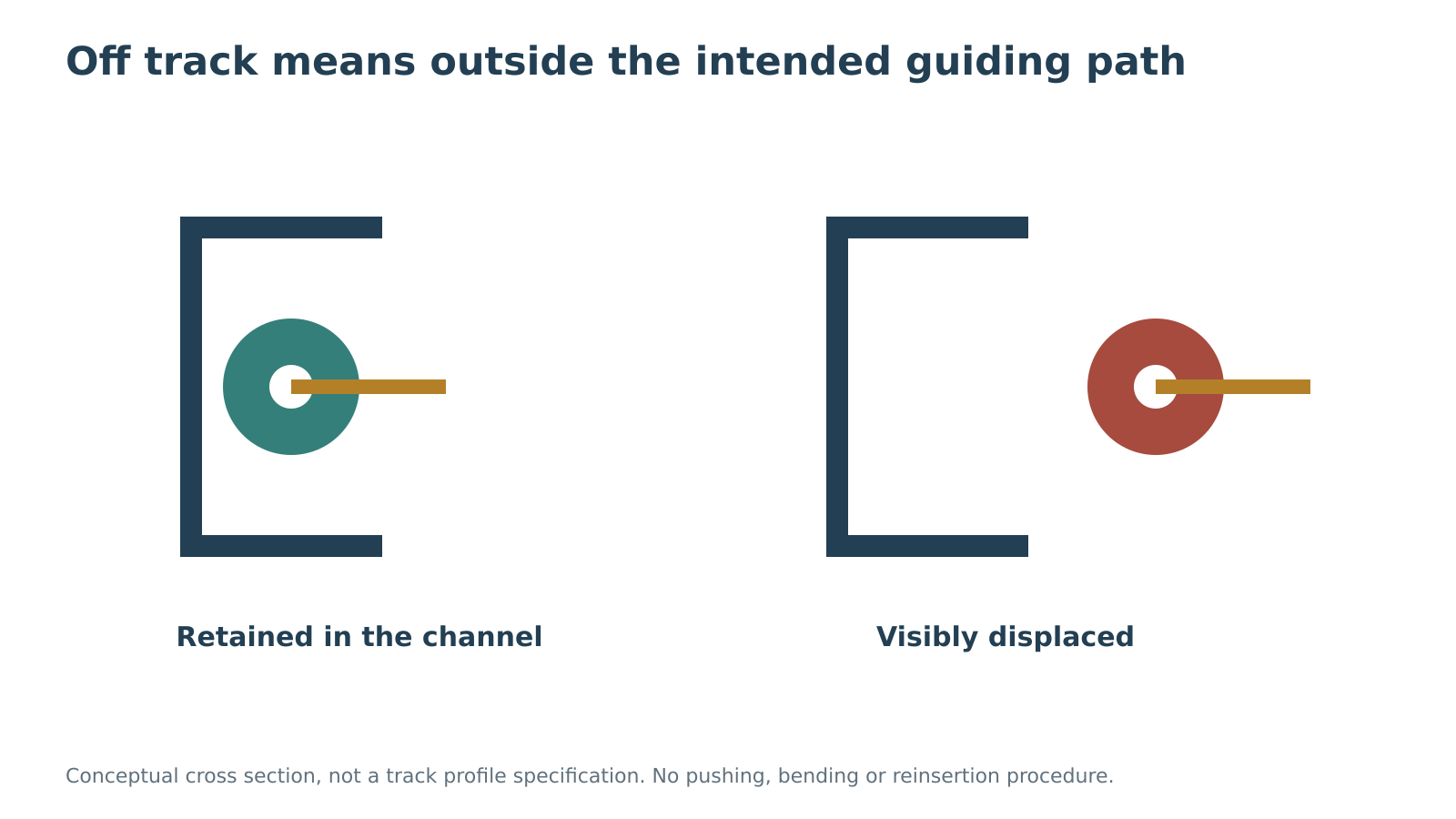 Select the diagram to view it at full size.
A bent track is not automatically an off-track door
A roller may still be inside the channel even when the track is visibly damaged. That does not make the deformation harmless. Conversely, a roller outside the track is a distinct displacement that should be reported explicitly. Avoid assuming either condition from the other.
If a wheel is visibly outside its intended path, use the off-track guide for recognition and the keep-clear boundary. If the door binds near a curve but no bend is established, the curve-binding guide explains why the location is a clue rather than a diagnosis.
This distinction also improves the repair request. “Track visibly crushed, rollers not safely visible” tells the technician what is known and what remains uncertain. It avoids a quotation discussion based on an assumed derailment that no one has actually observed.
Why hammering and loosening are not neutral experiments
The guiding channel has a profile as well as a position. Reshaping one visible flange does not demonstrate that the roller can travel correctly through the whole area. Tool marks and an apparently straight edge are not substitutes for the applicable system requirements.
Loosening a mounting point introduces another variable: the track may move relative to the door or surrounding support. On an already damaged installation, that can change how components bear against one another. Do not treat a bracket adjustment as harmless because it is not a spring winding operation.
A door opener is also not a straightening tool. Repeatedly driving the door through resistance can apply load to rollers, hinges, sections and the opener connection. Increasing force to overcome a damaged path does not repair that path or establish safe operation.
Keep people away from a jammed or displaced door and do not release a suspect open door from the opener. If access is blocked, arrange service around that fact. Do not improvise props, clamps or a lifting team to make the door pass the damaged area.
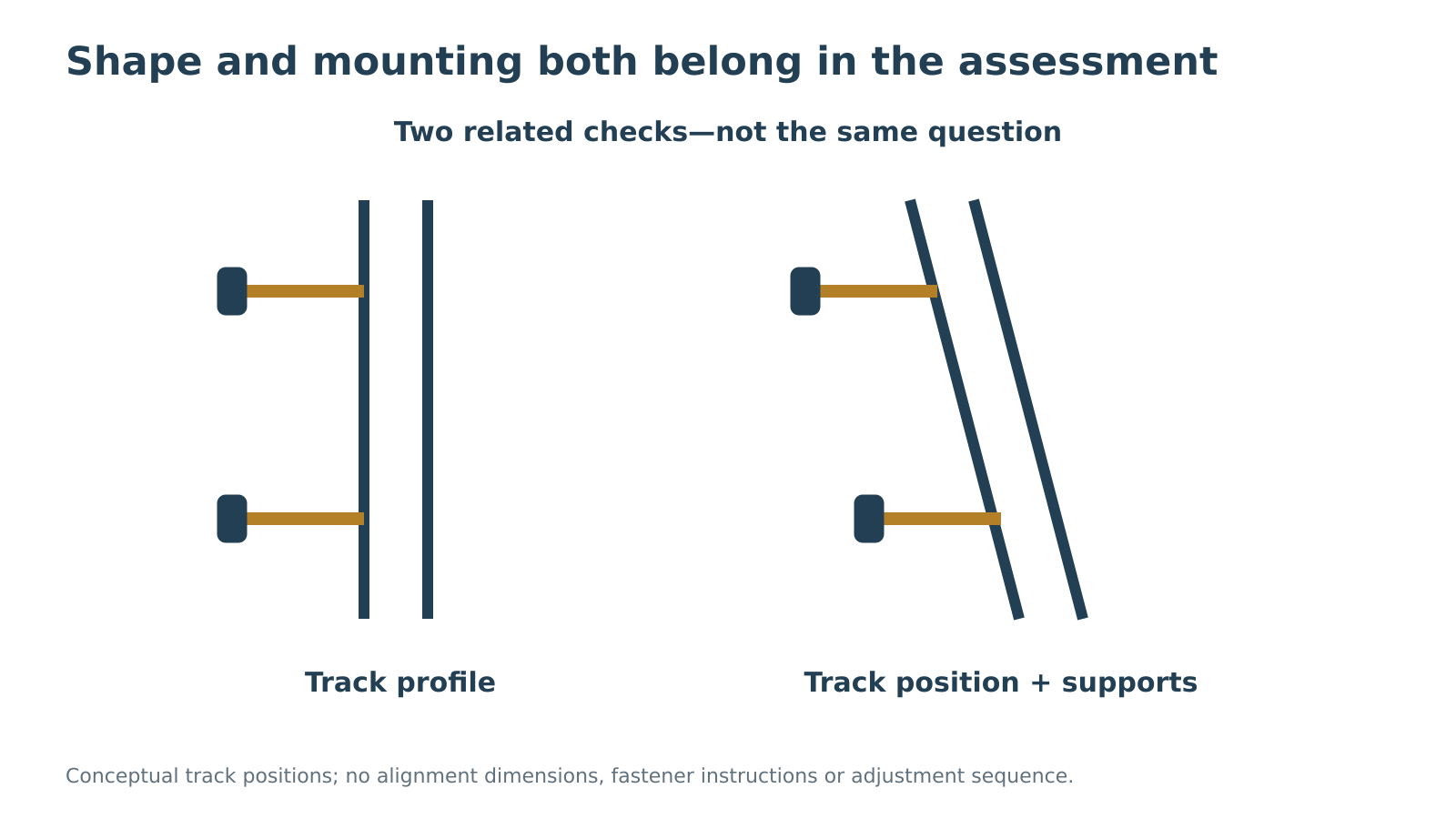 Select the diagram to view it at full size.
Repair or replacement: ask for the basis, not a universal rule
This guide cannot classify a track as repairable from a photograph. The material condition, extent of deformation, location, supporting structure and manufacturer requirements all matter. The service explanation should identify what was found and why the proposed correction is appropriate.
If replacement is recommended, ask which section of track is affected and how the replacement matches the door’s configuration. A similar channel width in an online listing does not establish compatibility. The designed path, transitions and connections must remain suitable for the installed door.
If the proposed work retains the track, ask how its suitability will be confirmed and whether the supports or nearby components also require attention. “We will make it look straight” is not a complete description of the outcome you need. The aim is reliable guided travel within the intended system.
There is no automatic requirement to replace every component after every impact, but there is also no basis for declaring only the track affected before inspection. Ask the technician to separate observed damage, necessary corrective work and optional recommendations. That makes the scope easier to understand without inventing a universal repair price.
What else belongs in the assessment?
The nearby rollers and their holders can help explain how the door interacted with the damaged path. Hinges, section attachments and the sections themselves may also need checking. If the door became uneven or a cable changed position, the counterbalance system belongs in the professional assessment as well.
Those are questions for the service visit, not a checklist for dismantling the door. Do not remove a roller to inspect its hidden side or loosen a bottom bracket to expose the cable. Our bracket guide explains why similar-looking attachment points can carry very different risks.
Give the technician any known previous repair history. A track that was moved or replaced earlier may require identification of the existing configuration before parts can be selected. A clear history is more valuable than assuming that the installation is original because it has been in place for years.
Before the door returns to use
The completed work should restore the intended guiding path and address associated damage, not merely allow one passage through the formerly bent area. Ask what mechanical travel and balance checks were completed and how the opener’s required safety functions were verified after the door was sound.
Keep a record of the repaired or replaced track location, compatible parts and any related support work. If limitations remain, have them stated clearly. Do not infer that normal operation is acceptable because a technician moved the door during the assessment.
For help evaluating track damage, see garage door track service. Your useful contribution is to preserve the evidence of the impact and describe the current condition. Leave the shape, mounting and return-to-service decisions to an assessment of the actual installation—not to how easily the metal seems to bend.