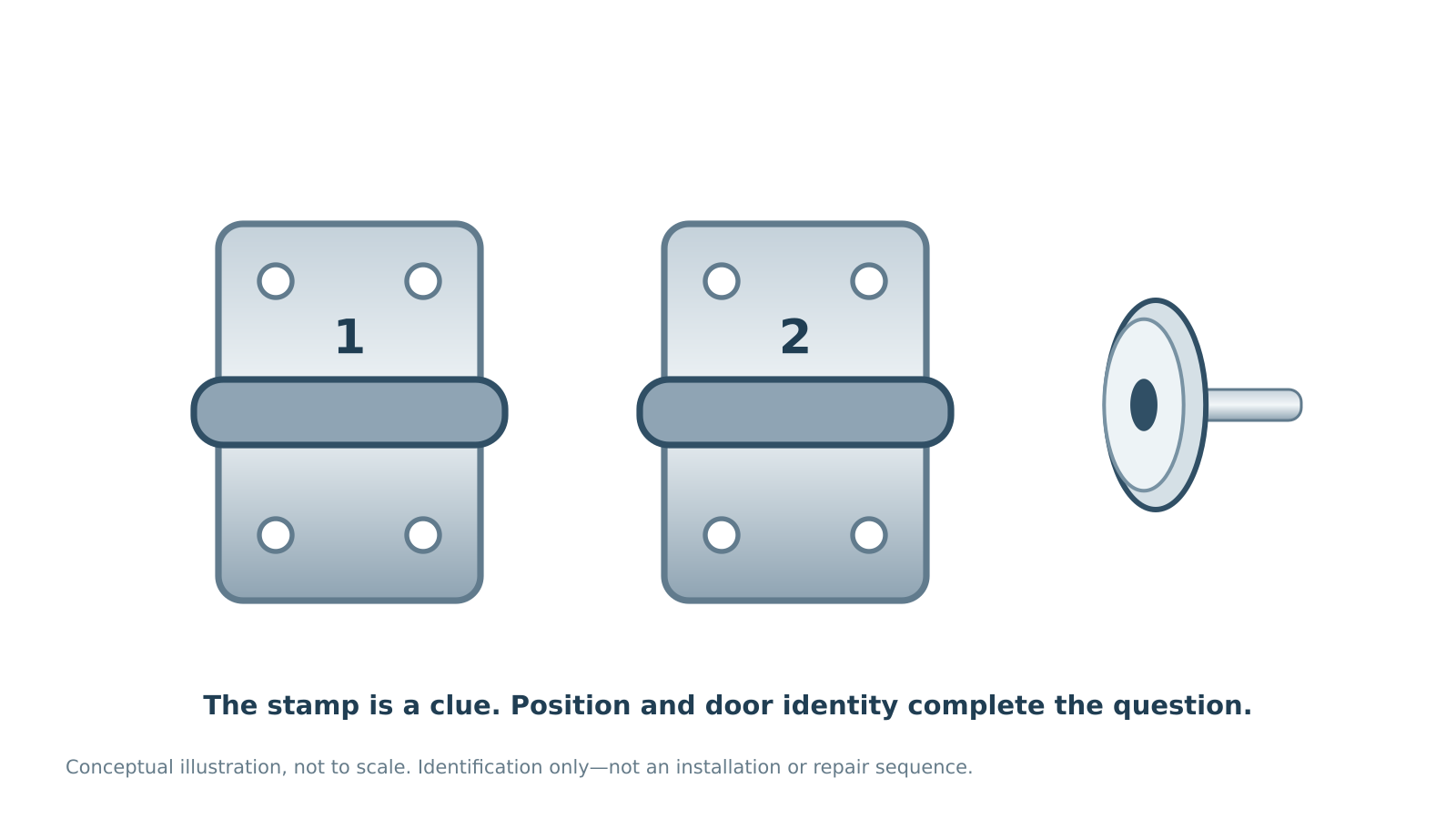
Hinge location and door documentation determine the replacement specification.
A hinge number identifies a position or part within a specified door configuration, not a universal replacement. Match the door’s documentation and the hinge’s location before comparing parts.
A small number stamped on a garage door hinge can look like a size, a strength rating or the order in which the part was installed. It is not safe to guess. On documented sectional-door systems, numbered hinges are associated with particular positions and geometry, and similar-looking parts may not be interchangeable.
This guide explains how to read a hinge-number question without turning it into a replacement tutorial. You will learn what information to collect, why a center hinge can differ from an end hinge at the same section joint, and why the door’s manual is more reliable than a universal online numbering chart.
Start with the hinge’s job in the assembly
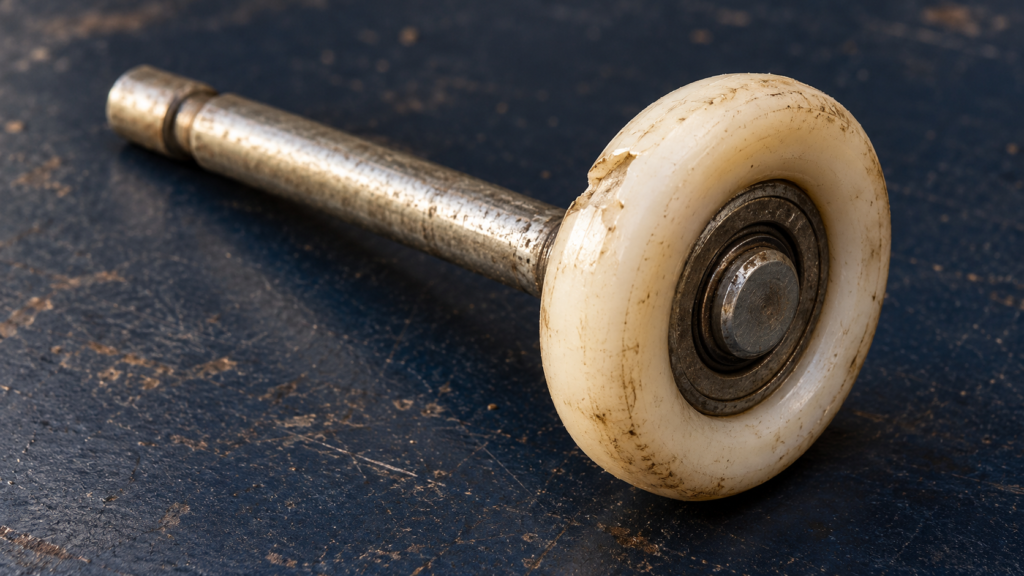
Sectional-door hinges connect neighboring sections so the door can articulate as it follows the track. At the edges, some hinge assemblies also hold a roller stem. Those functions place the hinge in a relationship with both the sections and the track; it is not merely a small plate that happens to fit several screw holes.
The number is useful as a part-identification clue. It is not enough by itself to establish compatibility with a different manufacturer, door construction or hardware arrangement. A familiar “2” does not automatically identify the complete replacement specification.
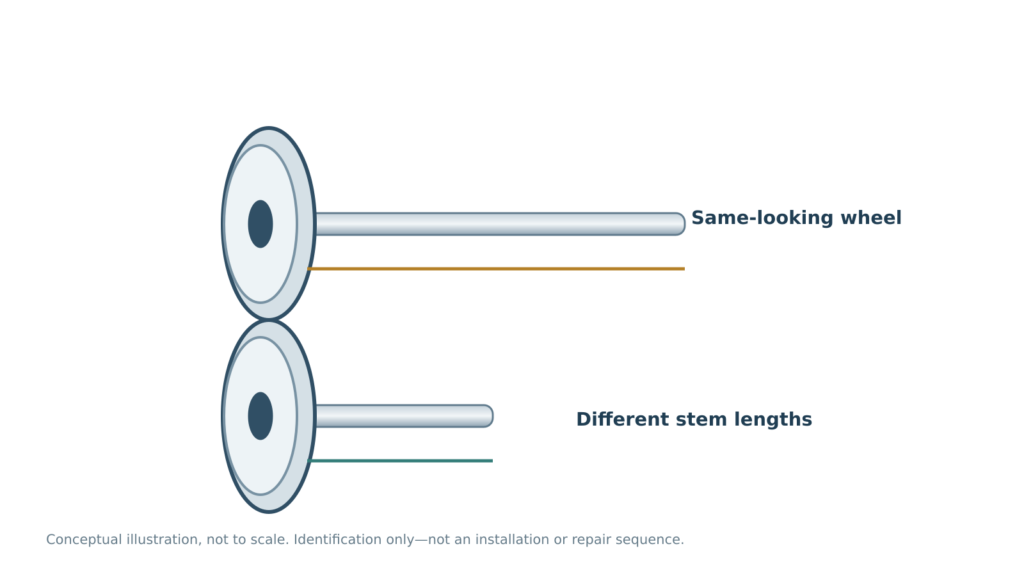
 Select the diagram to view it at full size.
A specific example: Clopay Gallery residential instructions
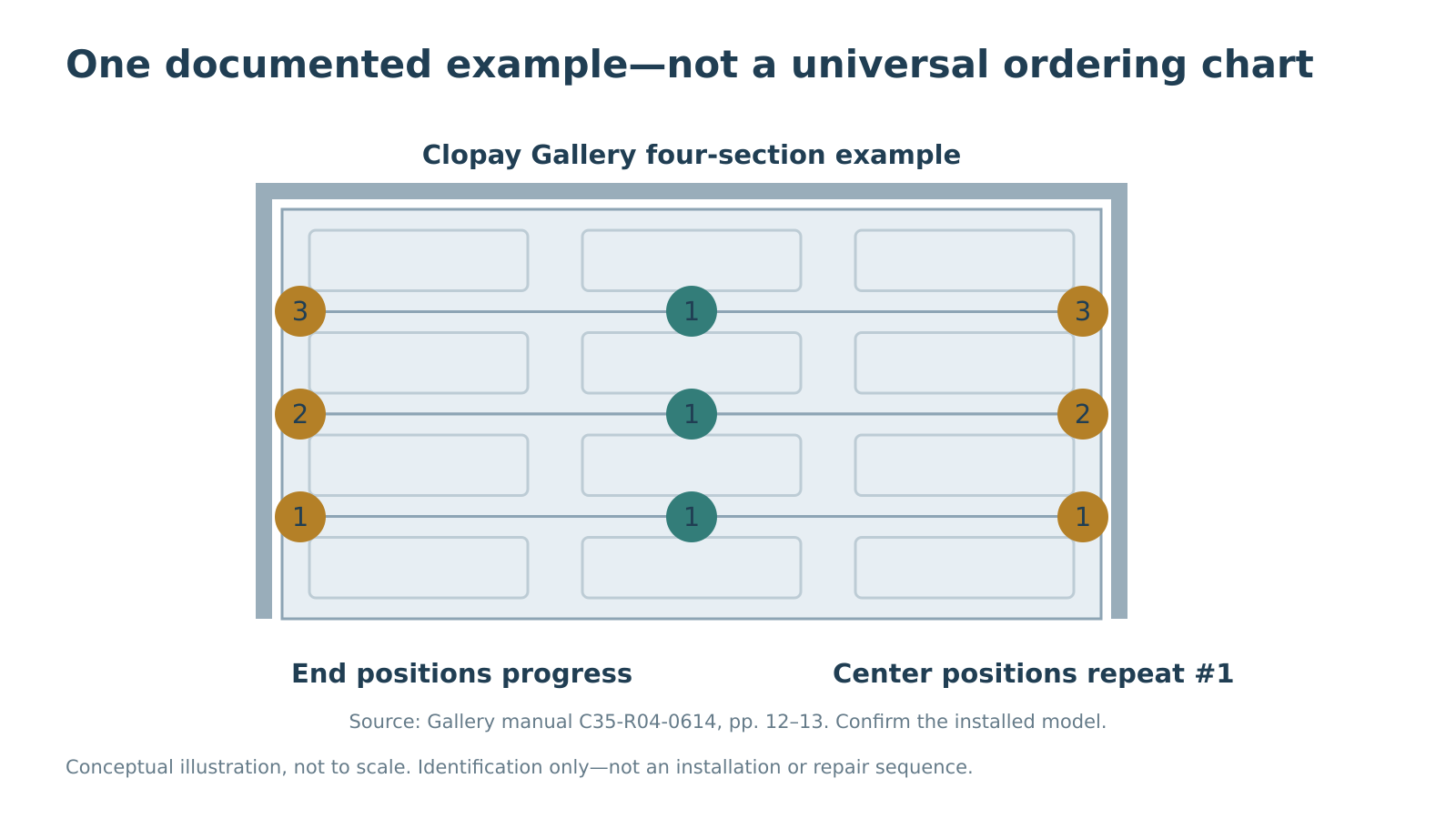
The Clopay Gallery insulated-steel residential manual C35-R04-0614 illustrates numbered end hinges and repeated number-one center hinges. In the four-section example, the end-hinge numbers progress upward at the section joints while center positions continue to use number-one hinges.
That example explains why matching the height of a joint is not enough to decide which hinge belongs there. An end position and a center position can use different numbers at the same horizontal joint. The manual’s configuration—not a general rule about every garage door—provides the answer.
Why geometry matters more than a matching outline
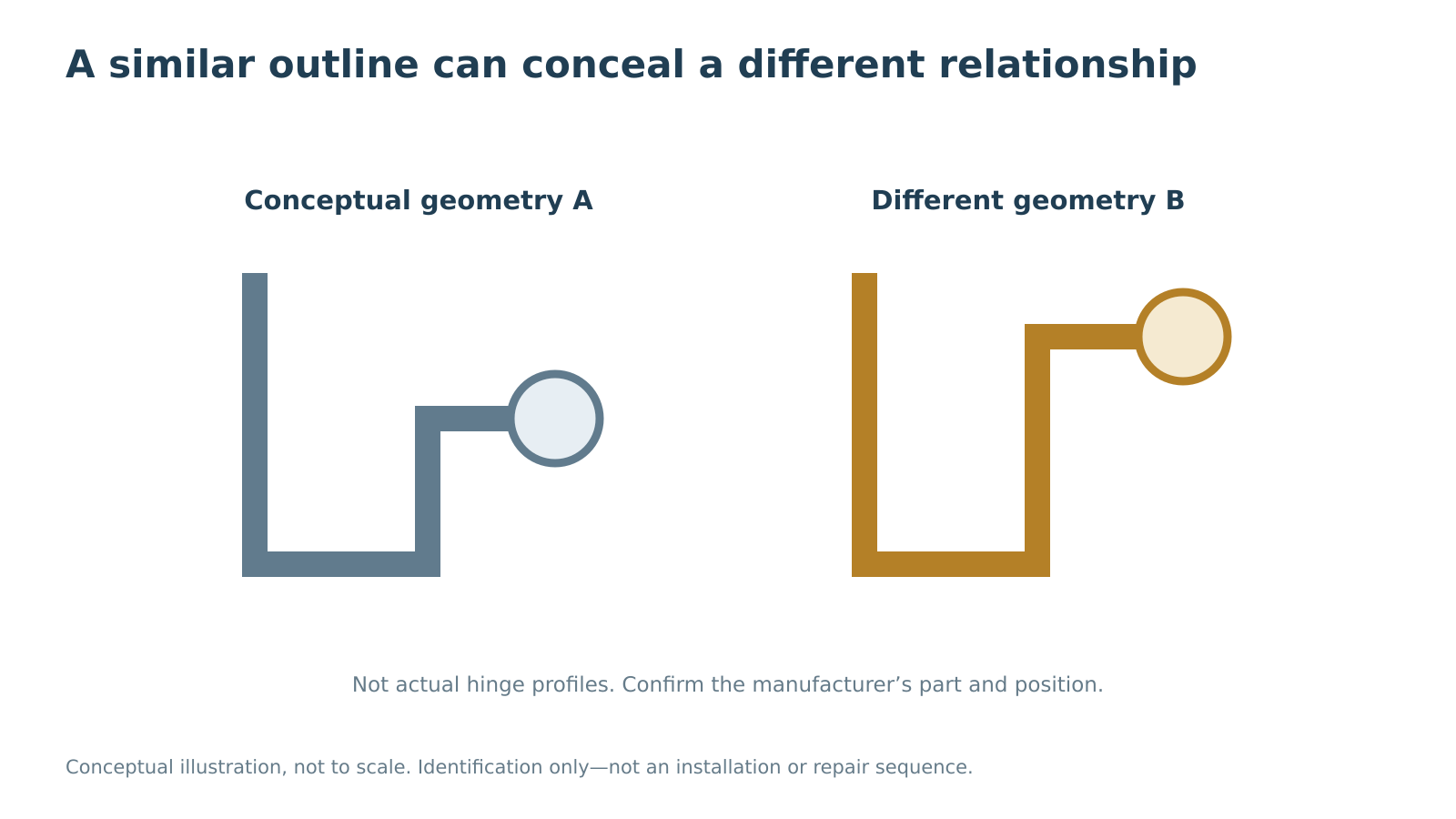
A hinge can look similar when viewed flat while differing in the geometry of its roller-holding portion. The relationship between that holder, the sections and the track matters to the assembled door. A part that accepts the existing fasteners is not therefore proven appropriate.
Ask the supplier to confirm the exact replacement against the door specification and the hinge’s position. If the proposed part differs from what is installed, ask whether it is a documented replacement or whether the existing installation may itself be incorrect. Avoid silently assuming that every old part is original.
Do not bend the hinge, drill new holes or move the roller holder to make a near-match work. Those are not identification steps. The purpose of reading the stamp and documentation is to avoid improvisation in loaded door hardware.
 Select the diagram to view it at full size.
The stamp is evidence—but it needs context
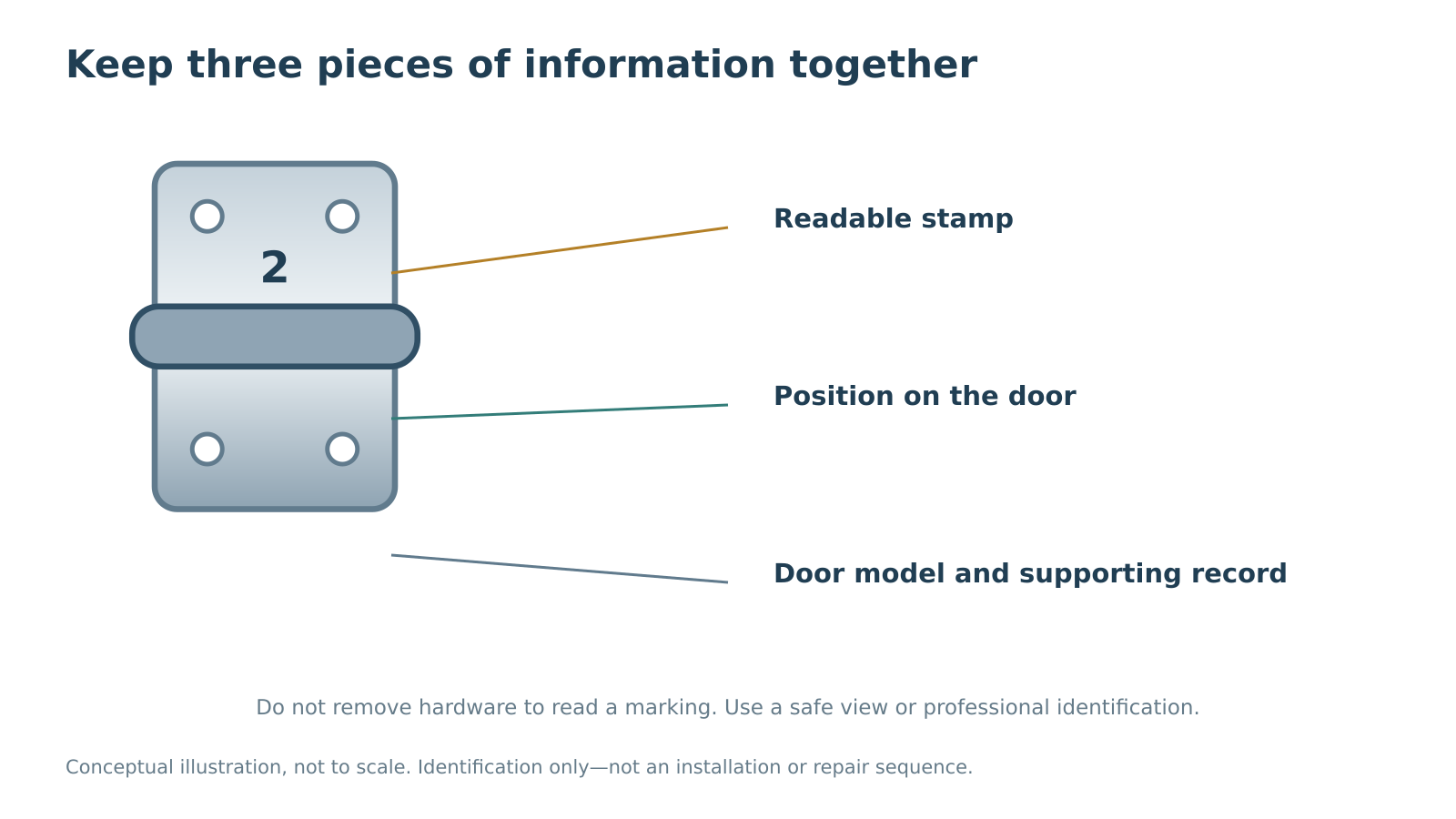
Photograph the marking if it can be seen from a safe position with the door stationary. Include the hinge’s location in a second image or a written note. A close-up of a number alone can be difficult to interpret when several similar components are involved.
Keep the door manufacturer and model separate from the opener manufacturer and model. The motor label may tell you nothing about which door hinge belongs at the edge of a particular section. Previous invoices, installation paperwork and a safely accessible door label can help establish the door identity.
If the marking is unreadable, say so. Do not scrape aggressively, loosen the hinge or reposition the door just to reveal it. A supplier or technician can decide what additional evidence is needed. “Unreadable stamp, left end of second joint” is a useful starting point.
 Select the diagram to view it at full size.
A bottom bracket is not simply another numbered hinge
The lowest hardware can look like part of the same family of metal plates, but its role may be different. Bottom brackets commonly connect to the lifting cable, and their tension hazard is not removed by familiarity with hinge numbers. Do not loosen that assembly while investigating a roller or hinge question.
Clopay’s maintenance guidance recommends professional attention for hinge replacement and warns against removing bottom brackets under tension. This guide keeps the homeowner’s role to identification and observation.
For a visual overview of the different attachment roles, see garage door brackets: identify the part first. If a cable is loose, a door is crooked or a component is visibly displaced, stop operation rather than continuing a numbering exercise.
When the question is damage rather than identification
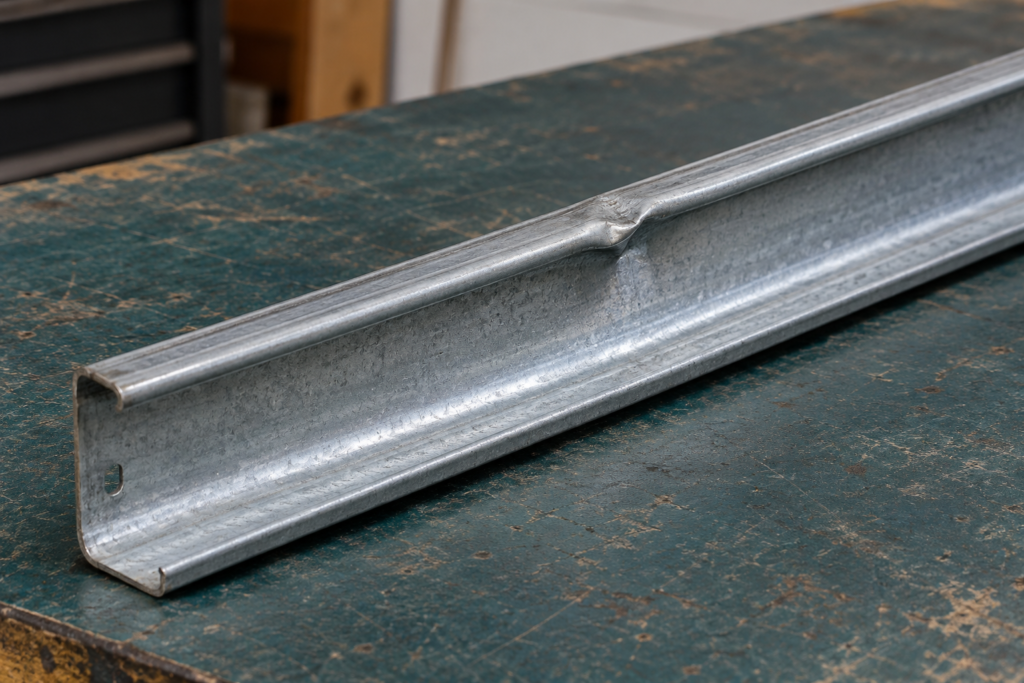
A cracked, bent or detached hinge needs more than a catalog match. Report what happened and whether the surrounding section or attachment area also appears damaged. The replacement decision should consider what the hinge attaches to, not only the metal part itself.
For example, an elongated-looking attachment area is an observation to report, not permission to install a larger fastener. Likewise, a hinge that appears separated from the section does not become safe because you can identify its number. Leave the part untouched while the condition is assessed.
If you already noticed a change in movement, describe it without repeating a failed cycle. A door that binds or moves unevenly after a hardware problem needs assessment of the connected system. Do not compensate at the opener by changing force or travel settings.
Turn an online search into a precise parts question
Instead of asking only for “a number-two garage door hinge,” provide the identified door model, the location of the part and the readable stamp. Ask whether the proposed replacement is documented for that combination. If the listing contains a full part number or drawing, save it with the response.
A useful reply should distinguish a confirmed match from a request for more information. If a seller cannot establish the application, pause rather than buy a visually similar piece and attempt a trial fit. Hardware that belongs to a moving door should not be selected by experimentation.
For installed work, ask whether the proposal includes inspection of the neighboring section, roller holder and track relationship where relevant. The goal is to understand the repair scope, not to prescribe the technician’s procedure. A clear explanation is more useful than a promise that a new hinge will automatically silence every noise.
Why a copied numbering chart can be misleading
A search result may display a neat progression of numbers without identifying the door height, hinge positions or manual revision behind it. That makes it easy to apply an example outside its intended scope. Check the document title and the configuration before using the chart to ask for a part.
Even the manufacturer’s illustration may combine features for explanation rather than depict one complete model. Read its caption and notes as carefully as the numbers. This article uses the Gallery example to explain why center and end positions differ; it does not promise that its illustrated arrangement matches your door. The correct final reference remains the documentation confirmed for the installed system.
What to keep after the repair
Retain the replacement part description and the explanation of the condition found. If the installation was corrected rather than replaced like for like, ask that the reason be noted. That information helps a future service provider avoid treating the previous appearance as the original specification.
Follow the door manufacturer’s care instructions for the installed hardware. A number stamped on a hinge is not a maintenance interval, and this article does not assign a universal replacement schedule. New symptoms or visible damage deserve attention even if the part was recently serviced.
For a hinge concern associated with rollers or track movement, track and connected-hardware assessment can help identify the actual issue. Local Garage Experts answers (323) 924-8777 daily from 6 a.m. to 11 p.m.; free estimates, free diagnostics and no service call fee are available. Keep the stamp, position and door identity together—that is the useful information behind the number.
Sources & manuals
Use the documentation for the actual installed model..