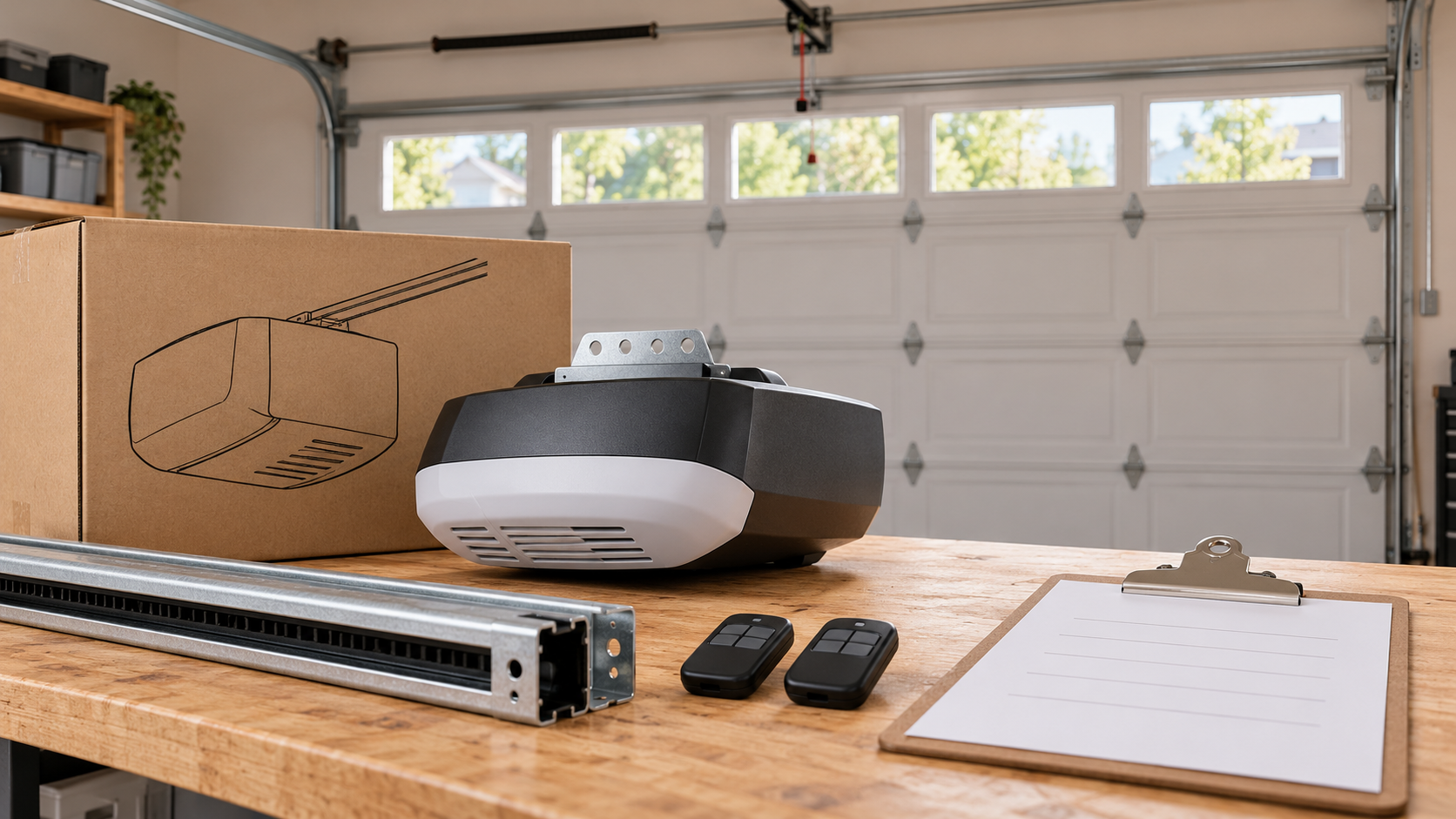
An opener quote should identify the equipment, installation scope and door requirements.
An opener installation estimate depends on equipment, door condition, compatible accessories and the work included. Compare complete written scopes rather than treating a motor’s retail price as an installed quote.
The most useful garage door opener installation price is a written price for your door and a named opener. A retail box price cannot tell you whether the installation needs a longer rail, a different mounting arrangement, door reinforcement or separate electrical work.
This guide explains how to compare garage door opener installation cost in West Hollywood without relying on unsupported local averages. We do not publish a dollar range here because we do not have a verified, current set of equivalent local installation quotes. Instead, use the scope checklist below to find out what each proposal actually buys.
Define the job before comparing prices
Tell the installer whether this is a replacement of an existing opener, the first opener on a manually operated door, or part of a complete door replacement. Those are different projects. A working installation may provide useful infrastructure, but existing rails, controls and safety sensors should not be assumed reusable with a new model.
Describe the door type and height, the current opener model if visible from a safe position, and the symptom that prompted replacement. Include whether the door runs unevenly or has damaged hardware. An opener replacement should not be sold as a cure for a door that needs mechanical repair.
For a West Hollywood condo, rental or shared garage, identify who can authorize the work and provide access. Ask the property manager about applicable building rules rather than assuming every association has the same equipment or noise restrictions.
Three projects that should not share one assumed price
A like-for-like replacement begins with an existing powered door. Its apparent simplicity depends on what is actually reusable and approved: a visible rail is not proof that a new motor can be fitted to it. The old system also needs removal, new equipment needs setup, and the finished door needs the manufacturer's safety checks. Those tasks belong in the base scope rather than emerging as surprises at handover.
A first-time automation starts with a different question: is the door ready to be operated by the proposed equipment? The door attachment, mounting location, available space and suitable power source need assessment. Treating this as “hang a motor where there was none” can leave essential work out of the comparison.
A door-and-opener project has two interacting systems. The quote should identify the door and operating equipment separately, then show the complete installation package. A new door price with “opener optional” is not directly comparable with a package that includes automation, controls and setup. None of these examples establishes a West Hollywood surcharge; they explain why apparently similar jobs differ.

What should an installation quote include?
| Quote item | What to ask |
|---|---|
| Opener | What exact model is supplied, and which accessories come with it? |
| Rail and mounting | Does the price cover the correct rail, brackets and any required reinforcement? |
| Installation labor | What work is included, and which existing components will be retained? |
| Controls and sensors | Are compatible safety sensors, wall control, remotes and keypad included? |
| Electrical scope | Is a suitable outlet already available? Who handles any electrical changes? |
| Setup and handover | Are programming, safety checks and an operating demonstration included? |
| Removal and disposal | Will the old opener and packaging be taken away? |
| Warranty and exclusions | What parts and labor coverage applies, and what is outside this price? |
Ask for the total with applicable charges clearly identified. If a quotation is provisional until the door is inspected, have the assumptions written down. That makes a later change understandable: the installer can point to a newly discovered condition rather than a vague “installation extra.”
Equipment fit matters more than a feature label
“Smart,” “quiet” and “heavy-duty” are not complete specifications. Start with a model approved for the door and available installation space, then choose the features you will use.
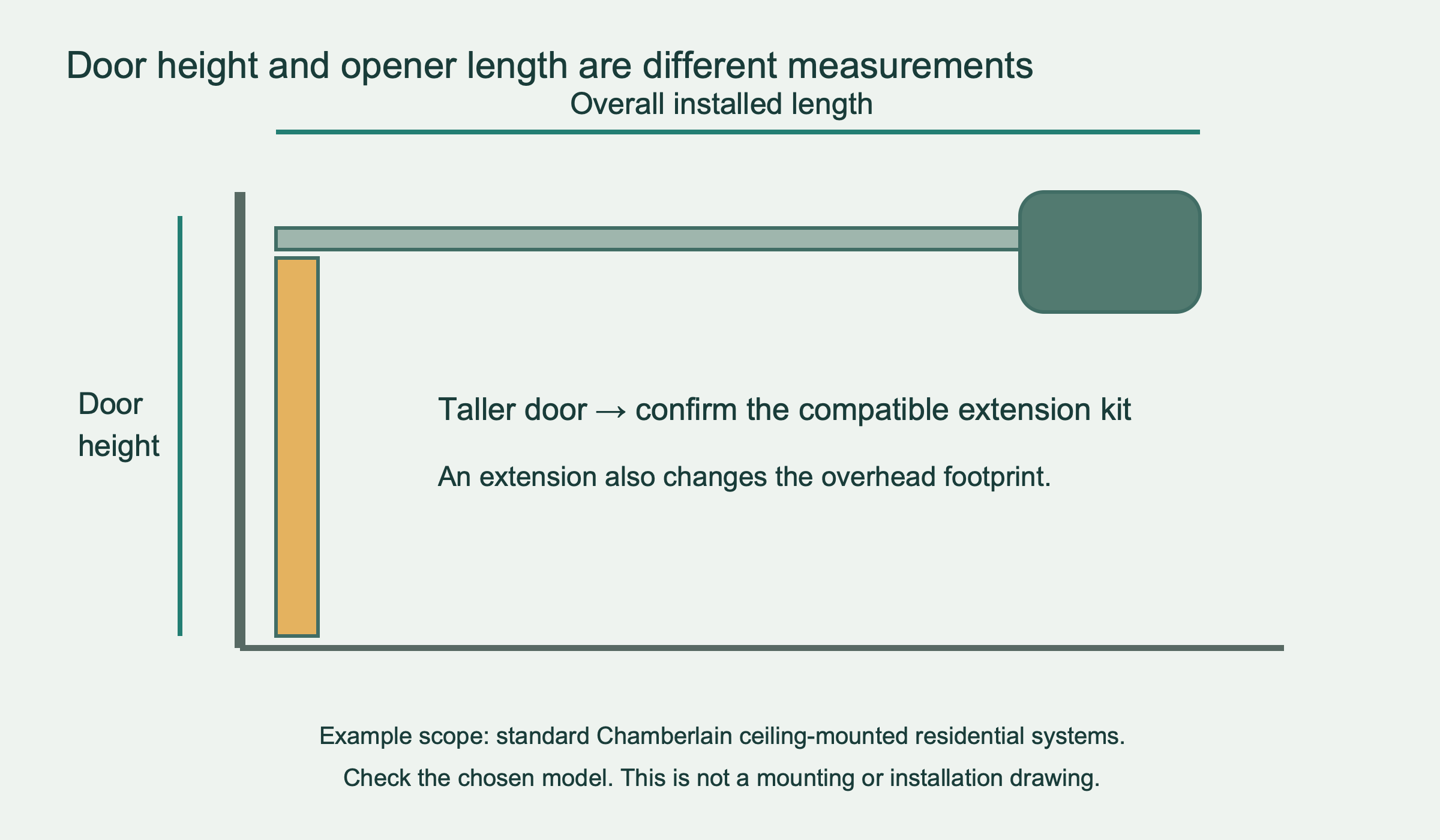
Door height and rail length: Chamberlain explains that its standard residential ceiling-mounted units are intended for a seven-foot-high door, with appropriate extension kits needed for taller doors within the system's limits. Other models must be checked against their own specifications. A taller opening is a reason to confirm the kit, not to assume every box contains the right rail.
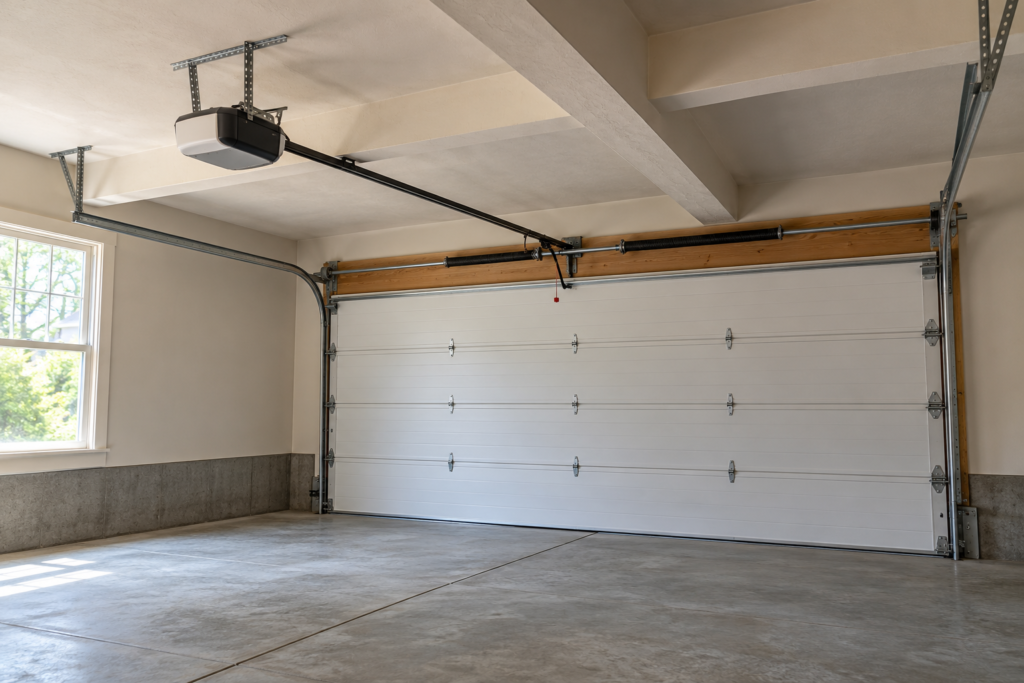
Overhead space: Beams, storage and existing mounting locations may affect the proposed arrangement. A wall-mounted opener is not an automatic substitute for a ceiling-mounted model; its door-system compatibility must be established.
Door condition: A technician should assess the door's movement and the attachment area. New electronics cannot correct a damaged panel, binding track or failed counterbalance system. Ask for any door repair to be separated from the opener installation scope.
 Select the diagram to view it at full size.
Why an eight-foot opening changes the conversation
In Chamberlain's published guidance for the residential ceiling-mounted range, the standard application is a seven-foot-high door. Taller doors require the appropriate extension within the model's limits. That is an equipment-fit issue, not simply another foot of travel to program into a standard kit. The manufacturer also publishes rail length separately from overall installed length, because the motor housing occupies additional space.
Before buying a boxed unit, record the door height and the available ceiling path. Photograph obstructions from the floor rather than climbing beside the door. An installer can then confirm whether the proposed rail and complete opener fit. A bargain kit that is the wrong configuration is not made compatible by a lower purchase price.
Electrical work and permits: ask about the actual scope
West Hollywood's Building and Safety Division handles local building and electrical permitting questions. Confirm requirements for the proposed work with the city and the responsible contractor. A blog cannot determine the permit requirement, fee or inspection schedule for every property.
Ask who will obtain any required approval, whether that work is included in the proposal, and what happens if the scope changes. The same practical approach applies to owner or association approval: establish it before scheduling rather than discovering an access restriction on installation day.
 Select the diagram to view it at full size.
Compare two quotes on equal terms
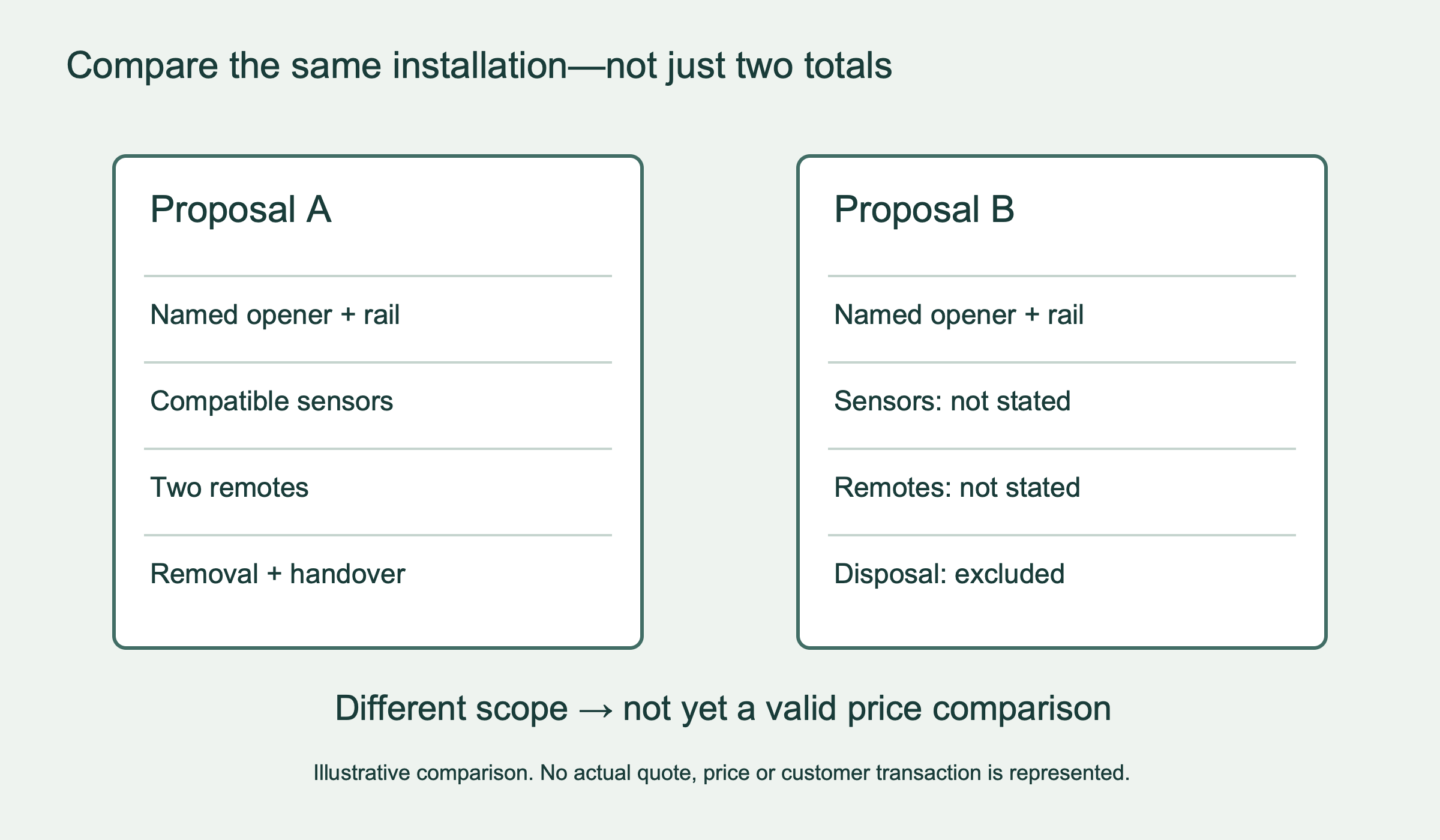
Put the proposals side by side and circle differences before comparing the totals. One may include a keypad and new sensors; the other may be labor-only for an opener you supply. One may include repairing an attachment point; the other may exclude all door work. Those are not identical offers.
For an owner-supplied opener, ask who verifies compatibility, who handles a defective product, and which labor costs apply if the unit needs to be exchanged. Buying equipment first may narrow your options before anyone has assessed the door.
Ask the contractor to identify required work separately from optional upgrades. A replacement remote may be essential to your household; a camera may not be. That distinction makes the quote easier to adjust without dropping necessary safety equipment.
Verify contractor information through the California Contractors State License Board's license check. A polished advertisement or a neighborhood reference is not a substitute for checking the business you will actually hire.
When “repair instead” is a serious alternative
If a particular control or replaceable component has failed and the rest of the system remains serviceable, a repair proposal deserves comparison. But it should name the diagnosed fault and explain what will remain unchanged. A repair does not automatically add desired connectivity, battery backup or new controls; a replacement does not automatically fix a binding door. Compare the result you need, not merely the verbs “repair” and “replace.”
For a shared or rental garage, also establish who will receive the remotes, own the connected account and authorize future access changes. This is a handover requirement with practical value, not a reason to invent a neighborhood-specific fee. Have the installer explain the equipment and account responsibilities before the appointment is complete.
What a useful handover looks like
Before the job is considered complete, ask for the model information, warranty details and owner's manual. Have the installer demonstrate the supplied controls and explain the model-specific maintenance and safety-test schedule. Everyone who regularly uses the garage should understand the emergency-release precautions.
If app setup is included, keep the owner account under your control. Confirm which users have access. An installed opener is not fully handed over if the household cannot manage its controls or identify the equipment when it needs support.
Frequently asked questions
Is a belt-drive opener always the right choice for West Hollywood?
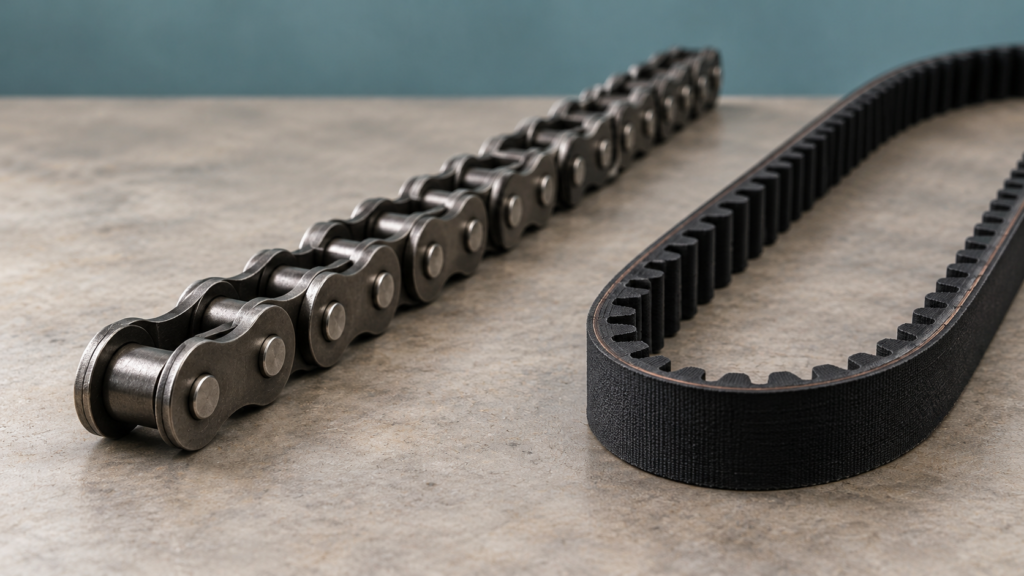
No. Noise preferences, the door system, installation space and the specific model matter. Ask for the proposed model's features rather than relying on a city-wide rule or an assumed HOA ban.
Should I replace the opener or repair it?
Request the diagnosis, repair scope, compatible-parts availability and warranty terms. Compare that proposal with a complete replacement scope. Age alone does not explain which component failed.
Can I get an exact price over the phone?
You may be able to discuss options, but a firm scope can depend on inspecting the door and mounting conditions. Photos and the model number help; they should not require you to climb or approach damaged hardware.
For a property-specific proposal, see garage door opener repair and installation. Local Garage Experts offers free estimates, free diagnostics and no service call fee. Call (323) 924-8777 daily, 6 a.m.–11 p.m.