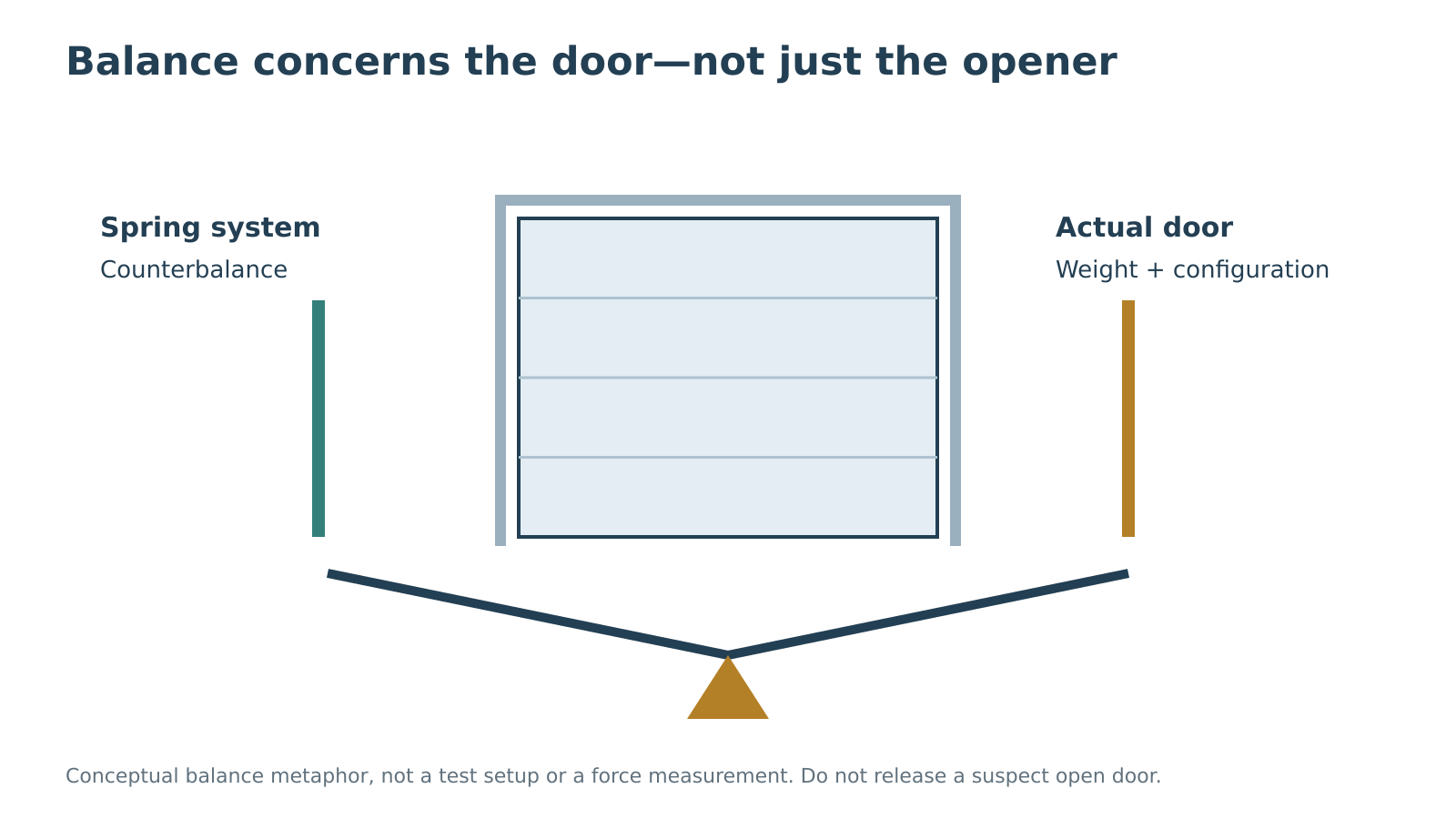
Balance is a system condition, not a stronger-motor specification.
Unexpected heaviness, drifting or uneven movement can indicate a counterbalance problem. Do not release a suspect door to test its balance; report the change and arrange professional assessment.
A garage door can have a working remote and still have a mechanical problem. If it has recently felt much heavier, drifted unexpectedly during ordinary use, or risen unevenly, the question is not simply whether the opener has enough power. The door and its counterbalance system need to be assessed together.
Balance describes the door—not the strength of the motor
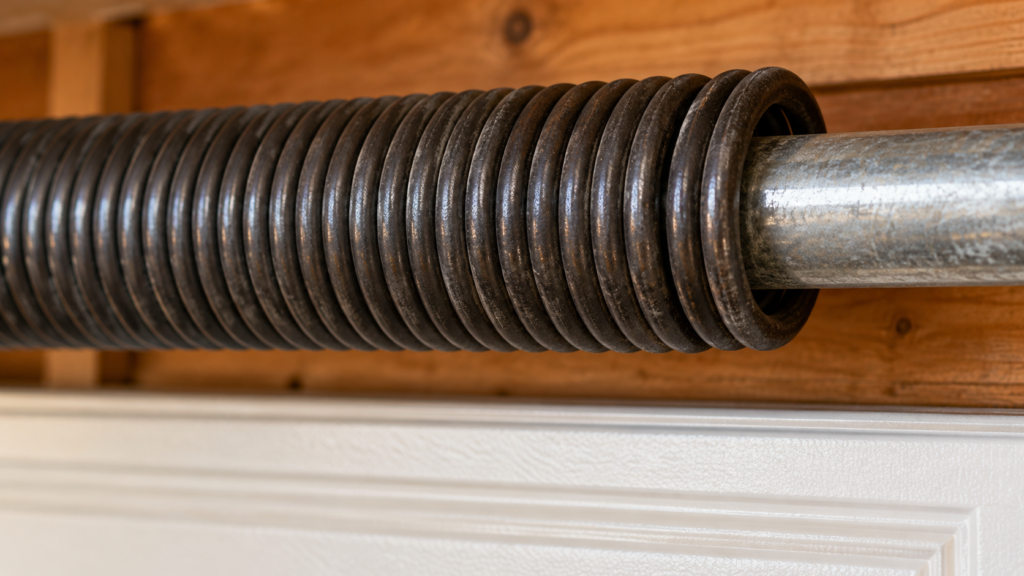
The spring system counteracts the door’s weight; the opener is not a substitute for a correctly functioning counterbalance. Genie’s balance guidance explains that an unbalanced door can put extra strain on the opener and connected components. Its warning signs include unusually heavy manual movement and crooked travel.
That distinction changes the repair question. “Should I buy a stronger opener?” starts with an assumed solution. “Why did the door’s movement change?” starts with the condition that needs explaining. An opener replacement might be appropriate for a separately identified problem, but it does not establish that the door beneath it is mechanically sound.
Nor does a successful trip prove the opposite. A door that opened once after several attempts has not supplied a balance measurement. Record that sequence for the technician rather than treating the last successful attempt as permission to keep using it. The relevant observation is the change from its previous behavior, not which button eventually produced movement.
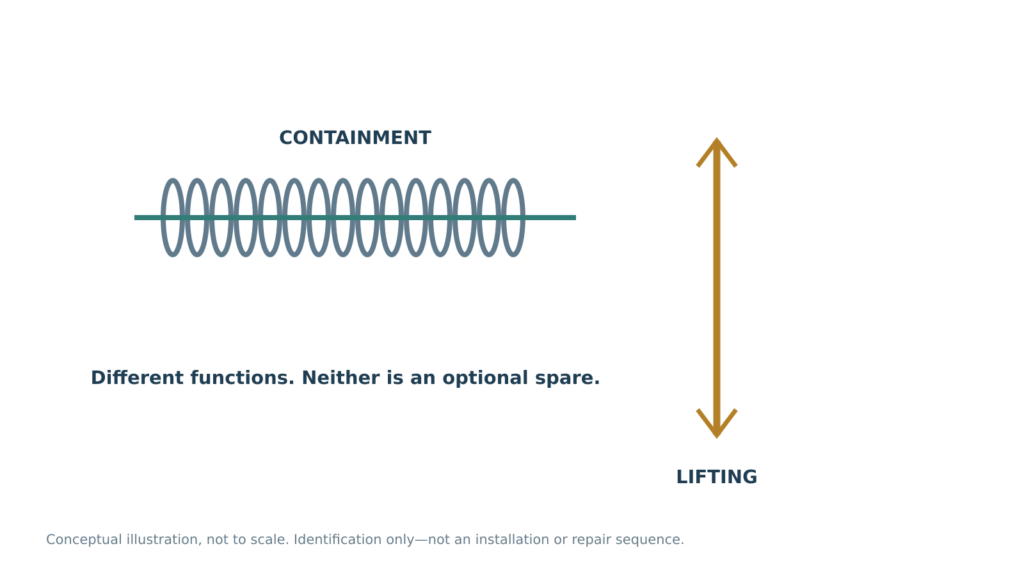
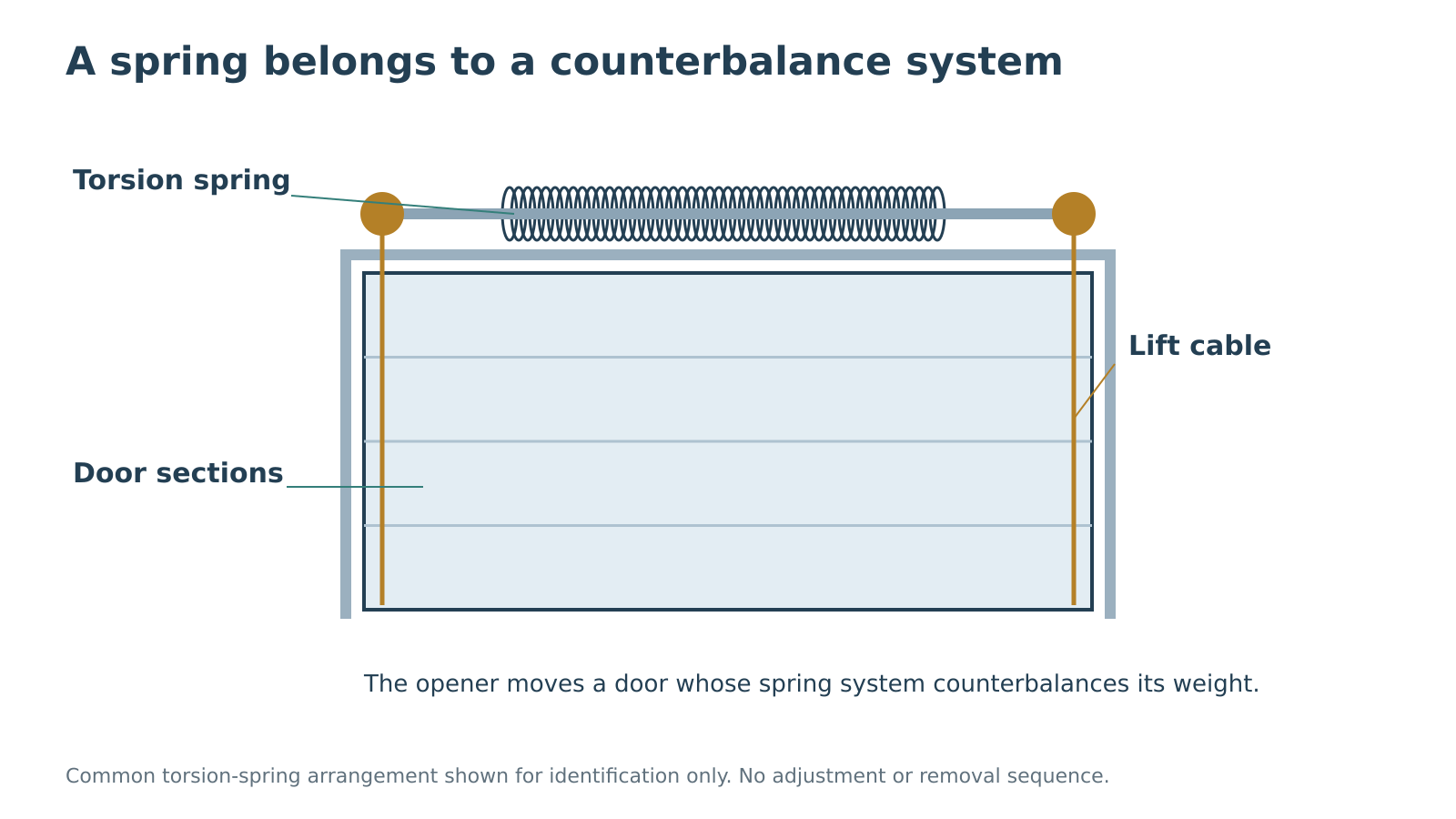 Select the diagram to view it at full size.
Start with signs you have already noticed
Describe the symptom in ordinary language before naming a failed part. “It suddenly felt much heavier during normal manual use” is useful. “It needs two new springs” is a diagnosis that the observation alone does not support. Similarly, an uneven rise is worth reporting, but it does not tell you which cable, spring, roller or support needs attention.
Separate the movement from the sound. If you heard a noise and then saw the door tilt, report both in that order. If you only heard a noise from another room, say that you did not see the door move. Avoid filling the gap in the account with a likely explanation found online. A clear statement of what is unknown helps the assessor more than an incorrect component name.
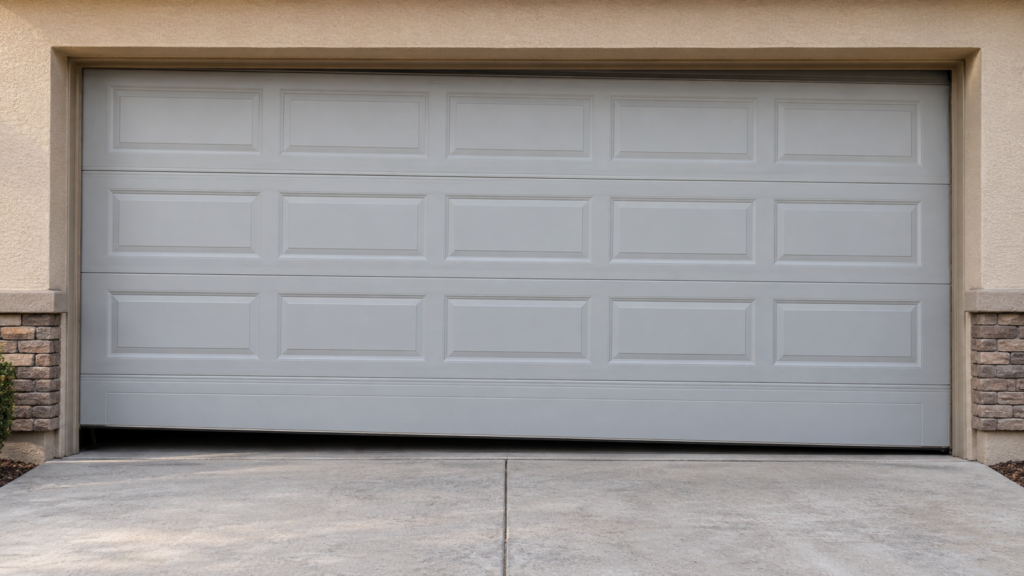
Three details make a report more precise: whether the change was sudden or gradual, whether it occurred during opening or closing, and where the door is now. “It is partly open and tilted” needs a different access plan from “it is fully closed and felt heavier last week.” Neither description requires another operating cycle.
If the main observation is one side rising before the other, use the separate guide to crooked garage door movement. If the door actually dropped or slammed unexpectedly, the sudden-drop guide addresses that event. Those situations should not be reduced to a routine maintenance check.
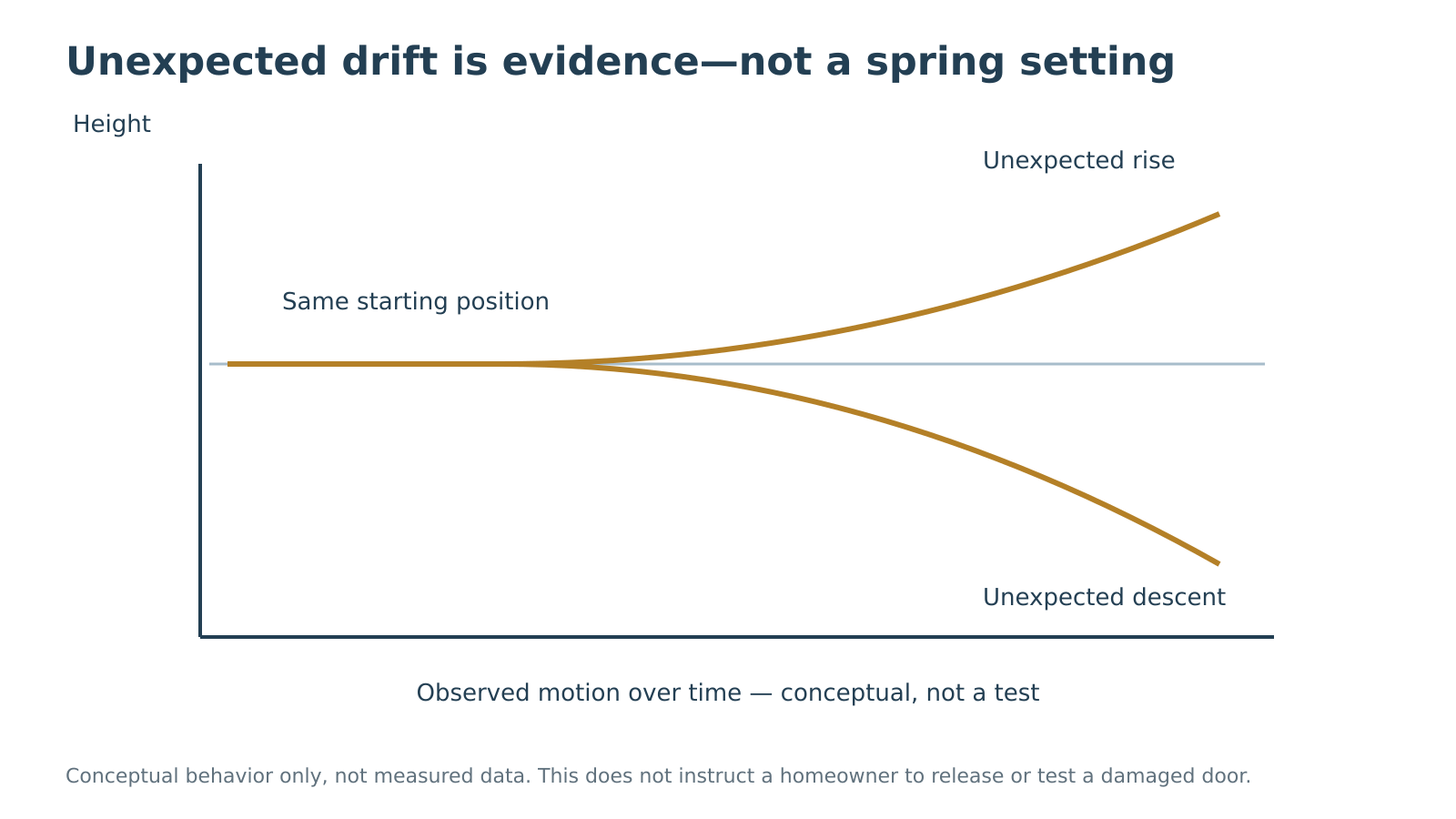 Select the diagram to view it at full size.
Why this guide does not ask you to release the door halfway
You may find balance-test instructions that describe disengaging an opener and checking how a door moves by hand. Those instructions have prerequisites. They are not permission to release a damaged, jammed or unstable door. Genie specifically warns against disengaging an open door in its balance guidance; its safety instructions also say not to operate a door with a broken spring or a jam.
Do not improvise a substitute test with a bathroom scale, hanging weight, prop or another person holding the door. Nor should you reach toward a suspected spring gap or cable defect to make the photograph clearer. A professional can establish the condition with the correct equipment and control of the door; a household measurement does not create that control.
If a manual seems to conflict with something you have read online, save the page and the model information for the service visit. Do not choose the easiest-looking procedure. The manual for the actual equipment, its condition and the technician’s assessment belong together.
What a professional balance assessment should establish
Ask for a description of the finding, not just a recommendation to “add tension.” A useful explanation distinguishes a counterbalance problem from resistance or damage elsewhere in the door’s movement. It should identify the installed system and explain why the proposed work addresses the observed symptom.
Genie’s component guide describes the connected roles of springs, cables, rollers and supports and reserves high-tension work for professionals. That connected-system view is important when discussing an estimate: replacing one visible part is not automatically an explanation of the entire movement problem.
You can ask: What did you find? Was the condition related to a damaged component, an inappropriate part, resistance in the door’s path, or another identified issue? What work is necessary before operation can safely resume? Which checks will be completed after the work? These are questions about the scope and evidence, not instructions to perform the assessment yourself.
If the diagnosis requires replacement parts, request their description on the written estimate. A clear record is more useful than a verbal claim that a component is “heavy duty.” It also helps a future service provider understand what changed. Do not insist on a spring size, adjustment or replacement count based on an internet diagram; those decisions need the actual door specifications.
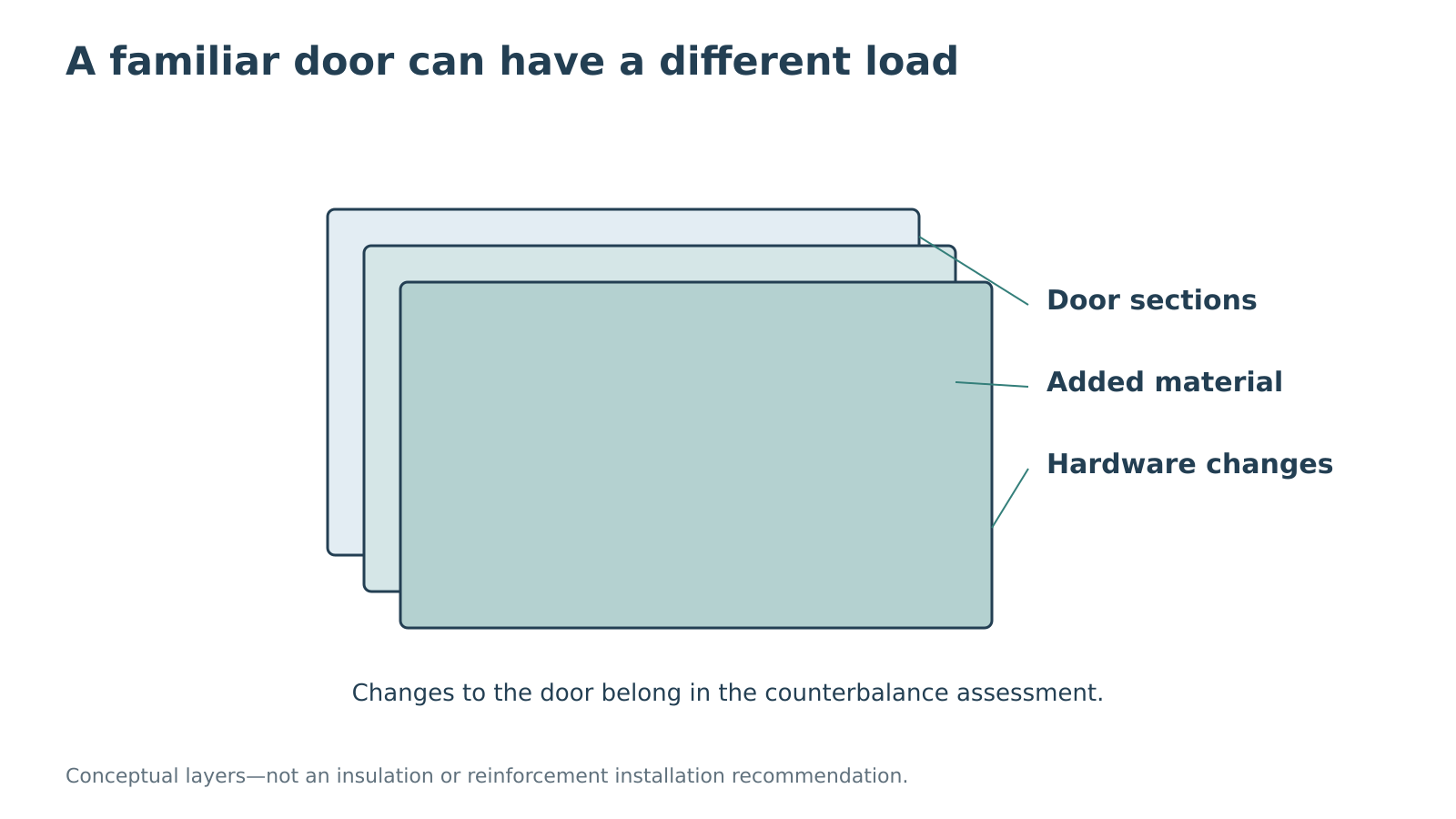 Select the diagram to view it at full size.
Include changes to the door in its service history
Tell the technician about work that altered the door, even if it was presented as cosmetic. An insulation addition, replacement section, added hardware or other modification belongs in the history. Genie notes that a door upgrade requires a properly matched spring. That is a reason to disclose changes, not a formula for calculating an adjustment.
Gather invoices, product labels and any original door documentation you already have. If a replacement section was installed, include the part information rather than simply saying “one panel was changed.” If you bought the home with the modification already in place, say so. There is no need to invent its date or assume the spring system was checked at the same time.
Keep the door’s identity separate from the opener’s identity. A motor label can help with the operator, but it does not by itself identify the door sections or counterbalance parts. Do not climb or move the door to locate an inaccessible label. An old invoice or installation record may provide the information safely.
After the assessment, retain a usable baseline
Ask which routine checks are appropriate for your equipment once the identified problem has been resolved. A maintenance instruction for a sound door is different from a troubleshooting instruction for a suspect one. Keep that distinction in the written record, particularly if several people use the garage and only one of them spoke with the technician. Everyone should know what changed and which new symptoms would justify stopping use again.
Before handover, ask the service provider to explain the repair and any remaining restrictions. Keep the findings, part descriptions and maintenance instructions together. A record that says what was actually inspected and changed gives you a better baseline than a generic note saying the door was serviced.
If an unusual symptom returns, describe it against that baseline: when it began, what changed and where the door is now. Do not accept renewed heaviness or drift as something to work around by using a different remote. Equally, avoid promising yourself a fixed trouble-free lifespan; this guide cannot infer remaining component life from age or appearance.
For questions about replacement after an identified spring problem, see our spring replacement safety guide. For an assessment of a heavy or unstable door, Local Garage Experts’ spring and counterbalance service can evaluate the installed system. Calls are answered daily from 6 a.m. to 11 p.m. at (323) 924-8777, with free estimates, free diagnostics and no service call fee.
The goal is not to prove balance by taking a risk. It is to recognize the change, preserve the useful information and have the mechanical condition established before normal use resumes.