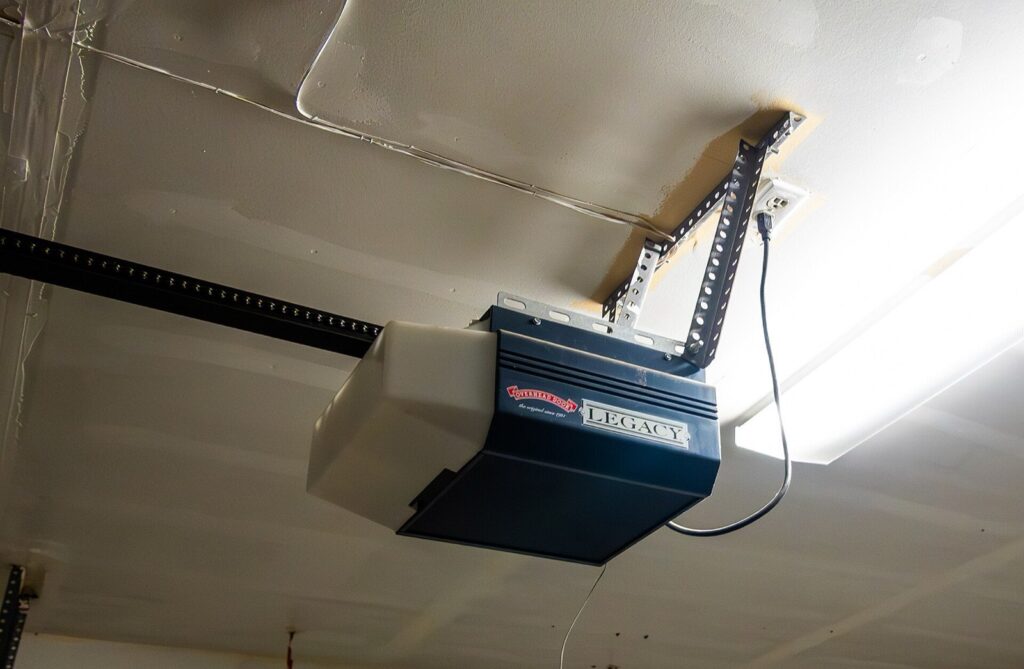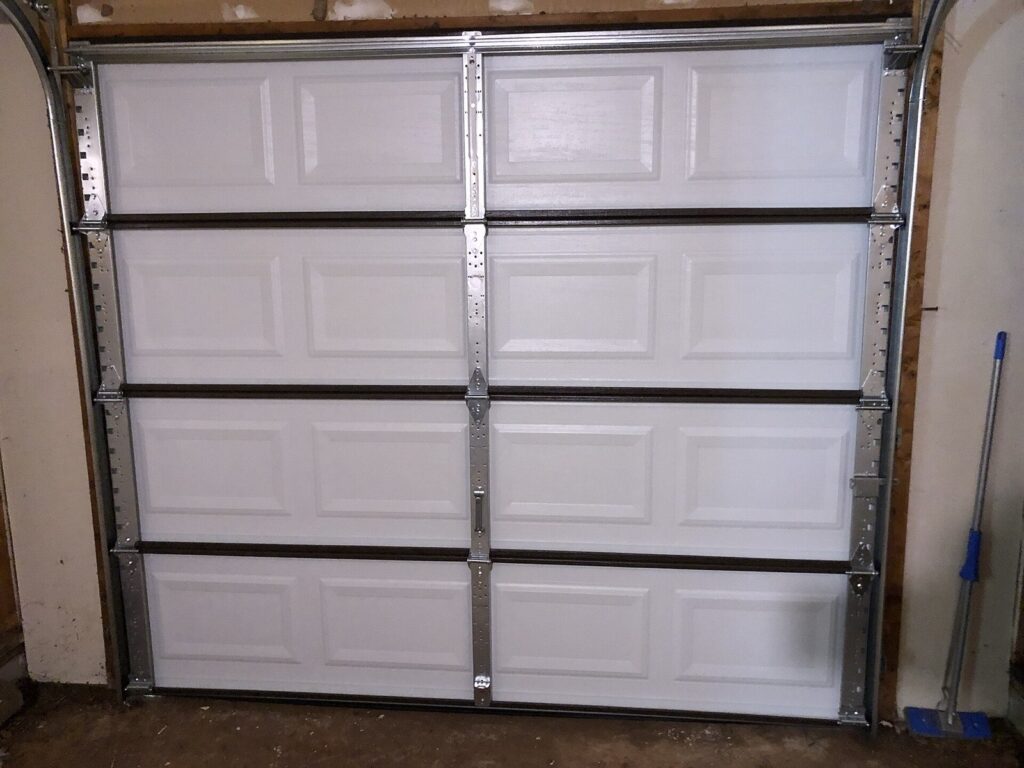

Keep the product identity and purchase record beside the warranty.
Read what the warranty covers, for how long, and under which exclusions and claim conditions. “Lifetime” does not by itself describe every component, labor cost or owner’s obligation.
“Lifetime warranty” is not a complete description of garage door coverage. It may refer to a particular finish condition on a particular product for an eligible owner, while sections, windows, springs and labor have different terms. The useful comparison is the written coverage for the exact door you are buying—or already own.
Read the document as a set of practical questions: which component, which condition, which owner, which dates and which remedy? This guide shows how to build that record and make a clear inquiry. It does not decide whether an individual claim must be accepted or interpret your legal rights.
Find the warranty that actually belongs to the door
Start with the manufacturer, collection, model and finish. Clopay’s warranty page links separate documents for different product families and constructions. That organization is an important clue: the brand name alone is not enough to choose the correct warranty.
Locate the paperwork supplied at purchase and any later written coverage agreement. Record the document title and revision if shown. A current website document can help you ask the right question, but it should not silently replace the terms applicable to an older sale. Ask the provider to confirm which document governs your product.
The door and opener are separate products. Keep the opener’s model and warranty in a different section of the file. Installation workmanship may also be covered by a separate agreement. If a symptom could involve more than one of these, describe it without prematurely assigning responsibility to the wrong provider.
For a new purchase, ask for these documents before approving the order. A salesperson’s summary can be useful, but the summary should point to the actual written terms. If “everything is covered” is not supported by the documents, resolve that difference before relying on it.
Break the promise into components and conditions
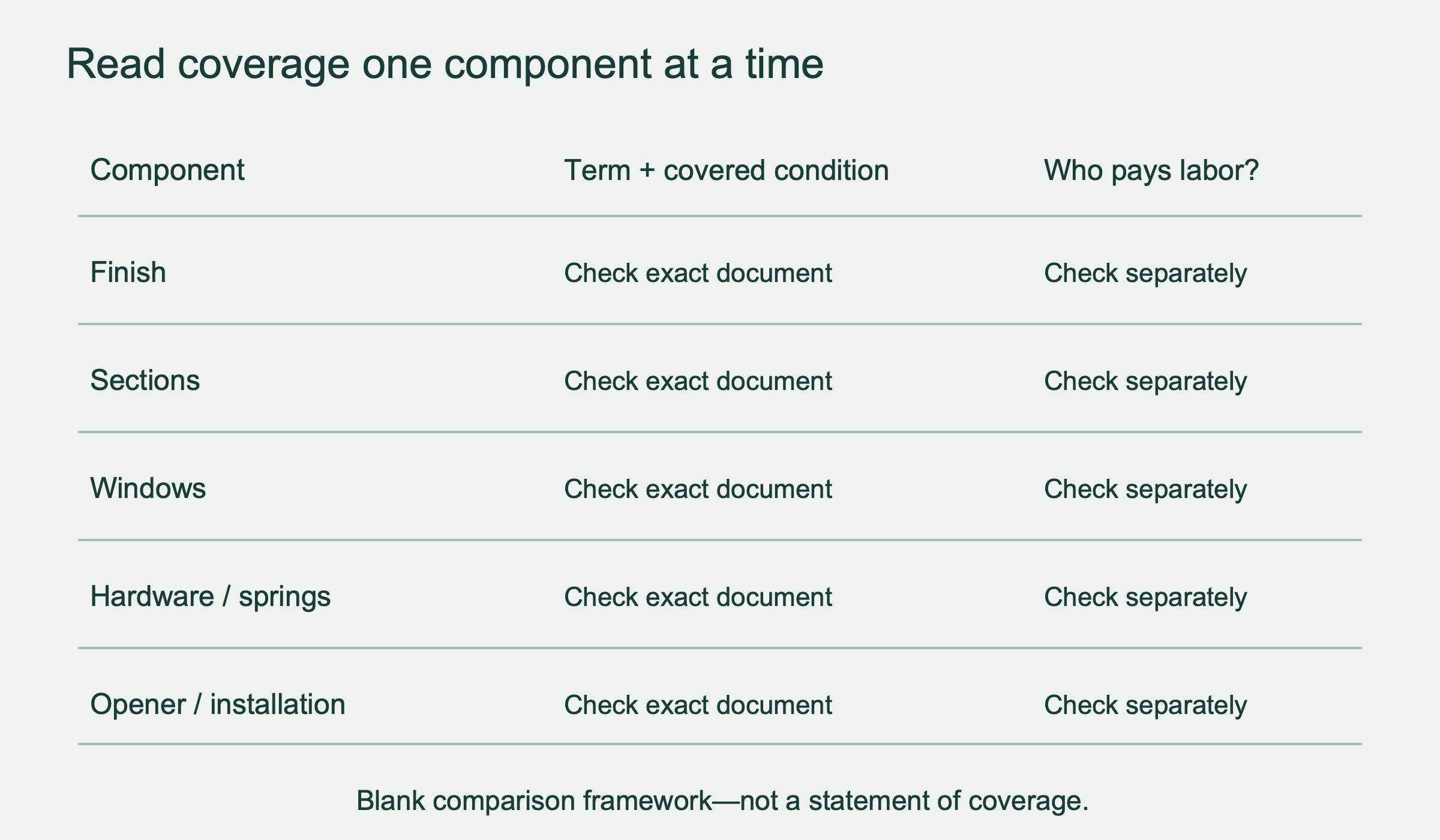
Create separate rows for finish, door sections, windows, hardware or springs, opener and installation labor. For each row, record the term, the covered defect or condition, relevant exclusions and the remedy. This keeps a long finish term from visually swallowing shorter or narrower provisions elsewhere.
A concrete example shows why the rows matter. Clopay’s currently linked WAR-C31 insulated-steel warranty lists lifetime paint-finish coverage for the identified single-family models, while its table gives different periods for sections, windows and hardware/springs. It also treats Color Blast differently. That is not a universal promise for every Clopay door or finish.
Use the document’s own structure when comparing products. If one quote says “lifetime” and another gives several separate terms, the second may simply be more explicit. Fill in the missing rows before deciding which promise is broader.
 Select the diagram to view it at full size.
Separate a replacement part from the cost of completing the work
Ask what the provider supplies after a covered defect is accepted. A replacement part, a repaired component and a complete replacement door are different remedies. Also ask who selects the remedy and whether the document permits a similar replacement when the original item is unavailable.
The WAR-C31 example places claim-related labor, including removal, installation and finishing, on the owner. That single provision explains why an accepted parts claim can still involve an installation bill. Read your own warranty and any separate dealer agreement before assuming the same arrangement applies.
Request a written explanation of possible inspection, access, transport, labor and finishing charges before authorizing work. Do not assume all of those charges exist; ask which ones do. A provider should be able to distinguish covered items from separately authorized work without turning every line into one unexplained total.
If optional upgrades are proposed during a claim, keep them separate from the remedy under review. You may decide an upgrade is worthwhile, but that is a purchase decision rather than evidence that the original warranty covered it.
Check eligibility and dates before building expectations
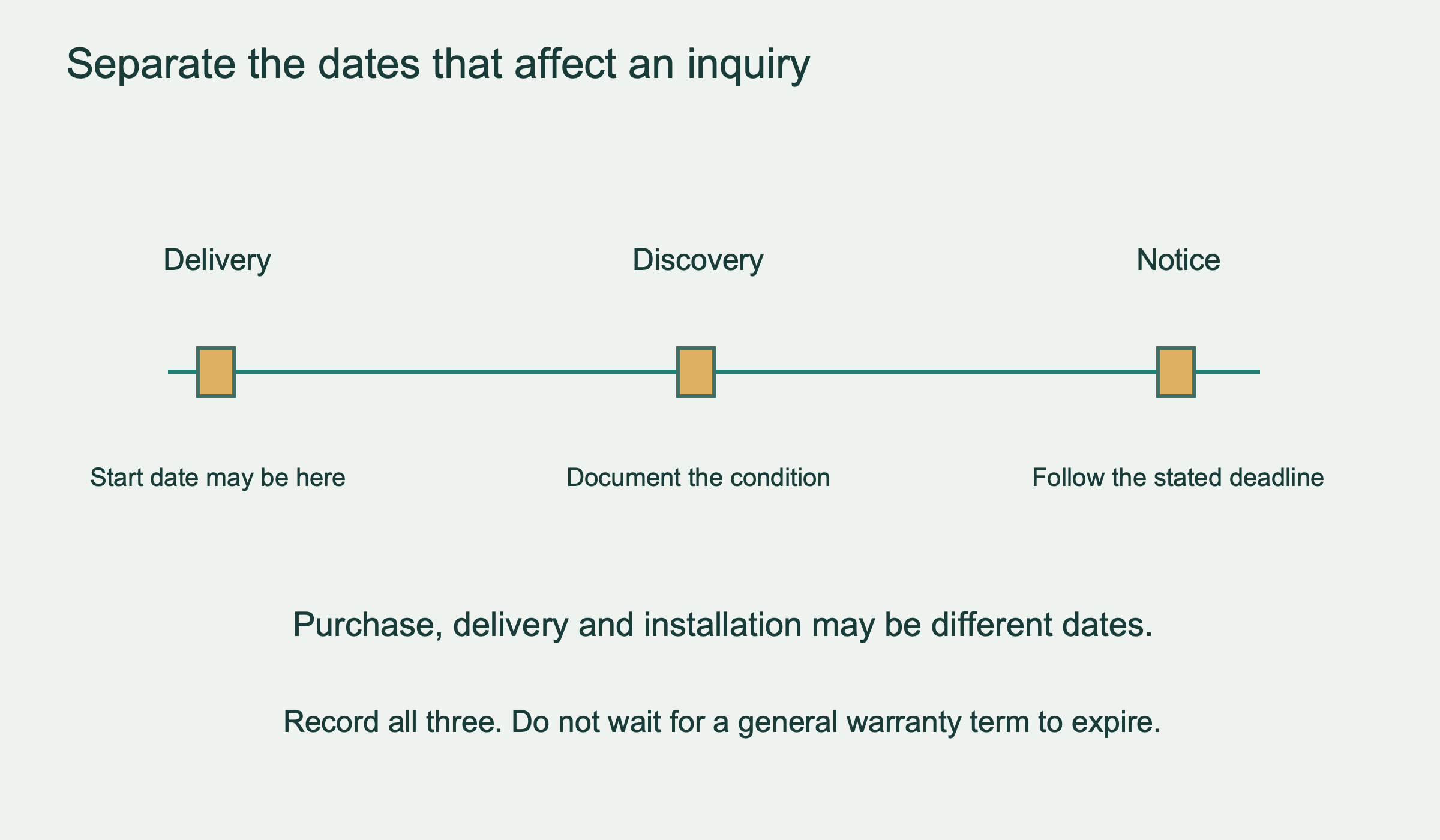
Identify who is eligible and whether coverage transfers with the property. The WAR-C31 document is non-transferable and begins its period at delivery, with proof of purchase required. Other products or agreements may differ. A home’s recent purchase date does not automatically restart the door’s coverage.
Record purchase, delivery and installation dates separately where available. If you do not know a date, say so and ask what evidence the provider can accept. An invoice, delivery record or installer’s paperwork may answer different parts of the timeline.
Notice deadlines also deserve attention. The example document requires prompt reporting and contains a specific 45-day-from-delivery provision for immediately visible manufacturing defects. Do not generalize that deadline to all claims or other products; the lesson is to look for a reporting requirement in addition to the headline term.
When a problem appears, document it and contact the relevant provider without waiting for the annual maintenance visit. A multi-year term does not necessarily mean that every notification can be delayed until its final day.
 Select the diagram to view it at full size.
Read maintenance and modification conditions before changing the evidence
Review what the door’s care instructions require and keep a reasonable record of work performed. Save product details for touch-up or refinishing, along with service invoices and dated photographs where useful. Do not create a retrospective maintenance history that you cannot substantiate.
If you are considering repainting, adding windows or changing hardware, ask how the exact proposed change interacts with the written coverage. Avoid both blanket assumptions: “any change voids everything” and “the warranty continues regardless.” The provider’s document and a specific written response are more useful than either slogan.
For a suspected finish defect, photograph the condition before cleaning, sanding or covering it. Ask whether inspection or authorization is needed before repair. This is not a recommendation to leave an unsafe condition unattended; it is a way to preserve evidence while arranging appropriate service.
A warranty exclusion is not a homeowner diagnosis. For example, a document may distinguish surface rust from a covered corrosion condition, but a photograph alone may not establish the origin or extent. Describe what you see and let the qualified inspection address the technical finding.
Send an inquiry that can be answered
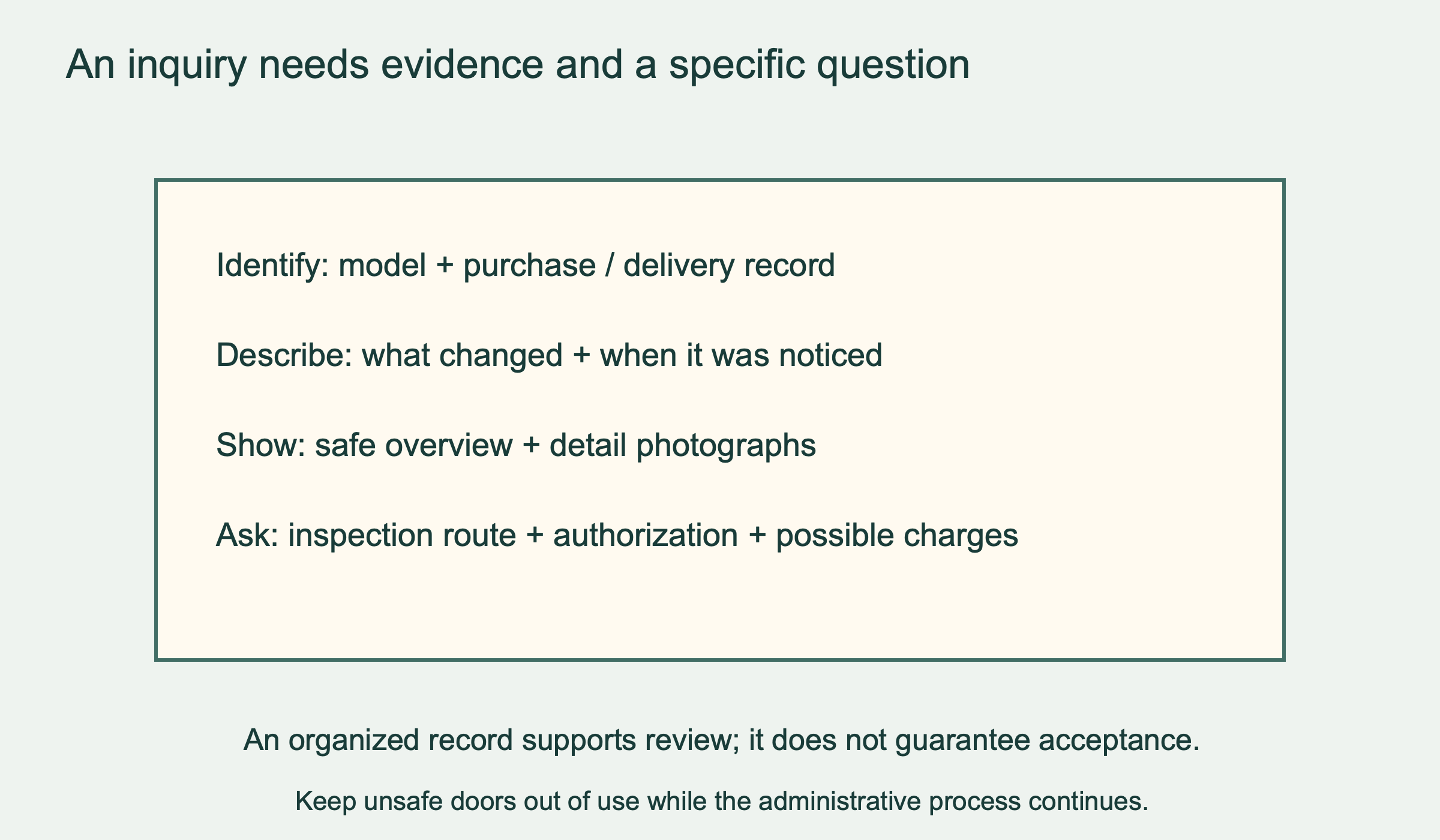
Provide the model, serial or identification information if safely accessible, purchase and delivery records, and the applicable warranty document if you have it. Include an overall photograph and a close-up showing the problem’s location. Keep personal details limited to what the provider needs for the claim.
Describe when the condition was first noticed, whether it changed and what service or modifications occurred beforehand. Separate known facts from guesses. “The coating began lifting near this edge” is a useful observation; “the factory used the wrong paint” is a conclusion that requires evidence.
Ask who will inspect, whether authorization is needed before any work, what possible charges are outside coverage and how the decision will be communicated. Keep a copy of the response and the claim reference. If more evidence is requested, add it to the same record rather than starting an unrelated conversation each time.
 Select the diagram to view it at full size.
If a claim is declined, ask for the written reason and the provision being applied. You can then check whether the product, dates and condition were understood correctly and follow the provider’s stated review process. For a disagreement about legal rights, seek qualified advice rather than treating this reading guide as a legal opinion.
The best time to understand coverage is before purchase, and the next best time is before authorizing a repair. Keep the manufacturer’s promise, the installer’s agreement and any optional service plan distinct. If the immediate need is an assessment of the physical door, contact Local Garage Experts and make clear that you also need to preserve the information for a possible manufacturer inquiry.