Cover photo: Famartin · Source · CC BY-SA 4.0. Resized and JPEG optimized; full framing retained.
Ordering a replacement part often begins with a deceptively simple question: “What garage door do you have?” The name on the motor above your car may not answer it. Door sections, rollers, seals and other hardware belong to the door system; the opener and its controls have their own identities. A few organized observations can prevent an expensive wrong purchase.
Keep three identities on separate lines
| Equipment | Useful record | What it does not identify |
|---|---|---|
| The garage door | Door manufacturer, model/series, serial information and documents | The correct remote or opener control |
| The powered opener | Opener brand and complete model, plus its manual | The door's section profile, finish or seal retainer |
| A remote or keypad | That accessory's individual model | The door model or proof of compatibility with every opener of the same brand |
“LiftMaster opener above a wood door” is a useful starting description, not a complete parts specification. A previous owner may have replaced the opener while retaining the door. Likewise, changing a remote does not change the identity of the door or motor unit.
For two openings, make two records—such as “left door” and “right door”—and note the direction from which you are looking. Do not assume both systems match because their exterior faces look similar.
Check paperwork before searching the hardware
Look for the installation invoice, purchase confirmation, warranty registration and owner maintenance sheet. A collection name can be useful, but preserve the full information rather than shortening it to a familiar brand. Keep the original documents even if you create a simple summary.
If you inherited the equipment, ask the seller, property manager or prior installer whether the door and opener were replaced at different times. A receipt for a new opener is not necessarily a receipt for a new door. Write “unknown” where the record is incomplete; an honest gap is easier to resolve than a guessed model copied into later orders.
Look for the door label from a safe position
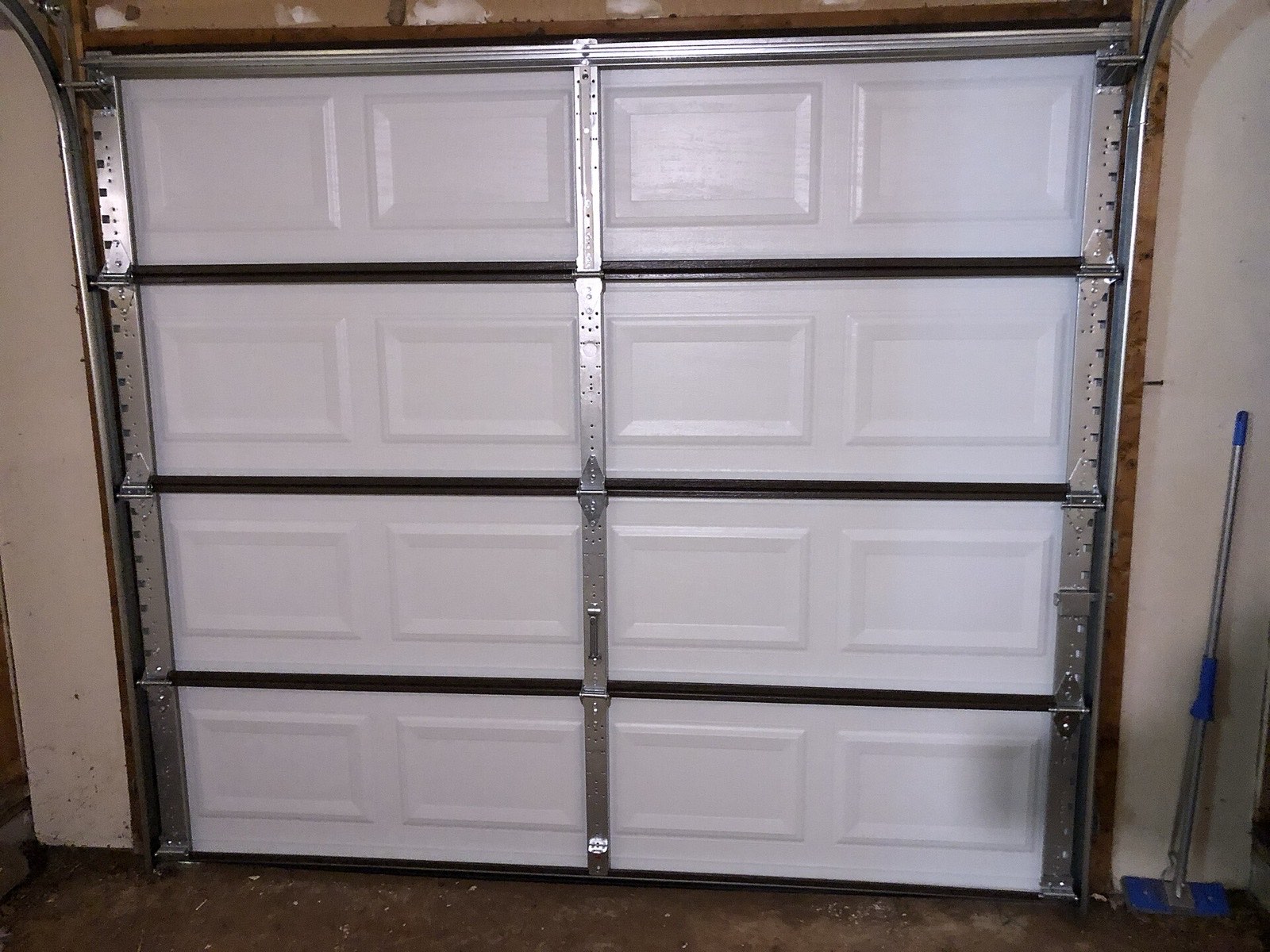
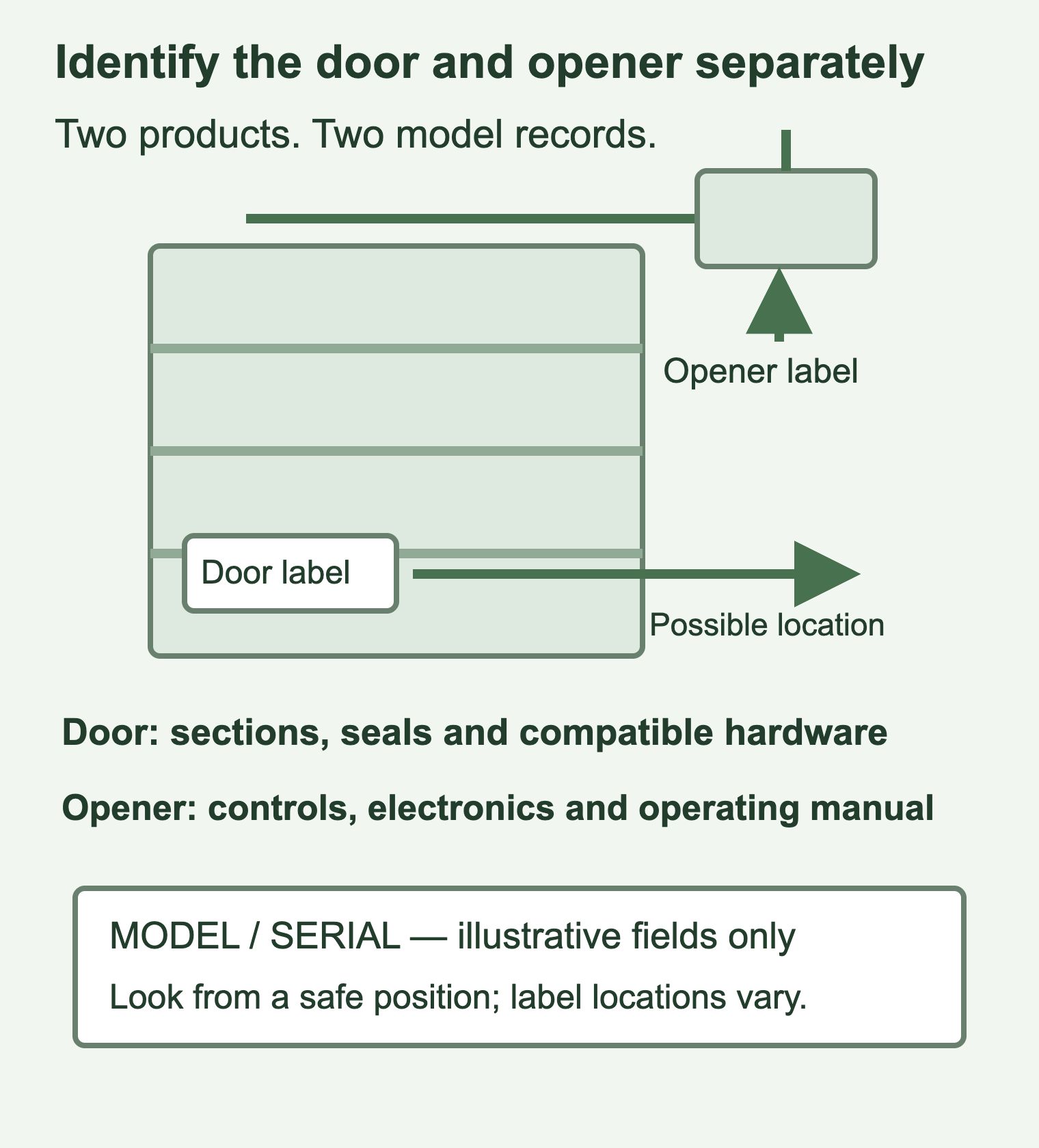
Clopay's current parts guidance says its door labels are usually on the interior side, often along a section edge or near the bottom panel. That is a manufacturer-specific place to begin, not a universal label location for every brand or age of door.
With the door stationary and safe, look at accessible inside surfaces without reaching into joints, tracks or spring hardware. Use a phone's camera zoom from the floor if helpful. If the label cannot be read safely, leave close access to a professional. Never operate a damaged door just to expose an identification sticker.
Photograph the label, then transcribe it carefully
Keep one clear photograph of the complete label and a second close view if small print is difficult to read. Avoid glare and record characters exactly. A model number, a serial number and a date can be different fields; retain the field name with the value.
Do not publish serial numbers, account setup codes or QR codes in an open forum merely to ask a general question. Share necessary details privately through the manufacturer's or service provider's appropriate channel. A public photo of a damaged section often does not need the identifying record attached.
Store the original photograph with the invoice. If a character remains uncertain, mark it as uncertain in the summary and send the image when asking for confirmation. Do not turn an unclear “0/O” or “1/I” into a confident parts order.
The opener's nameplate belongs to the opener
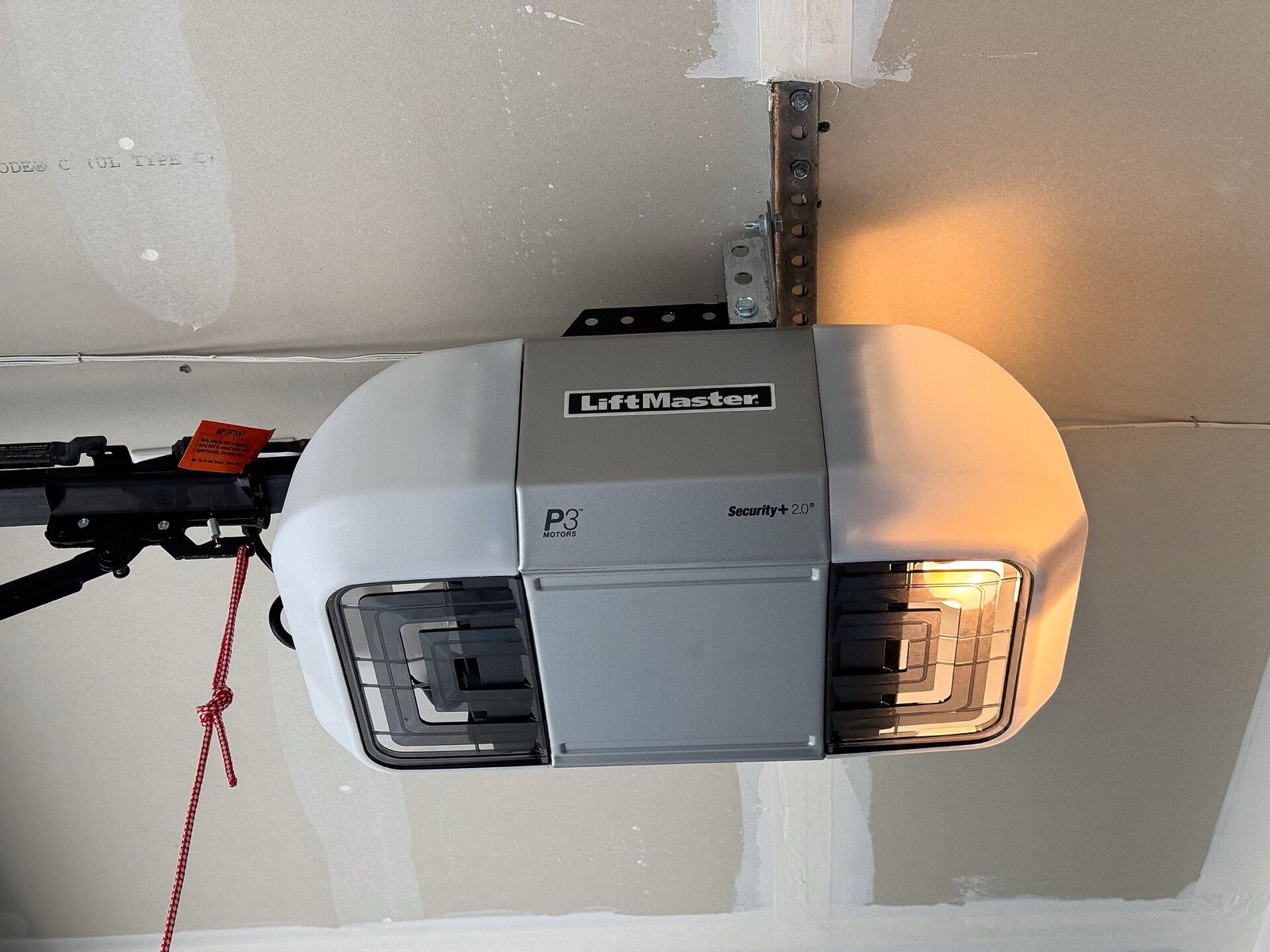
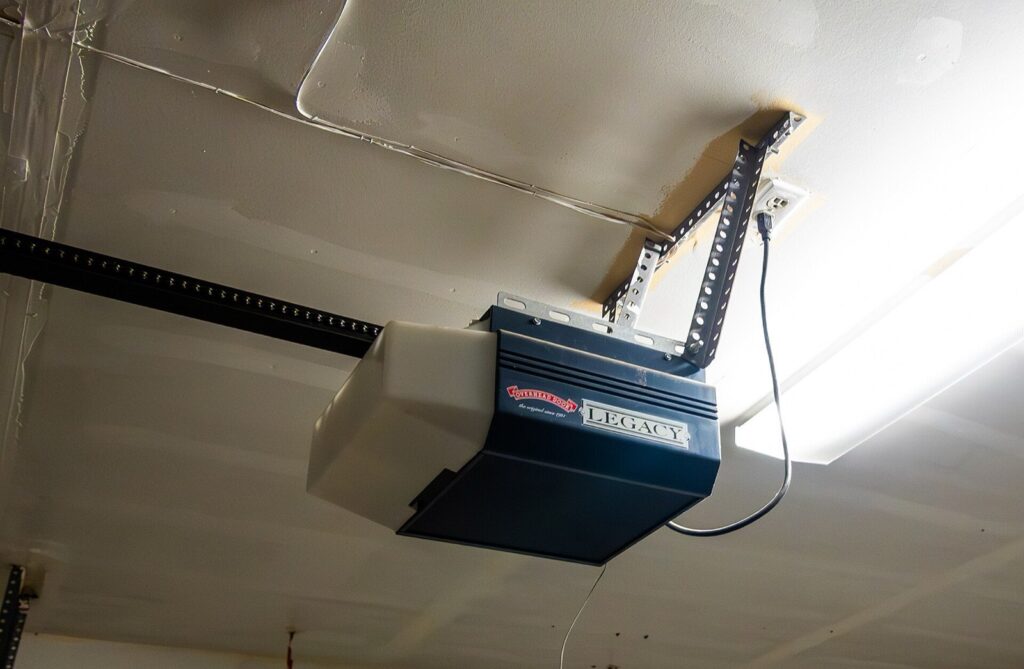
A motor housing can carry a brand, product family, safety information and an opener model label. Those details help you find the opener manual and compatible controls. They do not establish which door sections or weather seals were installed below it.
Record the opener information separately if it is accessible without unsafe climbing or removing covers. If it is not, ask the technician to add that identification to the service record. A clearly identified door with an unidentified opener is still a partial record, not a reason to erase what you already know.
If the label is missing, collect evidence instead of guessing
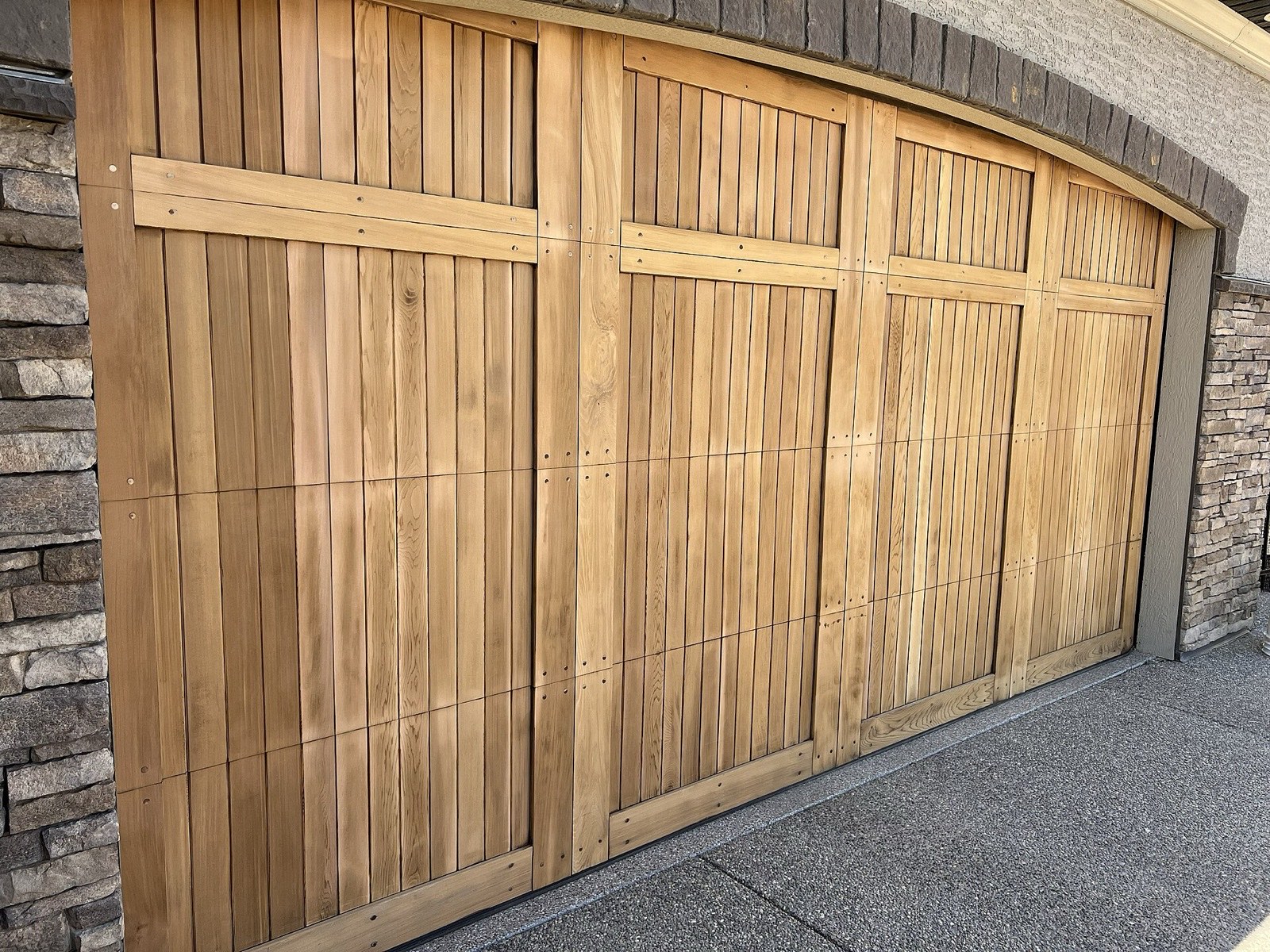
A panel pattern, color or material can narrow a discussion but does not prove a manufacturer or model. Similar exterior designs may use different section joints, hardware and finishes. A hinge's stamped number may describe that hinge's location or configuration rather than identify the entire door.
Prepare a small photo set: the full exterior, the accessible interior, a visible section joint and any surviving badge or label. Use existing measurements or a safe floor-level sketch if available. Do not remove a seal or a roller to make the identification easier. Explain which parts of the equipment history remain unknown.
Send that record to the manufacturer, the prior installer or a qualified door professional. Ask whether the proposed identification is confirmed and what additional information is needed. “It looks like this model” is not the same as a confirmed compatible replacement.
Use the identity to answer the next question
If the aim is to replace a damaged section, follow the single-panel replacement guide once the product has been identified. If the aim is to order a bottom seal, the seal and retainer guide explains why the attachment profile matters. Finding a brand name is progress, but it does not make every part sold under that brand interchangeable.
Before a purchase, ask the supplier to confirm the exact part against the record you supplied. Keep the written confirmation and return terms with the order. For a replacement project, the opening-measurement guide adds the site information that a model number cannot provide.
A record you can keep with the house
- Opening name and a whole-door photograph
- Door manufacturer, model/series and private serial record
- Opener manufacturer and complete model
- Remote and keypad models, recorded separately
- Installation or service date, source documents and unresolved questions
Update the record when equipment is replaced. Leave the old invoice attached so the next owner or service professional can see what changed. The useful result is a reliable identity for each component—not a collection of similar-looking online listings.