Cover photo: Tony Webster · Source · CC BY 4.0. Resized and JPEG optimized; full framing retained.
“I need a part for my overhead door” sounds specific until the supplier asks for a model. You might be describing the direction the door travels, the name on a motor housing, or a manufacturer's product. Understanding that difference helps you find the right manual and explain the problem without buying a part that merely looks familiar.
What does overhead door mean in a garage?
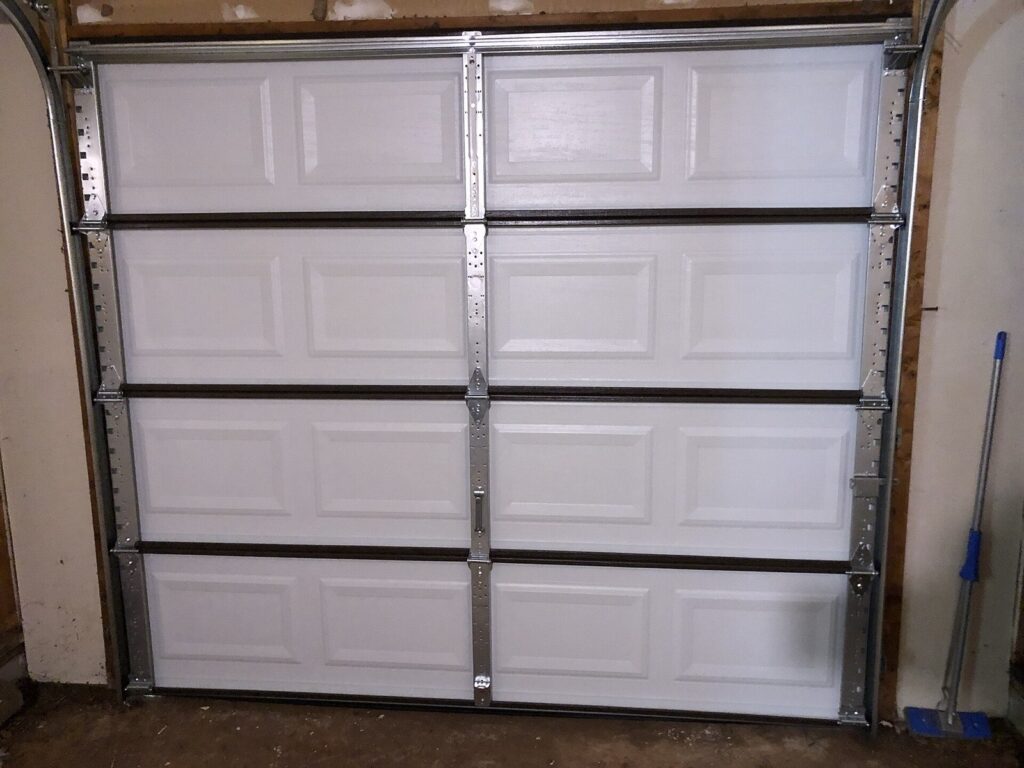
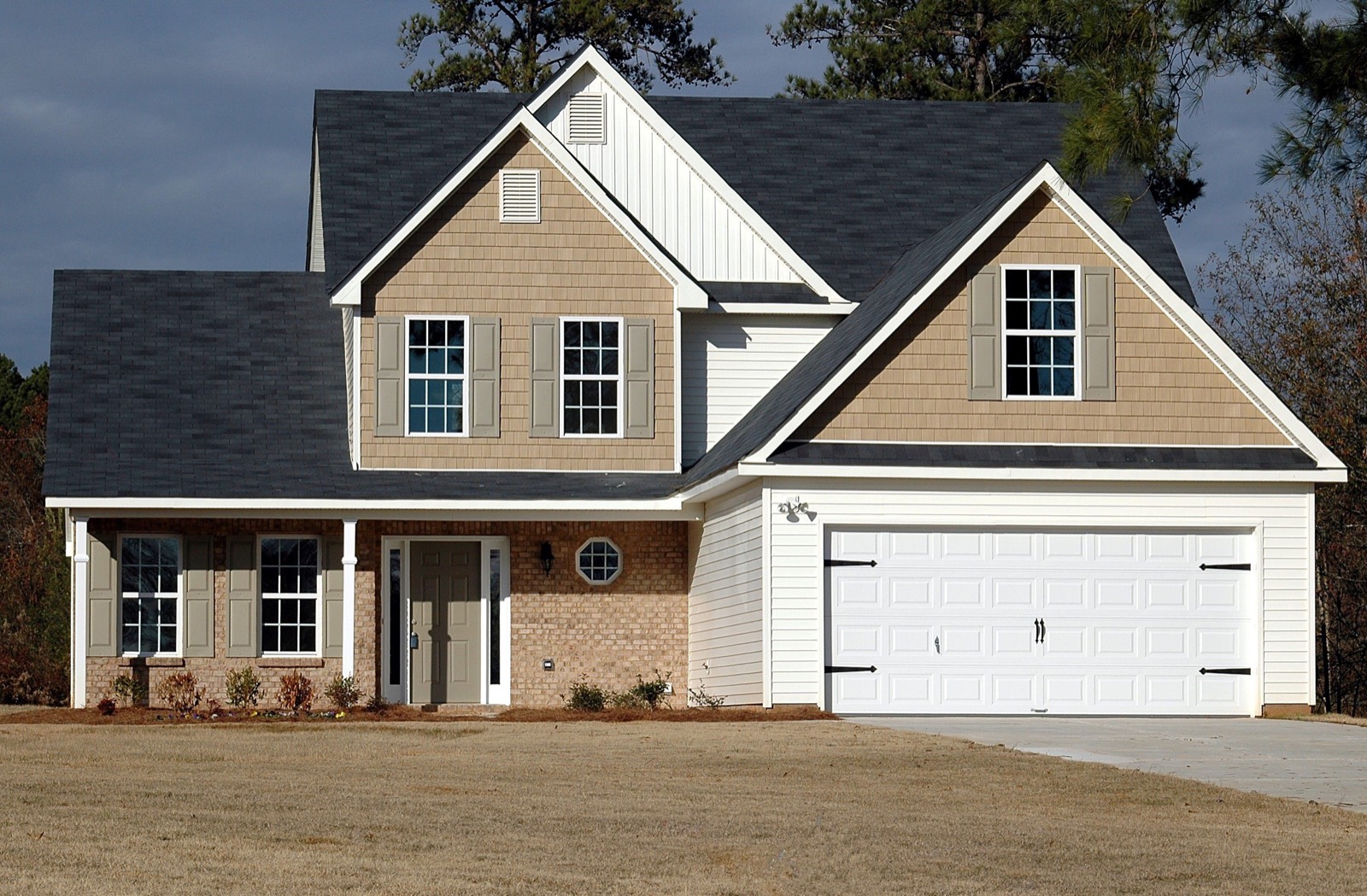
In ordinary use, overhead describes an upward-opening arrangement. A common residential example has horizontal sections joined by hinges. Rollers guide the sections up the sides of the opening and around a track curve toward the ceiling. The door is a moving assembly; the electric opener is the separate equipment that operates it.
The term is less precise than a product description. It does not tell you the material, spring arrangement, insulation, wind rating, size or brand. A quotation that says only “overhead door” still needs those details where they matter to the project.
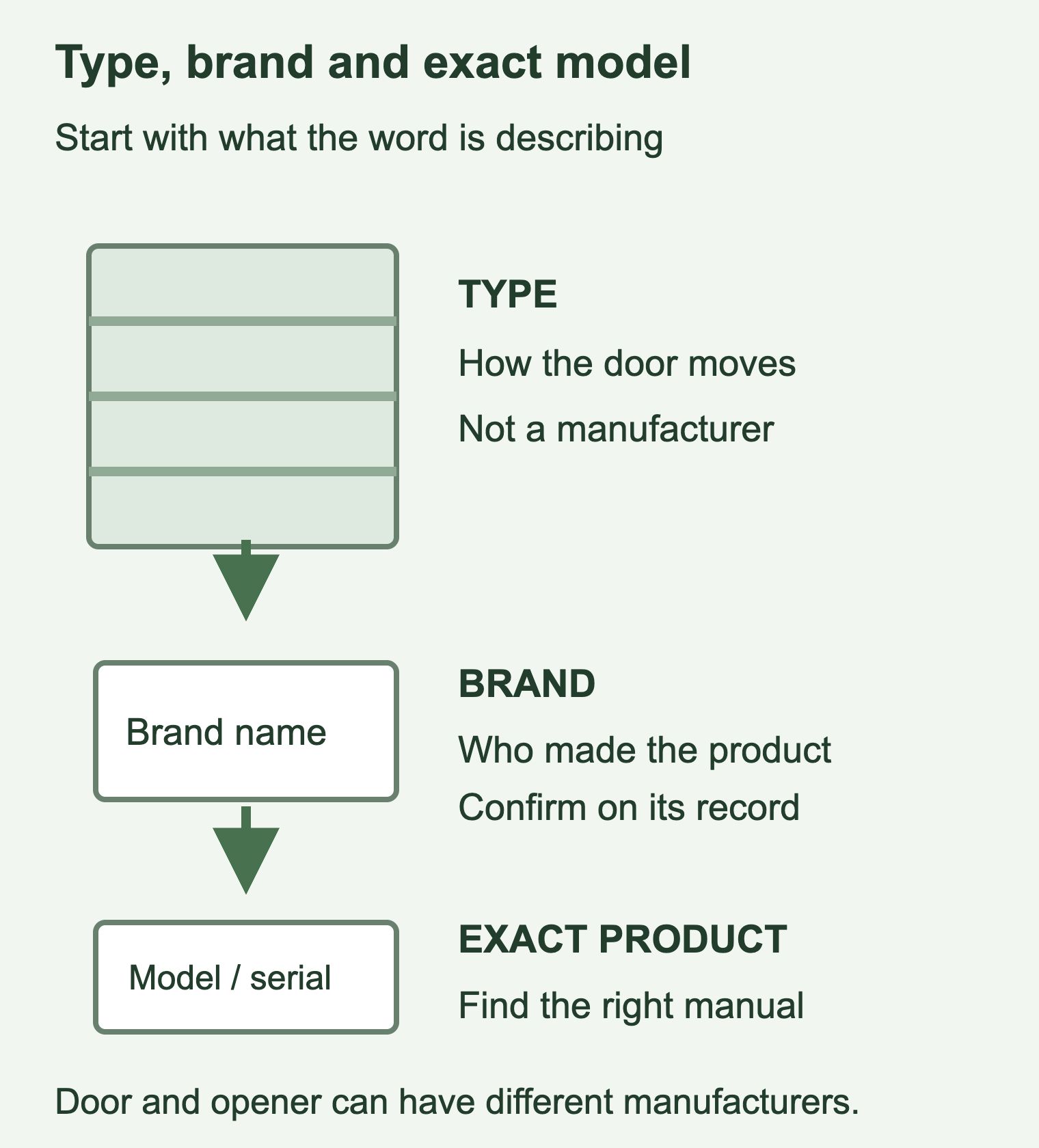
Is Overhead Door a brand or a type of door?
It can refer to either in conversation. The manufacturer Overhead Door™ identifies itself as a brand and uses a Red Ribbon logo. Its official site has separate categories for residential doors, openers and commercial products. A genuine brand marking is different evidence from someone casually calling any upward-opening garage door an overhead door.
Look for the actual manufacturer's information on the equipment or in the original invoice. Capitalization in an advertisement is not enough to identify the product in your garage. If you need brand-specific warranty support, use the exact product record and the manufacturer's current support route.
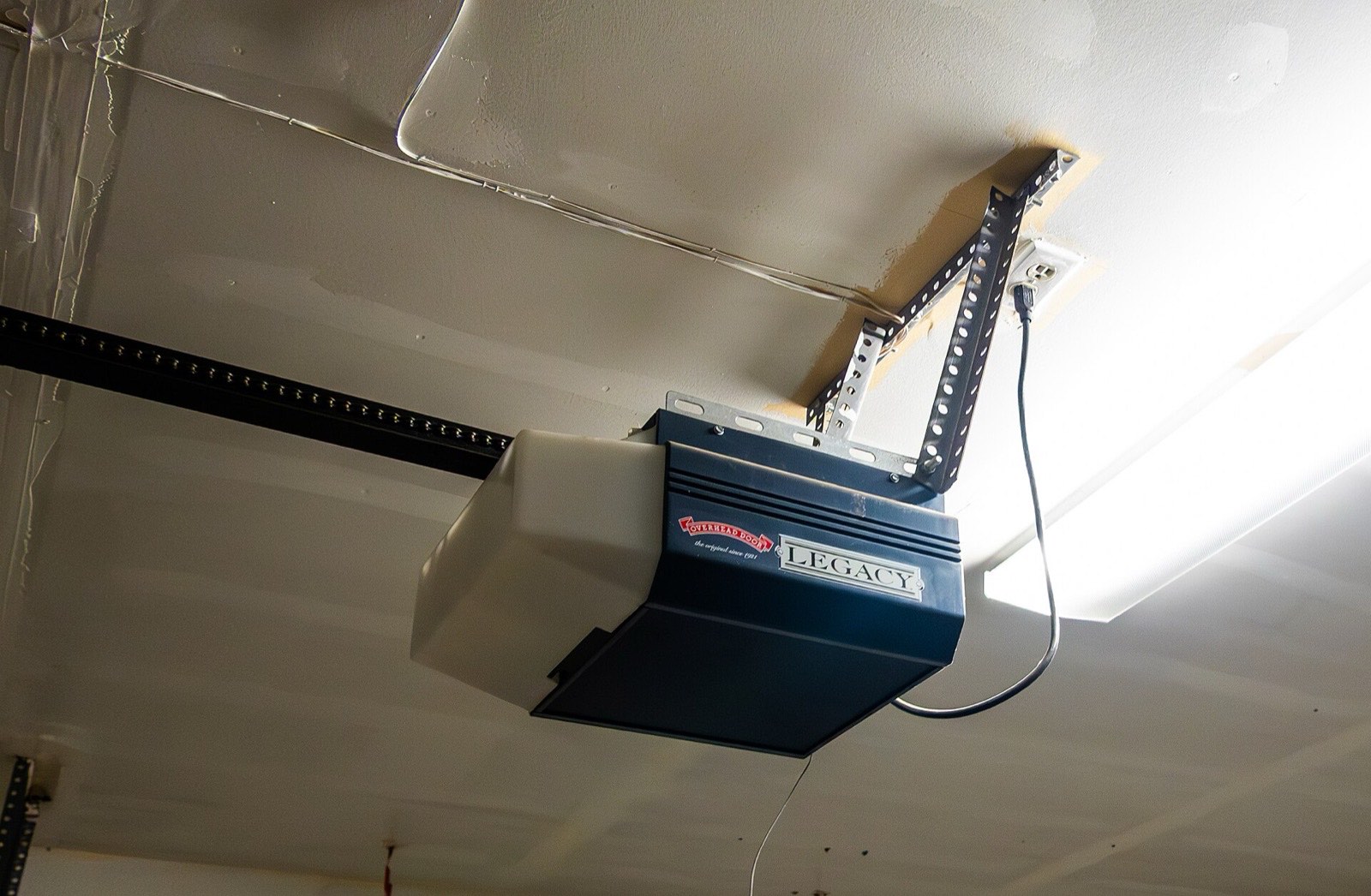
A name on the opener does not identify the door
The motor unit can be supplied by a different manufacturer from the door. A replacement opener may also have been installed years after the original door. Its remote instructions, control compatibility and replacement electronics belong to that opener's model record.
A replacement section, bottom seal or door hinge belongs to the door's own specification. Do not use the motor brand as a shortcut when ordering those parts. Similarly, the presence of a Wi-Fi logo does not prove compatibility with every remote or smart-home platform.
Keep two entries in your household record: door manufacturer/model and opener manufacturer/model. Our replacement-section compatibility guide explains why a similar-looking panel can still be the wrong fit.
Are overhead, sectional and roll-up interchangeable?
They should not be treated as interchangeable purchase specifications. Sectional describes a door made from hinged sections. A rolling curtain coils above the opening instead of following a sectional track arrangement. A one-piece door moves as a rigid leaf, with movement and hardware that differ from a hinged sectional door.
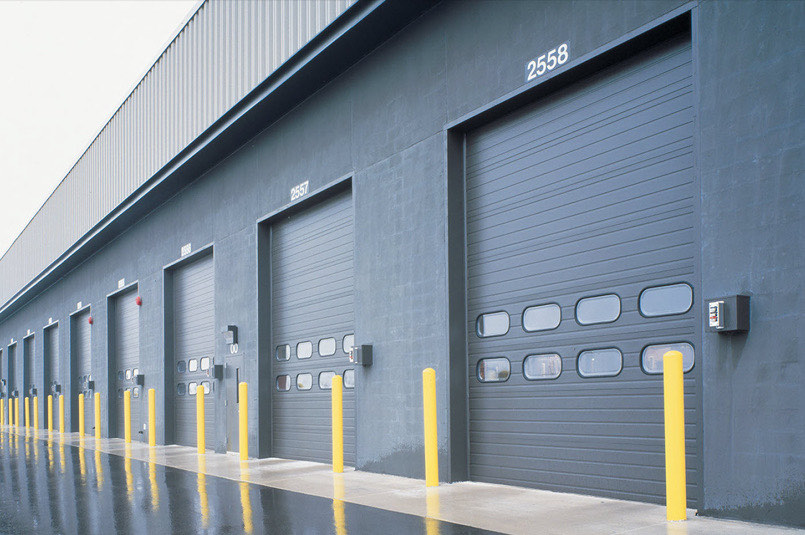
That short distinction is enough for a first service call. If you are choosing equipment for a business opening, use the separate rolling steel versus sectional commercial door comparison for space and operating requirements. A residential nickname should not substitute for the exact commercial product family.
What information helps when asking for service?
Start with the behavior and location of the problem. “The motor runs but the door does not move” and “the door is uneven with a loose cable” point to different questions. The second description is also a reason to keep clear and stop operation. Do not repeatedly cycle a faulty door to make the description more precise.
- Identify the equipment. Record the separate door and opener details from accessible labels or existing paperwork.
- Describe the symptom. Say whether movement fails to start, stops during travel, reverses or produces an unusual sound.
- Give the context. Mention a recent impact, outage, opener replacement or previous repair when relevant.
- Supply safe photographs. A wide view and an accessible label are more useful than an unsupported guess about the broken part.
Use a precise description when comparing a replacement
Ask for the actual door model, construction, dimensions and compatible operating arrangement. If an opener is included, have it listed separately with the supplied controls. Any required performance rating should refer to the specified assembly rather than a general word such as overhead, insulated or heavy-duty.
Also clarify what the work includes: supporting hardware, removal, electrical work if needed, operating checks and owner instructions. Our garage door measurement guide helps organize an initial record while leaving elevated measurements and final suitability checks to the installer.
Three quick answers to common mix-ups
Is every overhead garage door made by Overhead Door?
No. The descriptive phrase does not establish a manufacturer. Check the actual label and documentation.
Does overhead mean that the door must have an electric opener?
No. Door construction and powered operation are separate characteristics. Whether a particular door is suitable for a proposed opener must be checked against the equipment documentation and door condition.
Can I order a universal overhead door remote?
Only after identifying the opener. “Universal” still has a compatibility list; it does not mean every transmitter works with every upward-opening door. Match the remote to the opener model and control generation.