A small garage door question can lead to a surprisingly confusing search. Does “opener battery” mean the battery in your handheld remote or the backup battery beside the motor? Are you measuring the opening for a new door or trying to identify a replacement panel? A useful answer starts by separating those situations.
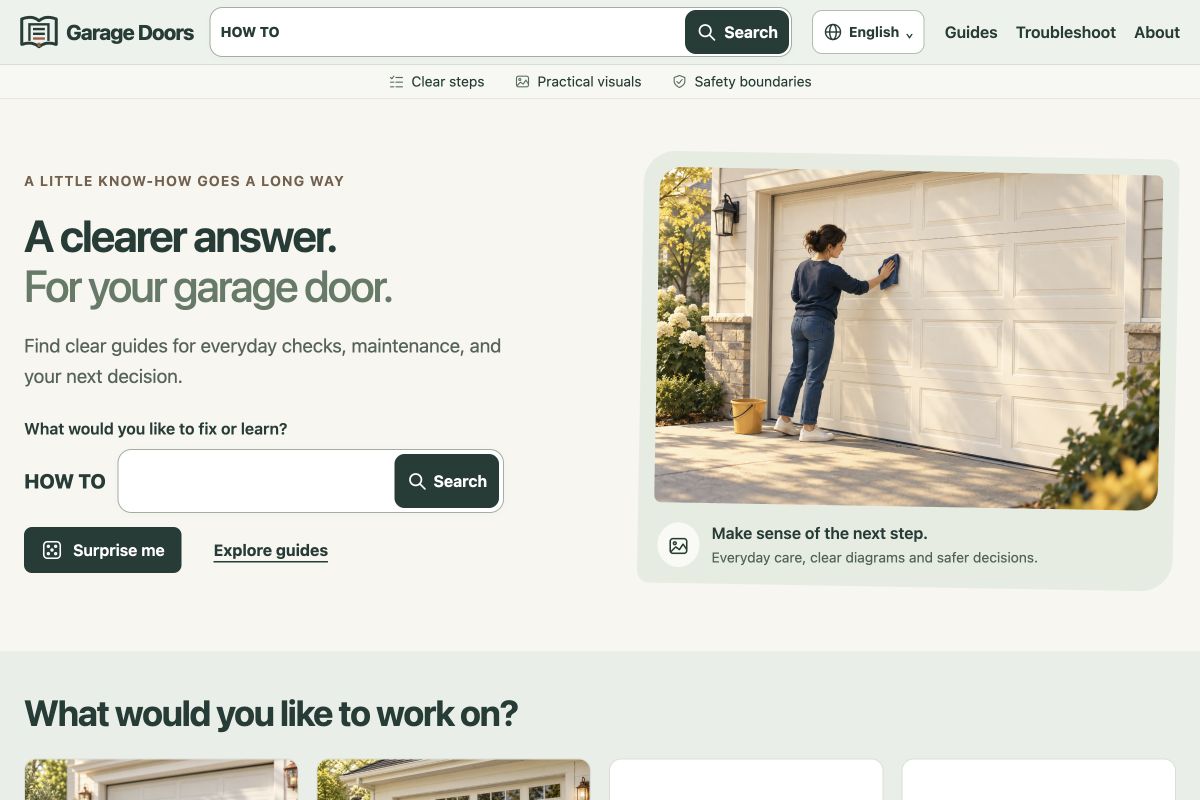
We are introducing How To Garage Doors, our companion educational resource. It brings common homeowner questions together in searchable guides with explanations, photographs, diagrams and clear limits on what a reader should attempt. Local Garage Experts and How To Garage Doors are under common ownership.
What kinds of questions can you explore?
The site organizes its library around recognizable tasks and symptoms. Topics include remotes and keypads, troubleshooting, care and maintenance, weatherproofing, sensors and safety, manual operation, repair planning, and costs and choices. You can begin with a topic or search for the words you would use to describe the issue.
That organization is useful when you know what happened but do not yet know the part name. A keypad that stopped responding, a gap beneath the door and a question about a replacement quote belong to different reading paths. Choosing the relevant path helps avoid applying a procedure to the wrong device or problem.
The library also separates an explanation from a repair instruction. Some questions call for a simple compatibility check. Others call for documenting the symptom and arranging professional assessment. The important result is understanding the next appropriate step, even when that step is to stop using the equipment.
Start with a familiar question: which battery?
The garage door remote battery guide is a good example of why precise wording matters. It covers a handheld remote and distinguishes that device from an exterior keypad, an add-on sensor and the opener’s backup power system. Those devices do not share one universal battery or replacement procedure.
Rather than encouraging a reset as the first response, the guide emphasizes identifying the remote, checking its specified battery and following the documented case-opening method. It also includes model-specific examples, battery safety information and a way to describe what happens if a correct fresh battery does not resolve the symptom.
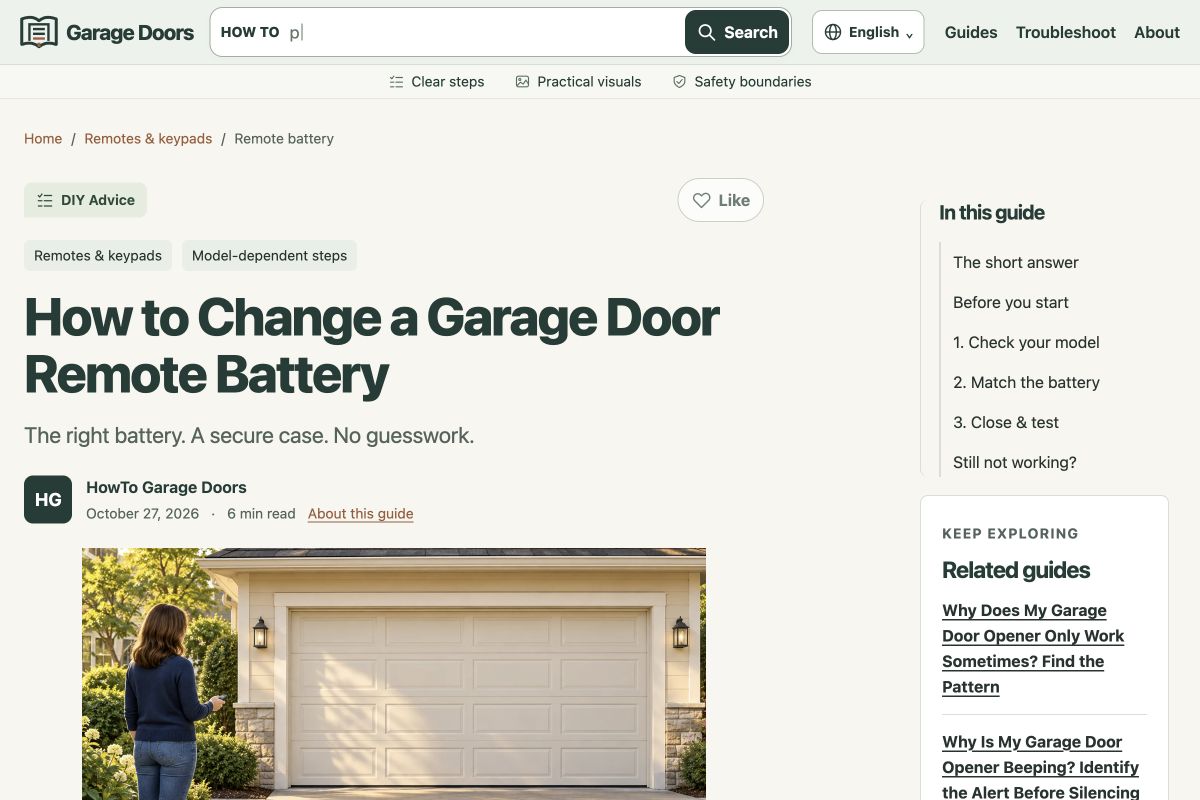
Use that reading to prepare a model record, not to assume that the example remote matches yours. Keep loose batteries away from children and follow the safety information for the actual device. A guide cannot establish that a damaged remote housing or an uncertain electrical problem is safe to work on.
Find care advice that matches the finish
Another useful starting point is the guide to cleaning a garage door without damaging its finish. It treats the painted surface, windows and seals as different materials, rather than assuming that one product or cleaning method suits the entire door.
The article explains why identifying the finish matters before choosing a cleaner. A surface that resembles wood may be a coating or overlay, and glazing may need different care from the surrounding panel. It also distinguishes ordinary dirt from peeling coating, corrosion or damage that washing will not repair.
This is the kind of question worth researching before buying supplies. Read the prerequisites and manufacturer references first, then decide whether your surface and access conditions fit the guide. If the material is unknown or the finish is deteriorating, gather the product information instead of escalating to a stronger treatment.
Prepare better information for a replacement quote
The guide to measuring a garage door opening and clearances shows a different use for the library: planning a conversation with an installer. It distinguishes opening width and height from the space beside, above and behind the opening.
That distinction helps explain why two garages with similar-looking doors can have different installation constraints. Pipes, shelving, ceiling features and existing equipment can affect the available space. The guide includes a measurement record and explains how to identify information that still needs verification.
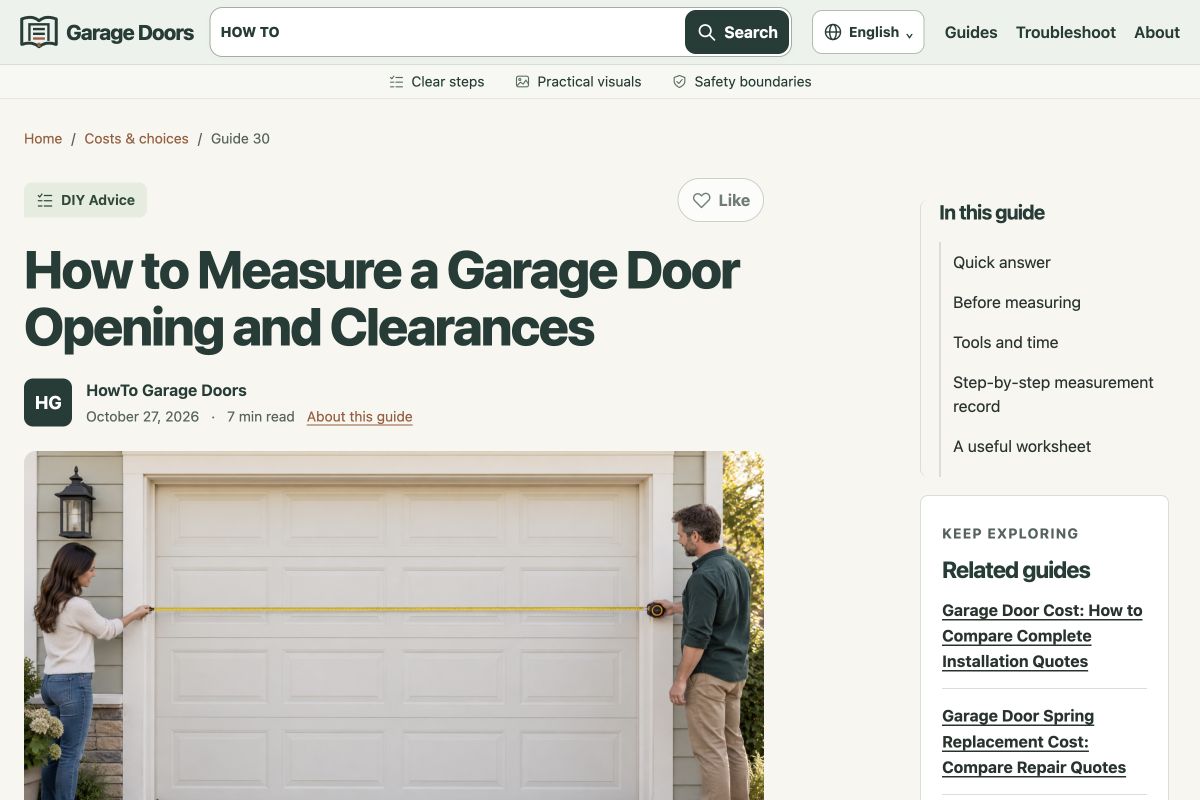
Preliminary measurements are not a final specification for springs, tracks, panels or an opener. Record what is safely accessible and mark unknown dimensions clearly. Do not move an unsafe door, climb on its hardware or remove components to complete a worksheet. For a project assessment, our garage door installation and replacement service is the relevant next conversation.
A simple way to use a guide well
- Name the question. Write down the symptom or decision in one sentence and identify the device involved.
- Check the scope. Read the quick answer, prerequisites and safety limits before moving to a numbered step.
- Match the equipment. Use the actual model, finish and manufacturer documentation; a similar photograph is not proof of compatibility.
- Keep a short record. Note what you observed, what remains unknown and which instructions apply.
- Choose the next step. Continue only within the guide’s stated limits, or use the record to request qualified help.
Where this resource fits alongside official instructions
How To Garage Doors helps you organize a question and locate relevant references. The current manual for the exact product remains the source for that product’s operating and maintenance requirements.
For legal requirements, permits or warranty decisions, check the responsible authority or the manufacturer directly. For the condition of an installed door, an on-site assessment may be necessary. Keeping those roles clear makes an online library more useful: it supports a better-informed decision without pretending to inspect equipment from a distance.
You can also find the resource in our Official Partners and useful resources directory.
Screenshots: How To Garage Doors.