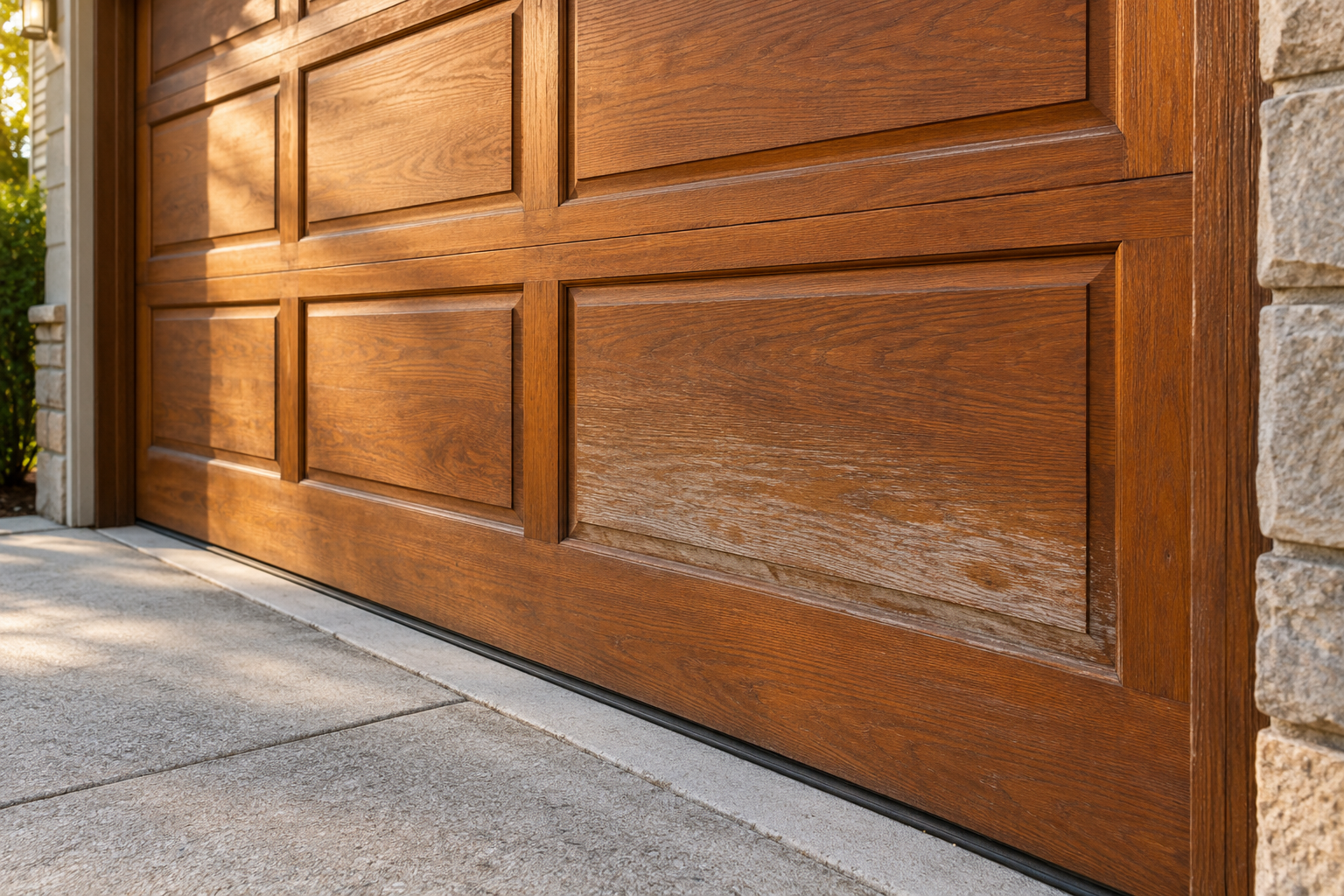
A changing finish deserves attention before the maintenance decision becomes a larger repair question.
Identify the wood door’s existing coating and maintenance requirements before refinishing. Record changes early and distinguish finish care from damage that needs a broader repair assessment.
A wood garage door’s finish is part of its protection, not simply its color. When it starts looking faded, dry or uneven, the useful next step is to identify the existing coating and inspect the condition beneath and around it. Adding a new stain to an unknown finish can create a different problem without addressing the original one.
This guide is for an existing real-wood door. It helps you distinguish routine finish care from damage that needs professional assessment, plan a compatible refinishing project and keep a useful maintenance record. It does not cover disassembling the door, repairing structural wood or adjusting its counterbalance system.
Confirm the door and the coating you actually own
For real wood, record the species or construction if known and whether it arrived painted, stained, primed or unfinished. Then identify any later coating. A color name alone is insufficient: two products can produce similar shades while forming different types of finish.
Look for the original finishing invoice, labelled container information or a written maintenance sheet. If the previous owner or painter used an unidentified product, make that uncertainty explicit. Do not treat the current color as proof that a penetrating stain remains exposed at the surface.
Keep factory-finish instructions and site-applied coating instructions together. The door manufacturer defines the product’s requirements, while the coating manufacturer supplies application and maintenance directions for its system. A successful plan needs those instructions to be compatible.
Read the surface in good light without disturbing it
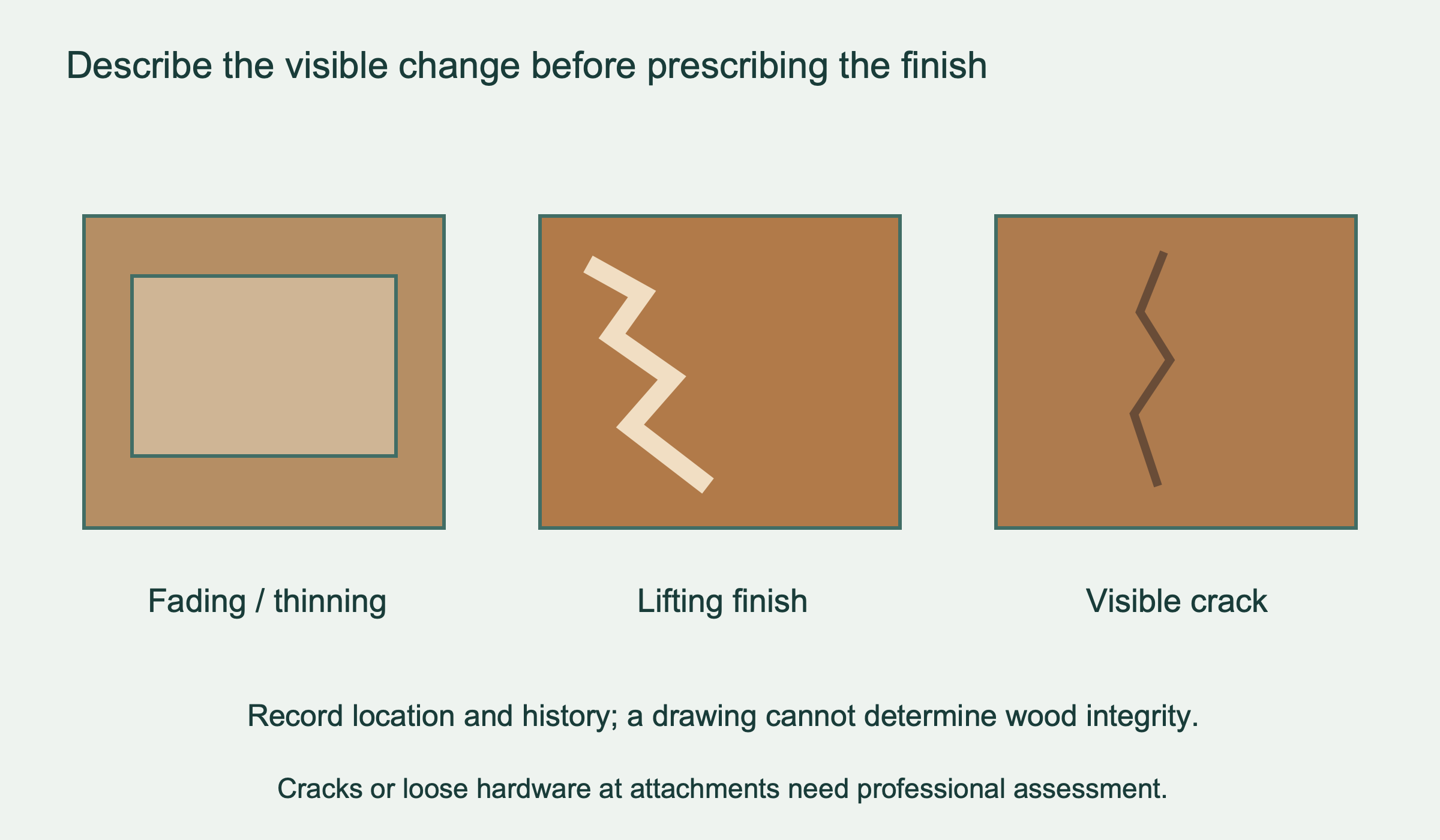
With the door safely closed, look from ground level for fading, thinning finish, peeling, cracking and unusual wet-looking or discolored areas. Take an overall photograph and closer views of specific locations. Compare the lower section, horizontal details and more sheltered parts of the face rather than assuming the whole door weathers uniformly.
DASMA’s wood-door maintenance guidance identifies topcoat condition and the integrity of wood around hardware attachments as separate inspection concerns. That distinction is useful: a cosmetic change on an open field of the panel is not the same observation as a crack or loose connection where hardware attaches.
Do not probe the wood with a screwdriver, pull at a loose-looking bracket or remove trim to see behind it. Describe what is visible and have questionable integrity assessed. A photograph can record a crack; it cannot establish that the remaining material is suitable to carry the door’s operating loads.
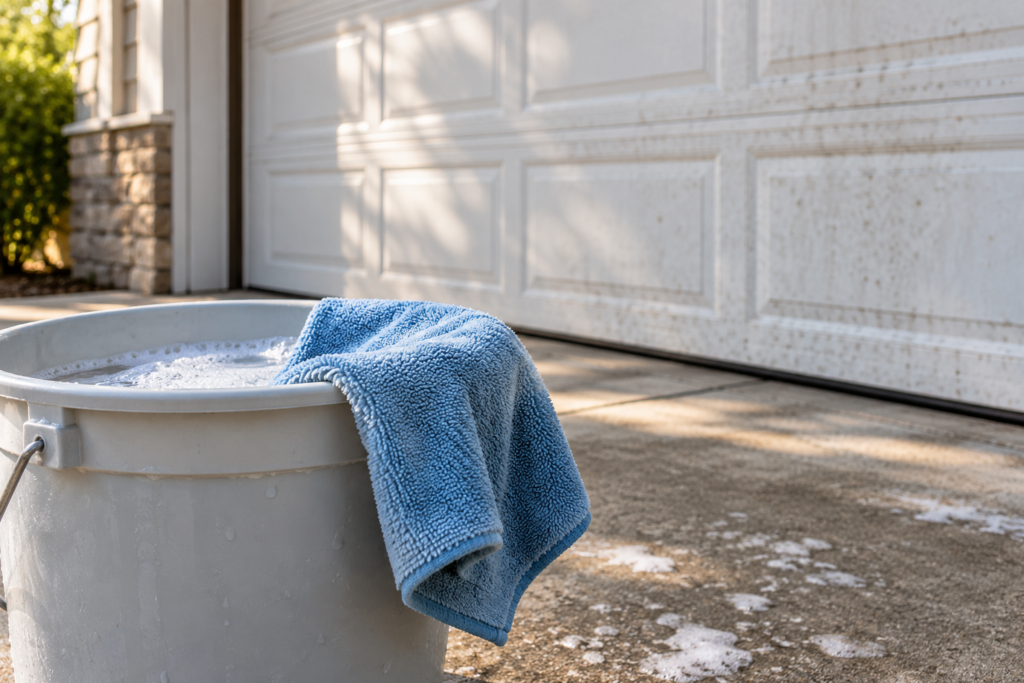
If the finish looks dull but otherwise intact, cleaning under the correct care instructions may clarify its condition. If it is lifting or wood is visibly deteriorated, do not hide the evidence under a fresh coat before deciding what work is needed.
 Select the diagram to view it at full size.
Use the current wood-door instructions, not a generic deck recipe
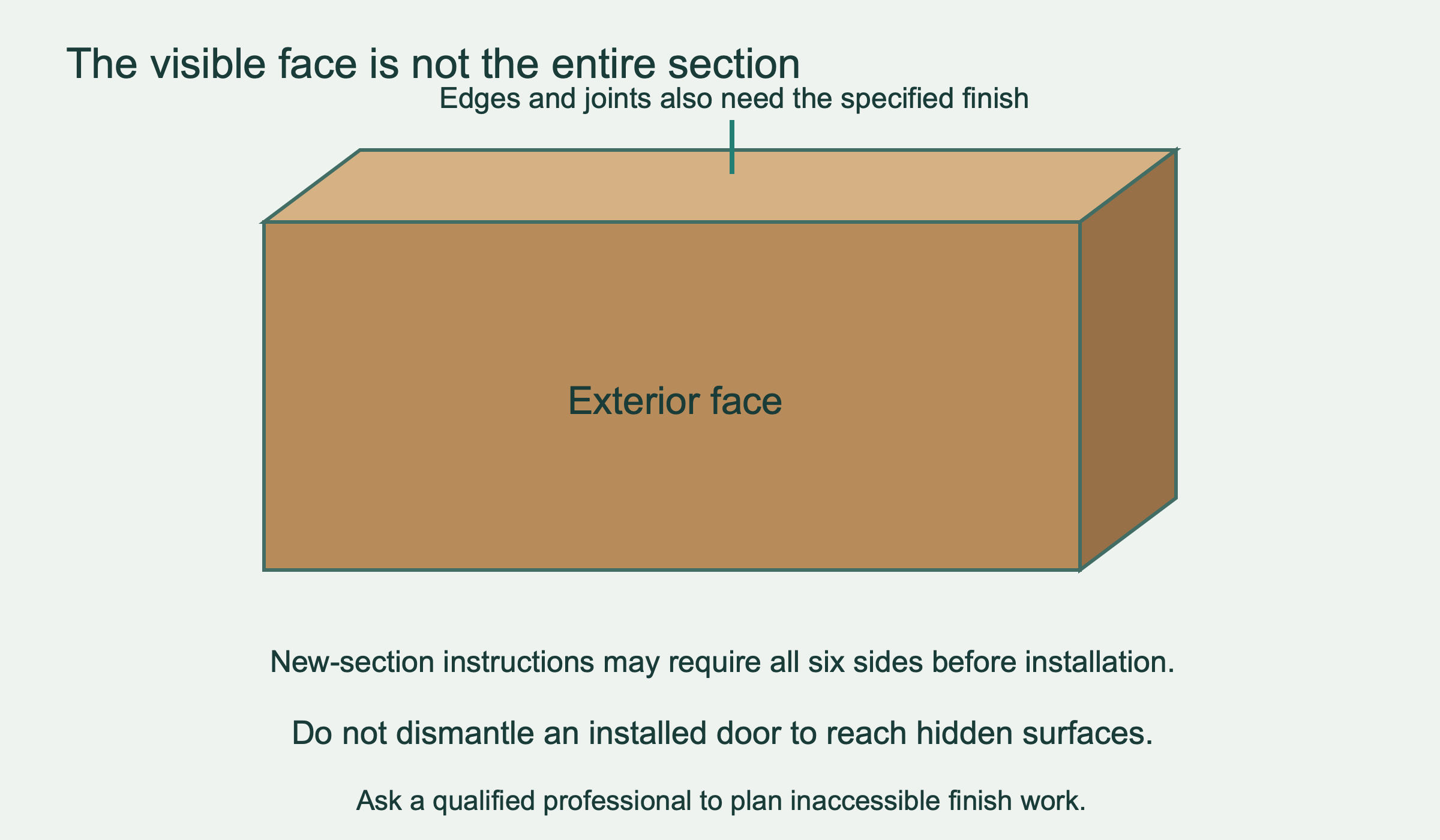
Clopay’s currently linked wood care manual, revision 06-0526, provides a useful example of why model and coating details matter. It distinguishes painting from staining, excludes staining for certain named models and calls for coating compatibility. It also warns against pressure washing and identifies different cleaning restrictions from those used on some metal finishes.
For its unfinished new sections, the manual requires finishing all six sides before installation. That is a manufacturing-and-installation planning requirement—not an instruction to take your installed door apart. If hidden edges or joints need finish work now, a professional must plan safe access and determine the appropriate scope.
The same manual calls for annual finish inspection, recommends repainting its painted wood doors every 1–2 years and ties restaining to need and the stain manufacturer’s instructions. Those are scoped requirements and recommendations for the covered products. They do not establish one universal refinishing interval for every wood door, exposure or finish.
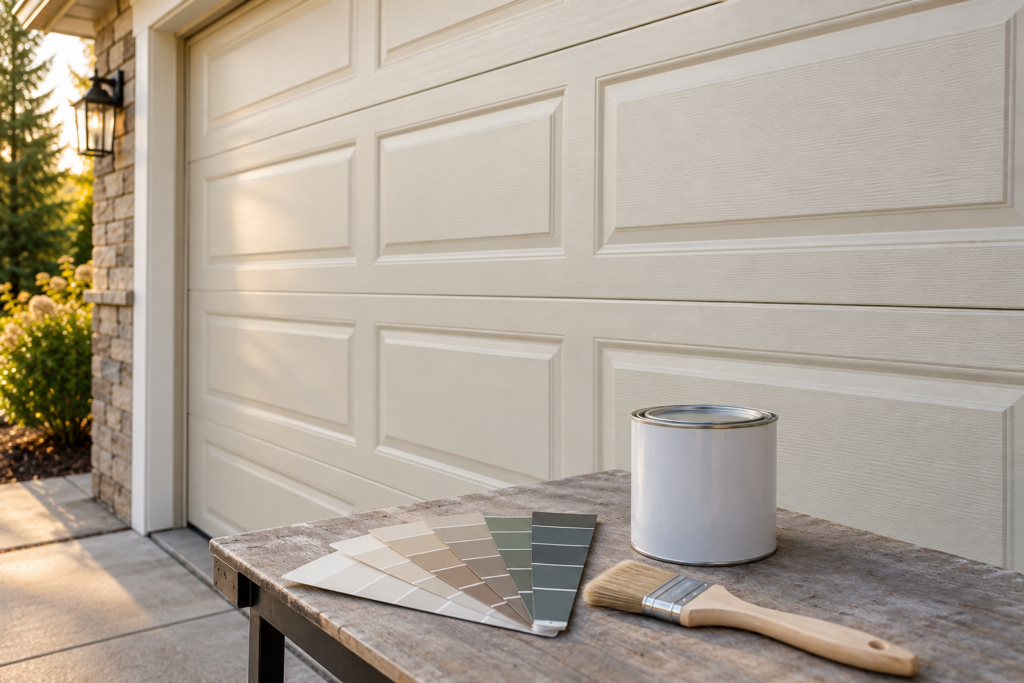
Use your actual documentation to answer the project questions: what preparation is permitted, which coating type is compatible, whether a color change is allowed and which application conditions must be met. A coating advertised for exterior wood is a starting description, not complete proof that it is suitable for the door’s existing system.
 Select the diagram to view it at full size.
Make a staining decision before buying the stain
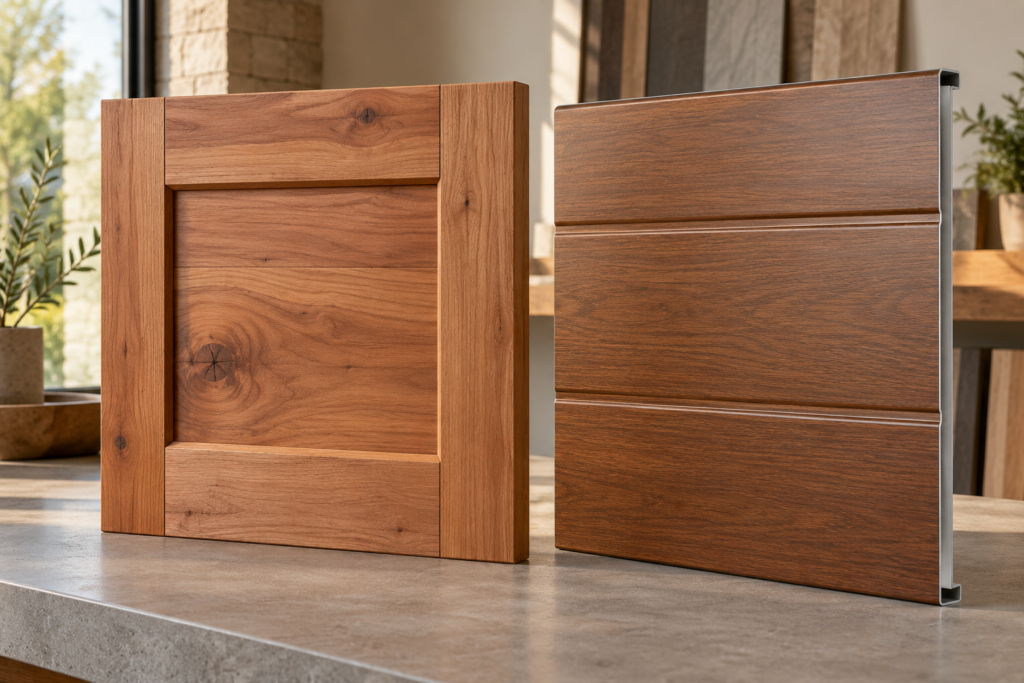
If you want to refresh a stained appearance, first determine whether the existing coating can accept the proposed product. A penetrating stain and a film-forming topcoat do not create the same surface. Applying another product over an incompatible layer may not produce the color or adhesion you expect.
Ask the coating supplier about the complete system, including any required preparation and test area, and confirm that it fits the door manufacturer’s instructions. Give the supplier the product history and photographs rather than only a desired color. If the history is unknown, a qualified finisher may need to assess the surface before a reliable specification is possible.
Do not select a darker color simply to conceal uneven weathering. The appearance problem and coating suitability still need to be resolved. Clopay’s wood manual cautions about dark colors, especially with direct southern exposure; your exact product instructions should govern that decision.
For an existing painted door, changing to a stained wood appearance may be a much larger project than a maintenance coat. Do not assume a stain will reveal attractive grain through paint or that stripping is harmless to every construction. Ask for a realistic preparation and finish proposal, including whether the desired result is appropriate for the actual door.
Plan the work around safe access and curing
Before refinishing begins, decide how the door will remain out of use and how the household will enter the garage. A finish job involves drying and curing conditions as well as brushwork. Do not let someone operate the door unexpectedly while a worker is positioned near it or while surfaces must remain undisturbed.
Do not loosen hinges, bottom brackets, cables or spring hardware to reach a strip of bare wood. Do not wedge or prop an uncertain door. Where access requires disassembly or a change in the operating arrangement, that is work for a qualified door professional coordinating with the finisher.
Follow the coating labels for temperature, humidity, ventilation, protective equipment and drying times. Those requirements cannot be replaced by a universal number of hours in an online guide. If a product involves solvent handling or other precautions you cannot safely manage, hire that stage rather than improvising.
Keep finish off moving hardware, seals, safety-sensor lenses and warning labels. If operation changes after finish work, stop and have it assessed; do not compensate with opener force or spring adjustment. DASMA notes that added finish weight can affect operation, so a cosmetic project should not be assumed mechanically irrelevant.
Investigate repeated wetting instead of repeating the same coat
Pay attention to where deterioration returns. A lower edge, horizontal detail or exposed side may experience different conditions from the sheltered center. Note sprinkler contact, recurring pooling or other wetting you actually observe, without deciding from appearance alone that you have identified the entire cause.
A coating plan and a moisture-source plan can be separate pieces of the same job. If water repeatedly reaches the same area, a new finish may not resolve the surrounding condition. Have drainage or building-envelope concerns evaluated by the appropriate professional rather than using caulk or finish to conceal an unexplained problem.
Do not seal moving section joints indiscriminately. A recommendation for a particular wood-panel joint in a manufacturer’s manual is not permission to fill every visible gap on an installed sectional door. If the joint type or purpose is unclear, ask before altering it.
 Select the diagram to view it at full size.
Leave a useful record for the next inspection
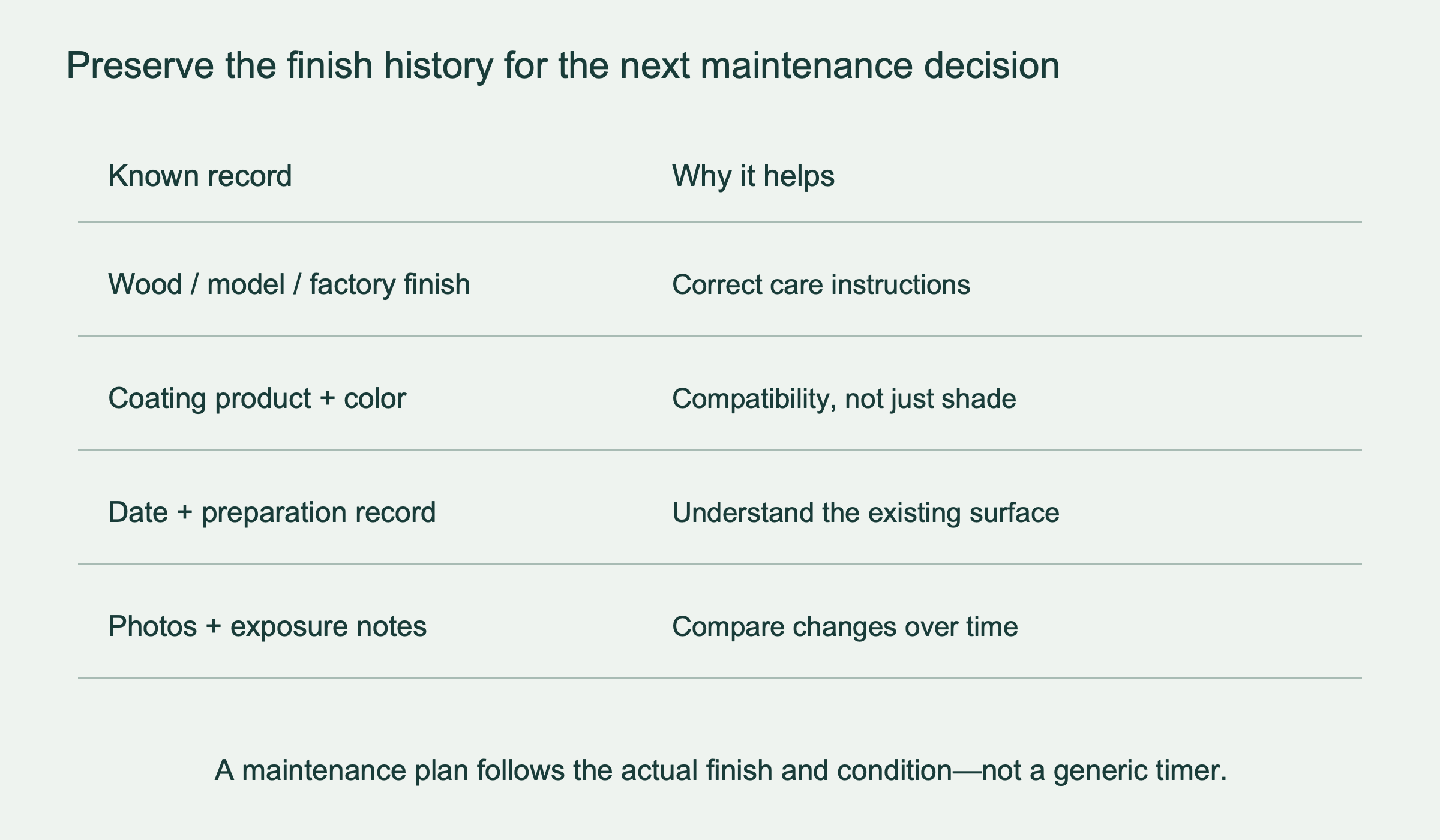
Save the door identification, coating product and color, preparation details, work date and photographs. Ask the finisher which cleaning method and inspection signs should guide future care. Preserve the product instructions rather than only the paint-store receipt.
Set inspections around the applicable manual and actual exposure. Compare photographs under similar light so ordinary lighting changes do not look like sudden finish failure. Attend to new peeling, visible deterioration or loose hardware promptly instead of waiting for a calendar reminder.
If a possible warranty condition is involved, document it and contact the provider before altering the evidence. For the physical door’s condition, contact Local Garage Experts and explain whether the concern is finish appearance, wood integrity or changed operation. The best maintenance plan preserves both the appearance and the safe function of the door without treating every problem as a reason to apply more stain.