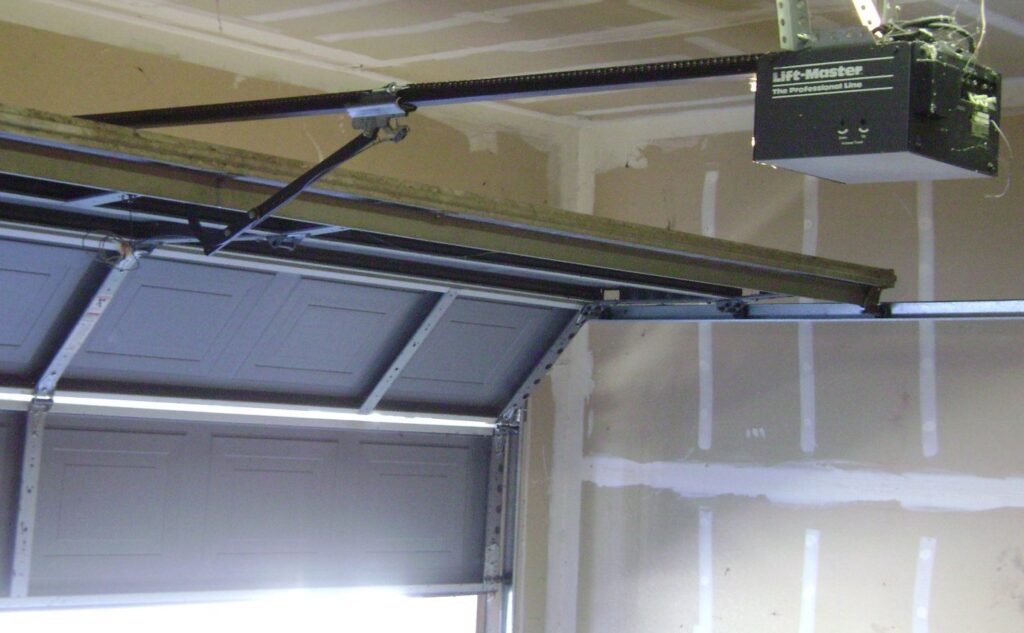
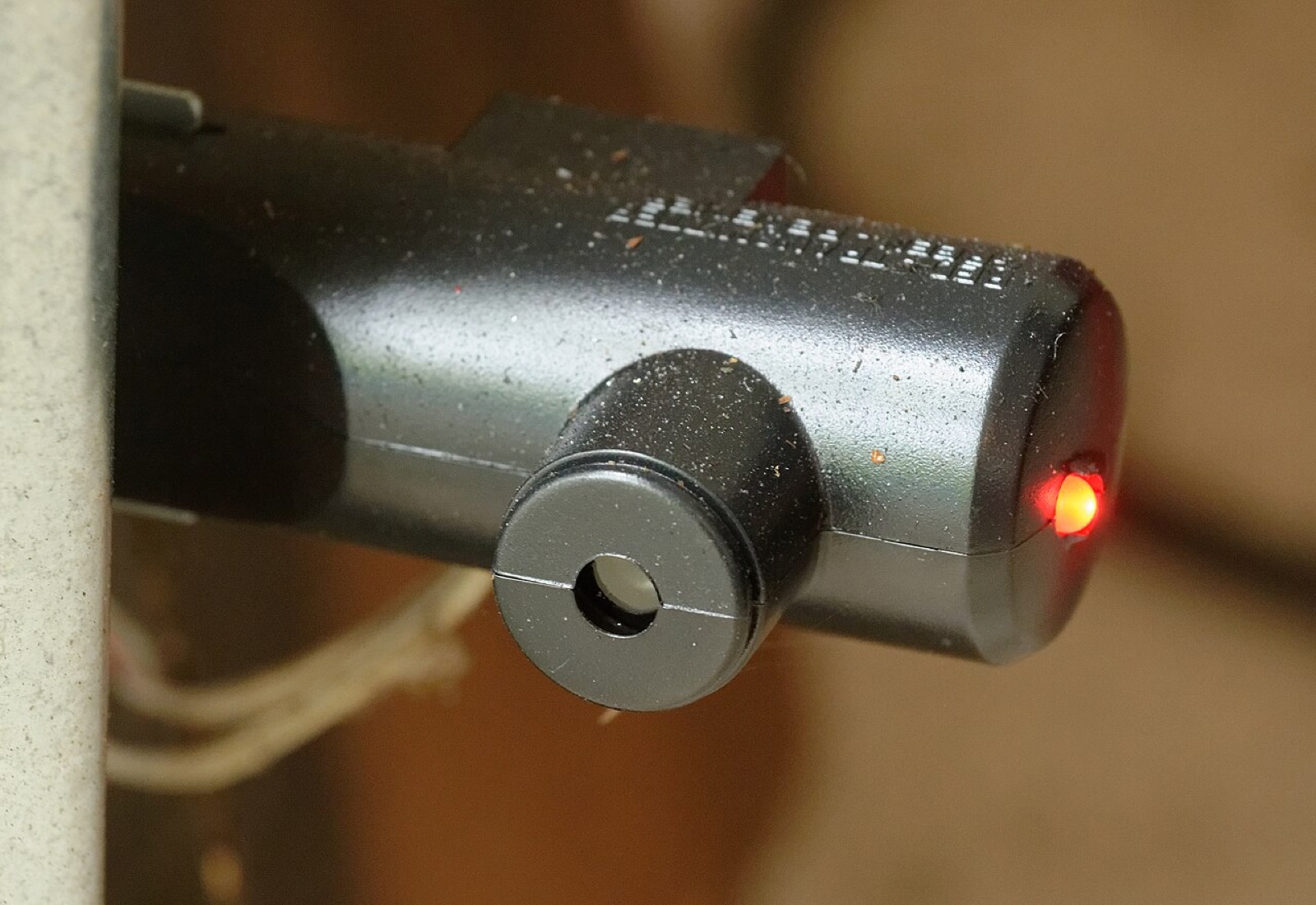
A photo-eye is one protective component. Its indicator does not verify contact reversal. Photo: Jud McCranie · CC BY-SA 4.0. Resized for the web; full framing retained.
Two sensor lights are on and the remote opens the door. Is the garage door safe? Those observations answer only part of the question. The door, its counterbalance, the operator and the protective systems must work together. A door can pass one check and fail another, so “the sensors work” should never become shorthand for a complete safety assessment.
Photoelectric sensors and contact reversal: what is the difference?
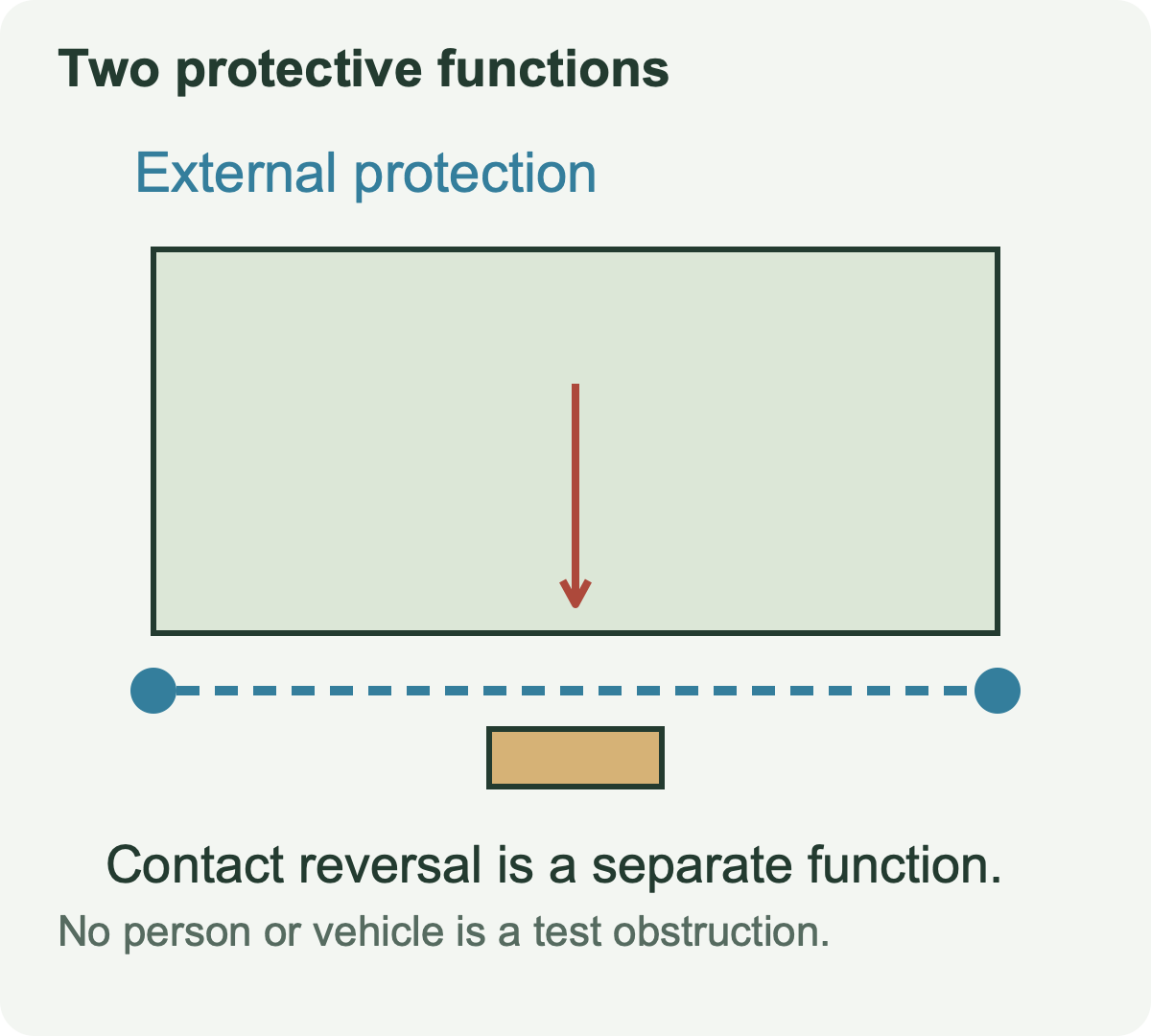
Photoelectric sensors send a beam across the opening. Interrupting that beam can prevent closing or make a closing door reverse, according to the model's design. This is external, non-contact protection: the door does not need to hit the detected object first. A contact-reversal system responds when the closing door encounters resistance. Its assessment is separate from sensor alignment.
| Check | What it evaluates | What a pass does not prove |
|---|---|---|
| Photo-eye obstruction check | The response to interruption of the documented beam | Contact reversal, door balance, or detection everywhere above the beam |
| Contact-reversal check | The response to the manual's specified test obstruction | Correct response to a blocked photo-eye or safe mechanical condition |
| Normal remote operation | That this control can command movement | Either protective function |
The distinction also explains why an object outside the beam's path may not be detected by that beam. Never use a person, pet or vehicle to demonstrate a safety feature. Keep the doorway clear and maintain a view of it whenever operating the door.
Before a safety test: identify the model and inspect from the floor
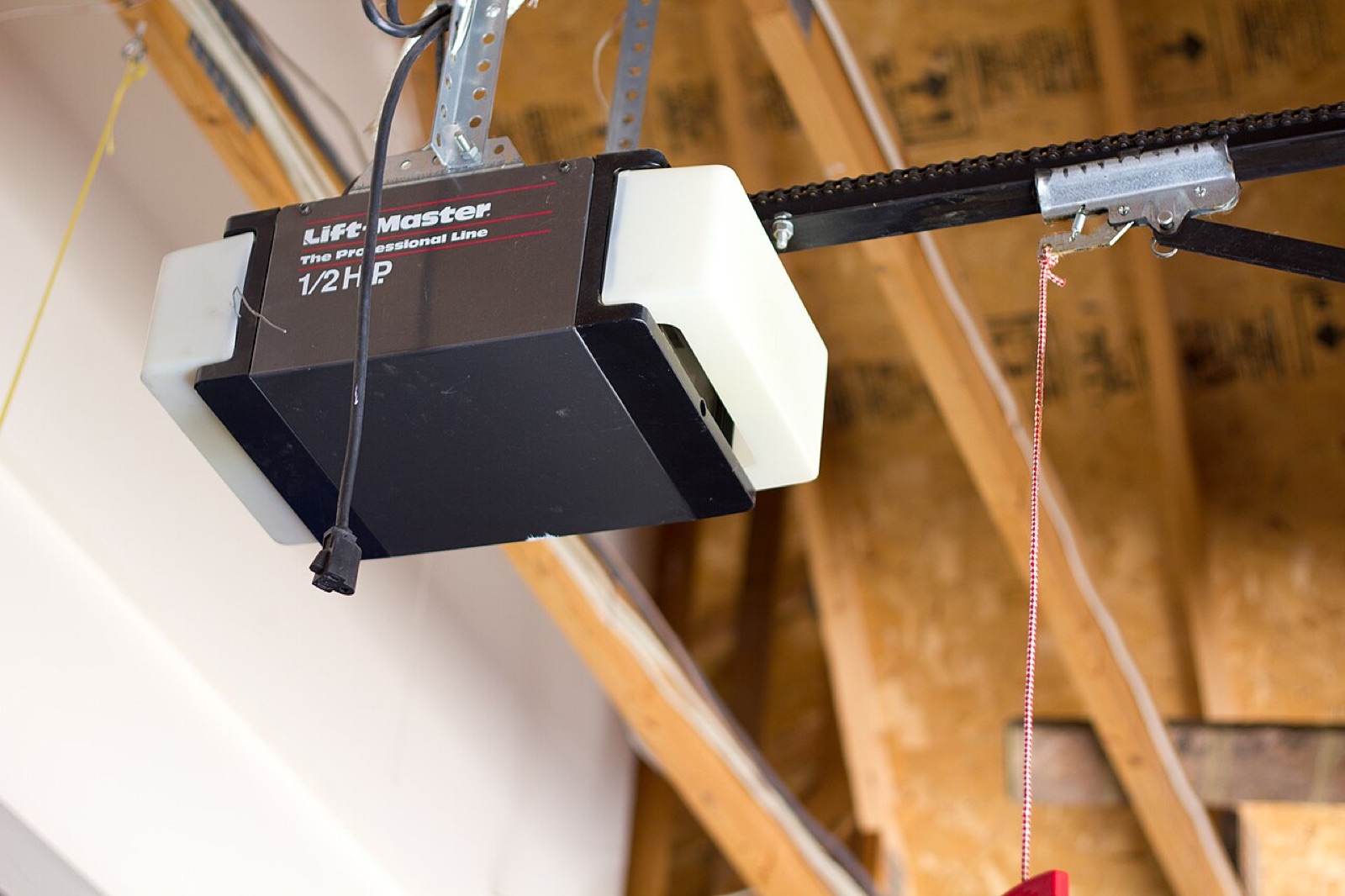
Find the opener model and its current owner's manual. A sensor's case color, a familiar red release cord or the number of remote buttons does not identify the correct test. The manual should state the required test object, its placement, the expected response and the maintenance interval. If you cannot establish those details, request the manual from the manufacturer or have a trained technician perform the checks.
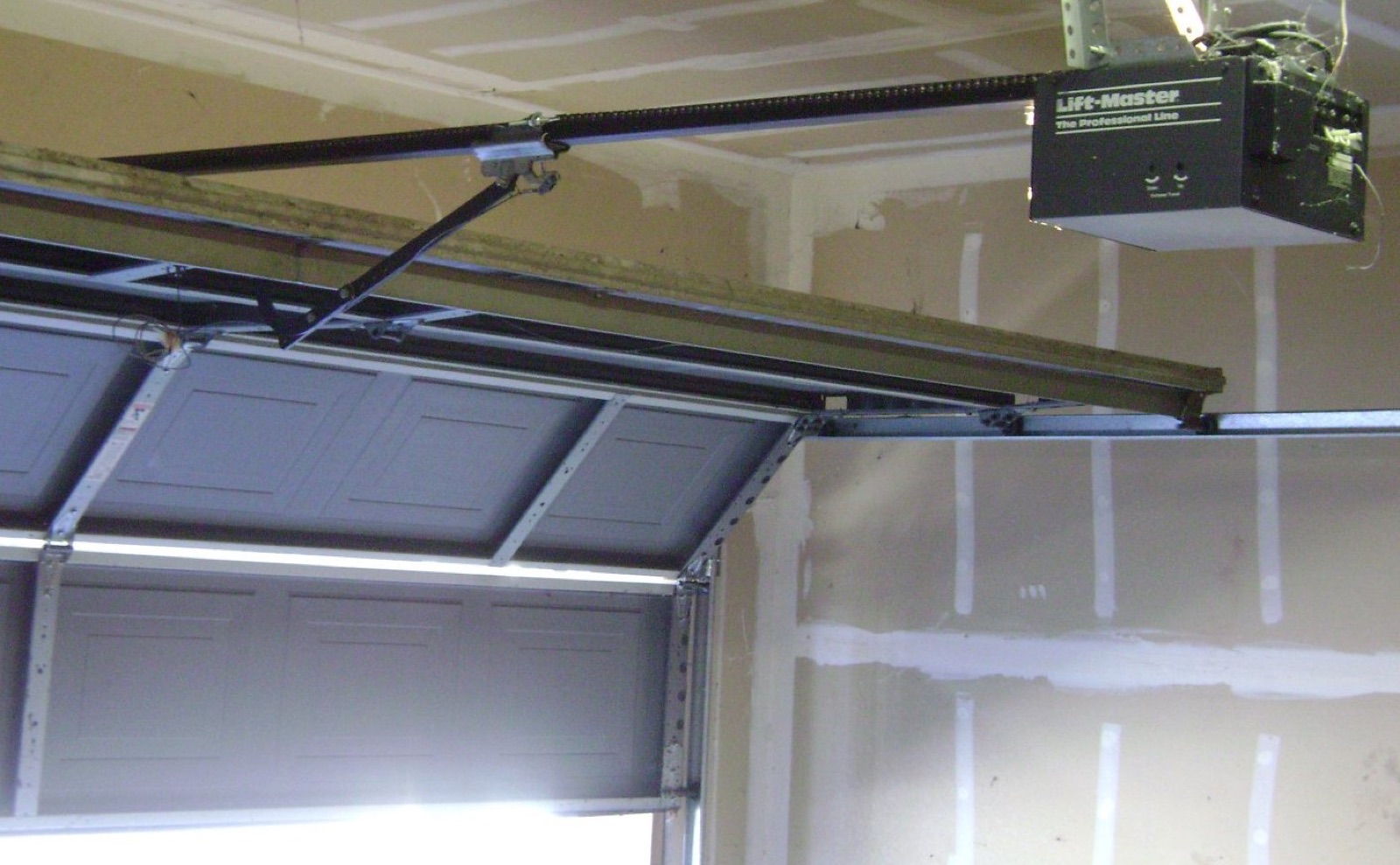
Look for a crooked door, frayed or slack cable, damaged bracket, displaced roller, loose mounting or unusual movement already observed. If any is present, stop here. Do not disconnect, manually lift or run test cycles on a visibly unsafe door. Spring, cable and counterbalance work belongs to a trained door professional.
Move stored objects away through ordinary housekeeping only when the stationary opening can be approached safely. Tell other household members that a check is planned so they do not send an unexpected command from another remote or app. Prepare the test item before beginning; do not enter the door's path while it moves.
What is the 2-by-4 garage door reversal test?
CPSC describes checking reversal with a 2-by-4 in the door's path. The manufacturer's instructions determine the correct procedure for your unit. For example, Genie's published contact-reversal instructions place the board flat at the center of the opening, presenting its 1½-inch height to the closing door. The expected response in that guide is reversal within two seconds of contact. Do not generalize its indicator-light response to other openers.
The important distinction is placement and result, rather than merely owning a board. A board standing on its edge is a different height. A beam interruption before contact is a different event. Read the exact procedure first and use only the specified setup on a door whose condition supports owner testing.
This article does not supply universal force or travel settings. Those settings interact with the installed door and its condition. A technician should identify the cause of a failed check and repeat the required checks after the supported repair or adjustment.
How to check the photo-eyes without treating lights as proof
Use the manual's obstruction test, including how the test object is positioned and when the command is given. Some procedures check refusal to start closing with the beam blocked; others also check reversal during closing. Do not substitute waving a hand beneath a moving door. Keep yourself outside the opening and use the documented method.
A steady LED may be a useful status indication, but its meaning depends on the device. It does not prove that contact reversal, door balance or every other component is correct. If the expected response fails, record the exact sensor indications and the step that failed without repeatedly cycling the door. The sensor alignment and visible-condition guide covers that separate troubleshooting task.
Do not tape over a lens, bridge wiring, raise the sensors or hold a wall control as a workaround for a failed protective-system check. A successful closing after an override does not resolve the fault.
Reversing at the floor is a symptom, not a successful test
A door that reaches the floor and reopens during ordinary use may have a travel, resistance, installation or other fault. That behavior is not evidence that the prescribed contact-reversal test has passed. Equally, a door that reverses well before the floor is not automatically suffering from misaligned sensors.
Record where the reversal starts, whether it is consistent and any accessible diagnostic message. Describe the control used and conditions already observed. Use the closing-problem guide to distinguish the symptom; do not repeat a fault to collect a video or clear its code before recording it.
What if an older opener has no visible photo-eyes?
Identify the actual protective arrangement instead of declaring an unfamiliar installation safe from a photograph. CPSC's historical overview distinguishes the reversing requirement for units manufactured or imported for U.S. sale after January 1, 1991 from additional external entrapment protection in 1993. External protection can include a photoelectric system, sensing edge or equivalent qualifying device.
Genie's policy recommends replacing its pre-1993 openers and ended repair support and replacement-part sales for those units on July 1, 2013. Other equipment requires its own manufacturer's assessment. Do not assume that adding a separate sensor kit updates any old operator to a later safety system.
Keep two results in the maintenance record
CPSC recommends inspecting the door and opener every 30 days; follow the installed equipment's specified checks and schedule as well. Record the date, opener model, manual reference and separate results for contact reversal and external protection. Include any repair and the checks performed afterward. A brief record is more useful than an undated note saying “sensors OK.”
When requesting an opener safety assessment, state exactly which check failed and whether the door is currently closed. A complete recommendation should address the door's mechanical condition and supported protective functions. Battery backup and app access are separate features; neither is a substitute for a functioning safety system.
Sources & manuals
- CPSC: Non-Reversing Automatic Garage Door Openers Are a Hazard
- Genie: separate contact and non-contact reverse tests
- Genie: pre-1993 opener policy
Sources checked November 5, 2026. Follow the current manual for the installed model; the Genie procedure is a named example, not a universal setup sequence.