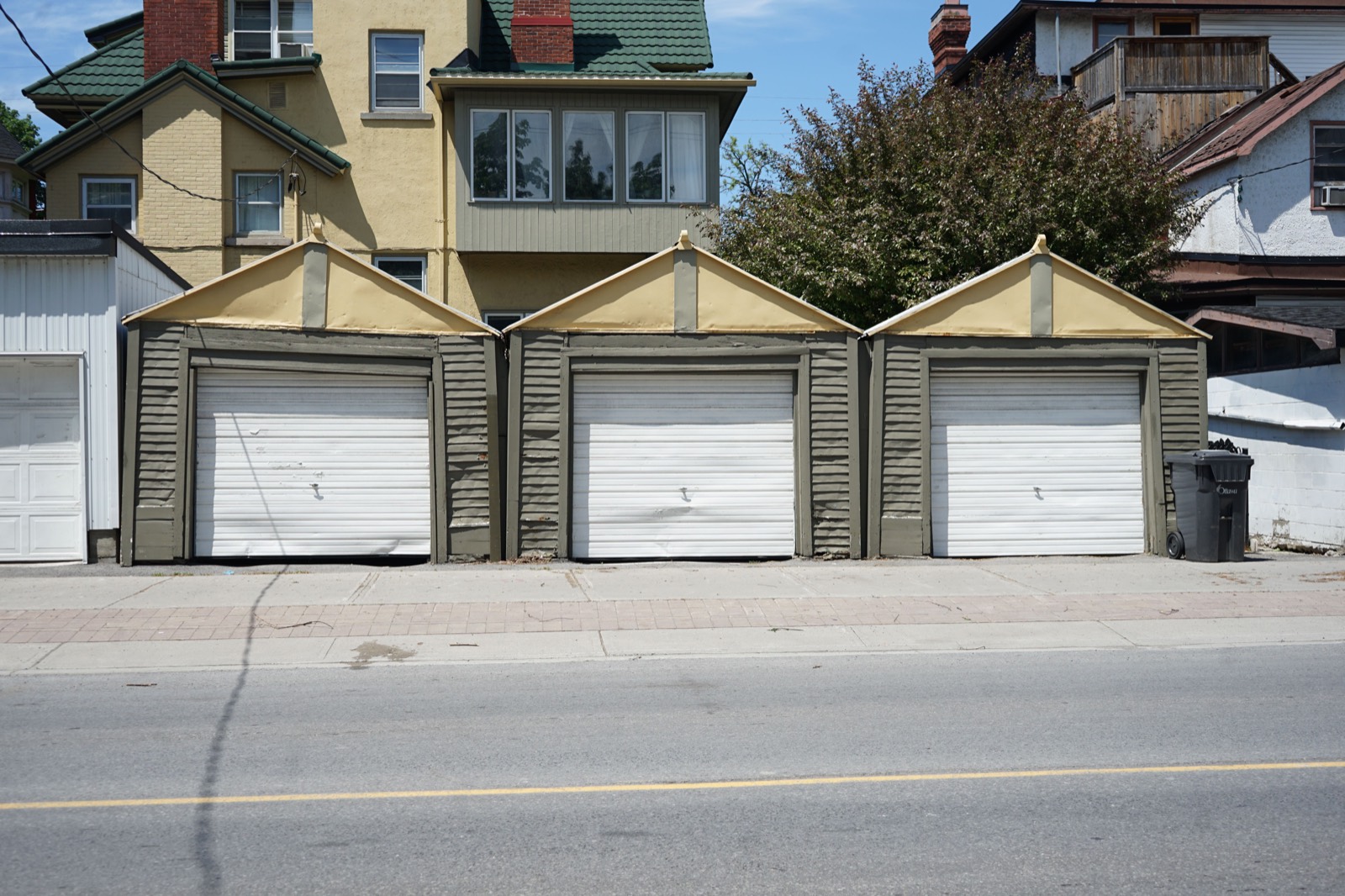
Cover photo: Braeson Holland · Source · Pexels License. Resized and JPEG optimized; full framing retained.
A damaged garage door creates two jobs: make the opening safe, then work out who pays for what. Keeping those questions separate helps you avoid approving a repair on the strength of a coverage promise that the repair company cannot make. This guide is a way to prepare an informed conversation with your insurer, not a decision about an individual claim.
Start with the event, not the price of a new door
Write down what you know happened and when you first noticed it. “The car contacted the closed door on Tuesday” is useful. “The whole system is ruined” is a conclusion that still needs an assessment. Record the door's position, visible panel damage and whether anything appears displaced. Do not operate a crooked or damaged door to demonstrate the problem.
Ask a door professional to distinguish the damaged section, operating hardware and opener. Those components may need different work, and the insurer will need a clear description of the loss. A dent does not establish that every component needs replacement. Equally, a small-looking mark does not establish that continued operation is safe. The existing guide to dents and potentially consequential damage explains that physical distinction.
Attached garage, detached garage and damaged belongings are separate entries
California's Department of Insurance describes dwelling coverage and coverage for other structures as separate parts of a typical homeowners policy. A detached garage may fall under the latter. Your declarations, policy wording and endorsements determine the applicable protection; the appearance of the building alone does not settle it.
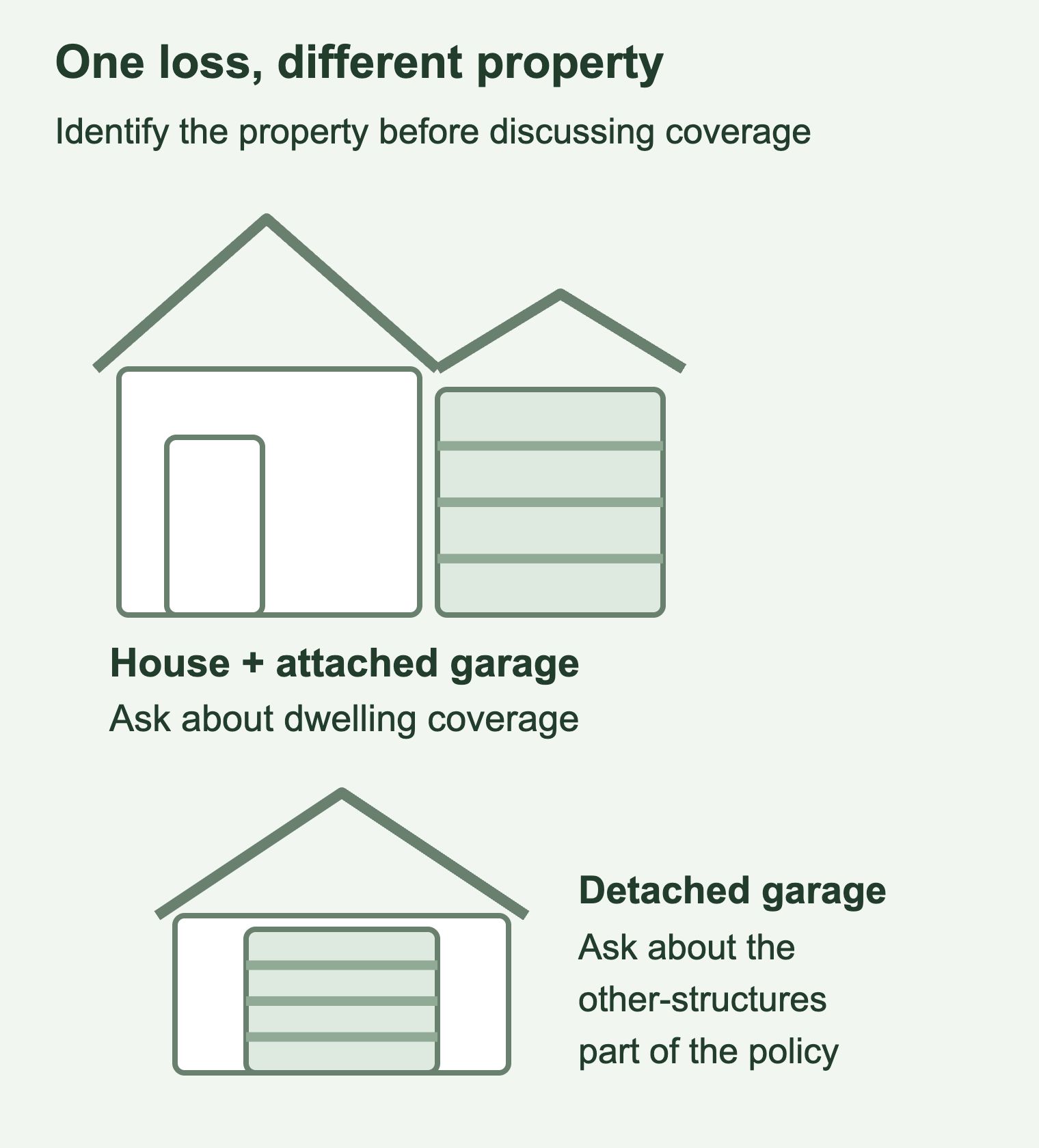
Make a short list of everything affected: the door, the opener, building framing, a vehicle and stored belongings. Avoid grouping them into one “garage repair” total. Ask which coverage the insurer is considering for each item. A policy question about the garage building is not automatically the answer to a question about a car parked inside it.
If you rent, tell the owner or property manager promptly. The building and your personal belongings can belong to different people and be insured differently. Do not authorize work on someone else's property or assume that renters insurance is a building-replacement policy.
Different causes deserve different questions
| What happened? | What to ask the insurer | What not to assume |
|---|---|---|
| Your car struck the door | Which policy, coverage and deductible apply to the door, and separately to the vehicle? | That a single claim necessarily pays for both. |
| Wind, fire or vandalism damaged the opening | Is this cause covered, and are any relevant exclusions or special deductibles involved? | That every policy treats every event alike. |
| A spring wore out or an opener stopped working | Is this a covered loss or a maintenance/mechanical issue under this policy? | That an expensive failure is automatically an insured event. |
| Water affected the garage | How does the policy distinguish the actual water source and any flood coverage? | That all water damage has the same coverage. |
Describe a water source as accurately as the available evidence allows. A photograph of a wet floor does not establish whether water came from a pipe, rain entry, surface runoff or flooding. Record what you observed and leave the cause open if it has not been established. Do not repeat a convenient explanation simply because someone says it is more likely to be covered.
Keep insurance, a product warranty and a home warranty distinct
A manufacturer's warranty addresses the product under its written terms. A homeowners policy addresses insured losses under its own contract. A separately purchased home warranty or service contract is another document again. They can have different administrators, exclusions and approval processes.
Keep the documents in separate folders and note whom you contacted. Our garage door warranty guide explains why “lifetime” is not a description of every component or labor obligation. Neither a long product warranty nor a repairer's verbal assurance proves that an insurance claim will be accepted.
Prepare a useful claim record without making the damage worse
- Record the event. Note the date, the apparent cause and the condition you actually saw.
- Photograph from safe positions. Include the whole opening and accessible details. Keep original files; avoid moving broken parts for a better view.
- Contact the insurer. Ask about notice requirements, inspection, repair authorization and reasonable steps to prevent further damage.
- Obtain an itemized assessment. Separate door sections, hardware, opener work and any building repairs.
- Keep the paper trail. Retain estimates, invoices, receipts, messages and the claim reference in one place.
The Department of Insurance's claims guide emphasizes documenting a loss and communicating with the insurer. Ask what evidence should be retained before anything is discarded. If urgent work is needed to protect people or the property, describe that urgency and keep records of what was done; do not turn a general recommendation to document damage into an instruction to leave a hazard unsecured.
Compare the settlement terms with the actual repair scope

Ask the insurer to explain the applicable deductible, limits and valuation method in writing. Replacement cost and actual cash value are different policy concepts; depreciation and any process for recovering it need a policy-specific explanation. The repair quote and the insurance payment are not interchangeable documents.
Before approving work, clarify whether the proposal includes a matching section or a complete door, compatible hardware, finish work, removal and commissioning. Ask what happens if inspection reveals additional damage. Do not assume that choosing an upgraded model changes the insurer's obligation. For the physical scope, a door replacement assessment can identify the equipment and work being proposed.
Five questions to keep beside the phone
- Which event and policy provision are you considering?
- Which damaged items are included, and which need a separate decision?
- What deductible, limit and valuation method apply?
- What inspection or authorization is needed before the repair proceeds?
- What documents and receipts should I retain?
If a coverage decision is unclear, ask for the explanation and the relevant policy wording. California residents can use the Department of Insurance's consumer resources for further guidance. The aim is a documented decision about both the repair and the claim, without treating either party's estimate as a guarantee from the other.