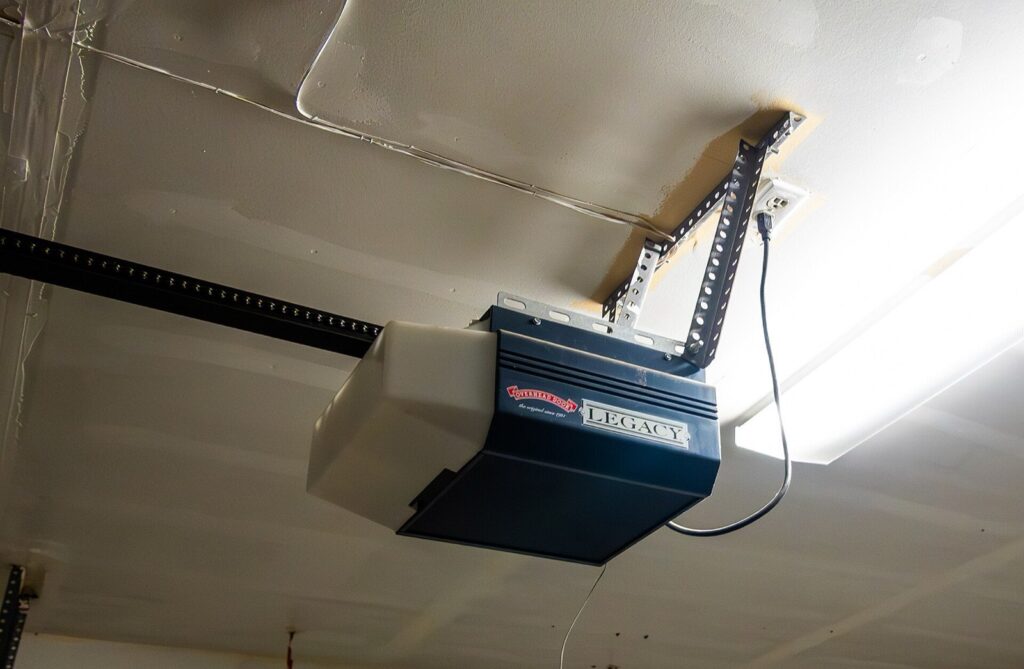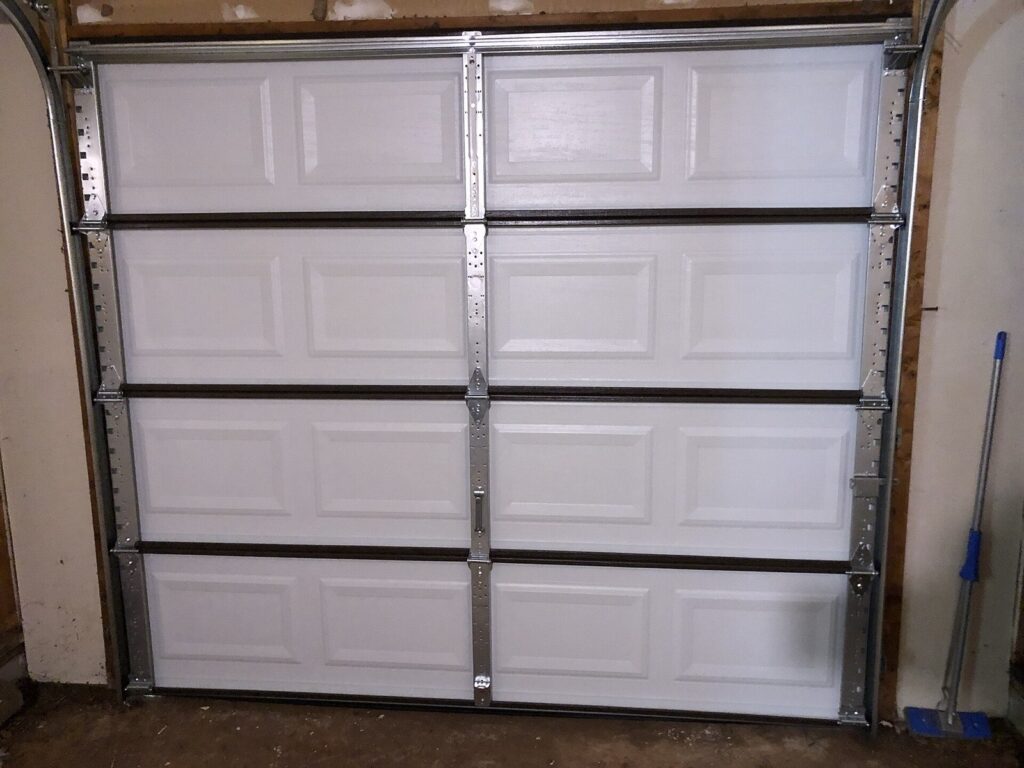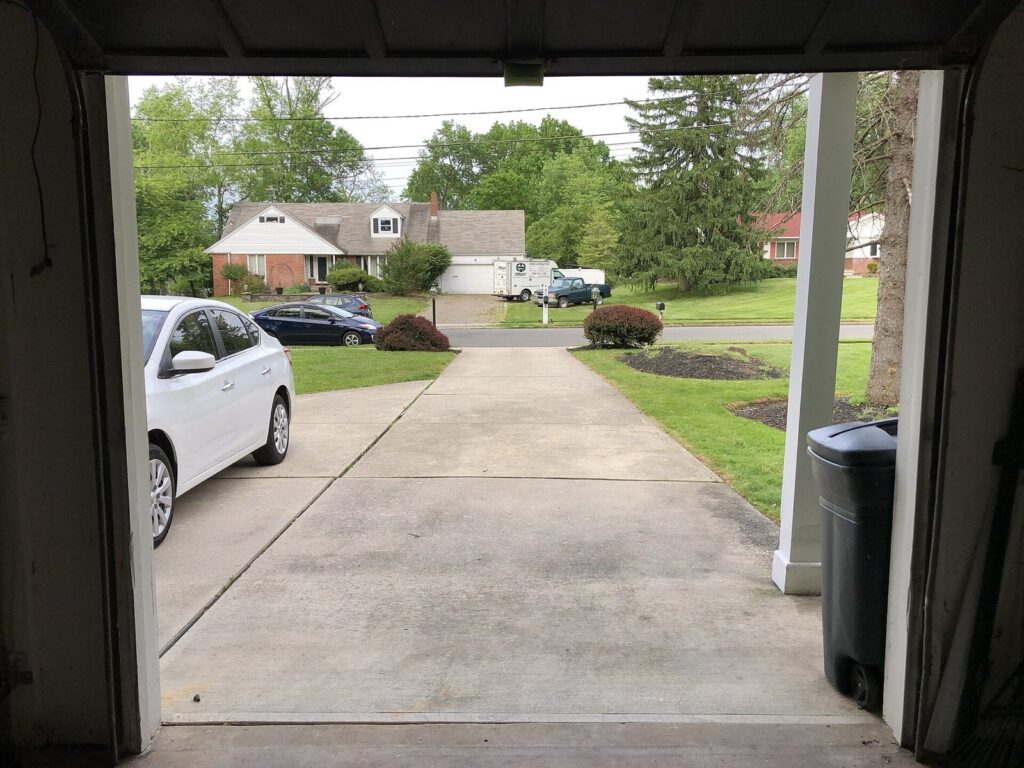
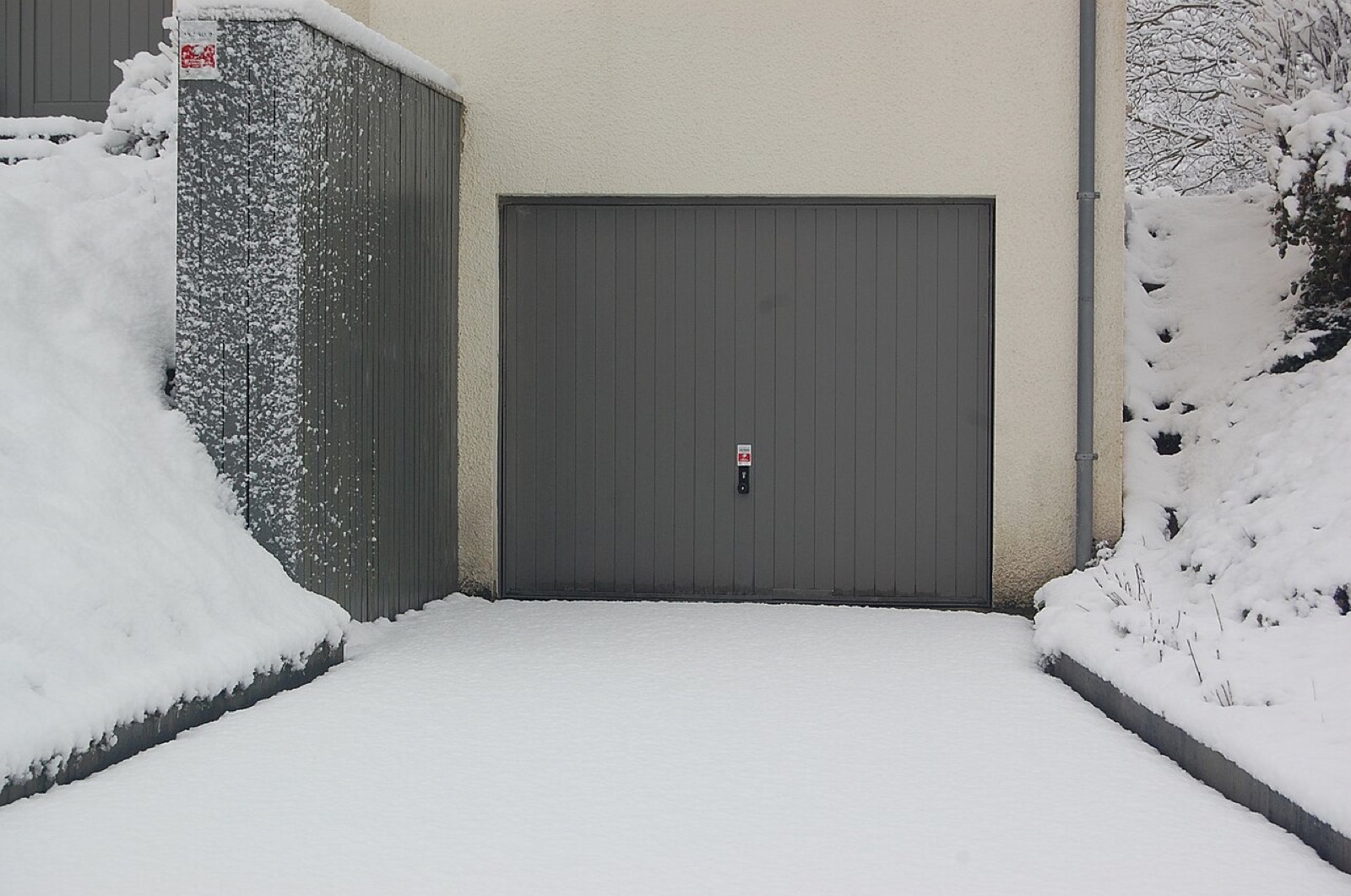
A real garage in snowy conditions. Snow alone does not establish that its seal is frozen to the floor. Photo: Lucyin · CC BY-SA 4.0. Resized for the web; full framing retained.
A door that worked the previous evening may refuse to lift after freezing weather. Water at the threshold can freeze around the flexible bottom seal, holding it against the floor. But cold weather is context, not a diagnosis: a damaged cable, broken spring or locked door can also prevent opening. The aim is to identify what can be observed without using the motor as a test of strength.
Check whether freezing conditions fit the event
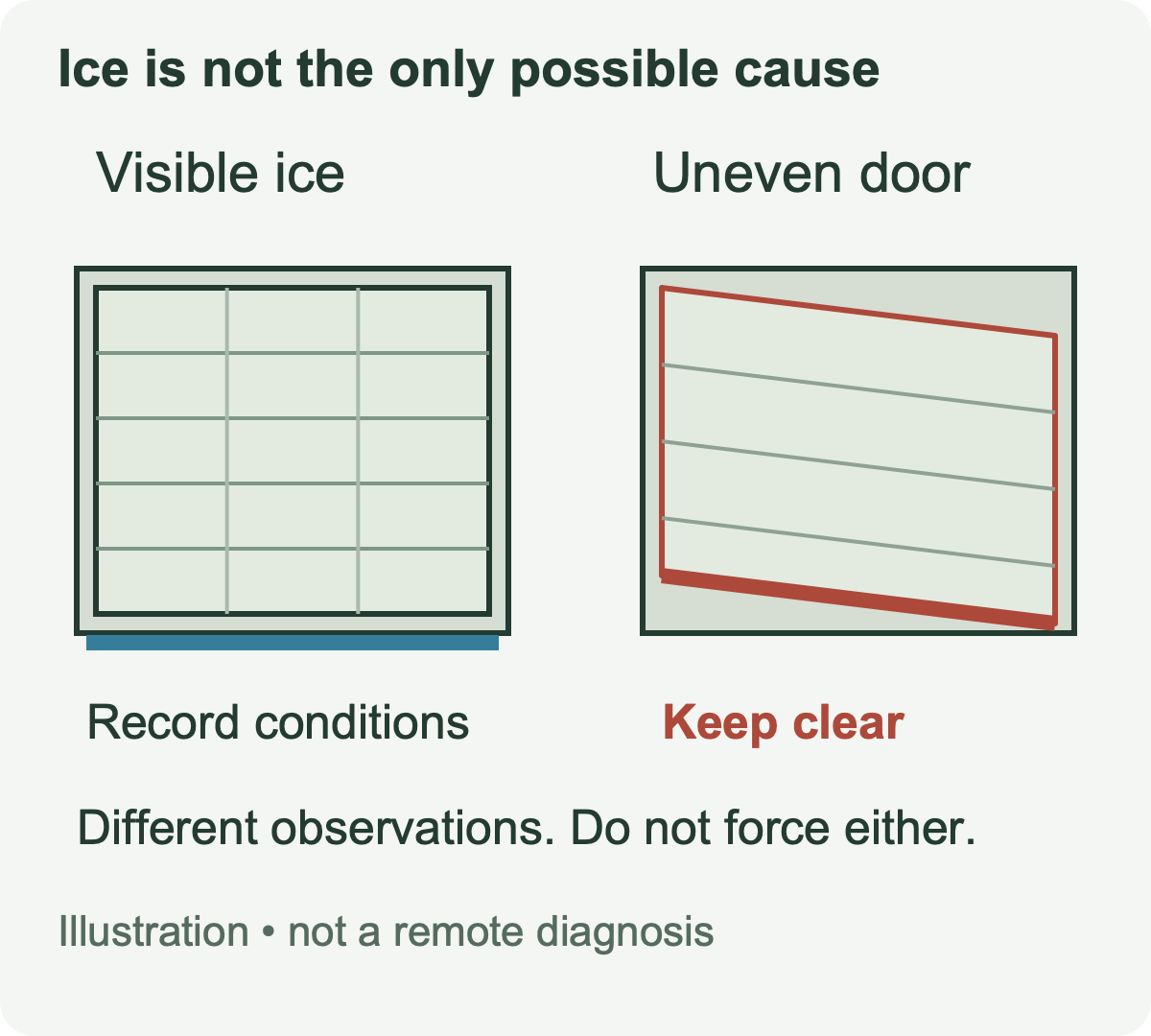
Record the overnight conditions and whether the threshold was wet before temperatures fell. Snowmelt, rain or water carried in by a vehicle may be relevant. A visible band of ice where the seal meets the floor supports an ice-related explanation, but it does not rule out another problem.
For a property in a mild coastal climate, do not call a door “frozen” merely because it will not move on a cool morning. Look for actual freezing conditions and visible evidence. The useful service description is “ice is visible along the bottom edge after a freezing night,” rather than “the opener needs more power.”
Stop repeated commands
GARAGA's manufacturer guidance specifically warns against using an electric opener to move a door stuck in ice. If a normal command has already produced strain or no movement, stop there. Repeating it does not identify which component is resisting the load.
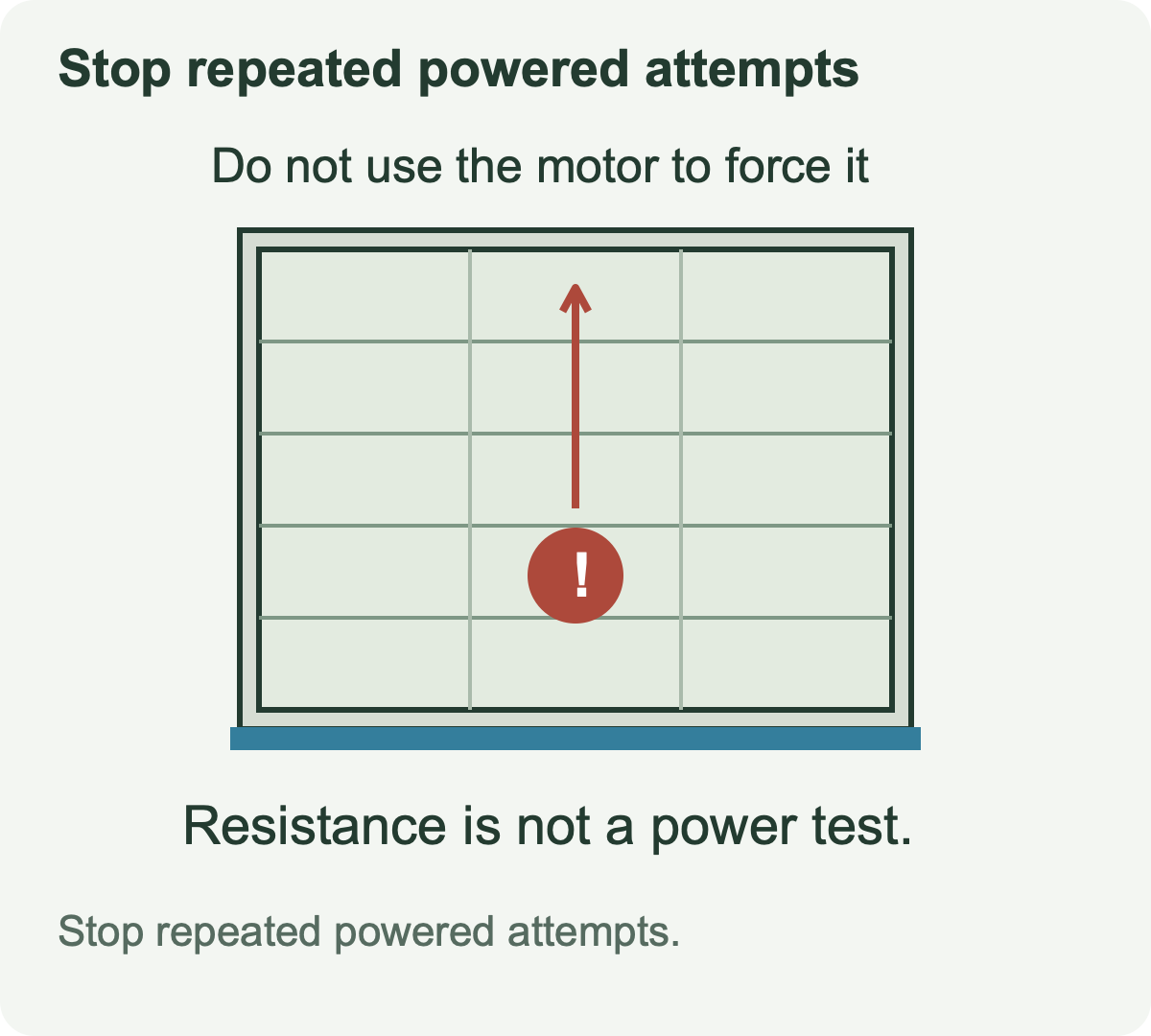
If the opener runs but the door remains down, record that observation. If only one side lifts, or the door tilts, stop immediately. Do not keep testing to see whether the ice will release on the next attempt.
Look for the reasons to stop owner checks
| Observation | Safe response |
|---|---|
| Ice visible along a level, closed bottom edge | Stop powered attempts and consult the correct owner guidance. |
| One side lifts or the door is crooked | Keep clear and arrange professional assessment. |
| Loose cable, displaced roller or a visibly broken component | Do not release or move the door to investigate. |
| No visible ice and no confirmed freezing conditions | Describe the actual response instead of assuming an ice bond. |
| Water around electrical equipment | Avoid wet electrical parts and obtain appropriate assistance. |
Do not loosen bottom brackets, cables or springs to free a door. A release cord is also not a universal cure: disconnecting the opener changes how the door is controlled. Follow a manual-release procedure only when the exact owner's instructions and safe door condition support it. If either is uncertain, leave the system alone.
Avoid turning a small ice problem into damage
Aggressive thawing and prying can create a second problem at the seal, panel, glazing or electrical equipment. Do not use an open flame, a metal tool under the door or a hammer against the hardware. Do not treat boiling water as a generic solution; added water can also leave another wet threshold to manage.
There is no single thawing method suitable for every door finish, seal material and electrical layout. Ask the manufacturer or service provider what is appropriate for the installed system. If the garage is needed urgently, explain the access problem when requesting help rather than forcing the equipment.
Inspect the seal after the opening is safely usable
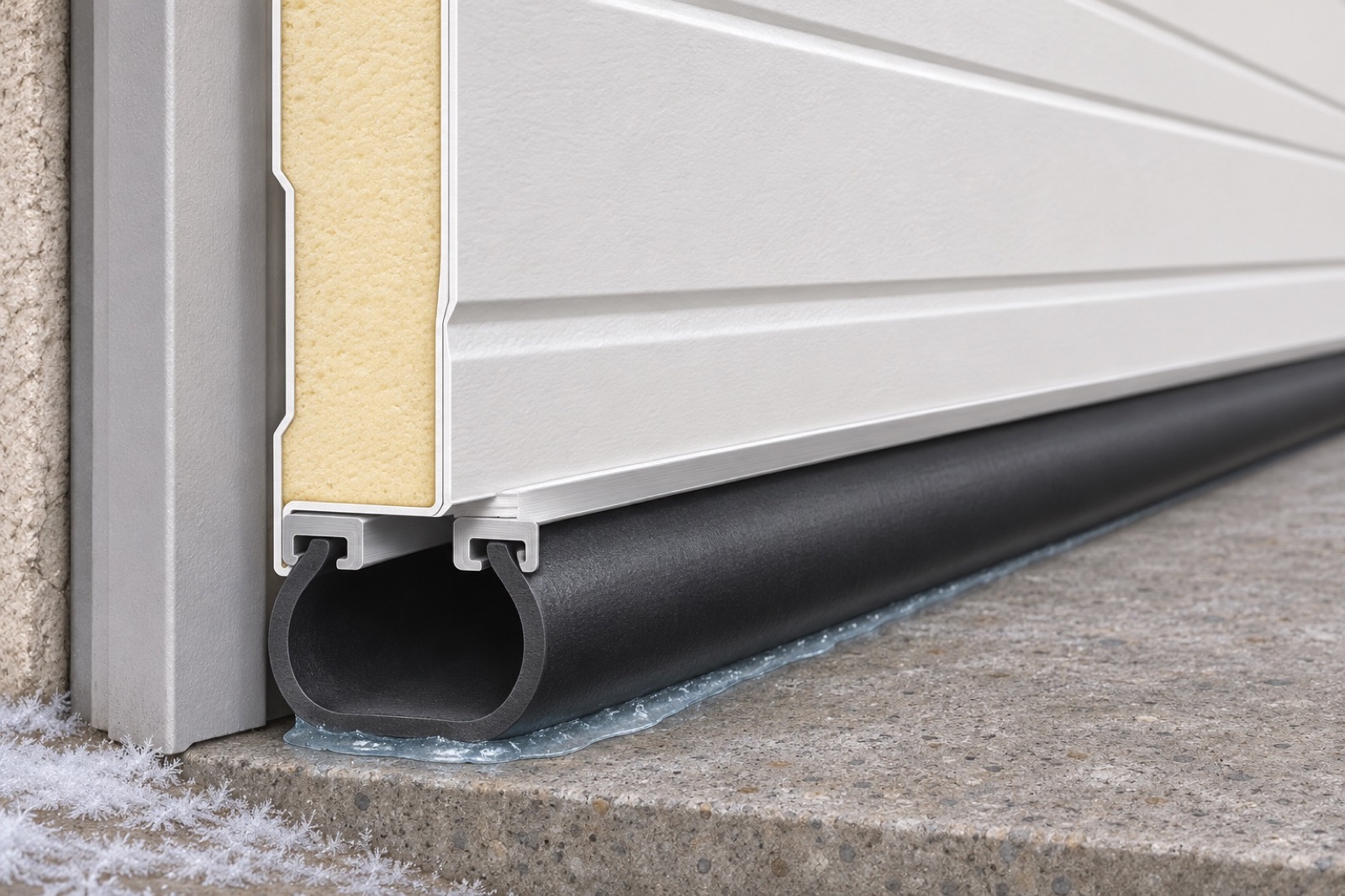
Once the ice has been addressed and the door has been confirmed safe to operate, inspect the accessible bottom edge for a torn, detached or distorted seal. Record the damage rather than immediately buying a visually similar replacement. The retainer and seal profile must match the door.
The bottom-seal identification guide explains that compatibility question. A new seal should not be forced into an incompatible retainer, and installing a different profile is not proof that water collection has been solved.
Find out why water remains at the threshold
After the immediate issue is over, look at the pattern during ordinary weather. Does water collect at one corner? Is snow repeatedly pushed against the closed door? Does a wet vehicle leave water near the opening? Photograph the pattern from a safe position.
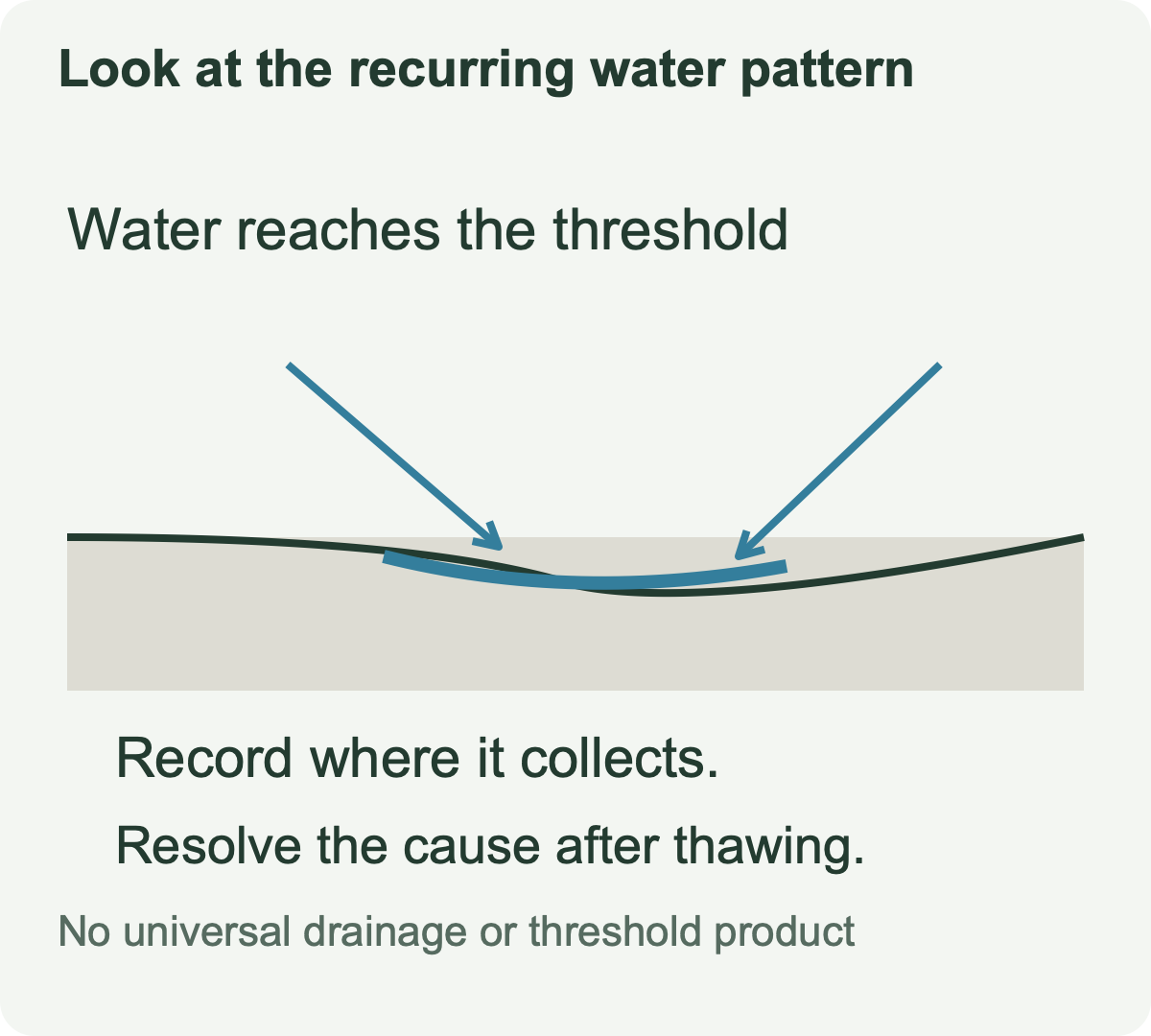
Separate maintenance from building work. Removing loose snow from an accessible approach is different from changing the slope of a slab or installing a threshold product. A strip that obstructs drainage or interferes with door closure may create another problem. Discuss persistent pooling with the appropriate contractor.
For broader seasonal planning, use the winter garage preparation guide. Heating, moisture control and door maintenance should fit the way the garage is used; none is a reason to seal required ventilation or modify safety devices.
Give the technician a useful account
- State whether the door is fully closed, partly raised or uneven.
- Describe visible ice and the recent weather.
- Explain what the opener did on the attempt already made.
- Report visible damage or an unusual sound without recreating it.
- Identify whether the property has another safe access route.
The goal is more than one successful opening. Before returning to ordinary use, the cause of the sticking and any resulting damage should be understood. That avoids treating every cold morning as another reason to force the motor.
How to unstick a frozen garage door: choose a supported thawing method
First stop powered attempts and identify whether the door is level and fully closed. If the door is uneven, partly suspended, or has damaged cables or hardware, leave it untouched and arrange service. If an otherwise undamaged, closed door has a visible ice bond, consult the installed door manufacturer's instructions for that seal and finish before attempting to thaw it.
Clopay's cold-weather guide describes warm water as one way to melt an ice bond, followed by cleaning and drying the area. That is a manufacturer example, not permission to pour water around wet wiring, use boiling water, or work where runoff will immediately become a slip hazard. If those conditions cannot be controlled, use a professional. A seal that has thawed is not proof that the door or opener escaped damage from an earlier forced attempt.
Keep children, pets and other users away throughout the process. Do not place fingers beneath the seal to check whether it has released. Never use the motor to pull against remaining ice, and do not pull the release cord on a damaged or uneven door. Return to normal operation only after the whole bottom edge is free and the door is confirmed fit to move.
Keep the bottom seal from freezing to concrete again
- Manage water before temperatures fall. Clear accessible loose snow away from the closed opening without striking the door or reaching into hardware. Address recurring pooling rather than repeatedly treating the ice.
- Check the actual weatherseal. A torn or loose seal needs a compatible replacement. A new seal does not correct a sloped or damaged slab.
- Check product compatibility. GARAGA discusses a silicone-based product for its weatherseal. Use only a treatment approved for your seal and finish; do not substitute petroleum products, road salt or a general-purpose grease.
- Plan access. Keep another safe entrance usable when freezing weather is forecast. Do not leave the door partly open as a routine anti-icing measure.
What if there is no ice and the opener only clicks?
Cold weather alone does not identify an ice bond. A click, hum or stationary motor needs its own diagnosis; use the guide to an opener that hums or clicks without moving the door. Do not increase force to overcome an unidentified obstruction.
Sources & manuals
Manufacturer guidance reviewed November 5, 2026. This article uses a conservative owner-observation approach; it does not prescribe a universal release or thawing procedure.