
Cover photo: Kampus Production · Source · Pexels License. Resized and JPEG optimized; full framing retained.
A door that will not close can make any offer of fast help feel reassuring. You can take the fault seriously while still asking ordinary business questions. Establish who will do the work, what they have found and what you are authorizing. This guide focuses on checking a provider and controlling the approval process; it does not accuse any named business of wrongdoing.
Confirm who is coming before the appointment
Ask for the business's legal or contracting name, contact details and contractor license information where applicable. Check whether the caller is the contractor, a dispatcher or a service that passes work to another company. There is nothing inherently wrong with dispatching, but the identity of the company you will actually pay should be clear.
Write the name down before you start searching. Similar business names can make a quick search misleading. Match the name and license number on the estimate with the relevant official record rather than treating a logo, sponsored advertisement or truck lettering as verification.
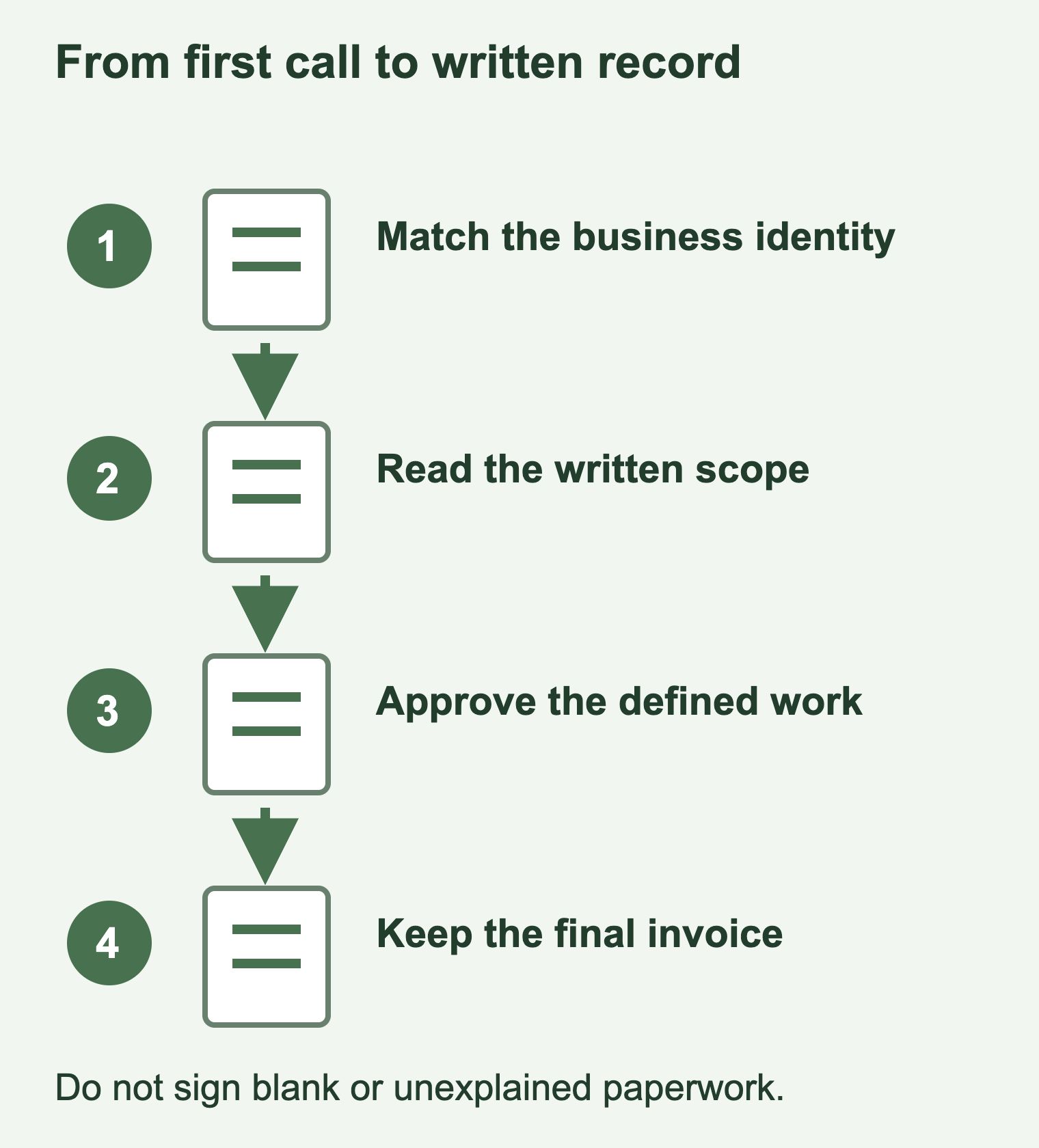
In California, the CSLB license lookup is the place to check a contractor record. Read the status and business identity shown there, and ask the board if a classification or requirement is unclear. Match the actual contracting business to that record before approving the job.
Separate the visit charge from permission to repair
Before booking, ask what the advertised or quoted visit charge includes. Does it cover travel, inspection, a limited service or something else? Is it credited against an approved repair? Ask what you owe if you choose not to proceed, and whether the answer will be provided in writing.
A useful question is: “Will you give me the proposed work and total before replacing parts?” Keep your own answer equally clear. Agreeing to an inspection should not be confused with authorizing every repair the technician may later recommend.
Ask for the finding, not just a dramatic description
Request the name and location of the part involved, the observed problem and how the proposed work addresses it. Ask whether the technician can show the issue safely from the floor or provide a photograph. You do not need to handle a spring, move a damaged door or stand beneath it to be an informed customer.
Words such as “bracket” can describe very different components. If that is the issue, our guide to identifying garage door brackets helps you follow the explanation without turning it into a removal procedure. A request for evidence is reasonable; a demand that someone prove a fault by repeatedly operating unsafe equipment is not.
Get a complete written estimate

The FTC recommends multiple estimates and a written description of the work, materials, timing and price. Compare the same job across proposals. One quote may cover a specific component while another includes a new opener, controls and door work. Different totals do not automatically describe the same repair.
- Finding: the component and condition identified.
- Work: what will be repaired or replaced, including quantities and model information where relevant.
- Money: labor, materials, applicable charges and the payment arrangement.
- Changes: how additional work will be documented and approved.
- Handover: functional checks, owner instructions, invoice and warranty terms.
The repair-estimate comparison guide discusses scope in more detail. Its local cost context is separate from this article's provider-verification checklist. Do not turn a price mentioned in another project into a universal fair-price test.
Recognize pressure without jumping to an accusation
The FTC identifies tactics such as pressure for an immediate decision, demands for the full amount up front and cash-only payment as warning signs in home improvement work. A claim that a special deal disappears unless you sign immediately deserves questions, especially when you have not received the scope.
Pause if the business identity changes between booking and the invoice, if blank paperwork is presented for signature, or if important promises remain verbal. Ask for an explanation and keep a record of the answer. A disagreement, mistake or expensive repair is not automatically fraud; focus on what can be documented.
You can ask someone you trust to join the call or review the estimate. That is useful for anyone who wants a second set of eyes. A professional service process should leave room for understandable questions, rather than requiring you to memorize unfamiliar technical terms under pressure.
Approve changes before the job grows

If another problem is found, ask for the finding, the changed scope and the revised total before approving it. Keep the original and revised documents. Avoid signing a completion statement before the agreed work and handover have been explained.
California contract requirements include important details and exceptions. Use CSLB's current consumer guidance for the situation you are in rather than relying on a generic internet claim about a universal deposit, cancellation period or contract threshold. Keep the applicable guidance with the written agreement.
Keep a useful record after the visit
Retain the estimate, approvals, invoice, payment record and any manufacturer documentation. Note what the provider demonstrated and what remained unresolved. If replacement parts were removed, ask in advance whether photographs or the parts can be retained when appropriate; disposal and return arrangements should be understood rather than assumed.
If a problem arises, describe it in writing to the business and keep copies. The FTC and CSLB provide consumer resources for unresolved concerns. Neither an online review nor filing a report guarantees a particular outcome. Clear records make the next conversation more useful, whether it is with the contractor, an insurer or the appropriate consumer agency.