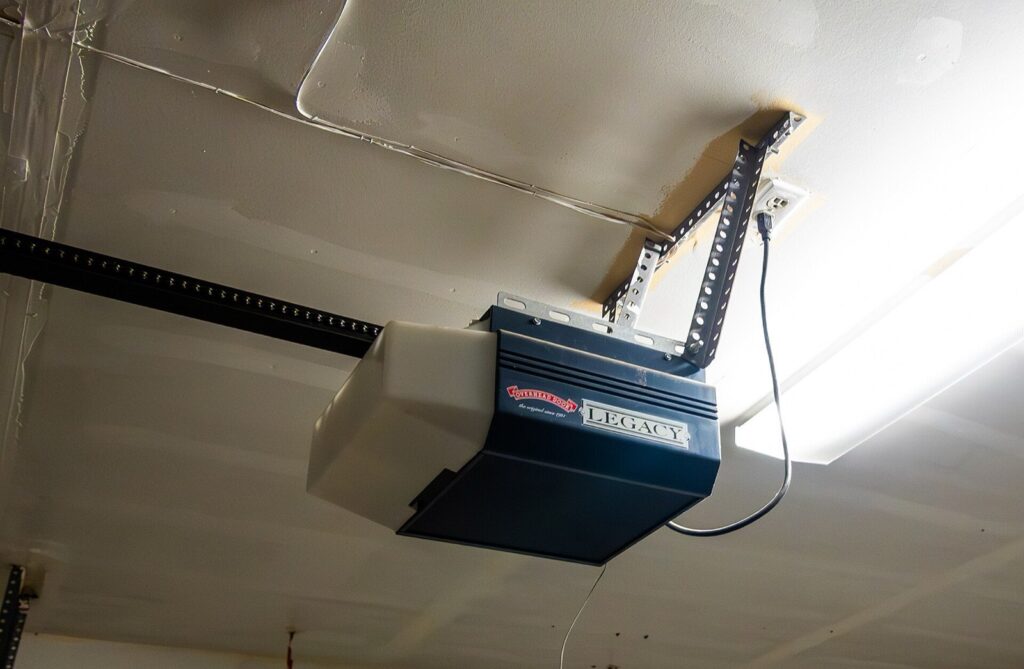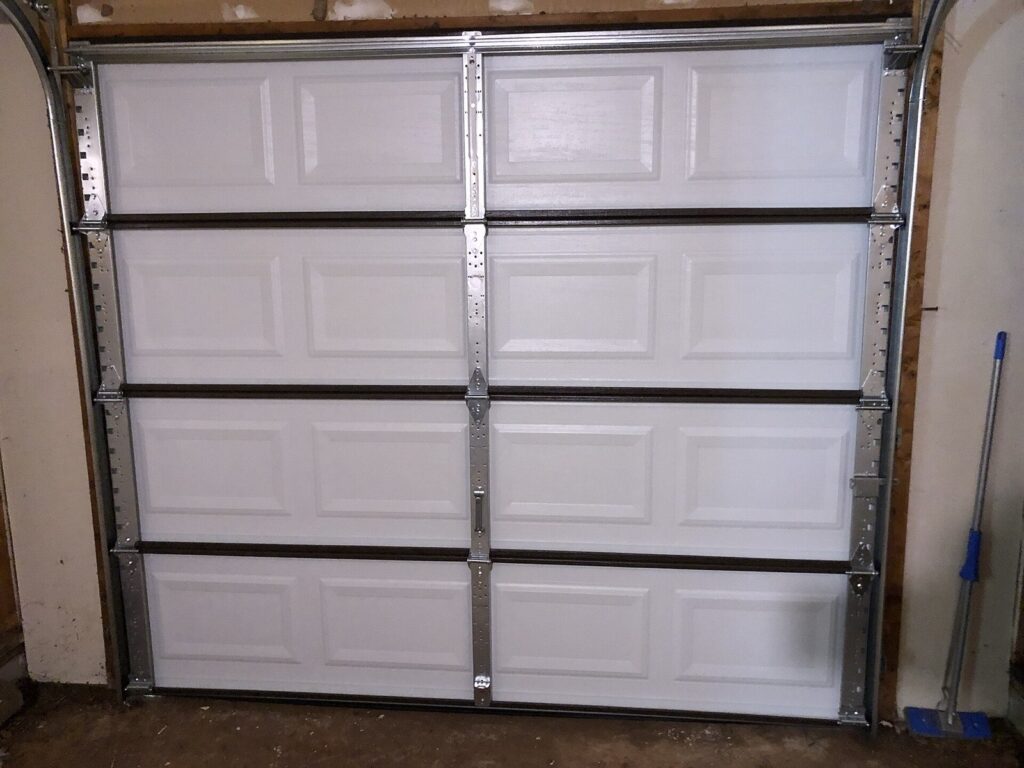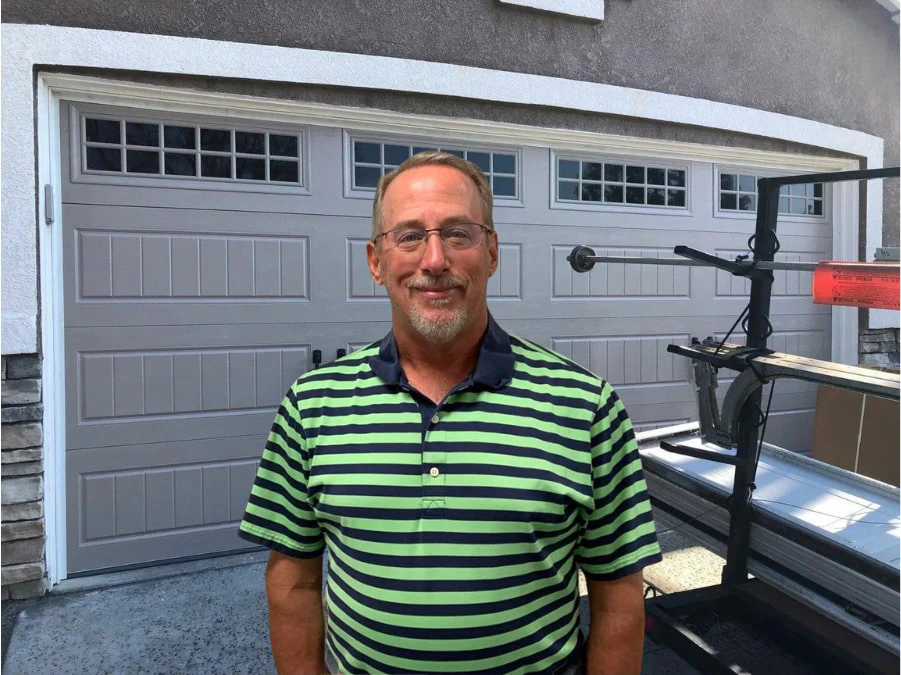
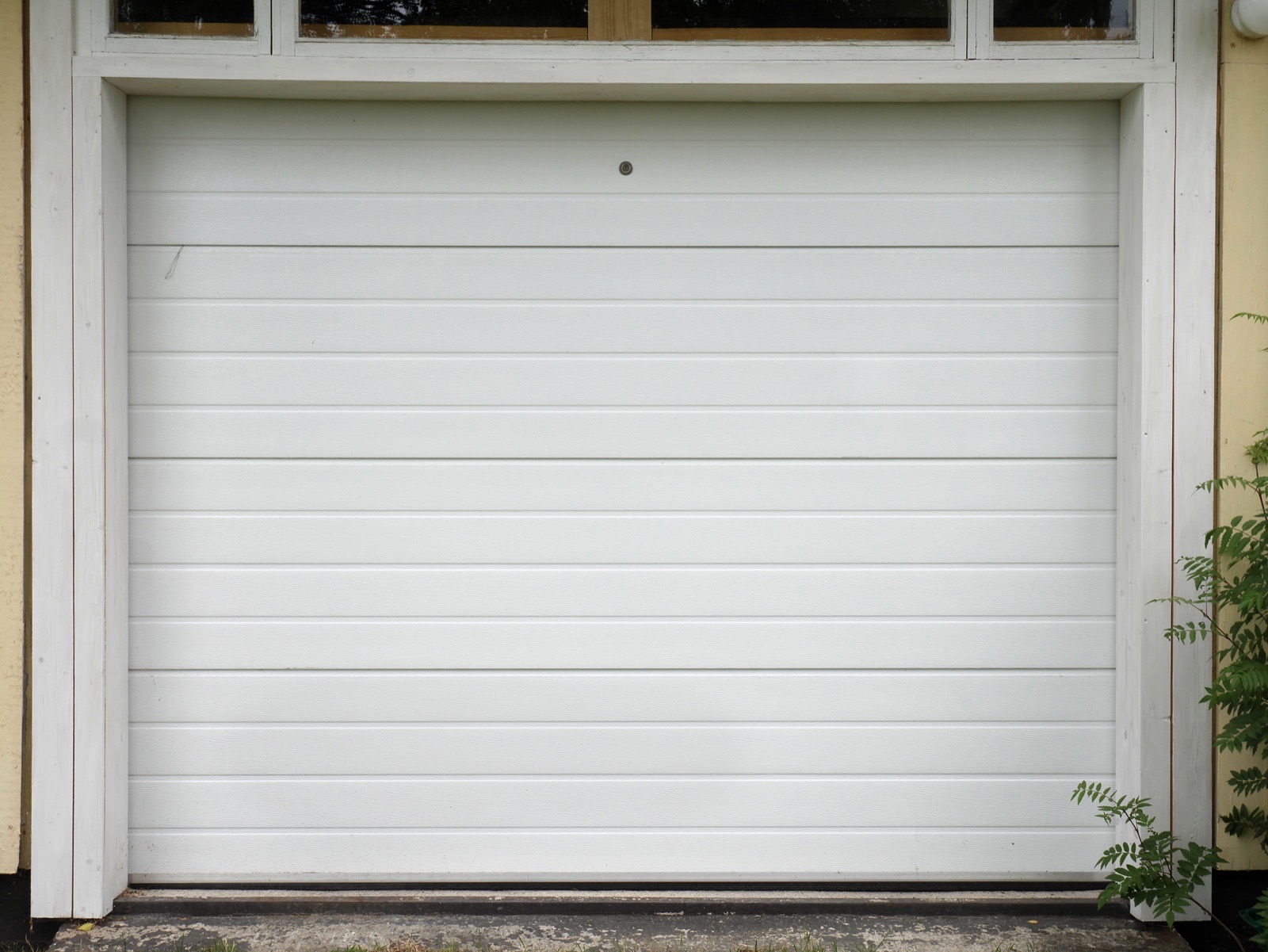
A real sectional door. Its appearance alone does not establish its core construction or diagnose thermal bowing. Photo: Santeri Viinamäki · CC BY-SA 4.0. Resized for the web; full framing retained.
A garage door can appear straight in the morning and look different after hours of direct sun. That timing is useful, but it does not prove the door is safe or identify the repair. The important distinction is between a temperature-related change in the panel and damage that must not be worked around.
Understand which construction this explanation concerns
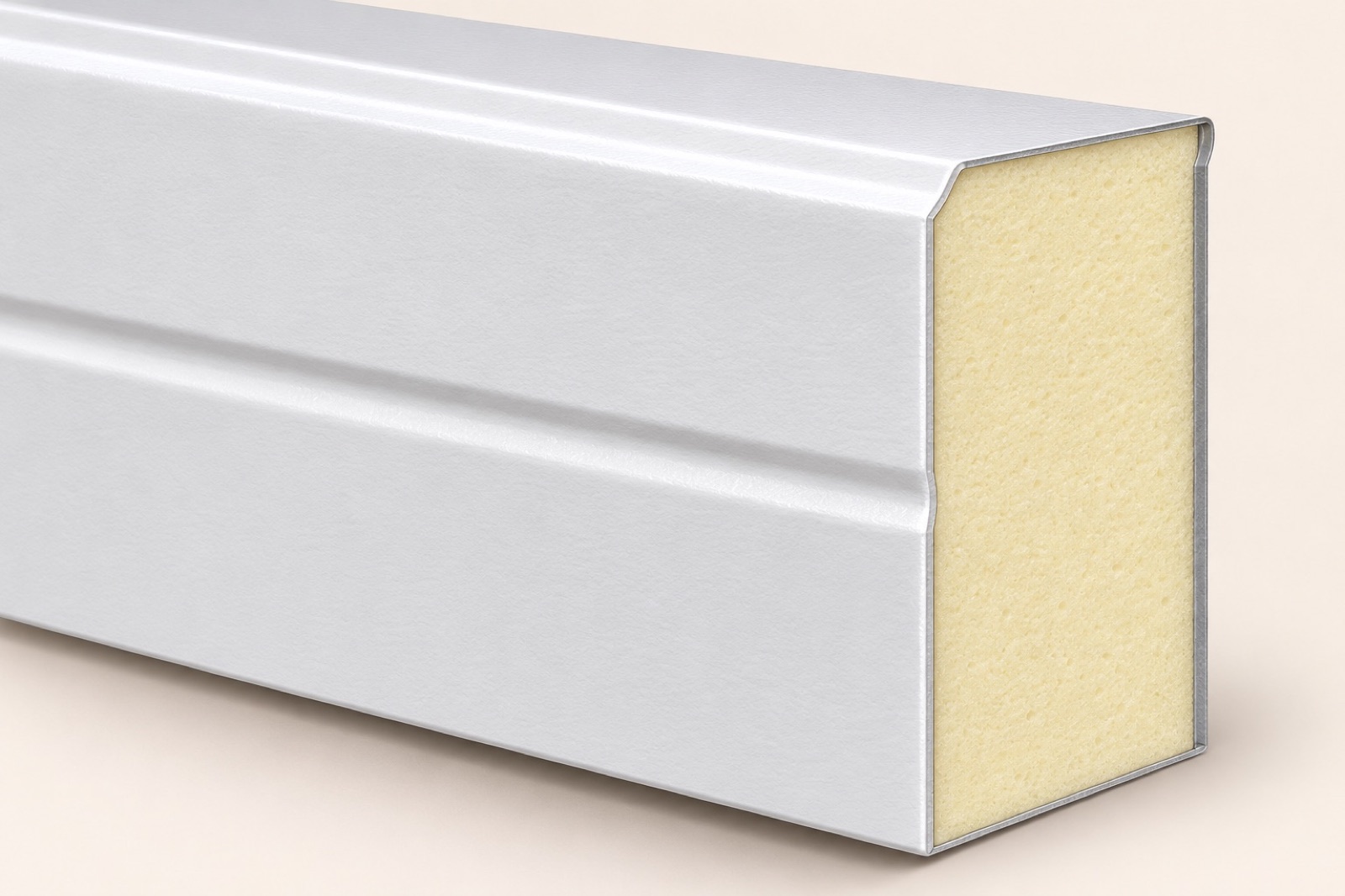
DASMA's thermal-bowing guidance concerns insulated bonded-core sections, commonly constructed with steel skins bonded to a foam core. A temperature difference across the section can produce curvature. The guidance should not be used as a blanket explanation for every bent single-skin door, timber panel or damaged rolling curtain.
Find the door model and construction in the documentation if available. From the floor, photograph the whole closed door and the affected section. Do not remove a panel cover, loosen hardware or climb beside the tracks to identify the insulation.
The direction depends on which face is hotter
The section bows toward its hotter face. An exterior heated by direct sun can therefore produce an outward bow; different conditions can produce inward movement. Door width, color, construction and the temperature difference influence the amount. A dark finish facing the sun is relevant context, not a measurement of the actual panel temperature.
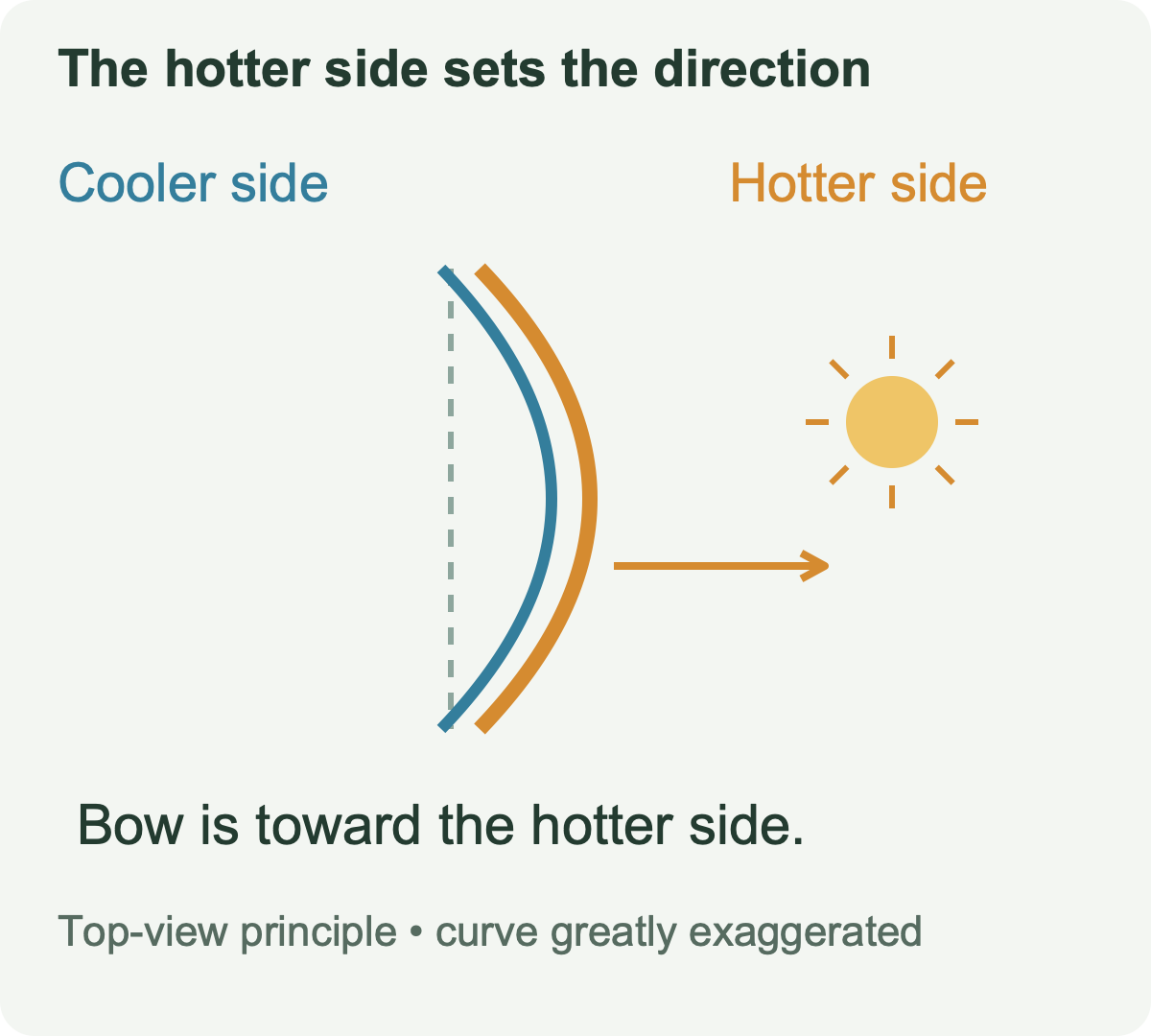
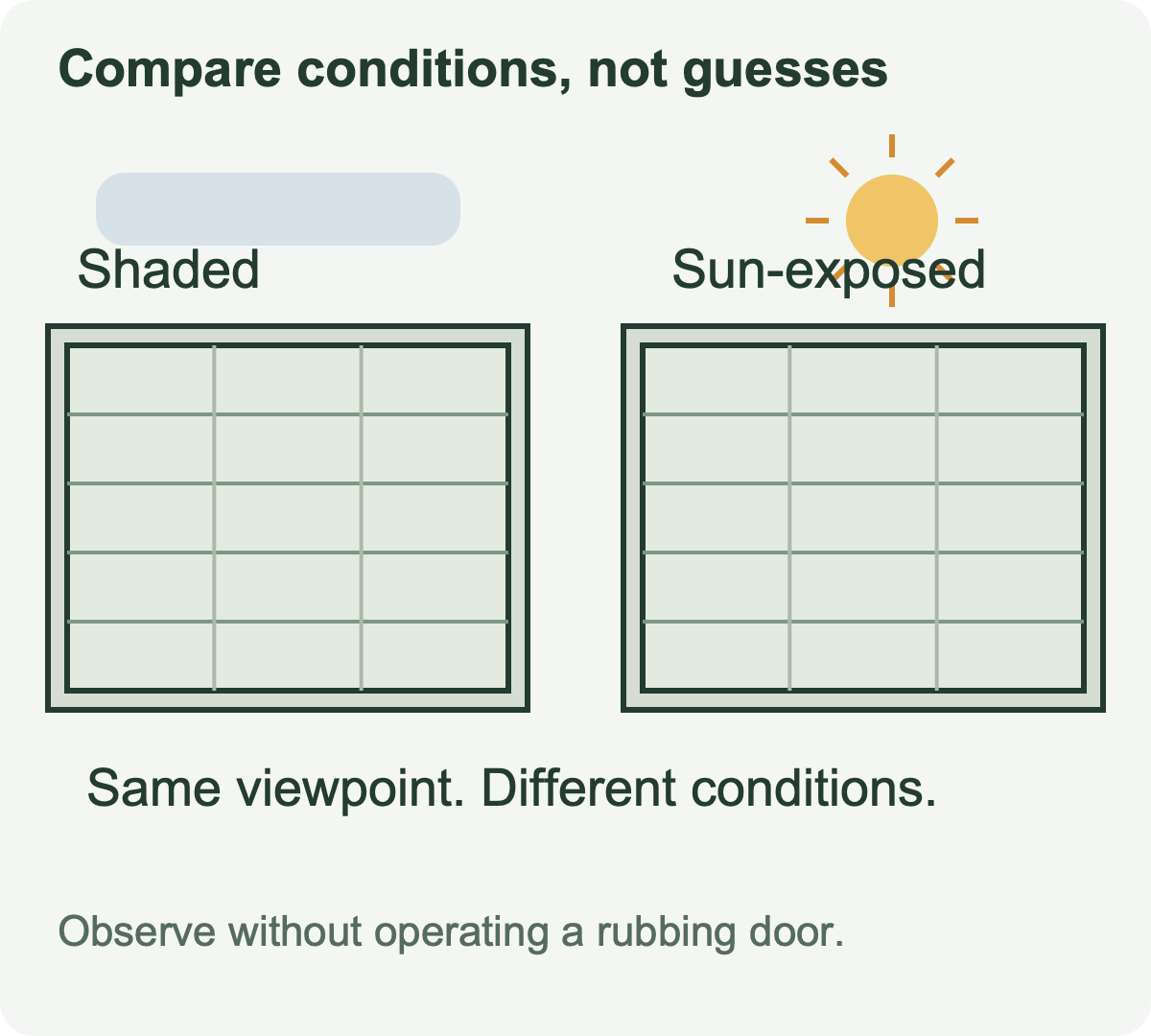
In an observation record, identify inside and outside rather than writing only “it bends forward.” Include when the change was noticed and whether the exterior was in sun or shade. Avoid describing a predicted amount of movement: a general diagram is not a specification for your door.
Compare the pattern with visible damage
| What you notice | Question for assessment | Do not conclude |
|---|---|---|
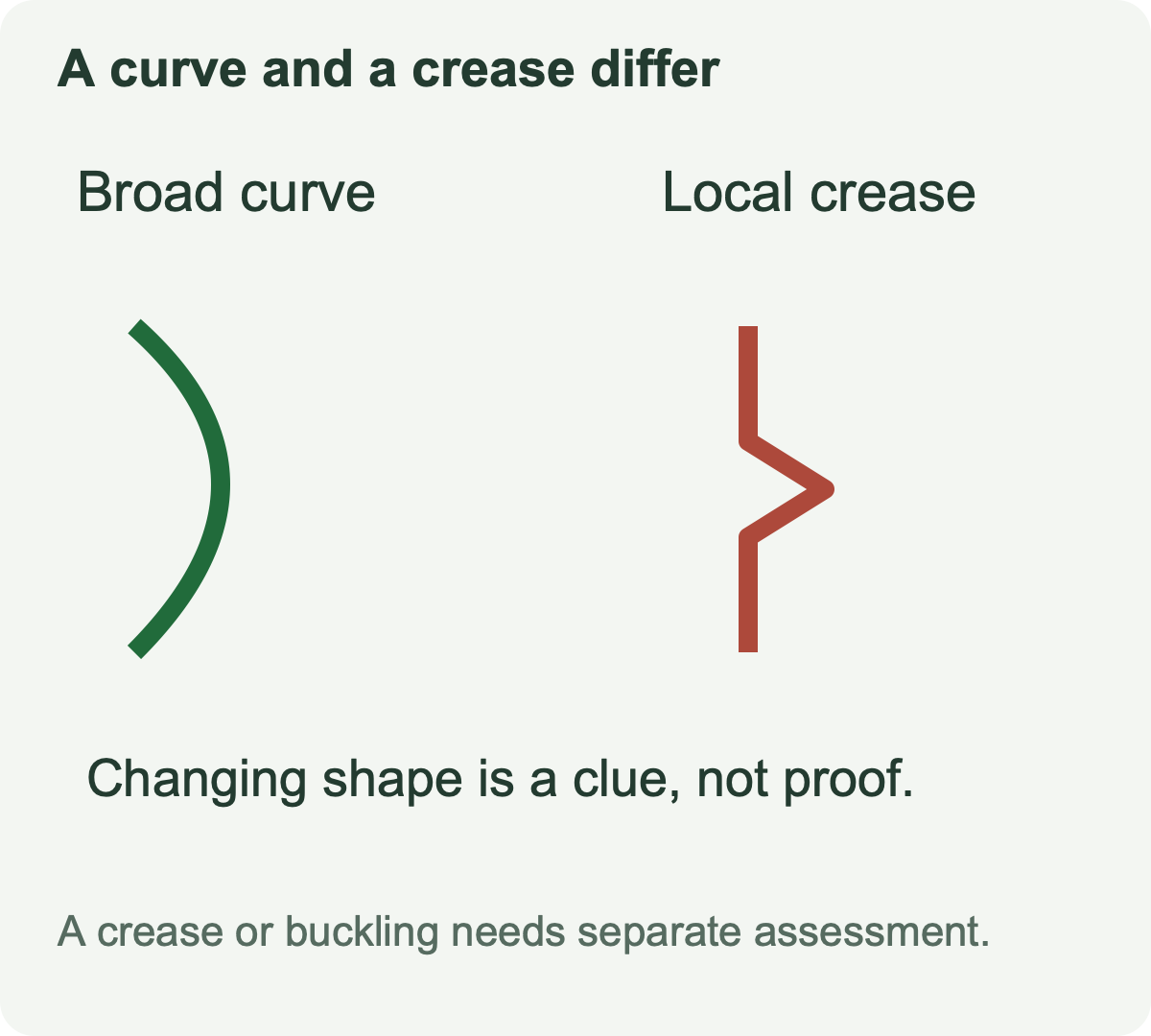
| A broad curve that varies with conditions | Does the construction and temperature pattern fit thermal bowing? | That operation is safe because the curve later reduces |
| A sharp crease or local dent | Is the section structurally damaged? | That warming or cooling will repair it |
| A section folds or buckles during movement | What is loading or obstructing the moving assembly? | That more opener force is appropriate |
| Rubbing at the header or a changing gap | How do panel movement, clearances and installation interact? | That a track adjustment alone is the answer |
If the panel buckles, the door moves unevenly or hardware is displaced, stop operating it. The guide to a panel buckling during opening addresses that separate stop-use symptom. Do not run extra cycles to decide which article best matches the fault.
Build a record without provoking the problem
Use photographs from a consistent, safe viewpoint. If the door is already closed and can remain undisturbed, a later photograph under different conditions can document a change. There is no need to operate it, heat it artificially or lean a straightedge against moving parts.
- Identify the opening. Record the door model, approximate width from existing records and orientation if known.
- Describe the conditions. Note the time, direct sun or shade, and whether the garage is being heated or cooled.
- Locate the effect. Identify which section appears curved and any visible contact with the opening.
- Record recent work. Include repainting, panel replacement or other changes.
- Describe operation already observed. Report rubbing or stopping without deliberately repeating it.
A pair of photographs establishes an observed change, not a diagnosis. Keep that distinction when asking about warranty coverage or repairs.
Check finish decisions before repainting
If the condition followed repainting, supply the coating information and the previous and current colors. Do not assume that a lighter paint is automatically permitted or that repainting will correct the entire problem. The door manufacturer's finish guidance and the actual installation both matter.
The garage door painting guide explains why checking the existing finish comes before selecting a new coating. Resolve compatibility and any warranty conditions before arranging another change.
Leave reinforcement and adjustments to the assessment
DASMA discusses manufacturer-recommended reinforcement and other system-specific measures. That is not an instruction to add a universal strut. The choice must account for the actual door and how it operates.
Ask the assessor to explain the proposed change, the reason for it and the checks needed afterward. If replacement is recommended, request the construction and finish specification rather than accepting “heat resistant” as a complete description.
Make the decision about the whole opening
For garage door replacement planning, provide the sun exposure, finish preference, opening size and the observed fault. Ask how the proposed product and installation address those conditions. No general article can promise that a particular panel will never move with temperature.
The useful outcome is a documented explanation of what was observed, whether damage is present and what the manufacturer-supported solution requires. That is a stronger basis for a repair than simply making the door move once.
Common questions about a bowed garage door
Why is the door bowing in the middle only in afternoon sun?
The timing can fit thermal bowing when the section has the relevant bonded construction and the exterior skin becomes hotter than the interior. It still needs confirmation. Describe whether the change is a broad curve, a sharp fold, or contact with the header, and whether it reduces later without anyone altering the hardware. A photo cannot reveal the full structural condition.
Does thermal bowing mean the insulation is defective?
Not by itself. The temperature difference across a bonded section is part of the explanation. Product suitability, installation clearances and the effect on actual operation still matter. A manufacturer describing thermal movement as an inherent characteristic does not mean a rubbing or damaged door should remain in service.
Can I straighten it with a brace or a stronger opener?
A manufacturer-supported reinforcement may be part of the answer, but its weight, fastening and effect on counterbalance must be evaluated with the door. Do not screw a timber brace or universal strut onto the panel or increase motor force to pull it straight. Ask for a specification for the exact section and door width.
What if the door bends while closing?
A section folding during travel is a separate stop-use symptom. Do not call it harmless thermal bowing because the day is hot. Stop operation and describe the point where the deformation occurred. Keep any video already recorded; there is no need to recreate the event.
Should I cool the door with water?
Do not deliberately heat or cool the panel as a home diagnostic test. It can obscure the original pattern and introduce water around finishes, glazing and electrical equipment. Document naturally occurring sun and shade conditions from a safe position, then obtain the manufacturer's assessment.
Sources & manuals
Source reviewed November 5, 2026. Illustrations explain the principle and are not installation drawings or allowable-deflection specifications.