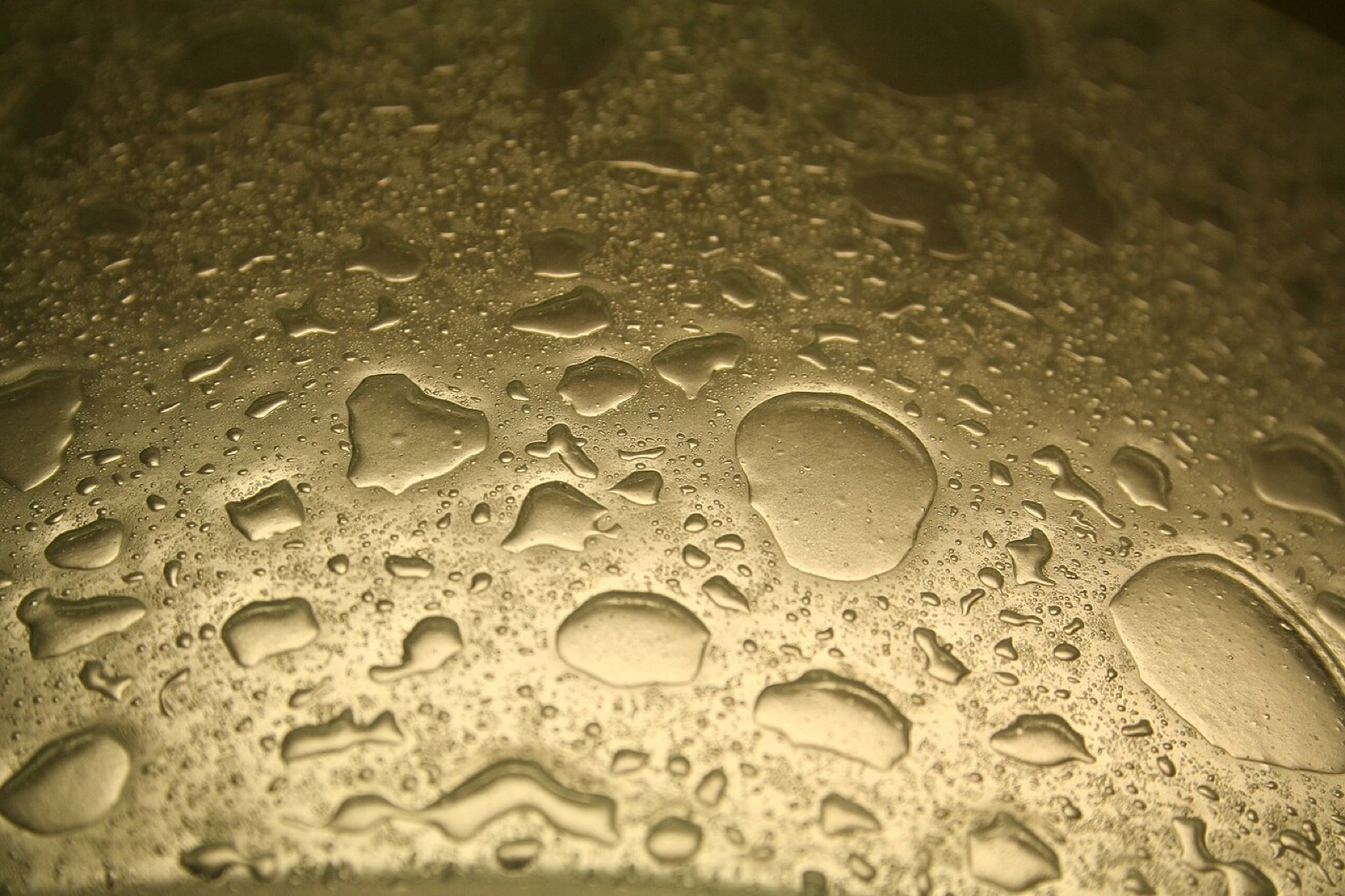
Surface condensation on glass; this close-up does not identify a failed glazing unit. Photo: Clearly Ambiguous · CC BY 2.0. Resized for the web; full framing retained.
A wet garage door does not automatically mean the door leaks. It also does not mean that every moisture problem is harmless condensation. The useful first step is to separate observations: which side is wet, where the water starts, and what was happening when it appeared. That record helps you discuss the problem without committing to the wrong repair.
Locate the moisture before choosing a fix
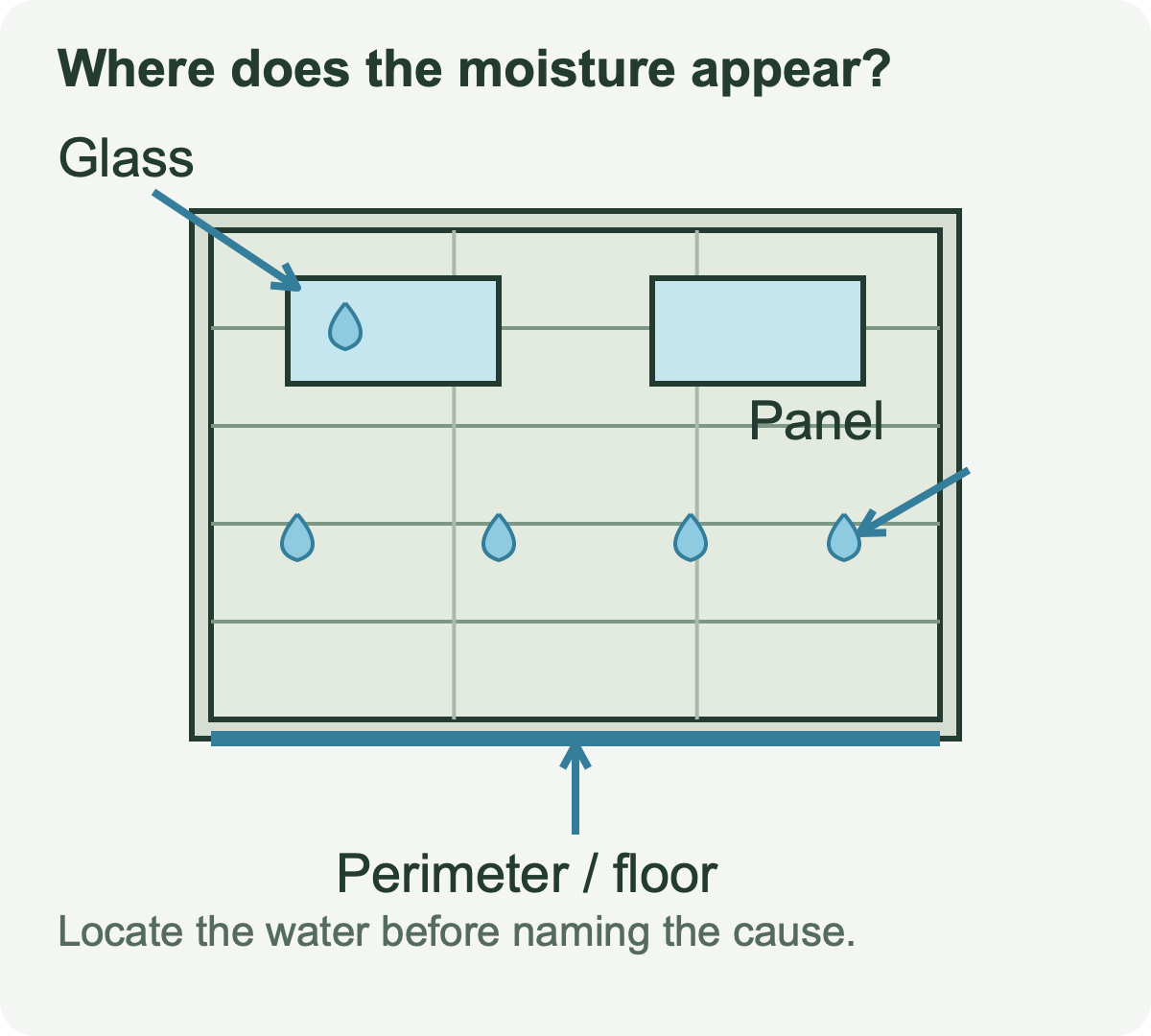
Look from a safe position with the door stationary. Is the moisture on the inside face of a panel, on glass you can reach safely, at the bottom corner, or on the floor? Note whether an entire surface has fine droplets or whether one narrow trail leads from an edge. These are clues to record, not proof that a particular seal or panel has failed.
| What you observe | What to record | What remains uncertain |
|---|---|---|
| Droplets on the room-side surface | Temperature conditions, wet vehicles and when the droplets appear | Whether condensation explains all the water |
| Haze that appears between glazing panes | Whether accessible surfaces are clear while the haze remains | The condition and construction of the glazing unit |
| Water at an edge or across the floor during rain | The apparent starting point and weather direction | Whether the entry path is the door perimeter, building or drainage |
Do not remove a window insert to investigate the space between panes. Do not climb on the door, tracks or opener rail to wipe an upper window. If the area is inaccessible, take a photograph from the floor and leave close inspection to a technician.
Why a cold panel can become wet inside
Condensation forms when humid air encounters a sufficiently cold surface. DASMA identifies wet vehicles and nearby washing or laundry activities as possible moisture contributors. Door glazing can show the effect clearly. An insulated door does not, by itself, eliminate this temperature-and-moisture interaction.
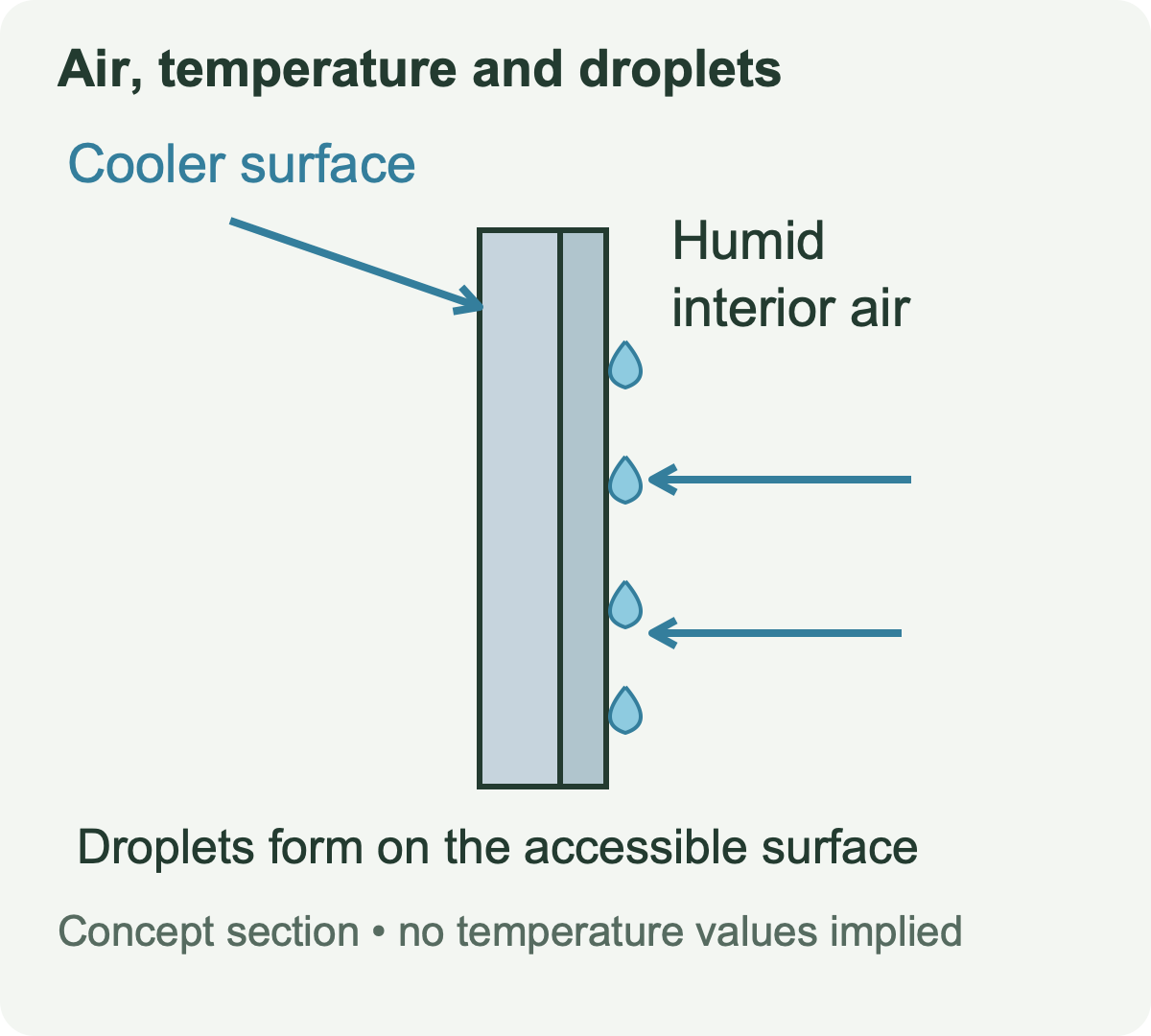
Think about the sequence on the day you noticed it. Did a wet car enter shortly before the droplets appeared? Was the garage being heated? Had the weather become much colder? Record what actually happened; avoid adding a cause simply because it sounds plausible. If you already have a humidity meter, note its reading and location, but do not treat one number as a diagnosis.
The existing garage warmth planning guide covers the broader heating and draft questions. Here, the priority is to identify moisture before changing how the space is heated or sealed.
Surface droplets and fogged glazing need different conversations
DASMA notes that fogging can indicate a seal problem in double-pane glazing and recommends professional evaluation. That possibility is different from assuming every wet window needs replacement. Confirm which surface is affected and identify the installed glazing before ordering parts.
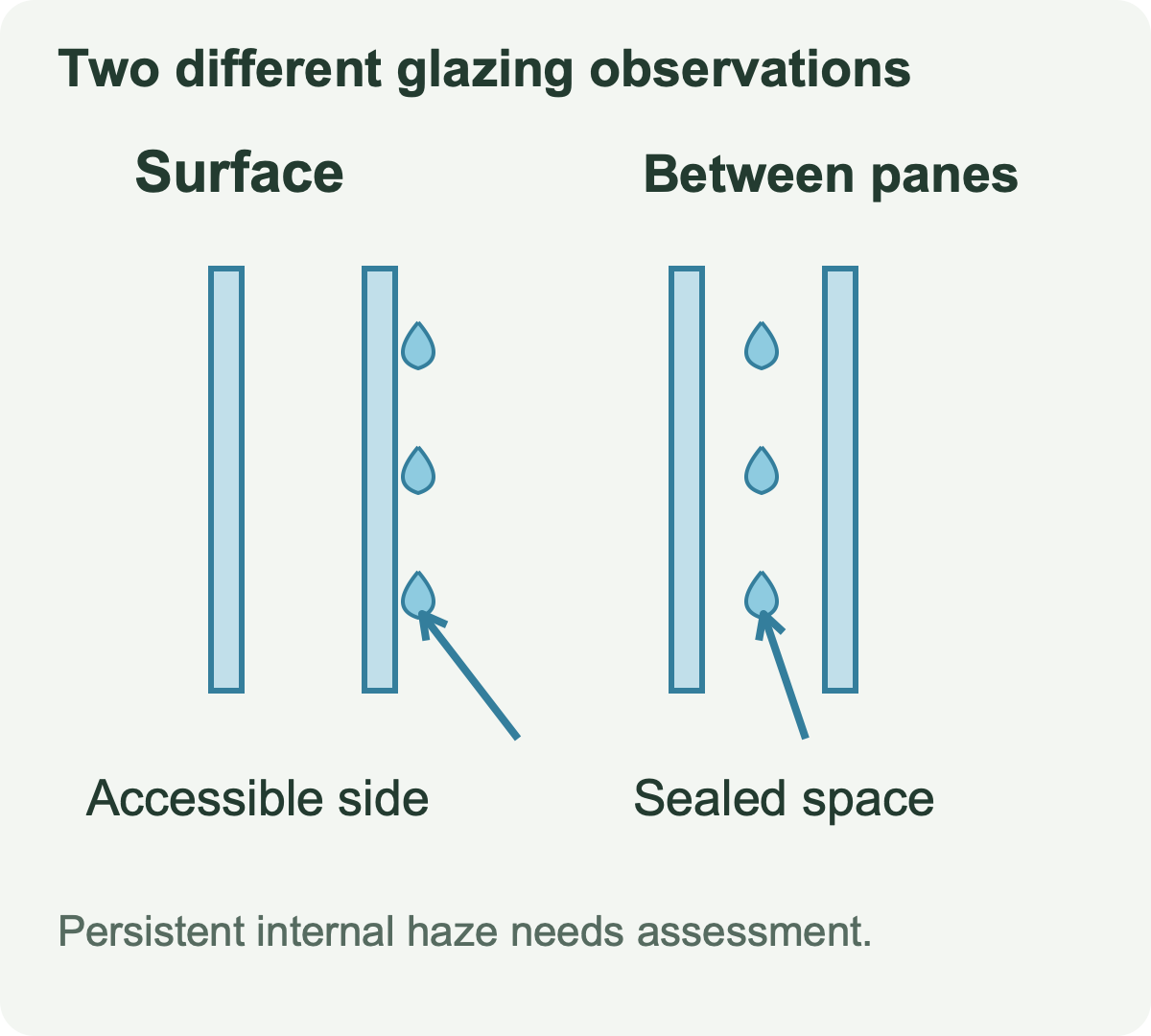
Keep the door model, invoice and any glazing specification together if you have them. Ask the service provider whether the affected component is separately replaceable and what must match the original assembly. Our garage door window planning guide explains why the glazing specification matters beyond appearance.
Record rain entry separately
If water appears during rain, photograph its apparent starting point before wiping up when safe. A wet floor alone does not show which component admitted the water. Include a wider view of the opening and the nearby floor, then a closer view of the affected edge. A service visit can then consider the opening as a whole rather than begin with an assumed bottom-seal replacement.
A useful description is specific: “Water first appeared at the left lower corner during wind-driven rain.” “The garage leaks” leaves the direction and timing unresolved. Do not apply sealant to moving joints or block an opening whose purpose you have not identified.
Make a small, repeatable observation record
- Record the time and conditions. Note rain, recent vehicle entry and whether the space was heated.
- Mark the location. Identify panel, glazing, perimeter or floor, and inside versus outside.
- Take comparable photos. Use the same safe viewpoint when the condition returns.
- List changes. Include recent sealing, heating, washing or building work.
- Keep the equipment details. Supply the door model and previous repair information if available.
You do not need to recreate the problem with a hose, extra heat or repeated door cycles. Existing observations are enough to start a focused assessment.
Choose the next step from the assessment
For a condensation pattern, discuss moisture sources and appropriate ventilation for the actual building. Required ventilation must remain functional, particularly where appliances are present. For glazing concerns, ask about the specific assembly. For rain entry, ask the assessor to identify the path before specifying a product.
If replacement is proposed, request a clear explanation of what it is expected to address. Garage door replacement planning should separate the door specification from any building or moisture work. A new door should not be presented as a guaranteed cure for an unidentified source of water.
How to reduce garage door sweating without trapping moisture
Work through the moisture sources first. Let wet items dry in a suitable location, address an active plumbing or building leak, and keep the ventilation designed for the garage working. If laundry equipment is nearby, have its exhaust arrangement checked rather than assuming an open garage door provides a permanent solution. A dehumidifier may be an option for a suitable enclosed space, but its temperature operating range, electrical location and drainage need to fit that space.
Heating and sealing deserve a combined decision. Warming the air while leaving a cold door surface and a continuing moisture source may leave droplets on the door. Closing every gap is also not a substitute for ventilation. Ask the assessor to explain how the proposed change affects both moisture and temperature, especially when combustion appliances share the garage.
Will a moisture barrier or extra insulation stop it?
There is no universal stick-on moisture barrier that solves every wet garage door. A door section, wall vapor-control layer and bottom weatherseal perform different jobs. Do not cover drainage paths, glazing details or moving joints with film or foam. Added insulation can change the door's weight and balance; use an approved door system and have any counterbalance implications assessed professionally. For specifications, compare R-value and U-factor on the correct basis.
Why are the windows wet when the panels look dry?
Different parts of the opening can have different surface temperatures. Accessible glass droplets alone do not prove that the sealed glazing unit has failed. If the haze persists between the panes after the accessible faces are clear, request a glazing assessment. Do not drill a sealed unit or remove the insert as an experiment.
Is a puddle under the door condensation or a leak?
It can be either, and more than one source can be present. A photograph of the first wet area and its timing is more informative than the size of the final puddle. Water that follows wind-driven rain needs an entry-path assessment; moisture appearing on the inside face after a wet vehicle enters raises a different question. The threshold and drainage guide explains why a raised strip is not the answer to every wet floor.
Sources & manuals
Source reviewed November 5, 2026. Use the documentation for the installed door and glazing when arranging work.